
The New Middle Class: Decathlon CMA CGM and Lidl-Trek Disrupt the UCI Team Standings
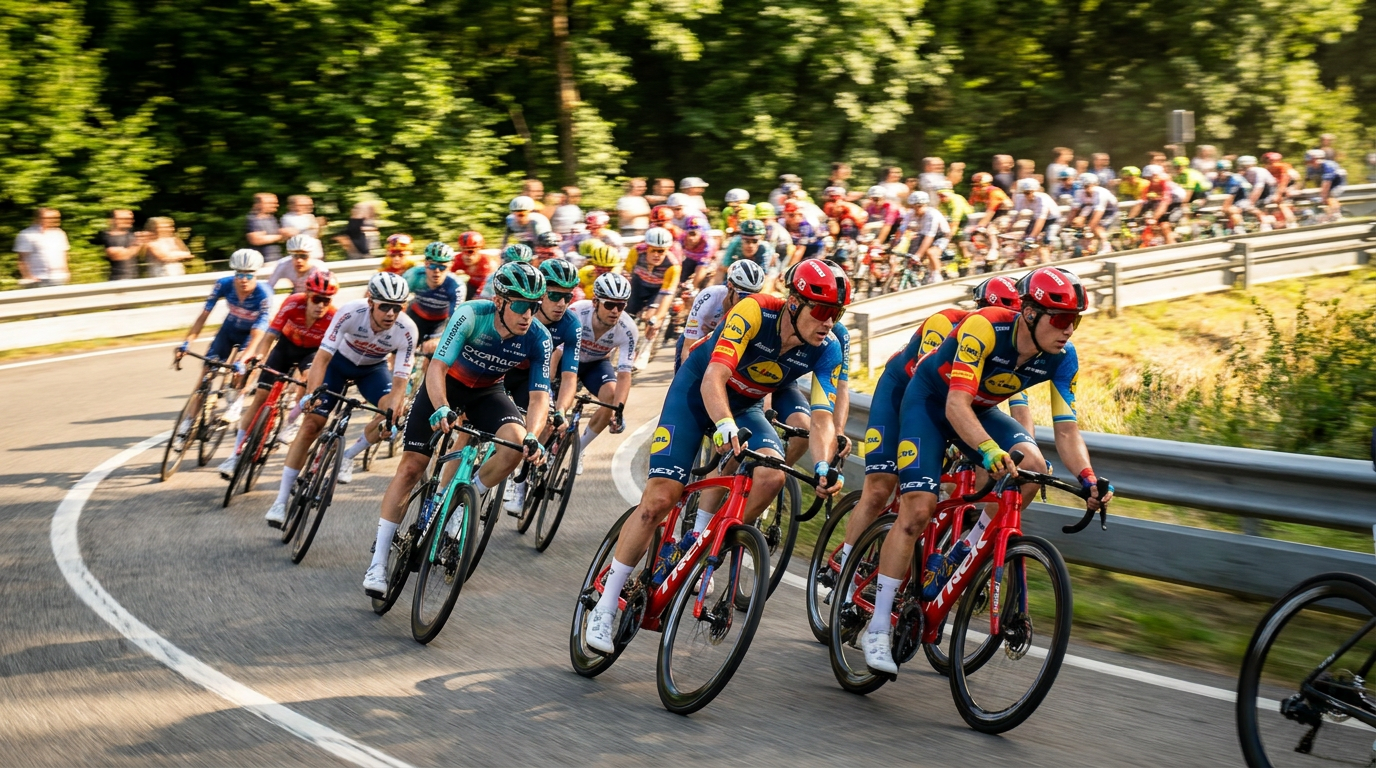
While three superteams dominate the top of the 2026 UCI Team Rankings, Decathlon CMA CGM and Lidl-Trek have surged into the top five, reshaping the sport's middle class. Driven by strategic racing and breakthrough performances, these squads are proving that smart roster management can challenge traditional cycling hierarchies.
By Factlen Editorial Team
- The Ascendant Middle Class
- Argues that smart scouting, data-driven points strategies, and targeted racing can overcome the financial advantages of the superteams.
- The Legacy Powerhouses
- Values prestigious Grand Tour victories over season-long points accumulation, even as they slip down the overall rankings.
- The Relegation Battlers
- Views every race strictly through the lens of survival, prioritizing minor placings that yield crucial UCI points to avoid demotion.
- Financial Realists
- Emphasizes that budget disparities ultimately dictate the three distinct strata of the modern WorldTour peloton.
What's not represented
- · Race organizers of smaller ProSeries events who benefit from desperate WorldTour teams showing up to hunt points.
- · Riders who feel pressured to race through minor injuries to secure relegation points for their employers.
Why this matters
The UCI Team Rankings dictate which 18 squads receive guaranteed WorldTour licenses for the next three-year cycle. The rise of data-driven middle-class teams proves that strategic management can overcome massive budget deficits, creating a more competitive and unpredictable sport for fans.
Key points
- UAE Team Emirates, Red Bull-Bora-Hansgrohe, and Visma | Lease a Bike maintain a firm grip on the top three spots in the UCI rankings.
- Decathlon CMA CGM has surged to fourth place, propelled by a massive transfer window and the breakout season of Paul Seixas.
- Lidl-Trek climbed to fifth following a management restructuring and the high-profile acquisition of Juan Ayuso.
- Traditional powerhouse Netcompany INEOS has slipped to eighth, struggling to replace points lost from departing veterans.
- The relegation battle is tightening at the bottom, with Groupama-FDJ United holding the final safe spot ahead of Tudor Pro Cycling.
The release of the late-June UCI Team Rankings confirms what has been brewing all season: the WorldTour peloton has fractured into three distinct strata. At the absolute summit, a trio of superteams—UAE Team Emirates - XRG, Red Bull - BORA - hansgrohe, and Team Visma | Lease a Bike—operate in a financial and competitive stratosphere of their own. UAE leads the standings with nearly 17,000 points, followed closely by a Red Bull squad supercharged by the blockbuster arrival of Remco Evenepoel. Visma, despite the retirement of Simon Yates and the departure of key sprinters, holds firm in third. But beneath this untouchable podium, a fierce revolution is reshaping the sport's middle class.[1][4]
Claiming the title of "best of the rest" are Decathlon CMA CGM Team and Lidl-Trek, who have surged into fourth and fifth place, respectively. Their ascent represents a triumph of strategic roster building and targeted points-hunting over legacy reputation. Decathlon, sitting on 11,572 points, has been the revelation of the 2026 season. The French squad executed a masterclass in the transfer market, acquiring Dutch sprinter Olav Kooij and Belgian Classics specialist Tiesj Benoot from Visma. Those acquisitions, combined with the explosive breakout of young French climber Paul Seixas—who leads the team with over 2,600 individual points—have transformed Decathlon into a relentless points-scoring machine.[1][4][5]

Just behind them, Lidl-Trek has climbed to fifth with 9,224 points, recovering from a sluggish spring campaign. The turnaround follows a management shake-up driven by title sponsor Lidl, who took direct ownership of the team to enforce stricter accountability. The structural pivot has paid dividends, as has the high-profile signing of Juan Ayuso from UAE. Ayuso's arrival finally gave Lidl-Trek a bona fide Grand Tour contender, complementing the steady points accumulation of Mattias Skjelmose and Giulio Ciccone. Together, Decathlon and Lidl-Trek are proving that teams operating in the €25 million to €35 million budget range can consistently outmaneuver wealthier, more established rivals.[1][2][3]
The starkest contrast to this new middle-class efficiency is Netcompany INEOS. The British powerhouse (formerly INEOS Grenadiers), armed with an estimated €45 million budget, languishes in eighth place. Despite signing Oscar Onley to bolster their climbing corps, INEOS has struggled to replace the massive points voids left by departing veterans. The team's stagnation highlights a broader shift in modern cycling: massive budgets no longer guarantee dominance if a team fails to adapt to the UCI's sprawling, season-long points economy. While INEOS remains a threat in isolated Grand Tours, their lack of depth across the broader calendar has left them trailing leaner, more agile organizations.[1][4][6]

The starkest contrast to this new middle-class efficiency is Netcompany INEOS.
"The WorldTour now divides into three rough strata: superteams, a status-quo middle class, and stragglers fighting relegation," notes a recent financial analysis of the peloton. Teams like Decathlon and Lidl-Trek have successfully bridged the gap between the middle class and the elite, utilizing "Moneyball" tactics to maximize their UCI yields. They target high-value ProSeries events and one-day races that legacy teams often overlook, ensuring a steady drip of points that insulates them from the volatility of Grand Tour crashes or illnesses.[3][6]
At the other end of the standings, the battle for survival is already reaching a fever pitch. The 2026 season marks the beginning of a new three-year promotion and relegation cycle, and the fight for the top 18 WorldTour licenses is brutally tight. Groupama-FDJ United currently sits directly on the cut-line in 18th place with 4,842 points. They are the gatekeepers to the top tier, and the teams below them are growing increasingly desperate as the summer calendar accelerates.[7]

Tudor Pro Cycling is breathing down Groupama's neck, sitting just 142 points adrift in 19th place. EF Education-EasyPost and Unibet Rose Rockets are also within 500 points of safety, margins that can be erased with a single stage win or a strong general classification placement at a one-week race. For these bubble teams, every sprint, breakaway, and minor classification has existential weight. Management must balance the desire for prestigious victories against the cold, hard math of the UCI points table.[7]

The grimmest picture belongs to Team Picnic PostNL. Mired in 28th place, they are already 3,400 points behind the safety threshold. Having lost key riders in the transfer window and failed to secure results in the spring, the Dutch squad faces a monumental, perhaps insurmountable, climb to avoid relegation at the end of the 2028 cycle. As the Tour de France looms, the contrast across the peloton is absolute: while the superteams fight for yellow jerseys, the middle class fights for status, and the bottom tier fights simply to exist.[7]
How we got here
Jan 2026
The new three-year UCI promotion and relegation cycle begins, resetting all team points to zero.
Apr 2026
INEOS Grenadiers announces Netcompany as their new title sponsor, hoping to reboot their season.
May 2026
Lidl-Trek's title sponsor takes direct ownership of the team to enforce stricter management accountability after a slow spring.
Jun 2026
Decathlon CMA CGM officially passes Lidl-Trek to claim fourth place in the global standings, establishing a new 'middle class' hierarchy.
Viewpoints in depth
The Data-Driven Challengers
Teams like Decathlon and Lidl-Trek view the UCI points system as a puzzle to be solved.
For the ascendant middle class, the traditional obsession with winning the Tour de France is a luxury reserved for the superteams. Instead, these squads operate on a rigid, data-driven points economy. By identifying undervalued riders in the transfer market and aggressively targeting ProSeries events and one-day Classics, they accumulate massive point hauls under the radar. This 'Moneyball' approach allows them to punch above their financial weight, securing their WorldTour status and attracting better sponsors without needing a generational superstar like Tadej Pogačar.
The Legacy Traditionalists
Historic powerhouses argue that prestige and Grand Tour victories matter more than a mathematical ranking.
Teams like Netcompany INEOS and Movistar often find themselves at odds with the modern points system. From their perspective, the sport's true value lies in its most famous races—the Monuments and the Grand Tours. They argue that a system rewarding a team for sweeping minor races in smaller markets over a squad that animates the Tour de France is fundamentally flawed. However, as the relegation cycle tightens, even the most stubborn traditionalists are being forced to adapt or risk losing their automatic invitations to the very races they prioritize.
What we don't know
- Whether Netcompany INEOS will pivot their strategy to hunt points in smaller races during the second half of the season.
- If bubble teams like Tudor Pro Cycling and EF Education-EasyPost can close the narrow gap to Groupama-FDJ United before the winter break.
Key terms
- WorldTour License
- The highest tier of professional cycling team status, granting automatic entry to all the sport's biggest races, including the three Grand Tours.
- ProSeries
- The second tier of international cycling races, just below the WorldTour, which offer crucial points for teams trying to climb the global rankings.
- Relegation Cycle
- A three-year period at the end of which the UCI tallies all team points; the top 18 teams earn WorldTour status for the next cycle, while the rest are demoted.
- Moneyball tactics
- A strategy where teams use data to sign undervalued riders capable of scoring consistent UCI points in smaller races, rather than overpaying for famous stars.
Frequently asked
Why are UCI Team Rankings so important?
The rankings determine which 18 teams receive guaranteed WorldTour licenses for the next three-year cycle. Teams outside the top 18 risk relegation to the ProTeam level, losing automatic invitations to major races like the Tour de France.
How did Decathlon CMA CGM climb to fourth place?
The French team executed a massive transfer window, signing stars like Olav Kooij and Tiesj Benoot, and benefited from the breakout season of young climber Paul Seixas, who leads the team in points.
Why is Netcompany INEOS struggling in the standings?
Despite an estimated €45 million budget, INEOS has failed to replace the points lost from departing veterans. Their focus on Grand Tours has left them vulnerable in the season-long points race against teams that target a wider variety of events.
Who is in danger of being relegated?
Groupama-FDJ United currently holds the 18th and final safe spot. Tudor Pro Cycling, EF Education-EasyPost, and Unibet Rose Rockets are narrowly behind, while Team Picnic PostNL is facing a massive deficit in 28th place.
Sources
Source coverage
7 outlets
4 viewpoints surfaced






[1]CyclingUpToDateThe Relegation Battlers
New UCI Team Rankings: Lidl-Trek claims the 'best of the rest' crown behind dominant trio UAE, Red Bull and Visma
Read on CyclingUpToDate →[2]The Inner RingThe Legacy Powerhouses
UCI Team Rankings: A mid-summer look at the team standings
Read on The Inner Ring →[3]CyclingnewsThe Legacy Powerhouses
2026 Men's WorldTour preview: The balance of power shifts
Read on Cyclingnews →[4]Domestique CyclingFinancial Realists
Most UCI points gained from transfers ahead of 2026
Read on Domestique Cycling →[5]ProCyclingStatsThe Ascendant Middle Class
Decathlon CMA CGM Team 2026
Read on ProCyclingStats →[6]Loaded BidonFinancial Realists
WorldTour Team Budgets: The widening gap in the peloton
Read on Loaded Bidon →The fight to enter the top 18: Relegation battle tightens
Read on CyclingUpToDate →
More in sports
See all 28 stories →Standings
The Race to Hong Kong: Inside the WTT Finals Cutline Battle at the Mid-Season Mark
6 sources
Injury
Global Field Hockey Injury Report: Major Returns for Australia and Belgium as FIH Pro League Resumes
6 sources
Standings
India Women Capture FIH Nations Cup Title, Securing Triumphant Return to Pro League
7 sources

Transfer Market
Real Madrid Completes Blockbuster Double Signing of Cucurella and Bernardo Silva in Major Summer Spree
6 sources
Every angle. Every day.
Get sports stories with full source coverage and perspective breakdowns delivered to your inbox.