
WNBA Announces Historic Regular Season Expansion to 50 Games Starting in 2027
Capitalizing on unprecedented momentum and a newly ratified collective bargaining agreement, the WNBA will expand its regular season to 50 games in 2027.
By Factlen Editorial Team
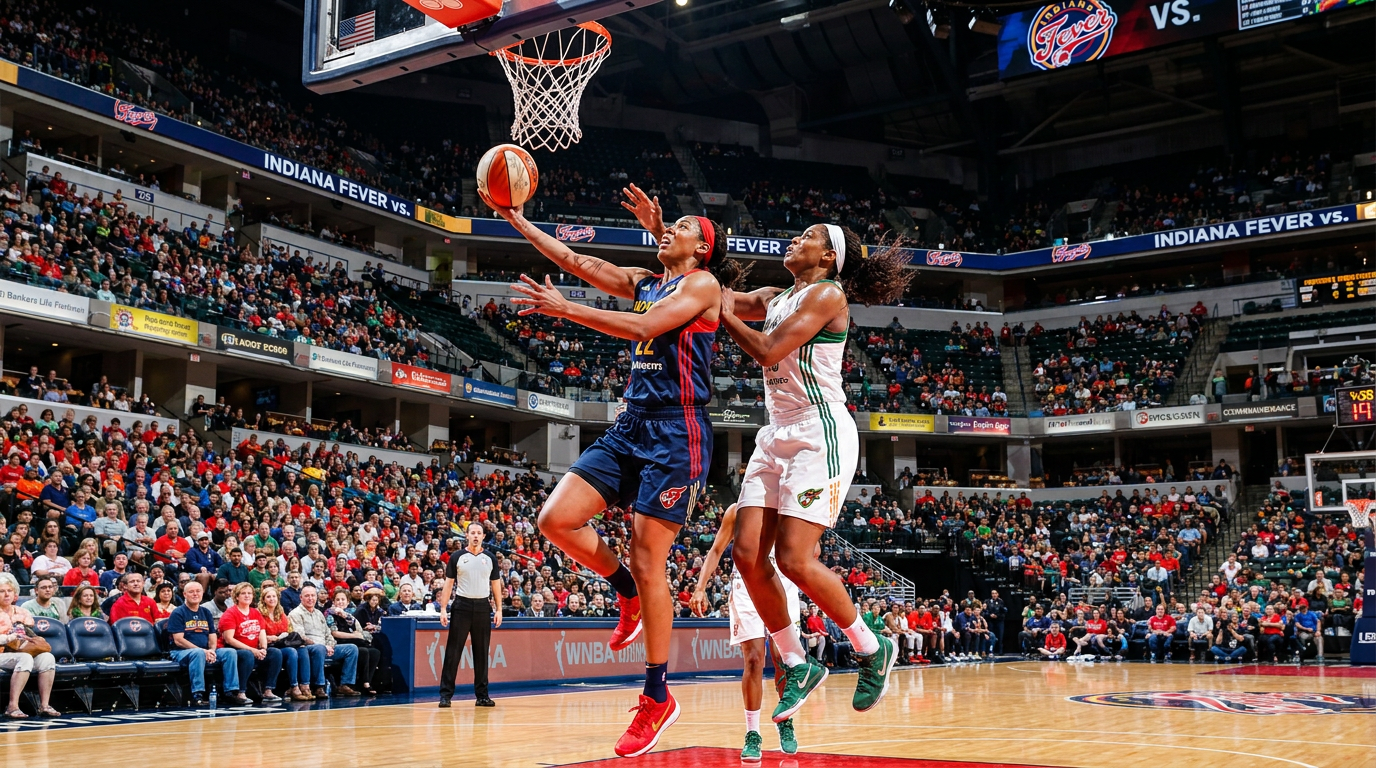
- League Leadership
- Focuses on capitalizing on the cultural momentum of women's basketball and satisfying broadcast partners.
- Players and Coaches
- Welcomes the financial benefits of a longer season while emphasizing the need for deeper rosters to protect player health.
- Sports Business Analysts
- Views the schedule expansion as a mathematical necessity for a league growing to 18 teams and fulfilling multi-billion-dollar media deals.
What's not represented
- · Overseas league executives
- · European club owners
Why this matters
For decades, WNBA players were forced to supplement their incomes by playing overseas during the off-season. A longer, more lucrative domestic schedule fundamentally changes the financial reality of women's professional basketball, establishing the WNBA as a true year-round economic powerhouse.
Key points
- The WNBA will expand its regular season from 44 games to 50 games beginning in 2027.
- The expansion is authorized under the newly ratified Collective Bargaining Agreement, which allows up to 52 games by 2029.
- A longer season provides players with increased compensation, reducing the financial pressure to play in overseas leagues during the winter.
- The schedule increase aligns with the league's broader plan to expand to 18 franchises by 2030.
The Women's National Basketball Association is officially expanding its regular season to 50 games starting in 2027, marking the most significant structural shift in the league's three-decade history. The decision, finalized under a newly ratified Collective Bargaining Agreement, pushes the calendar up from the current 44-game slate played during the ongoing 2026 season. For a league that never played more than 34 games in a season until 2022, the rapid expansion to a half-century mark represents a profound transformation in how women's professional basketball operates on a global scale.[1][2]
The schedule expansion serves as a direct response to the unprecedented surge in viewership, attendance, and cultural relevance the league has experienced over the past two years. WNBA Commissioner Cathy Engelbert framed the milestone as a necessary evolution to meet surging market demand and capitalize on the sport's historic audience growth. 'Demand for the WNBA has never been greater, and expanding to a 50-game regular season reflects the extraordinary momentum we are seeing across the league,' Engelbert stated in the official announcement. She emphasized that the move reflects a long-term commitment to growing the game and creating more opportunities for fans to watch the best players in the world.[1][5]
This schedule increase is the centerpiece of the league's new Collective Bargaining Agreement, which was fiercely negotiated and signed earlier this spring after months of tense discussions. The agreement strictly caps the 2026 season at 44 games, but grants the league the scheduling flexibility to scale up to 50 games for both the 2027 and 2028 seasons. Looking further ahead, the structural shift also includes option elements that permit the regular season to reach an unprecedented 52 games by 2029, ensuring that the league's footprint can continue to grow alongside its revenue.[2][6]

For the players, the expanded schedule represents a fundamental shift in their financial realities. Because player salaries are intrinsically tied to league revenue and the total number of games played, the additional inventory directly translates to higher compensation. Indiana Fever point guard Caitlin Clark welcomed the change, noting that the physical toll of a longer season is offset by the financial upside that players have long fought for. 'We are beginning to get paid more and I think that this increase is something that comes with it,' Clark said, adding that more opportunities to play ultimately benefit the athletes.[3][8]
The financial boost is expected to dramatically reshape the off-season landscape for women's basketball. Historically, a short WNBA season and lower domestic salaries forced many of the league's top stars to play in grueling European or Asian leagues during the winter just to supplement their incomes. With a 50-game schedule that will stretch the WNBA calendar deep into late November, the window for overseas play shrinks significantly. This shift alters the value proposition for athletes, making it far more viable to remain in the United States year-round.[2][4]
The financial boost is expected to dramatically reshape the off-season landscape for women's basketball.
Coaches and executives believe this domestic focus is a massive net positive for player health and long-term league stability. By offering a longer, more lucrative domestic season, players will face far less pressure to compete continuously without a break. 'The hope is that more players just play in the W,' noted one league coach, emphasizing that a true off-season allows athletes to focus on weight training, mental recovery, and skill development rather than immediately boarding a flight to Europe or joining domestic winter leagues like Unrivaled.[2][8]
However, the longer season will force a strategic overhaul of how WNBA teams are constructed and managed. Historically, franchises often carried only 11 players to stay under the salary cap, relying heavily on a tight rotation of seven or eight core contributors to get through the summer. Under the new collective bargaining rules, teams are now required to utilize all 12 of their roster spots. This mandate makes end-of-bench depth a critical component of a championship run, as teams can no longer survive a prolonged campaign with a shallow rotation.[4]

The physical demands of a 50-game slate will undoubtedly test that newfound roster depth. During the 2026 season, teams frequently navigated congested stretches with multiple games on tight 48-hour turnarounds, leading to severe player fatigue and heightened injury risks. Sports medicine staffs and front offices will now have to prioritize load management and long-term physical durability to survive a campaign that extends into the autumn. Star players and local coaches are already evaluating how this rapid scheduling growth alters long-term player longevity.[3][8]
The schedule expansion is also inextricably linked to the league's broader franchise growth strategy. After holding steady at 12 teams for over a decade, the WNBA is currently in the midst of a rapid geographic expansion. By 2030, the league is on track to field 18 teams, with new franchises in Cleveland, Detroit, and Philadelphia preparing to enter the fold over the next four years. A larger league inherently requires a larger scheduling footprint to ensure competitive balance.[2][6]
To accommodate an 18-team league where every franchise must play its 17 opponents multiple times, a longer regular season was an absolute mathematical necessity. The expanded inventory ensures competitive balance across the newly formed conferences and divisions that will inevitably accompany the arrival of expansion teams in Cleveland, Detroit, and Philadelphia. Furthermore, it guarantees that fans in every market will have ample opportunity to see the league's biggest stars roll through their cities, maximizing ticket sales and local revenue during the peak of the sport's popularity.[2][4]

Beyond competitive balance, the 50-game slate satisfies the insatiable demands of the league's broadcast partners. The WNBA recently secured a massive multi-billion-dollar media rights package, and networks are eager for more live game inventory to anchor their programming. The expanded schedule provides broadcast partners like NBC, USA Network, and Amazon Prime with a significantly larger footprint, ensuring that women's basketball remains a dominant fixture on national television from May through November. This increased visibility is expected to drive even higher advertising revenues and sponsorship deals.[3][7]
While the exact footprint and key dates for the 2027 season will be announced later this year, the trajectory of the sport is unmistakably clear. The WNBA is no longer a niche summer league; it is rapidly transitioning into a year-round sports and entertainment juggernaut. Equipped with the financial infrastructure to keep the world's best players competing on American soil, the league is entering the most lucrative and expansive era in the history of women's professional basketball, fundamentally changing the career arc for the next generation of athletes.[1][3]
How we got here
2022
The WNBA plays a 36-game regular season, the longest in league history at the time.
March 2026
The WNBA and the players' union ratify a new Collective Bargaining Agreement, paving the way for schedule expansion.
June 2026
The league officially announces the 50-game schedule for the 2027 season.
Viewpoints in depth
League Leadership
Focuses on capitalizing on the cultural momentum of women's basketball and satisfying broadcast partners.
For league executives, the 50-game schedule is a necessary evolution to satisfy broadcast partners and a rapidly growing fanbase. By expanding the calendar, the WNBA generates the live game inventory required to justify its multi-billion-dollar media rights deals. Leadership views this expansion as the definitive step in transitioning the WNBA from a niche summer attraction into a premier, year-round global sports property.
Players and Coaches
Welcomes the financial benefits of a longer season while emphasizing the need for deeper rosters to protect player health.
Players and coaching staffs largely welcome the expansion due to the direct financial benefits. A longer season means higher salaries, which significantly reduces the economic necessity of playing in grueling overseas winter leagues. However, coaches warn that teams must adapt their strategies; surviving a 50-game campaign requires utilizing all 12 roster spots and prioritizing load management to protect athletes from severe fatigue and injury.
Sports Business Analysts
Views the schedule expansion as a mathematical necessity for a league growing to 18 teams and fulfilling multi-billion-dollar media deals.
Business analysts point out that the schedule expansion is as much a mathematical necessity as it is a cultural milestone. With the league expanding to 18 teams by 2030, a 50-game slate is required to ensure competitive balance across new conferences and divisions. Analysts also highlight that more games create the necessary advertising inventory to drive local ticket sales and national sponsorship revenues to unprecedented heights.
What we don't know
- The exact start and end dates for the 2027 season, though it is expected to extend into late November.
- How European and Asian basketball leagues will adjust their schedules and compensation to attract WNBA talent given the shrinking off-season window.
Key terms
- Collective Bargaining Agreement (CBA)
- A negotiated contract between a sports league and its players' union that dictates rules, salaries, roster sizes, and season length.
- Salary Cap
- The maximum total amount of money a franchise is permitted to spend on player salaries in a single season.
- Load Management
- The practice of strategically resting players during a grueling season to prevent injuries and maintain long-term physical durability.
Frequently asked
When does the 50-game WNBA season start?
The expanded 50-game regular season will officially begin in 2027. The current 2026 season remains capped at 44 games.
Why is the WNBA expanding the schedule?
The league is capitalizing on unprecedented fan demand and fulfilling new broadcast inventory requirements as it expands to 18 teams by 2030.
Will WNBA players still play overseas?
While some may still choose to, the longer domestic season and increased WNBA salaries are designed to reduce the financial necessity of playing in European or Asian winter leagues.
Does this mean teams will need more players?
Yes. Under the new Collective Bargaining Agreement, teams are now required to carry a full 12-player roster, making bench depth more critical than ever.
Sources
Source coverage
8 outlets
3 viewpoints surfaced








[1]WNBA.comLeague Leadership
WNBA Announces Expansion To 50-Game Regular Season
Read on WNBA.com →[2]NBC SportsSports Business Analysts
WNBA expanding to 50 games in 2027 regular season
Read on NBC Sports →[3]Indianapolis RecorderPlayers and Coaches
WNBA expands regular season schedule to 50 games
Read on Indianapolis Recorder →[4]Sports IllustratedSports Business Analysts
WNBA Expands Schedule to 50 Games, Changing the League's Landscape
Read on Sports Illustrated →[5]FOX 9League Leadership
WNBA to increase regular season games
Read on FOX 9 →[6]Just Women's SportsSports Business Analysts
WNBA Expands Schedule From 44 to 50 Games for 2027 Season
Read on Just Women's Sports →[7]Sports Business JournalLeague Leadership
WNBA increasing regular-season schedule to 50 games in 2027
Read on Sports Business Journal →[8]The IX SportsPlayers and Coaches
'It's part of our job': WNBA players and coaches on moving to 50-game schedule
Read on The IX Sports →

More in sports
See all 28 stories →Standings
India Women Capture FIH Nations Cup Title, Securing Triumphant Return to Pro League
7 sources

Transfer Market
Real Madrid Completes Blockbuster Double Signing of Cucurella and Bernardo Silva in Major Summer Spree
6 sources

Injury
EHF Euro 2026 Casualties Update: Jørgensen, Remili, and Martinović Headline Summer Handball Returns
6 sources

Standings
Early Standings at the 2026 Women's U20 Handball World Championship: France Survives Sweden as Austria and Serbia Surge
7 sources
Every angle. Every day.
Get sports stories with full source coverage and perspective breakdowns delivered to your inbox.