
The Invisible Co-Pilot: How Radar and IMUs Are Revolutionizing Motorcycle Safety
Advanced Rider Assistance Systems (ARAS) and 6-axis sensors are transforming motorcycles from purely mechanical machines into smart vehicles capable of preventing crashes before they happen.
By Factlen Editorial Team
- Safety Technologists
- Advocates who believe active electronic intervention is the best way to significantly reduce motorcycle fatalities.
- Professional Riding Coaches
- Instructors who view technology as a valuable backup that cannot replace fundamental hazard awareness.
- Traditionalist Riders
- Motorcyclists who worry that excessive technology dulls the connection between rider and machine.
What's not represented
- · Automotive drivers interacting with ARAS-equipped motorcycles
- · Insurance actuaries calculating the impact of ARAS on premiums
Why this matters
Motorcyclists have historically relied entirely on passive gear and personal skill to survive on the road. The integration of aerospace-grade sensors and radar is fundamentally changing this equation, offering a digital safety net that can prevent crashes before they happen and making riding accessible to a wider audience.
Key points
- Inertial Measurement Units (IMUs) track a motorcycle's pitch, yaw, roll, and acceleration hundreds of times per second.
- Cornering ABS uses IMU data to modulate brake pressure while leaned over, preventing catastrophic low-side crashes.
- Front and rear radar systems now enable adaptive cruise control, blind-spot detection, and emergency brake assist.
- Autonomous airbag suits can detect a crash and fully inflate in 25 milliseconds, faster than human reaction time.
- Experts emphasize that while these systems save lives, they should complement—not replace—fundamental riding skills.
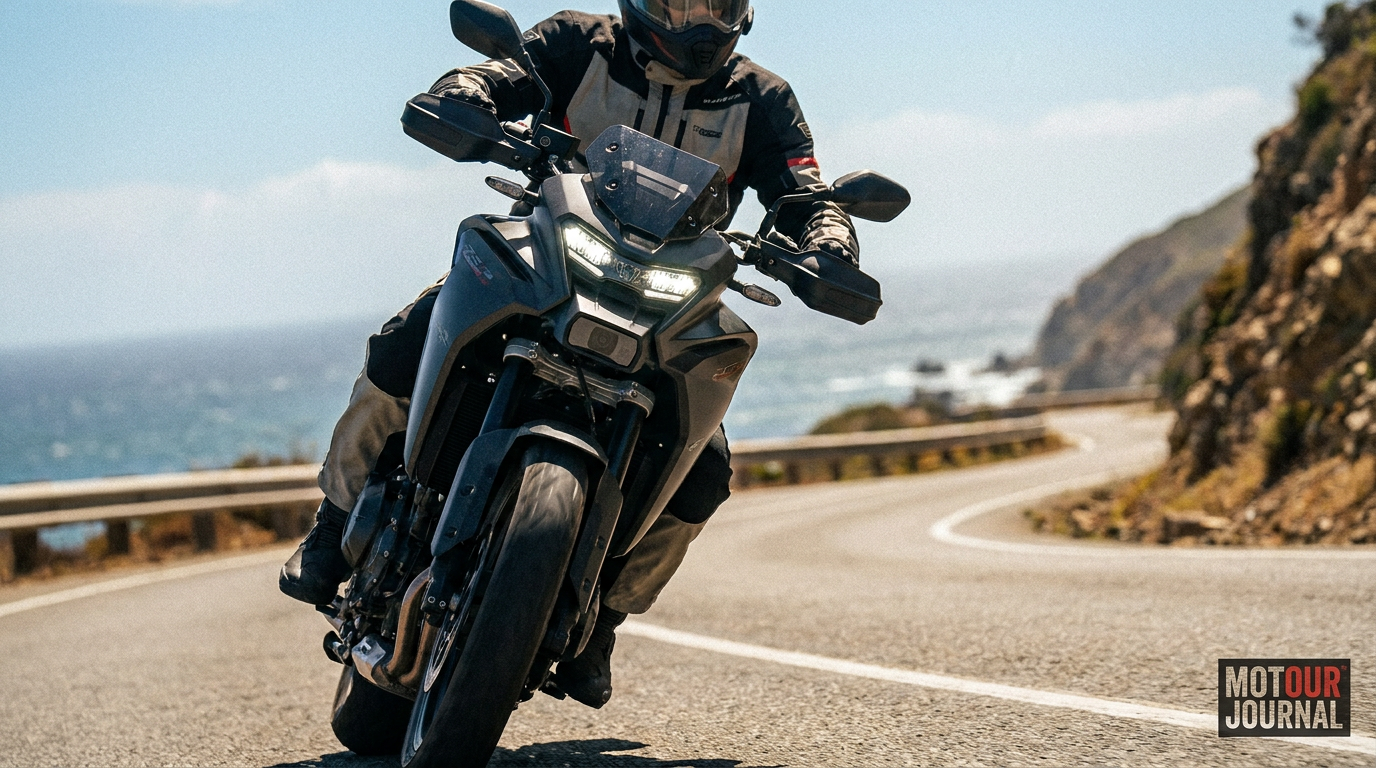
Motorcycling has always been defined by a delicate balance between absolute freedom and inherent vulnerability. For decades, the primary approach to motorcycle safety was entirely passive: riders armored themselves in leather, strapped on helmets, and relied on their own reflexes to navigate a world of distracted drivers and unpredictable road surfaces. If a rider made a mistake, or if a car suddenly merged into their lane, the outcome was dictated by physics and luck. But as we move deeper into 2026, the paradigm is undergoing a radical shift from passive protection to active prevention. Motorcycles are no longer just mechanical engines bolted to a frame; they are gaining a sophisticated digital nervous system designed to intervene before a crash occurs.[7][8]
The foundation of this active safety revolution is a piece of technology smaller than a deck of playing cards: the Inertial Measurement Unit, commonly known as an IMU. Originally developed for aerospace and guided munitions, the IMU is a suite of microscopic gyroscopes and accelerometers that measures a motorcycle's movement across six distinct axes. It tracks pitch (front-to-back tilt), yaw (left-to-right rotation), and roll (lean angle), alongside acceleration in three-dimensional space. By feeding this constant stream of telemetry into the bike's Engine Control Unit (ECU) hundreds of times per second, the motorcycle possesses a real-time, mathematical understanding of its exact position and dynamic state.[6][7]

This profound spatial awareness enables what is arguably the single greatest leap in modern motorcycle safety: Cornering Anti-lock Braking Systems (Cornering ABS). Traditional ABS, which prevents wheel lock-up during hard braking, works exceptionally well when a motorcycle is traveling in a straight line. However, the physics of a motorcycle change dramatically when it leans into a turn. If a rider panics and grabs a handful of front brake mid-corner, traditional ABS cannot account for the lateral forces at play. The result is almost always a catastrophic loss of front-wheel traction, causing the bike to instantly wash out from under the rider in what is known as a low-side crash.[3][6]
Cornering ABS fundamentally rewrites the physics of panic braking. When a rider applies the brakes while leaned over, the IMU instantly communicates the exact lean angle to the ECU. The system's algorithms then calculate the precise amount of hydraulic brake pressure the tires can handle without exceeding their lateral grip limit. It modulates the braking force seamlessly, allowing the rider to scrub off speed rapidly while maintaining their intended line through the curve. For street riders who might encounter unexpected gravel, a decreasing-radius turn, or a stalled vehicle mid-corner, this technology provides an unprecedented safety net that keeps the rubber on the road.[3][7]

While the IMU acts as the motorcycle's inner ear for balance, advanced radar technology is finally giving motorcycles eyes. Advanced Rider Assistance Systems (ARAS), which have been standard in luxury automobiles for years, are now being miniaturized and adapted for the unique dynamics of two-wheeled travel. Companies like Bosch have developed highly compact, lightweight radar units that mount discreetly to the front and rear of the motorcycle. These sensors constantly scan the surrounding environment, tracking the speed, distance, and trajectory of multiple vehicles simultaneously, effectively creating a 360-degree digital safety bubble around the rider.[1][2]
The rear-facing radar unit powers one of the most practical daily safety features: Blind Spot Detection. When wearing a full-face helmet and heavy protective gear, a motorcyclist's peripheral vision and ability to physically turn their head are significantly restricted. The rear radar monitors the lanes adjacent to the motorcycle and illuminates a bright LED warning light integrated into the rearview mirrors if a vehicle is lurking just out of sight. If the rider activates their turn signal while a vehicle is in the blind spot, the system flashes urgently, preventing high-speed lane-change collisions that are notoriously common on crowded highways.[1][8]

The rear-facing radar unit powers one of the most practical daily safety features: Blind Spot Detection.
Meanwhile, the front-facing radar powers Adaptive Cruise Control (ACC), a feature that is transforming long-distance motorcycle touring. Once the rider sets a desired speed, the front radar locks onto the vehicle ahead and automatically adjusts the motorcycle's throttle and brakes to maintain a safe, pre-selected following distance. The latest iterations of this technology even feature stop-and-go functionality. In heavy traffic, the motorcycle can bring itself to a complete, controlled halt without the rider touching the brakes, and resume speed with a simple tap of a button or a slight twist of the throttle, drastically reducing physical and mental fatigue.[1][2]
Beyond convenience, the front radar serves as a critical, split-second lifesaver through Forward Collision Warning and Emergency Brake Assist. If the radar detects that the motorcycle is closing in on a stationary or rapidly decelerating vehicle too quickly, it issues a visual and acoustic warning to the rider. If the rider initiates braking but fails to apply enough pressure to avoid the impact—a common human error in panic situations—the Emergency Brake Assist system actively boosts the hydraulic pressure to maximize stopping power. Bosch's accident research estimates that the widespread adoption of these radar-based systems could prevent one in seven motorcycle accidents globally.[1][2]
The technological revolution is not confined to the motorcycle itself; wearable safety gear is evolving in tandem to create a holistic protection ecosystem. The most significant advancement in this space is the autonomous electronic airbag suit. Manufacturers have integrated miniaturized IMUs directly into riding jackets and full leather suits. These wearable computers run complex machine-learning algorithms trained on thousands of real-world crash scenarios. They continuously monitor the rider's posture and motion, completely independent of the motorcycle's onboard systems.[5]
When the wearable IMU detects the specific physical signature of an impending crash—such as a sudden high-side ejection or a violent impact—it triggers compressed gas canisters that inflate a protective airbag in as little as 25 milliseconds. This deployment is faster than the human nervous system can even register the event. The inflated bladder provides rigid, shock-absorbing protection across the rider's collarbones, shoulders, chest, and spine, drastically reducing the severity of blunt-force trauma. As of 2026, these systems have become lighter, more breathable, and significantly more affordable for everyday commuters.[5]

Smart helmets are also making the leap from ambitious prototypes to reliable production gear. By integrating transparent Heads-Up Displays (HUDs) directly into the visor, these helmets project crucial information—such as GPS navigation, speed, and radar-based blind-spot warnings—into the rider's line of sight. This eliminates the need for the rider to look down at their dashboard, keeping their eyes focused entirely on the road ahead. High-end models now feature integrated rear-facing cameras that stitch together a 240-degree rearview image, further eliminating blind spots and enhancing situational awareness.[5]
Despite the undeniable statistical benefits of these technologies, their rapid proliferation has sparked a philosophical debate within the motorcycling community. Purists and traditionalists argue that an over-reliance on electronic safety nets could erode fundamental riding skills. They express concern that riders might become complacent, trusting the IMU and radar to save them rather than developing the proactive hazard perception and precise mechanical control that have historically defined proficient motorcycling. The fear is that technology might insulate the rider from the raw, analog connection to the machine and the road.[4][7]
However, safety experts and professional riding coaches offer a more nuanced perspective. They emphasize that technology should be viewed as an ally, not a master. Cornering ABS and radar do not replace the need for proper training, deliberate practice, and acute situational awareness. Instead, they provide a crucial margin of error when the unpredictable happens—a patch of invisible black ice, a deer leaping into the road, or a distracted driver running a red light. Ultimately, the integration of these advanced systems is making motorcycling more accessible and significantly safer, ensuring that the inherent thrill of the ride doesn't have to come at the expense of survival.[4][8]
How we got here
1988
The first production motorcycle equipped with a basic Anti-lock Braking System (ABS) is introduced to the market.
2015
Cornering ABS, powered by early IMU technology, makes its debut on flagship production motorcycles.
2020
The first motorcycles equipped with front and rear radar for adaptive cruise control and blind-spot detection hit showrooms.
2026
Advanced stop-and-go radar, emergency brake assist, and affordable autonomous airbag suits become widely available.
Viewpoints in depth
Safety Technologists
Advocates who believe active electronic intervention is the only way to significantly reduce motorcycle fatalities.
This camp, which includes engineers from companies like Bosch and Continental, argues that human error is the unavoidable root cause of most motorcycle accidents. Because human reaction times are biologically capped, and panic often leads to incorrect control inputs (like grabbing too much front brake), they believe the motorcycle itself must be capable of intervening. They point to data showing that ARAS and Cornering ABS can prevent up to one in seven crashes, arguing that these systems should become mandatory standard equipment on all new motorcycles, much like seatbelts and airbags in cars.
Traditionalist Riders
Motorcyclists who worry that excessive technology dulls the connection between rider and machine.
Traditionalists express concern that the proliferation of radar, IMUs, and automated braking systems fundamentally changes the nature of motorcycling. They argue that the appeal of riding lies in its raw, analog requirement for absolute focus and mechanical mastery. This camp fears a phenomenon known as 'risk compensation,' where riders might subconsciously ride faster or pay less attention to their surroundings because they believe the electronic safety net will save them. They advocate for prioritizing advanced rider training over expensive electronic aids.
Professional Riding Coaches
Instructors who view technology as a valuable backup that cannot replace fundamental skills.
Riding coaches occupy the middle ground, welcoming the life-saving potential of Cornering ABS and airbag suits while cautioning against over-reliance. They teach that technology should be treated as a last-resort safety net, not a tool to be actively leaned on during everyday riding. A rider should still practice proper trail braking, proactive hazard scanning, and defensive lane positioning. In their view, the ideal modern motorcyclist combines the hyper-awareness of a traditional rider with the split-second mechanical advantages of a digitally equipped machine.
What we don't know
- How quickly advanced radar systems will trickle down from premium touring models to affordable, entry-level motorcycles.
- Whether the widespread adoption of ARAS will lead to 'risk compensation' behavior, where riders take greater risks assuming the technology will save them.
- How insurance companies will adjust premiums for motorcycles equipped with comprehensive electronic safety suites.
Key terms
- Inertial Measurement Unit (IMU)
- An electronic sensor suite that tracks a motorcycle's acceleration and rotational movements across multiple axes to determine its exact position and lean angle.
- Advanced Rider Assistance Systems (ARAS)
- A collection of radar- and camera-based safety features, such as adaptive cruise control and blind-spot detection, designed to help riders avoid collisions.
- Low-side crash
- A common motorcycle accident where the front or rear tire loses lateral traction in a corner, causing the bike to slide out from under the rider.
- Cornering ABS
- An advanced braking system that uses lean-angle data to modulate hydraulic brake pressure mid-corner, preventing the wheels from locking up while turning.
Frequently asked
What does an IMU do on a motorcycle?
An IMU measures the motorcycle's pitch, yaw, roll, and acceleration. It feeds this data to the bike's computer, allowing safety systems like Cornering ABS to know exactly how far the bike is leaned over.
How is Cornering ABS different from regular ABS?
Regular ABS prevents wheel lock-up when braking in a straight line. Cornering ABS uses lean-angle data to safely modulate brake pressure while the motorcycle is turning, preventing the front tire from washing out.
Do airbag suits need to be attached to the motorcycle?
No. Modern autonomous airbag suits use their own built-in sensors and batteries to detect a crash and deploy instantly, without requiring a physical tether to the motorcycle.
Can I add radar to an older motorcycle?
Yes. Several aftermarket companies now offer bolt-on rear radar systems that provide blind-spot detection warnings for motorcycles that didn't come with factory-installed ARAS.
Sources
Source coverage
8 outlets
3 viewpoints surfaced








[1]Bosch MobilitySafety Technologists
Advanced rider assistance systems (ARAS)
Read on Bosch Mobility →[2]Cycle WorldProfessional Riding Coaches
Testing Bosch's Latest Advanced Rider Assistance Systems
Read on Cycle World →[3]Top SpeedSafety Technologists
Cornering ABS Explained: The Tech That Saves You From Low-Side Crashes
Read on Top Speed →[4]BennettsProfessional Riding Coaches
Does Motorcycle Tech Make Us Better Riders?
Read on Bennetts →[5]Bike N RiderSafety Technologists
The Future of Motorcycle Safety Gear: Innovations to Watch in 2026
Read on Bike N Rider →[6]MotoFomoProfessional Riding Coaches
Cornering ABS and IMUs on Motorcycles Explained
Read on MotoFomo →[7]Asphalt & RubberTraditionalist Riders
Behold the IMU: The Little Device Driving the Current Trend in Electronic Rider Aids
Read on Asphalt & Rubber →[8]Factlen Editorial Team
Synthesis by Factlen editorial team
Read on Factlen Editorial Team →
Every angle. Every day.
Get automotive stories with full source coverage and perspective breakdowns delivered to your inbox.