
The First Human Trials to Reverse Cellular Aging Have Quietly Begun
The FDA has approved the first human clinical trials for partial epigenetic reprogramming, a gene therapy designed to rewind the biological clock of cells and restore lost vision.
By Factlen Editorial Team
- Longevity Researchers
- View aging as a reversible disease caused by epigenetic data loss, believing that cellular reprogramming is the ultimate cure.
- Clinical Skeptics
- Emphasize the severe risks of tumor formation (teratomas) and caution that mouse models rarely translate perfectly to human efficacy.
- Biotech Industry
- Focus on the commercialization of healthspan extension, investing heavily in AI and small-molecule alternatives to viral gene therapies.
What's not represented
- · Healthcare Economists
- · Patient Advocacy Groups for Glaucoma
Why this matters
If successful, this technology will fundamentally shift medicine from treating the symptoms of age-related diseases to reversing the underlying cellular decay that causes them. Extending human healthspan by even a few years would reshape global economics, workforce dynamics, and the burden on healthcare systems.
Key points
- The FDA has approved the first human trial (ER-100) for partial epigenetic reprogramming.
- The therapy targets glaucoma and NAION by delivering three Yamanaka factors to the eye.
- Preclinical animal trials successfully restored vision and reversed cellular aging markers by up to 75%.
- The primary clinical risk is ensuring cells do not fully revert to stem cells, which can cause tumors.
- Researchers are also developing small-molecule chemical cocktails as an alternative to viral gene therapy.
For decades, the biological aging process was considered a one-way street—an inevitable accumulation of cellular damage that could, at best, be slowed. In early 2026, the U.S. Food and Drug Administration quietly crossed a Rubicon, approving the first human clinical trials for a gene therapy designed not just to halt disease, but to actively reverse the biological age of human cells.[1][7]
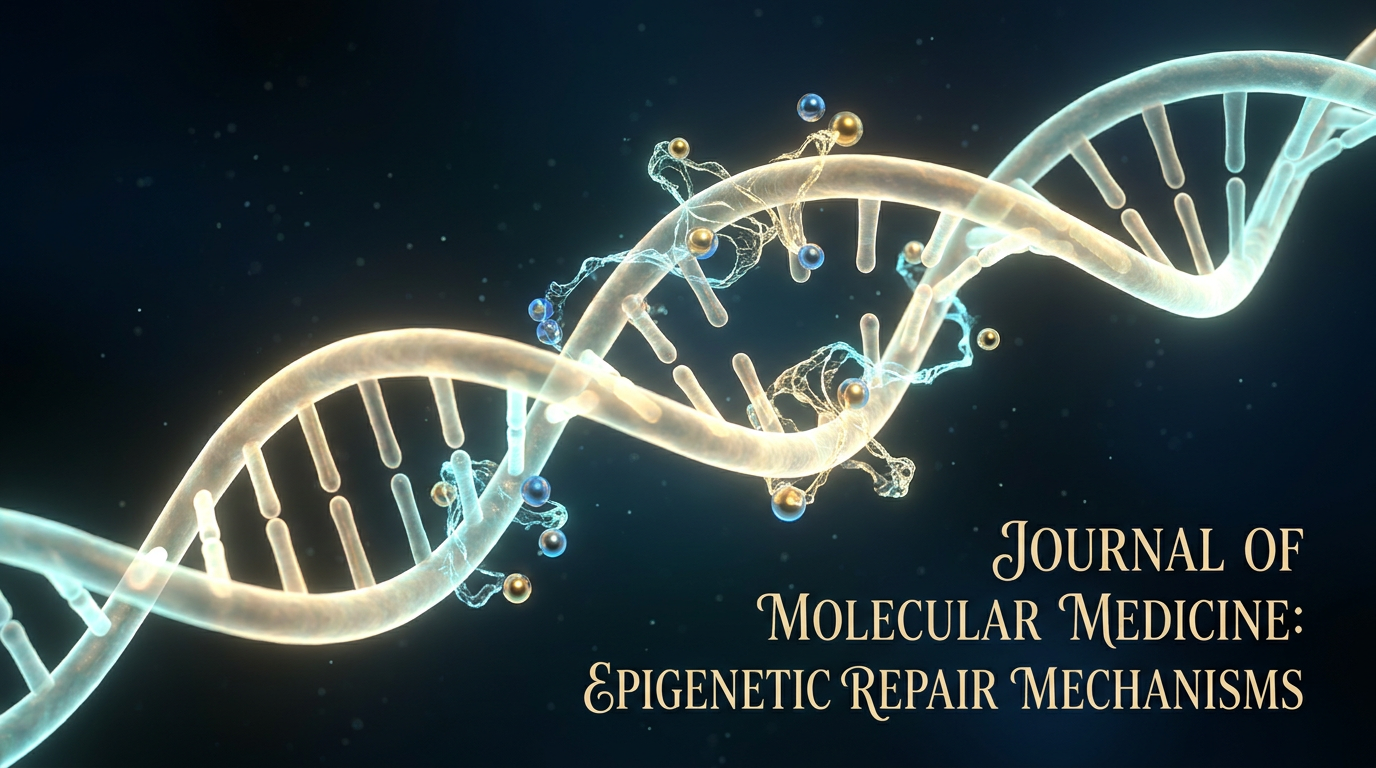
The trial, designated ER-100 and spearheaded by the biotechnology company Life Biosciences, targets two severe eye conditions: glaucoma and non-arteritic anterior ischemic optic neuropathy (NAION). While the immediate goal is restoring vision, the underlying mechanism being tested is "partial epigenetic reprogramming"—a technique that modifies the chemical tags on DNA to make old cells act young again.[1][6]
To understand the evidence behind this breakthrough, it is necessary to distinguish the genome from the epigenome. If the genome is the hardware of a computer, the epigenome is the software. Over time, environmental stress, radiation, and normal cellular division cause the epigenome to accumulate errors. The "Information Theory of Aging," championed by Harvard geneticist David Sinclair, posits that aging is simply the loss of this epigenetic information; cells forget how to function correctly.[1][2]

The ER-100 therapy attempts to reboot that software. It relies on delivering three specific proteins—a subset of the Nobel Prize-winning "Yamanaka factors"—into the cells of the eye via an adeno-associated virus (AAV) vector. These factors act as molecular polish, stripping away the accumulated epigenetic errors and resetting the cell's biological clock.[1][7]
The preclinical evidence supporting this approach is remarkably strong. In 2020, researchers successfully used this exact three-factor technique to restore vision in mice with crushed optic nerves—a feat previously thought impossible in adult mammals. Subsequent animal studies have demonstrated the ability to reverse aging markers in multiple tissues by up to 75 percent within weeks, effectively curing blindness in older animal models.[2][7]
However, translating these results from mice to humans carries profound uncertainties. The primary risk lies in the word "partial." If cells are fully reprogrammed, they revert entirely to pluripotent stem cells. While youthful, a stem cell in the retina forgets it is supposed to be a retinal cell. Worse, fully reprogrammed cells can grow uncontrollably, forming tumors known as teratomas.[1][7]
However, translating these results from mice to humans carries profound uncertainties.
Life Biosciences' technique deliberately stops short of full conversion. By carefully controlling the dosage and duration of the Yamanaka factors, the therapy aims to rejuvenate the cells without erasing their identity. The FDA's primary focus for the Phase 1 trial is rigorously testing this safety threshold in humans, ensuring the therapy does not trigger oncogenic (cancer-causing) activity.[1][6]
While viral gene therapy leads the clinical charge, alternative methods are rapidly emerging in the laboratory. Recent papers in peer-reviewed journals highlight the development of small-molecule chemical cocktails capable of resetting epigenetic clocks without the need for genetic manipulation. These chemical approaches target specific cellular signaling pathways, such as the Wnt pathway, offering a potentially more scalable and tunable "dial" for cellular rejuvenation compared to the "hard switch" of viral gene therapy.[3][7]
The broader biotechnology sector is heavily capitalized for this shift. Companies like Altos Labs and Clock.bio are utilizing artificial intelligence and multi-omics data to identify optimal reprogramming factors and senolytic compounds—drugs that clear out dead or "zombie" cells. This convergence of AI-driven drug discovery and epigenetic science is accelerating the pipeline of longevity therapeutics.[4][5]

The economic stakes of this research are staggering. Speaking at the 2026 World Governments Summit in Dubai, Sinclair noted that extending the healthy human lifespan by just one year could generate an estimated $38 trillion in economic value in the United States alone, primarily by keeping older populations active, productive, and out of expensive chronic care.[2][7]
Despite the optimism, significant gaps in the evidence remain. It is entirely unknown how long the rejuvenating effects of partial reprogramming will last in humans. Will the newly youthful cells maintain their state, or will they rapidly re-age once the therapy concludes? Furthermore, delivering these therapies to complex, deep-tissue organs like the heart or brain remains a formidable logistical challenge.[7]

The eye was chosen for the first human trials precisely because it is an isolated, easily accessible compartment where the immune system is highly regulated. If the ER-100 trial proves safe and effective, researchers plan a staged expansion. The long-term vision involves targeting hearing loss, liver disease, muscle atrophy, and neurodegenerative conditions, moving indication by indication toward multi-organ cellular rejuvenation.[1][6]
For now, the longevity field watches the ER-100 trial closely. It represents the first definitive test of whether the Information Theory of Aging can be actioned in humans. The results, expected to trickle out over the next two years, will determine whether aging remains a biological inevitability or becomes a treatable medical condition.[1][2][7]
How we got here
2006
Shinya Yamanaka discovers the four transcription factors capable of turning adult cells into stem cells, later winning the Nobel Prize.
2020
David Sinclair's Harvard lab successfully uses three Yamanaka factors to restore vision in mice with crushed optic nerves.
Early 2026
The FDA approves the ER-100 Phase 1 clinical trial, marking the first human test of partial epigenetic reprogramming.
Viewpoints in depth
Longevity Researchers
Scientists who view aging as a treatable condition rather than an inevitable decline.
This camp, heavily influenced by the Information Theory of Aging, argues that cellular decay is primarily a software problem. By proving that the epigenome can be safely reset in humans, they believe medicine can move away from playing 'whack-a-mole' with individual age-related diseases (like Alzheimer's or heart disease) and instead treat the root cause. They point to the dramatic 75% reversal of aging markers in animal models as proof that biological age is highly plastic.
Clinical Skeptics
Medical ethicists and traditional biologists urging extreme caution regarding the leap to human trials.
Skeptics emphasize the razor-thin margin of error in epigenetic reprogramming. If the Yamanaka factors are expressed for even slightly too long, the cells lose their identity and can form teratomas—complex tumors containing multiple tissue types. They argue that while the eye is a relatively safe, contained environment for a Phase 1 trial, systemic rejuvenation therapies carry catastrophic risks if the reprogramming process cannot be perfectly controlled in every organ.
Biotech Industry
Investors and pharmaceutical developers focused on the commercialization of healthspan extension.
The biotechnology sector views longevity as the next multi-trillion-dollar market. While viral gene therapies like ER-100 are pioneering the space, industry leaders are heavily funding alternative approaches, such as small-molecule chemical reprogramming and AI-optimized senolytics. Their goal is to develop scalable, non-invasive therapies—like a daily pill—that can achieve the same epigenetic reset without the immense costs and risks associated with viral vector delivery.
What we don't know
- How long the rejuvenating effects of the therapy will last in human cells before they begin to age again.
- Whether partial reprogramming can be safely delivered to complex, deep-tissue organs like the heart or brain without triggering cancer.
- If the small-molecule chemical alternatives currently in lab testing will prove as effective as viral gene therapies in humans.
Key terms
- Epigenome
- A multitude of chemical compounds and proteins that attach to DNA and direct its actions, turning genes on or off.
- Yamanaka Factors
- A group of four protein transcription factors (often abbreviated OSKM) that can convert adult cells back into pluripotent stem cells.
- Pluripotency
- The ability of a stem cell to develop into any of the different cell types that make up the body.
- Adeno-associated virus (AAV)
- A harmless virus engineered by scientists to act as a delivery vehicle, carrying therapeutic genes directly into human cells.
- Senolytics
- A class of drugs designed to selectively clear out senescent (aging, non-dividing) cells from the body.
Frequently asked
What is epigenetic reprogramming?
It is a technique that modifies the chemical tags (the epigenome) on top of DNA, effectively resetting a cell's biological clock to a more youthful state without changing the underlying genetic code.
Why is the therapy called 'partial' reprogramming?
If cells are fully reprogrammed, they revert into stem cells, losing their specific function and potentially forming tumors. 'Partial' reprogramming rejuvenates the cell while allowing it to remember its identity.
Is this the same technology as CRISPR?
No. CRISPR acts like molecular scissors to cut and edit the actual DNA sequence. Epigenetic reprogramming leaves the DNA sequence intact, acting more like a chemical wash that removes age-related errors.
When will this treatment be available to the public?
The therapy is currently in Phase 1 clinical trials, which primarily test for safety. If successful, it will likely be several years before it receives full FDA approval for widespread use.
Sources
Source coverage
7 outlets
3 viewpoints surfaced






[1]NAD.comLongevity Researchers
FDA Greenlights Life Biosciences' Human Study, Setting Up Pivotal Test for Aging Theory
Read on NAD.com →[2]World Governments SummitLongevity Researchers
Ageing could soon be treated as a medical condition rather than an inevitable part of life
Read on World Governments Summit →[3]Stem Cells Translational MedicineBiotech Industry
Molecular time machines unleashed: small-molecule-driven reprogramming to reverse the senescence
Read on Stem Cells Translational Medicine →[4]MDIHABiotech Industry
Emergence of Transformative Therapies for Longevity
Read on MDIHA →[5]Live ScienceBiotech Industry
Medicine stands at the precipice of an exciting new era
Read on Live Science →[6]Synthetic Biology SummitLongevity Researchers
Translating Breakthrough Research into the Clinic: The ER-100 Trial
Read on Synthetic Biology Summit →[7]Factlen Editorial TeamClinical Skeptics
Synthesis by Factlen editorial team
Read on Factlen Editorial Team →

Every angle. Every day.
Get science stories with full source coverage and perspective breakdowns delivered to your inbox.