
The Measurement Breakthrough Unlocking 'Rock Dust' Carbon Capture on Global Farmlands
Enhanced rock weathering—spreading crushed basalt on farmland to absorb CO2—has long been a promising but hard-to-measure climate solution. A new soil-sampling breakthrough and expanding global field trials are finally providing the hard evidence needed to scale the technology.
By Factlen Editorial Team
- Climate Verifiers
- Focuses on the rigorous measurement and permanence of the carbon sink.
- Agricultural Sector
- Focuses on the agronomic co-benefits of applying rock dust to farmland.
- Logistics & Economics Analysts
- Highlights the high upfront costs and energy requirements of moving millions of tons of rock.
What's not represented
- · Marine biologists monitoring the long-term impact of increased ocean alkalinity.
- · Local communities living near the rock mining and crushing facilities.
Why this matters
If scientists can accurately measure how much carbon crushed rocks pull from the air, farmers can be paid reliably for carbon credits. This turns global agriculture into a massive, permanent carbon sink while simultaneously boosting crop yields and reducing fertilizer use.
Key points
- Enhanced rock weathering accelerates a natural geological process to permanently lock away carbon dioxide.
- A new extraction tool called SAT-C allows scientists to measure carbon removal even in dry soils.
- Accurate measurement is unlocking verified carbon credits, providing a new revenue stream for farmers.
- Basalt dust acts as a natural fertilizer, improving crop yields and neutralizing acidic soils.
- Startups are using residual rock dust from existing mines to minimize the carbon footprint of the supply chain.
The Earth possesses a built-in, geological thermostat, but it operates at a glacial pace. When rainwater falls through the atmosphere, it naturally binds with ambient carbon dioxide to become slightly acidic. As this rain hits the ground and washes over silicate rocks, a chemical reaction occurs that converts the dissolved carbon into stable bicarbonates. These bicarbonates eventually wash into watersheds and flow into the ocean, where the carbon remains safely locked away. This natural weathering process has regulated the planet's climate for billions of years, but it is far too slow to offset the rapid accumulation of modern industrial emissions.[2][7]
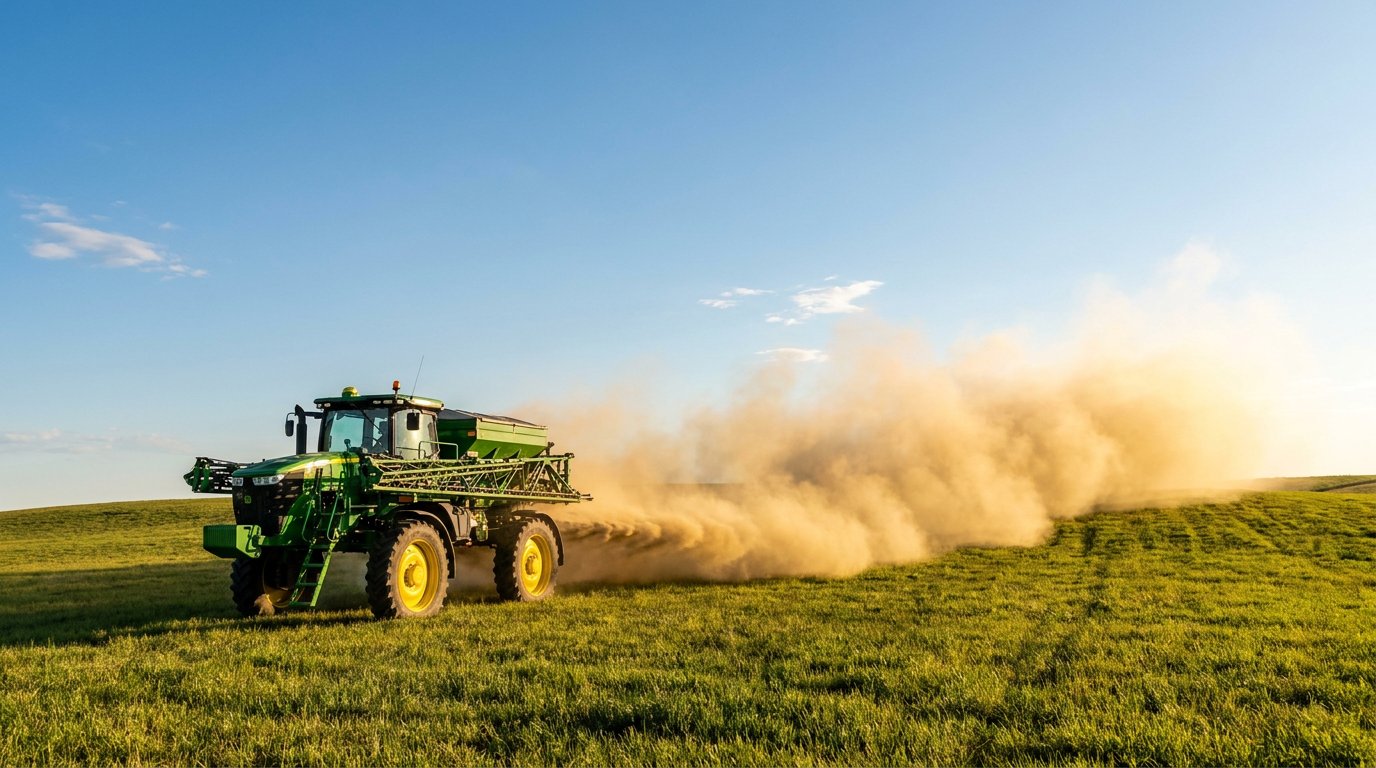
Enter Enhanced Rock Weathering (ERW)—a highly promising climate intervention that accelerates this ancient natural cycle by crushing rocks like basalt into a fine dust and spreading them across vast tracts of agricultural land. By exponentially increasing the surface area of the rock exposed to rain and air, ERW compresses thousands of years of carbon removal into just a few growing seasons. The resulting carbon sink is virtually permanent, locking away carbon dioxide for over 10,000 years with almost zero risk of reversal. This durability is critical for climate mitigation, as traditional approaches that rely on organic carbon sinks, such as planting forests, are increasingly vulnerable to storage failure from wildfires, disease, or land-use changes.[2][7]

Despite its theoretical elegance and geological soundness, Enhanced Rock Weathering has historically faced a massive logistical bottleneck: accurate measurement. To sell carbon credits and fund the heavy machinery required for the operation, project developers must prove exactly how much carbon has been sequestered. Tracking invisible chemical reactions in open agricultural fields is notoriously difficult, requiring precise accounting of environmental variables across diverse soil types and weather conditions. Without rigorous Monitoring, Reporting, and Verification (MRV) protocols, the commercialization of this approach has been severely hindered, leaving buyers skeptical of the actual climate impact of their investments.[1][2]
Traditional measurement methods rely heavily on extracting soil porewater—the microscopic moisture trapped between dirt particles—to measure bicarbonate alkalinity and dissolved cations like calcium, magnesium, sodium, and potassium. These chemical markers act as a proxy for carbon dioxide removal, allowing researchers to interpret the progression of the weathering process and distinguish how much of the weathering actually contributed to carbon drawdown. However, this extraction depends entirely on natural soil moisture. During dry periods or droughts, which are becoming more frequent globally, data collection stalls completely. This creates unacceptable gaps in the long-term monitoring required by strict carbon markets, limiting the deployment of ERW in arid regions.[1]
In June 2026, a major technological breakthrough addressed this critical limitation. The carbon removal company UNDO unveiled SAT-C, short for SATuration-Centrifugation, a proprietary and patent-pending technique designed to extract porewater even in dry, compacted soils. Utilizing a specialized battery-powered auger, the tool uses soil friction to break through dry earth while preserving the underlying soil structure and minimizing land impact. This engineering advancement reduces soil sampling time by an impressive 70 percent and cuts the associated emissions of the monitoring process by 90 percent. More importantly, it provides the reliable, year-round data necessary to satisfy strict verification protocols, moving ERW from a theoretical model to a highly quantifiable climate solution.[1]

The timing of this measurement breakthrough coincides with a surge of large-scale field trials worldwide, aimed at validating the technology across different climates and agricultural contexts. In Australia, a massive consortium led by James Cook University is currently running extensive trials across banana, avocado, cotton, dairy, and grain farms. These trials, highlighted at a major symposium and field visit in Cairns and Mareeba in late June 2026, are designed to identify pathways for responsible, large-scale implementation across diverse cropping systems. By bringing together national and international researchers, growers, and climate practitioners, the initiative aims to transition ERW from isolated pilot projects into a mainstream land management practice.[3]
In Australia, a massive consortium led by James Cook University is currently running extensive trials across banana, avocado, cotton, dairy, and grain farms.
Crucially, these field trials are not just focused on carbon sequestration; they are heavily invested in proving the agricultural co-benefits of the process. Basalt dust acts as a natural, slow-release fertilizer, releasing essential nutrients as it breaks down in the soil. Agronomists are finding that this rock dust can effectively neutralize acidic soils, improve overall crop yields, and build plant resistance against pests and diseases. For farmers operating on tight margins, these agronomic benefits are the primary incentive to participate. By rejuvenating degraded agricultural soils and reducing the reliance on expensive synthetic fertilizers, ERW offers a rare alignment of climate action and agricultural productivity.[3][4]

The financial ecosystem required to support this dual-purpose technology is also maturing rapidly. In early 2025, the industry witnessed a major milestone with the first-ever delivery of verified ERW carbon removal credits. Developed by the climate tech company InPlanet and verified by Isometric's rigorous protocols, these credits proved that it is possible to conduct scientifically rigorous monitoring on open-system carbon removal pathways. This achievement raised the bar for quality across the voluntary carbon market, demonstrating to corporate buyers that ERW credits represent genuine, permanent carbon removal rather than accounting tricks or temporary storage solutions.[2]
To ensure high integrity, organizations like Puro.earth have established strict methodologies that require third-party auditors to measure environmental stressors and emissions at every single step of the ERW process. This life-cycle accounting is absolutely crucial because the process of enhanced rock weathering is not entirely emissions-free. The operation requires heavy machinery to mine the rock, energy-intensive mills to crush it into a fine powder, and diesel trucks to transport it to rural farmlands. For an ERW project to be viable, the gross amount of carbon captured from the atmosphere must significantly outweigh the operational carbon footprint generated by its own supply chain.[4][5]
To minimize this operational footprint, innovative startups are optimizing the supply chain by utilizing waste products. Companies like Germany's ZeroEx are sourcing residual silicate rock dust from existing industrial operations and quarries. By repurposing a byproduct that would otherwise sit in a tailings pile, these companies can bypass the massive energy emissions associated with new mining operations. This circular economy approach turns an industrial waste stream into a valuable climate asset, maximizing the net carbon removed and significantly improving the overall techno-economic viability of the carbon credits being sold to corporate buyers.[4][6]
While independent evaluators like Project Drawdown classify enhanced rock weathering as a highly plausible and promising climate solution, they maintain a cautious outlook regarding its immediate scalability. They note that the effectiveness of carbon removal can be unpredictable depending on local soil chemistry, rainfall patterns, and temperature. Furthermore, the sheer logistical cost of moving millions of tons of heavy rock dust across continents remains a formidable economic hurdle that the industry must overcome. Until transport networks are fully electrified or localized supply chains are established, the high costs will likely restrict deployment to regions situated close to existing quarries and basalt deposits.[5]
Nevertheless, if these logistical and measurement challenges continue to be solved by innovations like the SAT-C auger, the scale of the opportunity is staggering. Because the resources required are globally abundant and the spreading technology already exists on most commercial farms, the potential for rapid scaling is immense. A recent study suggested that extensive deployment of enhanced rock weathering on United States agricultural lands alone could sequester up to 0.30 gigatons of carbon dioxide annually by 2050. When extrapolated to the vast agricultural expanses of Brazil, India, and Australia, the global impact could fundamentally alter the trajectory of atmospheric carbon concentrations.[1][4][5]

Beyond voluntary carbon markets, policymakers are beginning to take notice of ERW's potential to help meet binding national climate targets. In Australia, the national science agency CSIRO recently highlighted enhanced rock weathering as a critical novel technology in its Carbon Dioxide Removal Roadmap. By integrating ERW into national carbon accounting frameworks, governments could eventually subsidize the application of rock dust, treating it as a public utility service for atmospheric cleanup rather than relying solely on private corporate purchases. This policy shift would dramatically accelerate adoption, providing farmers with government-backed financial incentives to transition their land management practices toward climate-smart agriculture.[3][7]
Ultimately, the success of enhanced rock weathering hinges on its ability to serve two masters: the global climate and the local farmer. By providing a permanent, verifiable carbon sink that simultaneously enriches the soil, ERW bypasses the traditional trade-offs between environmental conservation and agricultural output. As the science of measurement catches up to the ancient geology of weathering, this technology is poised to transform the world's working farmlands into one of the most durable and scalable climate solutions on the planet. With robust verification now possible, the flow of carbon finance can finally reach rural communities, incentivizing a practice that heals the atmosphere while securing the future of global food production.[7]
How we got here
Billions of years ago
Natural rock weathering begins acting as Earth's slow geological thermostat.
2022
Startups like ZeroEx begin forming to commercialize ERW technology using precision engineering.
January 2025
InPlanet and Isometric deliver the world's first verified ERW carbon removal credits.
December 2025
Project Drawdown evaluates ERW as a highly plausible climate solution, noting measurement challenges.
June 2026
UNDO announces the SAT-C measurement breakthrough; Australia hosts major ERW field trial symposium.
Viewpoints in depth
Climate Verifiers' View
Focuses on the rigorous measurement and permanence of the carbon sink.
For carbon markets to function, a ton of carbon claimed must equal a ton of carbon removed. Verifiers and climate scientists emphasize that ERW's greatest asset is its 10,000-year permanence, which far outlasts forestry projects. However, they insist on strict, direct measurement of soil porewater rather than relying on theoretical models, driving the push for advanced extraction tools like SAT-C.
Agricultural Sector's View
Focuses on the agronomic co-benefits of applying rock dust to farmland.
Farmers and agronomists view ERW not just as a climate intervention, but as a soil health strategy. Basalt dust acts as a slow-release fertilizer, neutralizing acidic soils and providing essential micronutrients. For the agricultural sector, the primary appeal is the potential to boost crop yields, reduce reliance on expensive synthetic fertilizers, and generate a new revenue stream through carbon credits.
Logistical Skeptics' View
Highlights the high upfront costs and energy requirements of moving millions of tons of rock.
Economists and life-cycle analysts caution that ERW is a heavy-industry solution. Mining, milling rock into fine dust, and transporting it via diesel trucks requires massive energy inputs. Skeptics argue that unless the industry can rely heavily on waste rock from existing operations and transition to electrified transport, the gross carbon removal will be significantly offset by the supply chain's emissions.
What we don't know
- Exactly how different soil microbiomes and regional weather patterns will affect the speed of the weathering process over decades.
- Whether the long-term influx of bicarbonates into local river systems will have any unforeseen ecological impacts before reaching the ocean.
Key terms
- Enhanced Rock Weathering (ERW)
- The process of accelerating natural carbon sequestration by spreading crushed silicate rocks on agricultural land.
- Silicate Rock
- A type of rock, such as basalt, that naturally reacts with carbon dioxide and water to form stable carbonates.
- Soil Porewater
- The microscopic moisture trapped in the spaces between dirt particles, which contains chemical evidence of carbon removal.
- Bicarbonate
- A stable chemical compound formed when CO2 reacts with weathering rocks, which eventually washes into the ocean.
- MRV
- Monitoring, Reporting, and Verification—the rigorous scientific protocols required to prove carbon has been permanently removed.
Frequently asked
Does mining the rock create more carbon emissions than it saves?
Mining, crushing, and transporting rock does generate emissions, but life-cycle analyses show that the carbon captured by the weathering process significantly outweighs the operational footprint. Many projects also use residual rock dust from existing mines to minimize new emissions.
How does the carbon actually get to the ocean?
When the crushed rock reacts with CO2 dissolved in rainwater, it forms a liquid bicarbonate. This bicarbonate washes into local watersheds and rivers, eventually flowing into the ocean where it remains stable for millennia.
Can any farmer participate in enhanced rock weathering?
While the process is theoretically applicable to many soil types, it works best in warm, wet climates with acidic soils. Ongoing field trials are currently determining which specific crops and regions yield the best results.
Sources
Source coverage
7 outlets
3 viewpoints surfaced







[1]UNDOClimate Verifiers
SAT-C: UNDO's Carbon Removal Measurement Breakthrough
Read on UNDO →[2]InPlanetAgricultural Sector
First-ever delivery of verified carbon removal credits through Enhanced Rock Weathering
Read on InPlanet →[3]Enhanced Rock Weathering AustraliaAgricultural Sector
Rejuvenating agricultural soils to enhance productivity, resilience and carbon sequestration
Read on Enhanced Rock Weathering Australia →[4]Puro.earthClimate Verifiers
Verified removal with agricultural benefits
Read on Puro.earth →[5]Project DrawdownLogistics & Economics Analysts
Enhanced Rock Weathering
Read on Project Drawdown →[6]ZeroExLogistics & Economics Analysts
Enhanced Rock Weathering: Nature's Carbon Capture System
Read on ZeroEx →[7]Factlen Editorial TeamClimate Verifiers
Synthesis by Factlen editorial team
Read on Factlen Editorial Team →

Every angle. Every day.
Get science stories with full source coverage and perspective breakdowns delivered to your inbox.