
How AI-Assisted Consensus Polling is Transforming Community Decision-Making
New 'computational democracy' platforms are using algorithms to map common ground rather than amplify division, offering a powerful alternative to traditional polling.
By Factlen Editorial Team
- Civic Technologists
- Advocates for using algorithms and machine learning to scale democratic participation.
- Traditional Democratic Theorists
- Proponents of face-to-face deliberation and informed mini-publics.
- AI Safety Researchers
- Technologists focused on aligning artificial intelligence with human values.
What's not represented
- · Local government officials who must translate algorithmic consensus into legally binding zoning and infrastructure codes.
- · Digital accessibility advocates concerned about marginalized groups lacking the internet access required to participate in online polls.
Why this matters
As traditional social media and binary polling continue to fuel political polarization, these new deliberative tools offer communities a proven, scalable way to bypass outrage and draft policies based on shared values.
Key points
- Computational democracy platforms like Polis use machine learning to map public opinion and identify hidden consensus.
- By removing the reply function, these tools eliminate trolling and force participants to evaluate ideas on their merits.
- Taiwan successfully used Polis to find a 95% consensus on Uber regulations, bypassing traditional partisan gridlock.
- AI companies are now using these deliberative tools to crowdsource democratic guardrails for powerful language models.
- Offline methods like Deliberative Polling prove that citizens shed polarized views when given time and structure to discuss issues.
The traditional internet architecture inherently rewards division, as social media algorithms amplify the most combative voices to maximize user engagement. This dynamic creates a pervasive illusion that communities are hopelessly polarized and fundamentally incapable of reaching agreement on complex issues. Traditional polling often exacerbates this problem rather than solving it. By forcing nuanced, multi-faceted civic issues into rigid binary choices or simplistic multiple-choice boxes, standard surveys measure the temperature of public outrage but offer policymakers no practical path to resolution. When citizens are only asked whether they are "for" or "against" a broad policy, the resulting data highlights the exact fault lines of a community without revealing any of the underlying values that might bridge those divides.[2][6]
A quiet revolution in a field known as "computational democracy" is actively flipping this architecture. Civic technologists, political scientists, and community organizers are deploying a new generation of digital platforms designed specifically to map common ground rather than highlight division. At the forefront of this movement is Polis, an open-source platform developed by the nonprofit Computational Democracy Project. Since its launch in 2012, the tool has hosted tens of thousands of civic conversations involving over 10 million participants globally. Unlike traditional surveys that ask static questions, Polis operates as an evolving, artificially intelligent suggestion box that adapts to the community's input in real-time, allowing citizens to define the parameters of the debate themselves.[1][2]
The genius of the Polis platform lies in a remarkably simple but profound design choice: there is no reply button. Participants read short, 140-character statements submitted by their peers and can only click "agree," "disagree," or "pass." By completely removing the ability to directly argue, quote-tweet, or thread replies, the platform eliminates the performative dunking, grandstanding, and trolling that inevitably derail traditional internet comment sections. Instead, participants are forced to evaluate each individual idea on its own merits. Once they have voted on a batch of existing statements, users are encouraged to submit their own ideas into the pool, which are then semi-randomly distributed to other participants for evaluation, creating a living, breathing ecosystem of public opinion.[1][6]

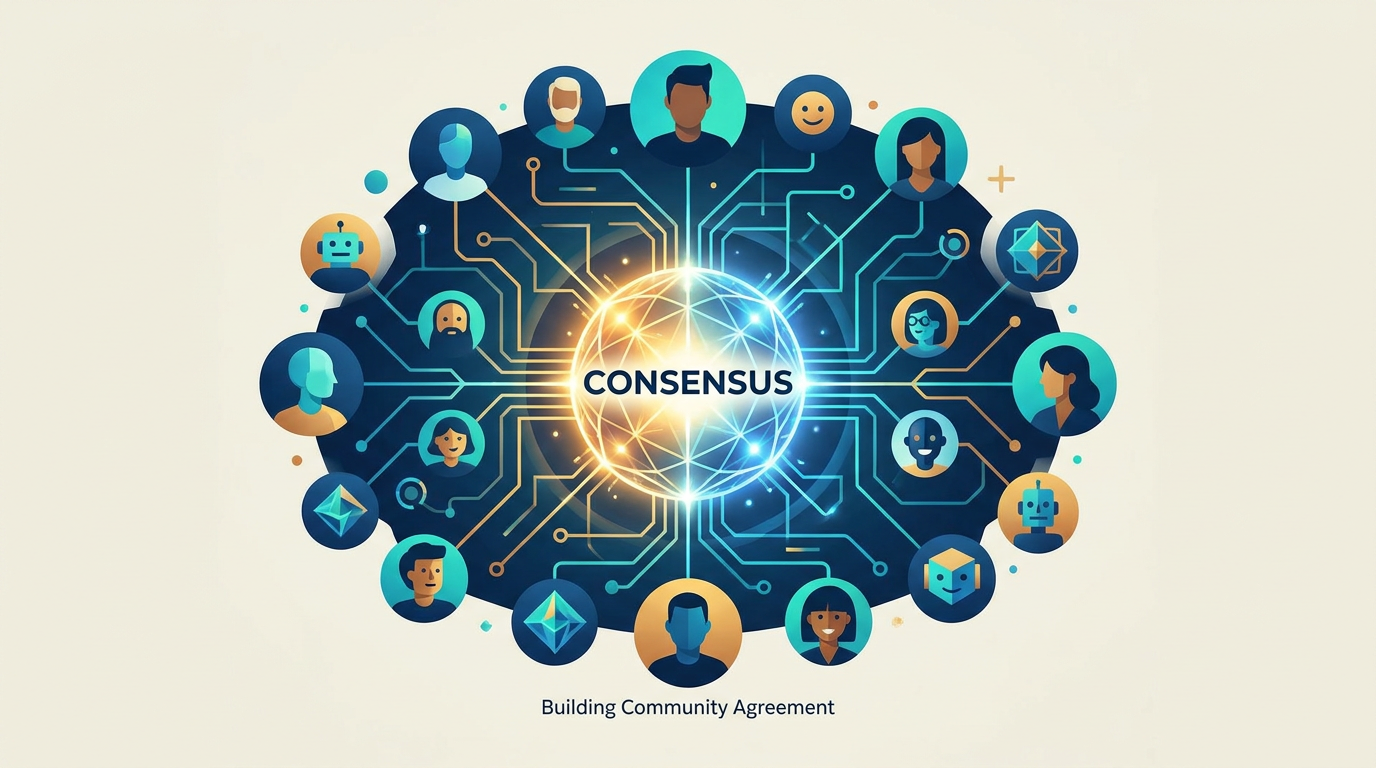
Behind the scenes, sophisticated machine learning algorithms analyze the incoming voting patterns in real-time. The system groups participants into distinct clusters based on how similarly they vote across dozens of different statements, creating a dynamic, visual map of the community's ideological divides. However, the algorithm's true purpose is not to separate people into tribal camps—it is to find the hidden bridges between them. Polis actively searches for and surfaces statements that generate high agreement across otherwise opposed clusters. This mechanism makes consensus visible, identifying the rare, nuanced statements that people who disagree on almost everything else can mutually endorse, thereby providing a clear, data-driven roadmap for community leaders and policymakers.[1][6]
The most famous and impactful application of this technology occurred in Taiwan, where the government integrated Polis into its national democratic infrastructure through a pioneering civic initiative called vTaiwan. When Taiwan faced severe political gridlock over how to regulate the ride-sharing company Uber, traditional public town hall meetings quickly devolved into unproductive shouting matches between traditional taxi drivers and ride-share advocates. Seeking a breakthrough to the impasse, the government moved the entire national debate to the Polis platform, inviting thousands of citizens, drivers, and stakeholders to submit their views and vote on the statements of others over several weeks.[1]
The Polis platform accurately mapped the deep, expected divisions between the pro-Uber and pro-taxi clusters, but it also revealed a staggering 95 percent consensus across all groups on several core underlying values. Regardless of which side of the debate participants fell on, nearly everyone agreed that drivers should be properly insured, pricing structures must be transparent, and passengers deserve rigorous safety standards. By isolating these points of universal agreement, the platform provided a shared reality that allowed Taiwanese lawmakers to draft widely accepted, common-sense legislation that successfully regulated the industry without alienating either of the core constituencies.[1][6]

The success of computational consensus in civic policy is now catching the attention of the artificial intelligence industry, which faces its own existential crisis regarding how to align powerful language models with diverse human values. In a landmark experiment, the AI research company Anthropic partnered with the Collective Intelligence Project to use Polis to crowdsource a "constitution" for its AI chatbot, Claude. Rather than having a small, insular team of engineers dictate the ethical boundaries of the model, the researchers invited roughly 1,000 Americans from diverse demographics to submit and vote on the specific rules and principles the artificial intelligence should follow.[4]
The Anthropic constitutional experiment generated over 38,000 individual votes and revealed a surprisingly high degree of consensus among the American public on core AI safety principles. Despite the diverse participant pool, strong majorities across all identified clusters agreed on fundamental rules, such as requiring the AI to protect human rights, avoid generating misinformation, and refuse to expand on conspiracy theories. By training their model to adhere to this crowdsourced constitution, Anthropic demonstrated that deliberative technologies can be used not just for local city planning, but for establishing democratic guardrails on the most transformative technologies of the 21st century.[4][6]
This digital approach to consensus building strongly complements a broader, offline movement known as "Deliberative Polling," a methodology pioneered by political scientist James Fishkin at Stanford University’s Deliberative Democracy Lab. Deliberative Polling operates on the premise that raw, top-of-mind public opinion is often uninformed and highly susceptible to partisan messaging. Instead of just calling people on the phone, this method brings randomly selected, demographically representative citizens together for moderated, small-group discussions. Participants are provided with balanced briefing materials and the opportunity to question competing experts before they are finally polled on a specific issue.[5]

Fishkin’s decades of research consistently show that when citizens are given the time, accurate information, and a structured, respectful environment to deliberate, they predictably shed their polarized reflexes. In these settings, people frequently arrive at shared, pragmatic solutions to highly contentious issues, from climate change policy to local municipal budgets. Whether happening in a physical town hall through Deliberative Polling or scaled to millions of users through an algorithmic platform like Polis, these deliberative technologies prove a vital point: extreme polarization is very often a product of the communication medium, rather than an inherent flaw in the people themselves.[3][5]
The practical applications of these tools are rapidly expanding beyond national tech policy and into everyday local governance. For instance, in 2025, the county encompassing Bowling Green, Kentucky, utilized Polis to draft a comprehensive 25-year community development plan. By facilitating the collection and review of ideas from thousands of local residents—representing a full 10 percent of the county's population—the platform allowed citizens to bypass the usual loud minority that dominates open mic sessions at city council meetings. Out of nearly 4,000 unique ideas submitted by the community, over 2,300 achieved an agreement rate of over 80 percent, providing local officials with an undeniable, data-backed mandate for their long-term infrastructure and zoning decisions.[1][6]
As local governments, national legislatures, and international organizations increasingly adopt these deliberative tools, the fundamental architecture of civic engagement is shifting. By moving away from systems that reward outrage and toward platforms explicitly designed to synthesize collective intelligence, communities are discovering that they possess far more common ground than the loudest voices on traditional social media would have them believe. This transition from combative debate to constructive, algorithmically-assisted deliberation offers a highly practical, scalable blueprint for repairing fractured communities and building a more resilient, functional democracy in the digital age.[2][6]
How we got here
2012
The Computational Democracy Project launches Polis to facilitate large-scale open-ended feedback.
2015
Taiwan integrates Polis into its vTaiwan project to crowdsource legislation on complex digital issues.
2023
Anthropic uses Polis to crowdsource a 'constitution' for its AI models from the American public.
2025
Local governments increasingly adopt deliberative technologies to bypass polarized town halls and draft long-term community plans.
Viewpoints in depth
Civic Technologists
Advocates for using algorithms to scale democratic participation.
This camp believes that traditional town halls and standard polls cannot capture the complexity of modern societies. By leveraging machine learning, they argue we can process millions of inputs to find hidden consensus that human facilitators might miss. They view open-source platforms like Polis as essential infrastructure for 21st-century governance, allowing entire populations to participate in drafting legislation without the process devolving into chaos.
Traditional Democratic Theorists
Proponents of face-to-face deliberation and informed mini-publics.
While supportive of digital tools, this viewpoint emphasizes that true democracy requires human connection and education. Pioneers of Deliberative Polling argue that raw, uninformed public opinion—even when aggregated by clever algorithms—is insufficient. They advocate for models where representative groups of citizens are given the time, expert resources, and structured environment to deeply understand an issue before their consensus is measured.
AI Safety Researchers
Technologists focused on aligning artificial intelligence with human values.
For this group, consensus-building tools solve a critical technical problem: how to program AI models with values that reflect diverse human societies. Rather than having a small group of engineers dictate what an AI considers 'safe' or 'ethical,' they use platforms like Polis to crowdsource democratic guardrails. They see computational democracy not just as a tool for civic policy, but as a necessary mechanism for governing the future of artificial intelligence.
What we don't know
- How highly polarized communities might attempt to game or manipulate algorithmic consensus platforms if they become the primary method of drafting legislation.
- Whether the high costs of organizing offline Deliberative Polling events can be reduced enough to make them a standard practice for local municipalities.
Key terms
- Computational Democracy
- The use of advanced algorithms, data science, and machine learning to enhance democratic processes and analyze public opinion at scale.
- Deliberative Polling
- A method of public consultation where randomly selected citizens are polled only after they have had time to learn about and discuss an issue with experts and each other.
- Constitutional AI
- A method of training artificial intelligence models to follow a specific set of rules or principles, often crowdsourced from the public.
- Mini-public
- A demographically representative group of citizens gathered to deliberate on a specific policy issue.
Frequently asked
How does Polis prevent trolling?
Polis intentionally omits a reply function. Participants can only agree, disagree, or pass on statements, which eliminates the back-and-forth arguments that fuel internet trolls.
Can these tools replace traditional voting?
No, they are designed to complement traditional voting by helping policymakers understand nuanced public opinion and find widely acceptable solutions before drafting legislation.
Are these platforms open-source?
Yes, platforms like Polis are open-source and free to use, meaning any community, city, or organization can deploy them to gather consensus.
Sources
Source coverage
6 outlets
3 viewpoints surfaced






[1]The Computational Democracy ProjectCivic Technologists
Polis: A platform for large-scale open-ended feedback
Read on The Computational Democracy Project →[2]Toda Peace InstituteTraditional Democratic Theorists
Deliberative Technology: Designing AI and Computational Democracy for Peacebuilding
Read on Toda Peace Institute →[3]DemocracyNextCivic Technologists
Five Dimensions of Scaling Democratic Deliberation: With and Beyond AI
Read on DemocracyNext →[4]AnthropicAI Safety Researchers
Collective Constitutional AI: Aligning a Language Model with Public Input
Read on Anthropic →[5]Stanford Deliberative Democracy LabTraditional Democratic Theorists
What is Deliberative Polling?
Read on Stanford Deliberative Democracy Lab →[6]Factlen Editorial TeamAI Safety Researchers
Synthesis by Factlen editorial team
Read on Factlen Editorial Team →
Every angle. Every day.
Get community stories with full source coverage and perspective breakdowns delivered to your inbox.