
The Evidence on College Athletics: How the $2.8 Billion NCAA Settlement Ends Amateurism and Mandates Revenue Sharing
A landmark antitrust settlement has officially dismantled the NCAA's century-old amateurism model, mandating $2.8 billion in back-pay and authorizing schools to share up to $20.5 million annually with student-athletes. While the agreement empowers athletes with direct compensation, it also triggers complex new challenges regarding Title IX compliance and employment status.
By Factlen Editorial Team
- Student-Athlete Advocates
- Argue that direct compensation and revenue sharing are long-overdue corrections to an exploitative system that denied athletes their fair market value.
- Title IX Defenders
- Warn that the settlement's back-pay formula and future revenue-sharing models risk exacerbating gender inequities in college sports.
- Institutional Administrators
- Focus on the logistical and financial challenges of implementing the $20.5 million cap, roster limits, and compliance oversight.
What's not represented
- · Olympic Sports Governing Bodies
- · Group of 5 Conference Athletes
Why this matters
This historic settlement fundamentally rewrites the economics of higher education, transforming a multi-billion-dollar enterprise into a formalized partnership with its athletes. For universities, athletes, and fans, it marks the end of an exploitative amateurism model and the beginning of a transparent, revenue-sharing era.
Key points
- The NCAA will pay $2.8 billion in back-pay damages to athletes denied NIL opportunities between 2016 and 2024.
- Starting in July 2025, schools can share up to $20.5 million annually directly with their student-athletes.
- Strict scholarship caps have been eliminated and replaced with roster limits, expanding full-ride opportunities.
- The back-pay formula allocates 90% of funds to football and men's basketball, sparking Title IX appeals.
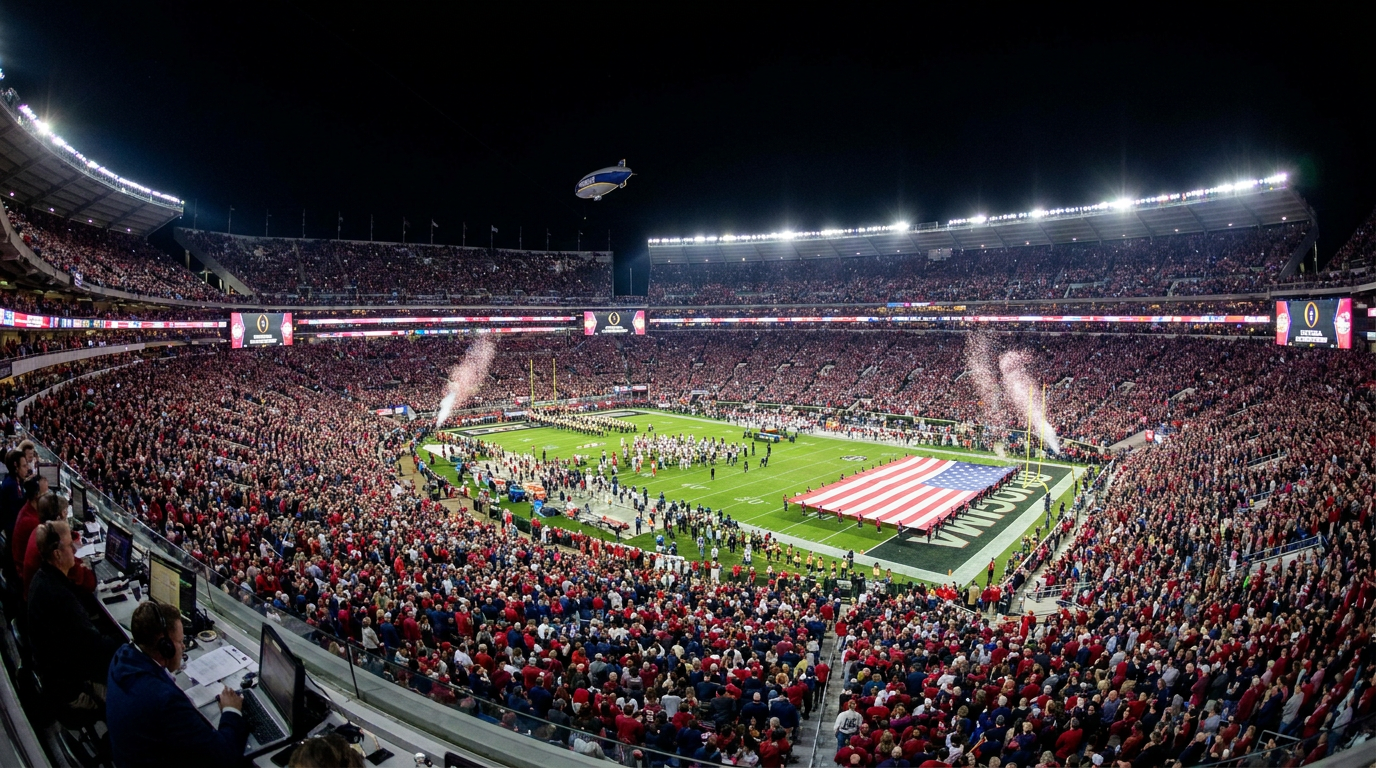
For more than a century, the National Collegiate Athletic Association operated under a strict definition of amateurism, insisting that the purity of college sports required athletes to remain unpaid. Even as television contracts and sponsorships swelled into a multi-billion-dollar enterprise, the athletes generating that wealth were restricted to scholarships and basic living stipends. That era officially ended on June 6, 2025, when U.S. District Judge Claudia Wilken granted final approval to the landmark House v. NCAA antitrust settlement. The ruling dismantled the foundational premise of amateurism, legally acknowledging that the NCAA's financial restrictions violated federal antitrust laws.[9]
The $2.8 billion agreement fundamentally restructures the economics of higher education athletics, transforming a system long criticized as exploitative into a formalized revenue-sharing partnership. By resolving three consolidated antitrust lawsuits—House, Carter, and Hubbard—the NCAA and the Power Five conferences avoided a trial that could have bankrupted the association. Instead, they agreed to a comprehensive framework that empowers student-athletes with direct financial compensation, effectively turning the page on decades of contentious litigation, public scrutiny, and congressional hearings regarding the fundamental fairness of collegiate athletics.[2][6][8][9]
The most forward-looking provision of the settlement is the establishment of a ten-year revenue-sharing model, which officially takes effect on July 1, 2025. For the first time in the history of collegiate athletics, Division I institutions are explicitly permitted to share athletic department revenue directly with their student-athletes. This shift represents a monumental victory for athlete rights, ensuring that the young men and women who power the engine of college sports finally receive a guaranteed cut of the profits they generate.[1][2]
Under the approved formula, participating schools can distribute up to 22 percent of the average athletic revenue generated by Power Five schools—funds derived from lucrative media rights, ticket sales, and corporate sponsorships. For the 2025–2026 academic year, this creates a compensation cap of approximately $20.5 million per institution. This figure serves as a functional salary cap, allowing athletic departments to budget for direct athlete compensation just as they would for coaching salaries or facility upgrades.[1][2][7][8]

This revenue-sharing pool is projected to increase by 4 percent annually, potentially reaching a $33 million cap per school by 2035. Crucially, this direct institutional compensation exists entirely separate from third-party Name, Image, and Likeness (NIL) endorsements. This means high-profile athletes can stack their university revenue-sharing payments on top of external corporate sponsorships, maximizing their earning potential during their relatively short windows of collegiate eligibility.[1][7][9]
Before establishing the future framework, the agreement rectifies nearly a decade of lost earnings. The NCAA and the Power Five conferences are legally bound to pay $2.8 billion in back-pay damages to approximately 184,000 current and former Division I athletes who competed between June 2016 and September 2024. This massive restitution fund compensates athletes for the NIL opportunities and video game royalties they were illegally denied under the NCAA's previous amateurism rules, finally delivering financial justice to players whose likenesses were monetized without their consent.[6][7]
The damages will be paid out over a ten-year period, with the NCAA shouldering roughly 40 percent of the cost and the member conferences covering the remainder through reductions in their annual distributions. This financial burden represents a significant operational shift for the NCAA, forcing the organization to redirect funds that would have historically been spent on administrative overhead or distributed to member schools back into the pockets of the athletes who actually produced the on-field product.[7]

Beyond direct compensation, the settlement rewrites the rules governing educational access. For decades, the NCAA enforced strict scholarship limits that forced coaches in sports like baseball, soccer, and track and field to divide partial scholarships among their players. This often left athletes in non-revenue sports struggling to cover the full cost of tuition, despite dedicating full-time hours to their athletic commitments, travel schedules, and rigorous physical training regimens. The elimination of these arbitrary caps represents a massive win for athletes outside the major revenue-generating sports.[7][8]
Beyond direct compensation, the settlement rewrites the rules governing educational access.
The House settlement abolishes these scholarship caps entirely, replacing them with sport-specific roster limits. Under the new framework, institutions can provide full-ride scholarships to every single athlete on a team's roster, dramatically expanding the number of fully funded educational opportunities available to student-athletes across all sports. While this requires schools to carefully manage their overall roster sizes, it ensures that those who do make the team are adequately supported.[2][3][7]
To manage this new financial ecosystem, the settlement establishes the College Sports Commission (CSC), an independent regulatory body tasked with overseeing revenue sharing and NIL compliance. The creation of the CSC marks a shift away from the NCAA's historically opaque enforcement mechanisms, introducing a third-party regulator to ensure that schools and booster collectives adhere to the new financial boundaries. This commission will act as the primary watchdog for the new era of college sports, equipped with modern auditing tools.[7]
The CSC will utilize a centralized clearinghouse platform, known as "NIL Go," to review all third-party endorsement deals valued at $600 or more. This mechanism is designed to ensure that outside compensation reflects genuine fair market value for business services, rather than disguised recruiting inducements funded by booster collectives. By standardizing the review process, the settlement aims to bring transparency to an NIL marketplace that has often operated in the shadows.[1][2][7]

While the settlement provides a clear financial framework, its intersection with federal civil rights law remains highly contested. The $2.8 billion back-pay formula allocates approximately 90 percent of the funds to football and men's basketball players, with 5 percent going to women's basketball and 5 percent to all other sports. This allocation reflects the reality of which sports generated the television revenue, but it has sparked intense debate over gender equity.[4][5][6]
This distribution has triggered immediate legal scrutiny. Multiple groups of female student-athletes have filed appeals with the Ninth Circuit Court of Appeals, arguing that the back-pay formula violates Title IX by disproportionately compensating male athletes. Furthermore, as institutions begin distributing their $20.5 million revenue-sharing pools, they face significant liability risks regarding how those funds are allocated between men's and women's programs, prompting the White House to issue executive orders emphasizing the protection of women's sports.[4][5]

The legal status of student-athletes as "employees" also remains a lingering uncertainty. The House settlement explicitly avoids classifying student-athletes as employees, deliberately labeling the direct payments as "revenue sharing" rather than salaries to avoid labor law entanglements. However, this classification is currently being challenged in a separate federal lawsuit, Johnson v. NCAA, which argues that athletes should be treated as employees under the Fair Labor Standards Act due to the immense control universities exert over their daily schedules.[6]
If the courts eventually rule that student-athletes are legal employees, it would entitle them to minimum wage, overtime, and collective bargaining rights, potentially overriding key provisions of the House settlement. Despite these lingering legal questions, the $2.8 billion agreement stands as a monumental victory for athlete empowerment, permanently dismantling an outdated system and ensuring that the young men and women who power college sports finally share in the wealth they create.[6][9]
How we got here
June 2020
The House v. NCAA antitrust lawsuit is filed, challenging restrictions on athlete compensation.
July 2021
The NCAA suspends its strict NIL rules, allowing athletes to earn money from third-party endorsements.
May 2024
The NCAA and Power Five conferences agree to a preliminary $2.8 billion settlement to avoid a trial.
June 2025
U.S. District Judge Claudia Wilken grants final approval to the House settlement.
July 2025
The new revenue-sharing model officially takes effect for the 2025-2026 academic year.
Viewpoints in depth
Student-Athlete Advocates
Argue that direct compensation and revenue sharing are long-overdue corrections to an exploitative system.
Advocates for student-athletes view the House settlement as a monumental civil rights victory. For decades, they argue, the NCAA operated an illegal cartel that artificially capped compensation while coaches and administrators signed multi-million dollar contracts. By securing a 22 percent cut of the average Power Five athletic revenue, athletes are finally being recognized as the primary value creators in a multi-billion dollar entertainment industry. They maintain that the end of amateurism is simply the application of standard free-market principles to college sports.
Title IX Defenders
Warn that the settlement's back-pay formula and future revenue-sharing models risk exacerbating gender inequities in college sports.
Title IX advocates are deeply concerned by the precedent set by the $2.8 billion back-pay formula, which directs 90 percent of the funds to male athletes in revenue-generating sports. They argue that this distribution violates the spirit and letter of federal civil rights law, which mandates equal opportunity regardless of sex. Furthermore, they fear that as athletic departments scramble to fund their $20.5 million revenue-sharing caps, they will inevitably siphon resources away from women's programs and Olympic sports to remain competitive in football and men's basketball.
Institutional Administrators
Focus on the logistical and financial challenges of implementing the $20.5 million cap, roster limits, and compliance oversight.
For university presidents and athletic directors, the settlement presents an unprecedented operational challenge. While they welcome the legal protection from future antitrust lawsuits, finding an additional $20.5 million annually to fund the revenue-sharing cap will require severe budget restructuring. Administrators are also bracing for the logistical nightmare of managing the new roster limits and ensuring that all third-party NIL deals clear the College Sports Commission's fair-market value audits. Their ultimate fear is that the pending Johnson v. NCAA lawsuit will classify athletes as employees, triggering a cascade of labor law requirements that the current settlement does not cover.
What we don't know
- How the Ninth Circuit Court of Appeals will rule on the Title IX challenges to the back-pay formula.
- Whether the pending Johnson v. NCAA lawsuit will eventually classify student-athletes as legal employees under the Fair Labor Standards Act.
- How universities will fund the $20.5 million revenue-sharing cap without cutting non-revenue Olympic sports.
Key terms
- House v. NCAA
- The landmark antitrust class-action lawsuit that successfully challenged the NCAA's restrictions on athlete compensation.
- Revenue Sharing
- A financial model where a percentage of the money generated by athletic departments is paid directly to the athletes.
- College Sports Commission (CSC)
- The newly created independent regulatory body tasked with overseeing revenue sharing and NIL compliance.
- Title IX
- The federal civil rights law that prohibits sex-based discrimination in any school or education program that receives federal funding.
- Amateurism
- The NCAA's historical, now-defunct principle that college athletes should not be paid for their athletic participation.
Frequently asked
When does the revenue sharing actually start?
The new revenue-sharing model officially takes effect on July 1, 2025, for the 2025-2026 academic year.
How much can each school pay its athletes?
Participating schools can share up to $20.5 million in the first year, which represents 22 percent of the average Power Five athletic revenue.
Do athletes still get scholarships under the new rules?
Yes. In fact, scholarship caps have been replaced by roster limits, allowing schools to offer full-ride scholarships to every athlete on a team's roster.
What happens to third-party NIL deals?
Athletes can still sign outside endorsements, but deals valued over $600 must be reviewed by the newly created College Sports Commission to ensure fair market value.
Why are female athletes appealing the settlement?
Multiple groups of female athletes are appealing because the $2.8 billion back-pay fund allocates 90 percent of the money to football and men's basketball players, which they argue violates Title IX.
Sources
Source coverage
9 outlets
3 viewpoints surfaced









[1]BakerHostetlerInstitutional Administrators
House v. NCAA Settlement Ushers in New Era of College Sports
Read on BakerHostetler →[2]CUPA-HRInstitutional Administrators
Federal Judge Approves House v. NCAA Settlement
Read on CUPA-HR →[3]Inc.Institutional Administrators
NCAA Sued Over New Eligibility Rules Tied to House Settlement
Read on Inc. →[4]United EducatorsTitle IX Defenders
Title IX Liability Is Actively Evolving Post-House v. NCAA
Read on United Educators →[5]Parker PoeTitle IX Defenders
Higher Education Navigates Title IX Implications of House v. NCAA
Read on Parker Poe →[6]Temple UniversityInstitutional Administrators
The NCAA's $2.8 Billion Settlement Marks a Seismic Shift in College Athletics
Read on Temple University →[7]DentonsInstitutional Administrators
Key Settlement Terms in House v. NCAA
Read on Dentons →[8]ESPNStudent-Athlete Advocates
Judge OK's $2.8B settlement, paving way for colleges to pay athletes
Read on ESPN →[9]Factlen Editorial TeamStudent-Athlete Advocates
Synthesis by Factlen editorial team
Read on Factlen Editorial Team →
More in education
See all 4 stories →

Every angle. Every day.
Get education stories with full source coverage and perspective breakdowns delivered to your inbox.