
NYC Rent Guidelines Board Approves Historic Rent Freeze for Stabilized Apartments
In a 7-1 vote, the New York City Rent Guidelines Board approved a rent freeze for both one- and two-year leases, fulfilling a central campaign promise of Mayor Zohran Mamdani. The decision provides relief to roughly two million tenants but has sparked fierce backlash and a high-profile resignation from landlord representatives who warn of building deterioration.
By Factlen Editorial Team
- Tenant Advocates
- Argue that working-class New Yorkers are being crushed by the cost of living and desperately need relief from rising rents.
- Property Owners
- Contend that freezing rents while operating costs soar will force landlords to defer maintenance, ultimately degrading the housing stock.
- Market Economists
- Warn that strict rent controls can distort the housing market, discourage investment, and increase the risk of mortgage defaults.
- City Administration
- Views the freeze as a necessary intervention to fulfill electoral mandates and protect vulnerable residents from displacement.
What's not represented
- · Market-rate tenants who may face steeper rent hikes as landlords attempt to offset losses from stabilized units.
- · Construction and maintenance workers whose jobs depend on building upgrades and repairs.
Why this matters
The rent freeze directly impacts roughly one million rent-stabilized apartments housing over two million New Yorkers, offering immediate financial relief amid a high cost of living. However, it also sets up a high-stakes test of whether capping rental income will accelerate the physical decline of the city's aging housing stock as landlords warn of an inability to cover rising operating expenses.
Key points
- The NYC Rent Guidelines Board voted 7-1 to freeze rents on one- and two-year leases for rent-stabilized apartments.
- The freeze fulfills a central campaign promise of Mayor Zohran Mamdani, who appointed six of the board's nine members.
- Landlord representative Christina Smyth resigned hours before the vote, calling the process "political theater."
- Tenant advocates celebrated the decision as necessary relief amid a severe affordability crisis.
- Real estate groups warned the freeze will lead to deferred maintenance and worsen the city's housing shortage.
The New York City Rent Guidelines Board has voted to freeze rents for the city's roughly one million rent-stabilized apartments, delivering a landmark victory for tenants and fulfilling a central campaign promise of Mayor Zohran Mamdani.[1][2][3]
In a 7-1 decision on Thursday evening, the nine-member panel approved a 0% increase for both one-year and two-year leases commencing between October 1, 2026, and September 30, 2027.[1][2]
The vote marks the first time in the board's history that rents have been frozen for two-year leases, a move that will impact more than two million New Yorkers living in regulated housing.[1][5]

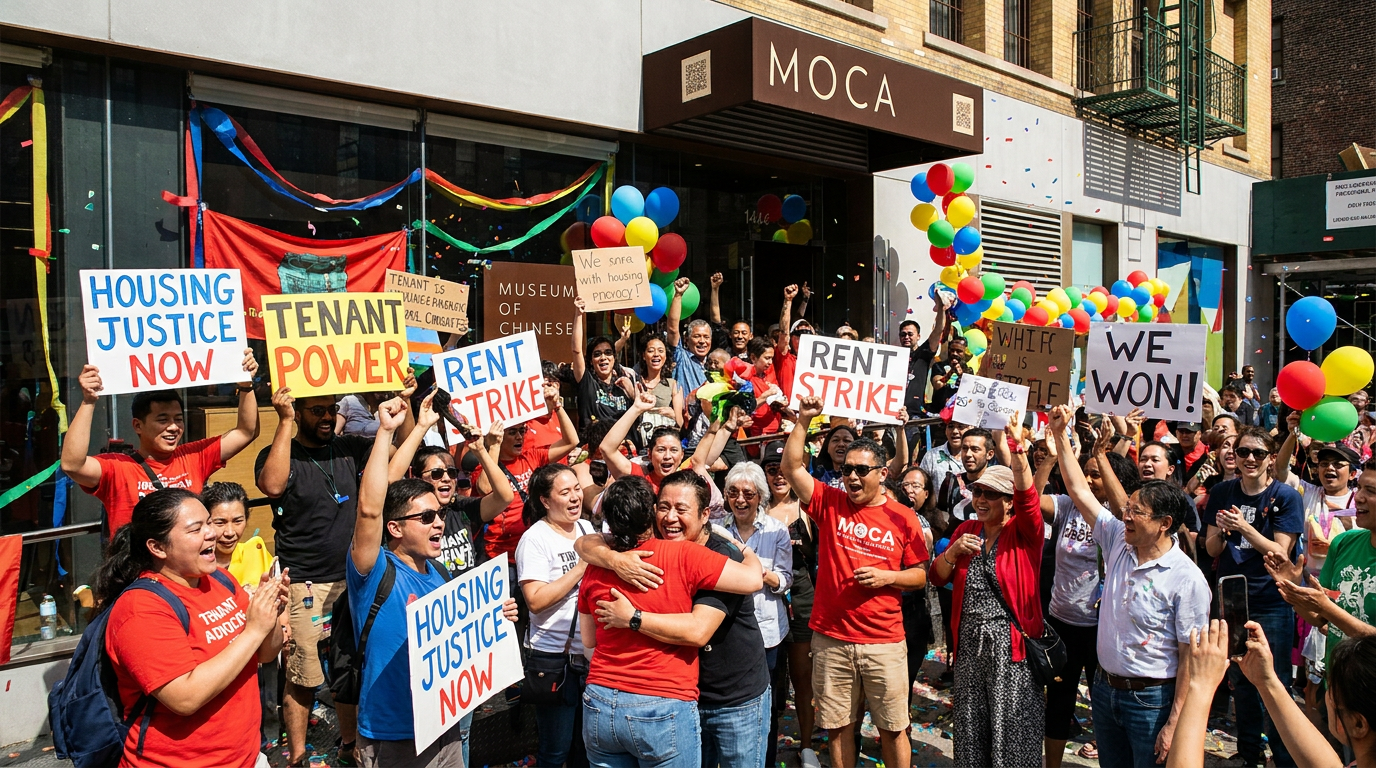
The decision was met with jubilation from tenant advocates who packed the auditorium at El Museo del Barrio in East Harlem, chanting "housing is a human right" as the final tally was announced.[3][6]
Mayor Mamdani, who took office in January after campaigning heavily on a "freeze the rent" platform, hailed the outcome as a "historic victory" that provides necessary relief to working-class residents crushed by the city's high cost of living.[1][2][3]
However, the vote was preceded by intense drama and accusations of political interference. Just hours before the meeting, Christina Smyth, one of the board's two landlord representatives, abruptly resigned.[1][2][4]
In a scathing resignation letter, Smyth claimed the board had ceased to be a "fact-finding body" and that the rent freeze had been "decided last year on the campaign trail," rendering the months of public hearings and data analysis mere "theater."[1][4][5]
The controversy stems from the composition of the board itself. In February, Mayor Mamdani appointed six new members to the panel, effectively securing a majority aligned with his progressive housing agenda.[2][3]

Arpit Gupta, a public member appointed by former Mayor Eric Adams, cast the lone dissenting vote against the freeze.[5][6]
Arpit Gupta, a public member appointed by former Mayor Eric Adams, cast the lone dissenting vote against the freeze.
In a surprising twist, the sole remaining landlord representative, Maksim Wynn—a Mamdani appointee—voted in favor of the freeze. Wynn argued that given the "imminent risk of cratering economic occupancy," raising legal rents might counterintuitively decrease landlords' actual collected income if tenants are forced to move out or stop paying.[4][5]
Wynn's vote came with a caveat, however, as he urged city and state officials to implement "capital and expense interventions" to help property owners survive the freeze.[4][5]
The debate over the freeze hinged on competing economic realities. Tenant advocates pointed to data from the Community Service Society showing that 67% of low-income rent-stabilized tenants are struggling to make ends meet, with many owing back rent.[2][7]
Conversely, landlord groups highlighted the board's own research, which found that building operating costs—including insurance, property taxes, and utilities—had risen by 5.3% over the past year.[2][4]

James Whelan, president of the Real Estate Board of New York, warned that the freeze would force owners to slash investment in maintenance and repairs, thereby "accelerating the deterioration of the housing stock that millions of New Yorkers call home."[4][5]
Small property owners echoed this sentiment, arguing that the combination of frozen revenues and uncapped expenses would push many family-owned buildings to the brink of insolvency.[1][4]
These concerns were bolstered by a recent analysis from Moody's Ratings, which estimated that a five-year rent freeze could drive approximately 6% of the city's multifamily loans into default by 2030.[5]
For buildings containing at least one rent-stabilized unit, Moody's projected the default rate could exceed 8%, though the agency noted that high rent growth in unregulated, market-rate apartments might help mixed-use properties offset some of the financial strain.[5]

Economists like Gupta have cautioned that while rent freezes provide immediate relief to current tenants, they risk mirroring the severe long-term costs of first-generation rent control, which historically led to widespread building abandonment and urban decay.[8]
The rent freeze also arrives in the wake of the 2019 Housing Stability and Tenant Protection Act, which severely restricted landlords' ability to deregulate units or significantly raise rents to cover the costs of major capital improvements.[8]
With the freeze now codified for the upcoming lease cycle, real estate industry leaders have signaled that legal challenges are likely, setting the stage for a protracted battle over the future of New York City's housing market.[4]
How we got here
June 2019
New York State passes the Housing Stability and Tenant Protection Act, severely limiting landlords' ability to deregulate units.
June 2020
The Rent Guidelines Board approves a one-year rent freeze during the COVID-19 pandemic under Mayor Bill de Blasio.
January 2026
Zohran Mamdani is sworn in as Mayor of New York City after campaigning heavily on a promise to freeze rents.
February 2026
Mayor Mamdani appoints six new members to the nine-member Rent Guidelines Board, securing a majority aligned with his housing agenda.
May 2026
The board approves a preliminary range of 0% to 2% for one-year leases and 0% to 4% for two-year leases.
June 25, 2026
Landlord representative Christina Smyth resigns in protest hours before the board votes 7-1 to freeze rents.
Viewpoints in depth
Tenant Advocates' view
A necessary intervention to keep working-class New Yorkers in their homes amid a severe affordability crisis.
Tenant organizers argue that working-class residents have been crushed by inflation and consecutive years of rent hikes under the previous administration. Citing data that over two-thirds of low-income stabilized tenants are struggling financially, they view the freeze as a vital lifeline that will prevent a surge in evictions and homelessness. Advocates maintain that housing should be treated as a human right rather than a speculative asset, and that landlords' profit margins should not come at the expense of community stability.
Property Owners' view
A politically motivated decision that ignores rising costs and threatens the physical viability of the city's housing stock.
Landlords and real estate groups contend that the board ignored its own data, which showed a 5.3% increase in operating expenses over the past year. They argue that freezing revenues while costs for insurance, property taxes, and utilities continue to soar will force owners to defer essential maintenance and repairs. Small property owners, in particular, warn that the freeze could push their buildings into insolvency, ultimately harming tenants by accelerating the deterioration of the aging housing stock.
Market Economists' view
A policy that provides short-term relief but risks long-term damage to the housing market and mortgage stability.
Economic analysts warn that strict rent controls can severely distort the housing market. By capping potential revenue, the freeze disincentivizes investment in building improvements and makes it financially unviable to rehabilitate vacant units. Furthermore, credit agencies like Moody's project that a prolonged freeze could trigger a wave of defaults on multifamily loans, potentially destabilizing the broader commercial real estate sector and reducing the overall supply of available housing.
What we don't know
- Whether landlord groups will successfully challenge the board's decision in court.
- How the rent freeze will impact the physical maintenance and condition of rent-stabilized buildings over the next two years.
- Whether the city or state will intervene to provide expense relief for struggling property owners.
Key terms
- Rent Guidelines Board (RGB)
- A nine-member panel appointed by the New York City Mayor that determines annual rent adjustments for the city's rent-stabilized apartments.
- Rent Stabilization
- A form of rent regulation in New York City that limits the amount landlords can increase rent for lease renewals and provides tenants with the right to renew.
- Net Operating Income (NOI)
- A property's total revenue minus its operating expenses, used by owners and lenders to assess profitability.
- CMBS Loans
- Commercial Mortgage-Backed Securities; loans secured by commercial real estate properties, including multifamily apartment buildings, that are bundled and sold to investors.
Frequently asked
Which apartments are affected by the rent freeze?
The freeze applies to New York City's roughly one million rent-stabilized apartments for lease renewals commencing between October 1, 2026, and September 30, 2027.
Does this mean my rent will go down?
No. A rent freeze means your rent will remain at its current level when you sign a new one- or two-year lease, but it does not roll back existing rents.
Does this apply to market-rate apartments?
No. The Rent Guidelines Board only sets allowable increases for rent-stabilized units, not unregulated market-rate apartments.
Why did the landlord representative resign?
Christina Smyth resigned hours before the vote, claiming the board had ignored data showing rising operating costs and that the rent freeze was a predetermined political outcome.
Sources
Source coverage
8 outlets
4 viewpoints surfaced








[1]CBS NewsCity Administration
New York City's Rent Guidelines Board votes 7-1 in favor of rent freeze
Read on CBS News →[2]TimeCity Administration
New York City Approves Rent Freeze in Major Victory for Mayor Zohran Mamdani
Read on Time →[3]The Washington PostCity Administration
New York City passes rent freeze, in line with Mamdani campaign promise
Read on The Washington Post →[4]The Real DealProperty Owners
It's official: New York City is getting a rent freeze
Read on The Real Deal →[5]BisnowProperty Owners
Rent Freeze Approved On All Stabilized Leases, Delivering On Mamdani Pledge
Read on Bisnow →[6]City LimitsTenant Advocates
Mamdani Gets His Rent Freeze
Read on City Limits →[7]Community Service SocietyTenant Advocates
NYC Rent Freeze 2026: Four Reasons the Data Supported Freezing Rents
Read on Community Service Society →[8]City JournalMarket Economists
The High Cost of New York's Rent Freeze
Read on City Journal →

Every angle. Every day.
Get perspectives stories with full source coverage and perspective breakdowns delivered to your inbox.