
US Regulators Announce Sweeping Rollback of Post-2008 Bank Capital Rules
The Federal Reserve, FDIC, and OCC have officially reversed course on the 'Basel III Endgame,' proposing an $87.7 billion reduction in capital requirements for the nation's largest banks.
By Factlen Editorial Team
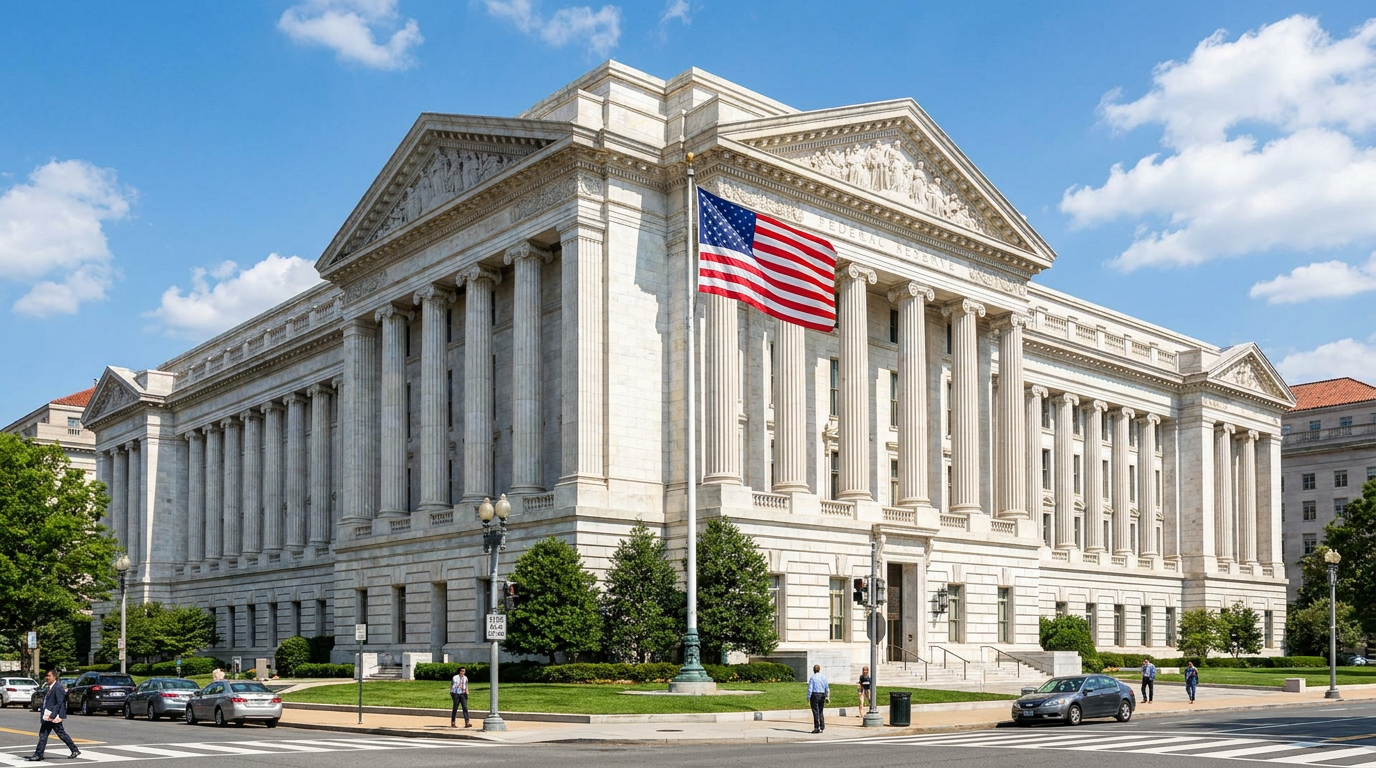
- Deregulation Advocates
- Argue that lowering capital requirements removes unnecessary compliance burdens and frees up billions for economic growth and lending.
- Financial Stability Advocates
- Warn that stripping $87 billion from safety buffers leaves the financial system vulnerable to bailouts during an economic downturn.
- International Regulators
- Fear that the U.S. rollback creates an uneven playing field, forcing other nations to delay or weaken their own banking rules.
What's not represented
- · Mid-sized regional bank executives
- · First-time homebuyers
Why this matters
Capital requirements dictate how much of a safety buffer banks must hold to prevent another 2008-style taxpayer bailout. By lowering these requirements, regulators are betting that freeing up $87 billion will spur a wave of mortgage and business lending, though critics warn it leaves the financial system significantly more vulnerable to an economic downturn.
Key points
- The Fed, FDIC, and OCC have officially scrapped a 2023 proposal that would have raised large bank capital requirements by 19 percent.
- The new regulatory framework will instead deliver an estimated $87.7 billion in net capital relief across the U.S. banking system.
- Regulators argue the rollback will spur economic growth and mortgage lending by removing overly punitive compliance burdens.
- Critics warn the move strips vital shock absorbers from the financial system just as credit card delinquencies and economic stress are rising.
- The U.S. policy shift has prompted the European Union to delay its own banking regulations to maintain global competitiveness.
The architecture of American banking regulation is undergoing its most significant structural shift in over a decade. In a coordinated move, the Federal Reserve, the Federal Deposit Insurance Corporation (FDIC), and the Office of the Comptroller of the Currency (OCC) have officially advanced a comprehensive plan to soften the capital requirements imposed on the nation's largest financial institutions. The sweeping rollback effectively dismantles the stringent "Basel III Endgame" framework proposed just three years ago, replacing it with a tailored approach designed to prioritize economic expansion over maximum capital retention.[1][5]
The pivot represents a stark reversal of the regulatory philosophy that has dominated Washington since the 2008 global financial crisis. Under the original July 2023 proposal, the largest U.S. banks were facing a mandated 19 percent increase in the capital they would be required to hold against potential losses. Following an unprecedented lobbying campaign by Wall Street and a shift in regulatory leadership, that mandate has been entirely scrapped.[6]
Instead of forcing banks to stockpile more cash, the new framework delivers an estimated $87.7 billion in net capital relief across the banking system. For the eight Globally Systemically Important Banks (G-SIBs)—institutions like JPMorgan Chase, Bank of America, and Citigroup—the revised rules translate to a roughly 4.8 percent reduction in Tier 1 capital requirements. Large regional banks will see an even steeper 5.2 percent reduction, while smaller community institutions will benefit from a nearly 8 percent drop in required capital buffers.[6]

At the heart of the debate is the concept of Tier 1 capital, the core measure of a bank's financial strength. This capital acts as a shock absorber, ensuring that when loans go bad or trading bets fail, the bank's own equity takes the hit before depositors or taxpayers are forced to step in. By lowering the required thickness of this shock absorber, regulators are fundamentally altering the calculus of risk and reward in the American financial system.[2]
Federal regulators argue that the post-2008 pendulum had simply swung too far, stifling innovation and artificially constraining the economy. Testifying before the House Financial Services Committee in early June 2026, Federal Reserve Vice Chair for Supervision Michelle Bowman argued that the central bank is now focused on "tailoring requirements to actual risk." Bowman noted that many of the deficiencies cited by examiners in recent years were merely procedural documentation gaps rather than material threats to financial stability.[5]
FDIC Chairman Travis Hill echoed this sentiment during the same congressional hearings, confirming that the agency has spent the past year pivoting away from "process-oriented, tick-the-box requirements." The new consensus among the three regulatory bodies is that overly punitive oversight has actively hindered banks' capacity to support the broader economy, particularly in the realm of traditional lending.[5]
The banking industry has aggressively championed this exact narrative, arguing that the original Basel III Endgame would have severely curtailed their ability to issue mortgages and extend credit to small businesses. By freeing up nearly $90 billion in capital, industry advocates claim banks will now be able to inject liquidity directly into the real economy. Furthermore, banking executives argue that the relaxed rules will improve their Return on Equity (ROE), making U.S. institutions more attractive to global investors.[2][6]
However, consumer advocates and systemic risk watchdogs view the rollback as a dangerous gamble, particularly given the current macroeconomic climate. Critics point out that the regulatory easing arrives at a moment of cascading economic stress, with first-quarter 2026 GDP growth forecasts slumping to just 1.2 percent.[2]

However, consumer advocates and systemic risk watchdogs view the rollback as a dangerous gamble, particularly given the current macroeconomic climate.
"Against this backdrop, weakening the safeguards on the institutions that sit at the center of our economy is not modernization. It is a gamble," one financial reform advocate noted during the recent congressional testimony. Watchdogs highlight that credit card delinquencies have climbed to 7 percent and mortgage defaults are beginning to tick upward, suggesting that the banking sector may soon need the very capital buffers that are currently being dismantled.[2]
Skeptics also challenge the industry's primary justification for the rollback: the promise of a mortgage lending boom. Critics argue that there is no statutory requirement forcing banks to deploy their newly freed capital into the housing market. Instead, they warn that the $87.7 billion windfall is far more likely to be funneled into stock buybacks, increased dividend payouts, and aggressive mergers and acquisitions, enriching shareholders without providing tangible benefits to ordinary Americans.[2][6]
The OCC is also taking steps to deregulate smaller institutions, recently finalizing rules that strip away what it views as obsolete paperwork. This includes rescinding the Fair Housing Home Loan Data System regulation, a move the OCC claims will allow community banks to devote more resources to core lending rather than legacy reporting. While community bankers have cheered the reduction in compliance costs, housing advocates worry that the loss of this data will make it harder to track and prevent discriminatory lending practices.[4]

The ripple effects of the U.S. policy shift are already being felt across the Atlantic, threatening to fracture the global consensus on banking regulation. The Basel III framework was originally designed as an international accord to ensure a "level playing field" among the world's major economies. With the United States now aggressively softening its stance, European regulators are being forced to reconsider their own implementation timelines.[3]
The European Commission recently announced it is delaying the implementation of its Fundamental Review of the Trading Book (FRTB)—a key component of the Basel framework—until January 2027. European officials explicitly cited concerns about diverging implementation across major jurisdictions, fearing that strict adherence to the original rules would place EU banks at a severe competitive disadvantage against their newly deregulated American counterparts.[3]
The Association for Financial Markets in Europe has capitalized on the U.S. pivot, lobbying the European Commission to neutralize the impacts of the FRTB. They argue that the original rules impose excessively conservative capital requirements that do not align with underlying economic risks, echoing the exact talking points successfully deployed by Wall Street lobbyists in Washington.[3]

Beyond capital requirements, the U.S. regulatory triad is also signaling a more permissive approach to financial technology. In their congressional testimony, regulators expressed a clear intent to foster the utilization of advanced technologies, including blockchain and artificial intelligence, within the regulated banking perimeter. Earlier in the year, the agencies issued joint guidance clarifying that tokenized securities would generally receive the same capital treatment as traditional assets, a major victory for banks looking to expand their digital asset operations.[5]
The sheer scale of the regulatory reversal underscores the enduring political power of the American banking sector. The original 2023 proposal was designed to be the final, definitive response to the vulnerabilities exposed during the 2008 crisis. Instead, it triggered what analysts describe as the most intense industry lobbying campaign since the passage of the Dodd-Frank Act.[6]
That campaign successfully reframed capital requirements not as a necessary safety net, but as an anchor dragging down American economic competitiveness. By aligning their arguments with broader political anxieties about GDP growth and housing affordability, the banking lobby managed to turn a proposed 19 percent capital hike into a multi-billion-dollar capital reduction.[6]
The revised rules are currently moving through a mandatory public comment period and are expected to be finalized in late 2026, with full implementation slated for 2027. Until then, the financial industry will begin adjusting its balance sheets in anticipation of the new, lighter regulatory regime.[6]
Ultimately, the success or failure of this sweeping deregulation will only be proven during the next severe economic downturn. If the regulators are correct, the banking system will remain resilient while injecting much-needed capital into the real economy. If the critics are right, the U.S. government has just stripped away the very shock absorbers needed to prevent another catastrophic taxpayer bailout.
How we got here
July 2023
The Fed, FDIC, and OCC propose a 19 percent capital increase for large banks under the Basel III Endgame framework.
March 2026
Regulators issue a reproposal, reversing course to offer net capital relief following intense industry lobbying.
April 2026
The European Commission delays its own Basel III implementation to 2027, citing the U.S. policy shift.
June 2026
Top U.S. regulators testify before Congress, defending the rollbacks as necessary for economic growth and innovation.
Late 2026
Expected finalization of the new relaxed capital rules, with implementation slated for 2027.
Viewpoints in depth
Federal Regulators
Argue that the post-2008 rules became too focused on procedural compliance rather than actual risk.
Agencies like the Federal Reserve and FDIC contend that the regulatory pendulum swung too far after the 2008 crisis. By focusing on "tick-the-box" compliance and punishing banks for minor documentation gaps, regulators argue they inadvertently stifled economic growth. The new approach aims to tailor oversight to material financial risks, allowing banks to operate more efficiently and integrate new technologies like blockchain without fear of punitive regulatory action.
The Banking Industry
Maintains that freeing up capital will unlock a wave of lending and improve global competitiveness.
Wall Street executives and banking lobbyists argue that every dollar held in a regulatory capital buffer is a dollar that cannot be lent to a small business or a first-time homebuyer. By securing an $87.7 billion reduction in capital requirements, the industry claims it can now inject massive liquidity into the real economy. Additionally, banks argue that the relaxed rules will boost their Return on Equity (ROE), ensuring U.S. financial institutions remain the most competitive and attractive in the global market.
Systemic Risk Watchdogs
Warn that the rollback enriches shareholders while leaving taxpayers exposed to future bailouts.
Consumer advocates and financial reform groups view the deregulation as a capitulation to Wall Street lobbying. They argue that the promised "mortgage lending boom" is a smokescreen, and that banks will likely use the freed-up capital to fund stock buybacks and executive dividends. More importantly, watchdogs warn that stripping away $87 billion in safety buffers during a period of rising credit card delinquencies and slowing GDP growth is a massive gamble that could force another taxpayer bailout if the economy enters a severe recession.
What we don't know
- Whether banks will actually use the freed-up capital to increase mortgage and small business lending, or if it will be diverted to stock buybacks.
- How the divergence between U.S. and European banking regulations will ultimately affect global financial stability.
Key terms
- Tier 1 Capital
- The core measure of a bank's financial strength, consisting primarily of common stock and disclosed reserves, used to absorb losses.
- Basel III Endgame
- The final set of international regulatory frameworks developed after the 2008 financial crisis to improve bank capital and liquidity.
- G-SIB
- Globally Systemically Important Bank; a massive financial institution whose failure could trigger a wider financial crisis.
- Risk-Weighted Assets
- A bank's assets or off-balance-sheet exposures, weighted according to their inherent risk of default.
- FRTB
- Fundamental Review of the Trading Book; a set of Basel rules designed to standardize how banks calculate market risk for their trading activities.
Frequently asked
Why are regulators lowering bank capital requirements?
Regulators argue that the previous rules were too punitive and focused on "tick-the-box" compliance, which hindered banks' ability to lend money and support economic growth.
How much money does this free up for the banks?
The revised rules are estimated to provide roughly $87.7 billion in system-wide capital relief for U.S. banks.
Will this lead to more mortgage lending?
The banking industry claims the freed-up capital will be used to issue more mortgages and business loans, though critics argue the money is more likely to fund stock buybacks and dividends.
How is Europe responding to the U.S. rule changes?
The European Commission has delayed its own implementation of the Basel III rules until 2027, fearing that strict adherence would put EU banks at a competitive disadvantage against U.S. banks.
Sources
Source coverage
6 outlets
3 viewpoints surfaced






[1]Federal ReserveDeregulation Advocates
Agencies issue revised proposal to modify regulatory capital rules for large banks
Read on Federal Reserve →[2]ForbesFinancial Stability Advocates
Why Weakening Bank Capital Rules Is A Gamble
Read on Forbes →[3]Global FinanceInternational Regulators
Basel III Framework Faces Reworking
Read on Global Finance →[4]Banks and BankersDeregulation Advocates
OCC Community Bank Relief and the Basel III Pivot
Read on Banks and Bankers →[5]ShareCafeDeregulation Advocates
Top US financial watchdogs to outline strategy for fostering innovation and economic growth
Read on ShareCafe →[6]Wall Street InsightsDeregulation Advocates
The Basel III Endgame Reversal: What It Means for FIG
Read on Wall Street Insights →

Every angle. Every day.
Get business stories with full source coverage and perspective breakdowns delivered to your inbox.