
The Death of Sterile Possession: How Spain Forged a Vertical Revolution for the 2026 World Cup
After a decade of possession without penetration, head coach Luis de la Fuente has rewired Spain’s tactical identity, swapping endless passing for devastating wing play ahead of the 2026 World Cup.
By Factlen Editorial Team
- Modern Pragmatists
- Argue that international football requires directness and individual brilliance to break down low blocks, praising the shift away from sterile possession.
- Spanish Football Federation
- Focus on the tangible results and the successful integration of youth players into a more entertaining, winning system.
- Tactical Purists
- Mourn the loss of absolute possession control and view the new verticality as a departure from Spain's unique footballing identity.
What's not represented
- · Opposition coaches who must now prepare for a multifaceted Spanish attack
- · La Liga academy directors adapting youth development to produce faster, direct wingers
Why this matters
Spain's tactical evolution provides a blueprint for the future of international football, proving that the era of slow, methodical possession has been permanently replaced by high-speed, winger-driven transition systems.
Key points
- Spain has transitioned from a slow, possession-based system to a fast, vertical attacking style.
- The deployment of pure wingers has stretched opposition defenses, creating space for central midfielders.
- Spain is now willing to cede possession in exchange for more direct, dangerous counter-attacks.
- The team utilizes an aggressive counter-press to win the ball back high up the pitch.
- The physical demands of the 2026 World Cup in North America will test the endurance of this high-octane system.
The defining image of Spain's 2022 World Cup exit was not a missed penalty, but a passing map. Against Morocco, Luis Enrique’s side completed an astonishing 1,019 passes over 120 minutes, yet managed only a single shot on target. It was the terminal stage of a tactical disease: possession without purpose, control without penetration. The system that had conquered the world between 2008 and 2012 had metastasized into a sterile, predictable loop. Opponents had figured out the formula: pack the penalty area, surrender the center circle, and watch Spain pass themselves into a state of hypnotic paralysis.[1][2]
Heading into the 2026 FIFA World Cup, that paralyzing predictability has been entirely eradicated. Under the guidance of head coach Luis de la Fuente, the Spanish national team has undergone one of the most profound tactical rewires in modern international football. They have not abandoned the technical principles of their golden era—they still value the ball and boast some of the world's most press-resistant midfielders—but they have ruthlessly excised the dogma of possession for possession's sake.[5][6]
The transformation is best described as a shift from horizontal suffocation to vertical devastation. De la Fuente, a pragmatic company man who spent a decade quietly winning trophies within Spain’s youth setup, recognized that the senior team’s methodology was fundamentally broken. He understood that modern international football, played in condensed summer tournaments against highly organized low blocks, requires individual brilliance and chaotic speed to break deadlocks.[1][5]

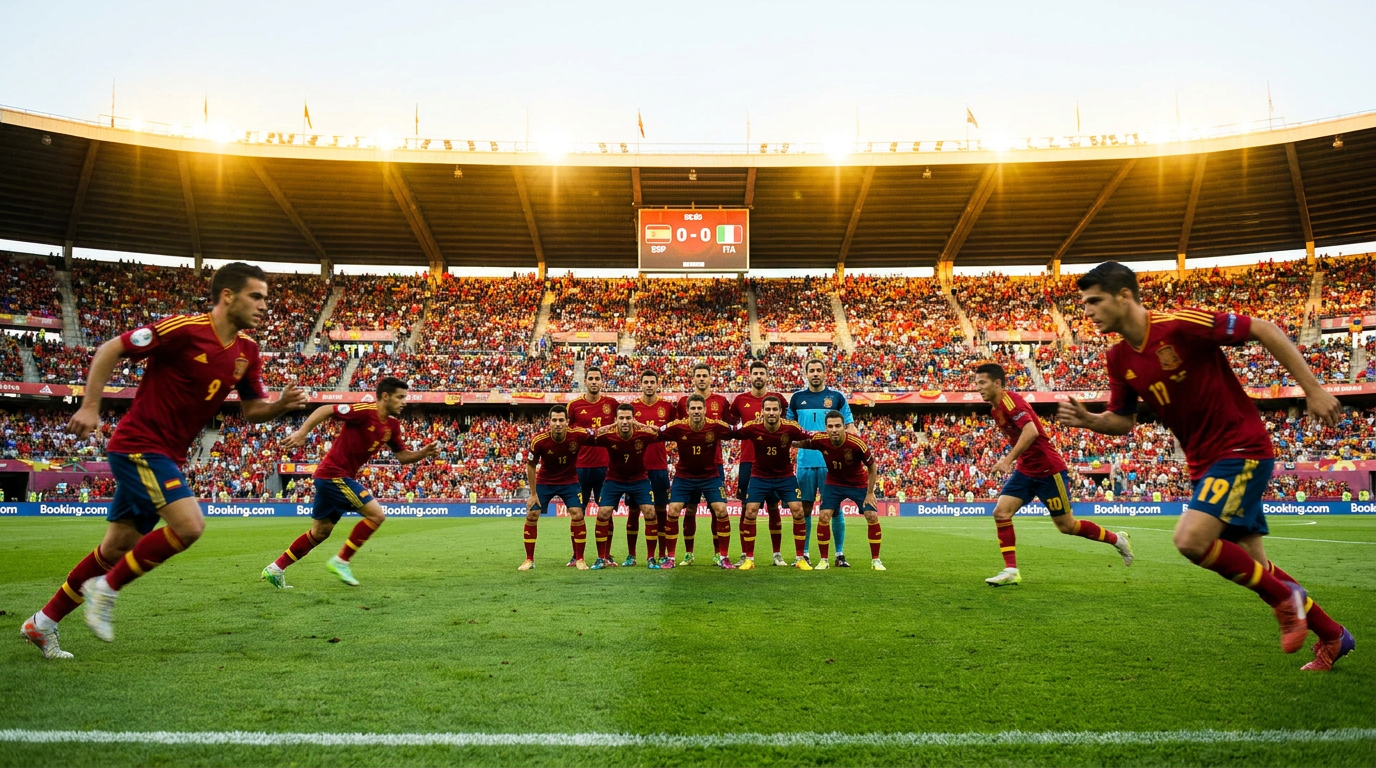
The most visible manifestation of this philosophical shift is Spain's newfound reliance on pure, unadulterated wing play. For years, Spanish managers insisted on deploying central midfielders—players like Andrés Iniesta, Koke, or Pedri—in wide areas to ensure numerical superiority in the middle of the pitch. This created a narrow, congested attacking shape that was easy for disciplined defenses to funnel away from danger. De la Fuente shattered this paradigm by handing the keys to the offense to explosive, traditional wingers.[3][4]
Lamine Yamal, operating on the right flank, represents a generational anomaly for Spanish football. Unlike the archetypal La Masia graduate who thrives on one-touch passing in tight spaces, Yamal is a direct, isolating dribbler who actively seeks one-on-one confrontations. His ability to cut inside onto his left foot forces opposition fullbacks to step out of their defensive lines, instantly compromising the structural integrity of the low block that used to stifle Spain.[2][3]
On the opposite flank, Nico Williams provides raw, terrifying verticality. Where Yamal uses deception and geometry, Williams uses explosive acceleration and bilateral dribbling. By pinning both wingers high and wide against the touchlines, De la Fuente stretches the opposition's defensive line to its absolute physical limits. This width creates massive interior channels—the half-spaces—for Spain's attacking midfielders to exploit, a luxury they were entirely denied during the 2022 campaign.[3][5]

The statistical evidence of this transformation is staggering. During their triumphant Euro 2024 campaign—the ultimate proof of concept for De la Fuente’s system—Spain scored a tournament-record 15 goals. More tellingly, in their opening match against Croatia, Spain recorded just 47 percent possession. It marked the first time in 136 competitive matches, dating back to the Euro 2008 final, that La Roja had lost the possession battle. Yet they won the game 3-0, dismantling the Croatians with ruthless, direct transitions.[1][3]
The statistical evidence of this transformation is staggering.
This willingness to cede possession represents a massive cultural hurdle cleared by the Spanish footballing establishment. For over a decade, the percentage of ball retention was viewed not just as a tactical metric, but as a moral imperative. De la Fuente has successfully decoupled Spain's identity from the possession statistic, convincing both his players and the notoriously demanding Spanish press that a 15-second counter-attack is just as culturally valid as a 40-pass buildup.[2][4]
The engine room of this new vertical machine remains distinctly Spanish, anchored by world-class defensive midfielders who dictate the tempo. However, the roles of the advanced midfielders have been fundamentally altered. Instead of dropping deep to orchestrate endless passing triangles, players like Fabián Ruiz and Dani Olmo are instructed to make aggressive, late runs into the penalty area. They are no longer just facilitators; they are primary goal-scoring threats.[3][5]
Defensively, the vertical system requires a much more aggressive and physically demanding approach. Because Spain is taking more risks and playing riskier forward passes, they turn the ball over more frequently than the 2022 iteration of the team. To compensate, De la Fuente has implemented a ferocious counter-pressing system. The moment possession is lost, the nearest three Spanish players swarm the ball carrier, attempting to win it back high up the pitch before the opponent can transition.[1][5]

This high-wire defensive act places immense pressure on Spain's center-backs. They are frequently left defending one-on-one near the halfway line with vast expanses of space behind them. The emergence of physically dominant, recovery-paced defenders has been crucial in making this system viable. Their ability to win aerial duels and sweep up long balls allows Spain to maintain an incredibly high defensive line without being constantly exposed.[4][5]
The North American setting of the 2026 World Cup presents a unique stress test for De la Fuente's high-octane system. The sheer geographical scale of the tournament, combined with varying altitudes and intense summer heat across the United States, Mexico, and Canada, will severely test the physical endurance required to maintain a relentless counter-press. Squad rotation and load management will be just as critical as tactical preparation.[6]
To mitigate these environmental factors, De la Fuente has built a deeper, more versatile squad than his predecessors. He has moved away from the historical reliance on players from just Barcelona and Real Madrid, selecting in-form talent from across La Liga and Europe. This meritocratic approach has fostered a hungrier, more adaptable locker room, capable of shifting seamlessly from a possession-dominant game state to a low-block counter-attacking posture depending on the opponent and the climate.[1][4]

The psychological shift within the squad is perhaps De la Fuente's greatest achievement. The paralyzing fear of making a mistake—a hallmark of the late-stage tiki-taka era, where losing the ball was viewed as a cardinal sin—has been replaced by a culture of calculated risk-taking. Players are actively encouraged to attempt low-percentage, high-reward passes. If the pass fails, the team trusts its counter-pressing structure to recover the ball.[2][6]
As the 2026 World Cup unfolds, Spain arrives not as the dogmatic passing metronomes of the past, but as the most multifaceted attacking force in international football. They can still strangle a game with possession if required, but they no longer rely on it as their sole mechanism for victory. By embracing verticality, width, and individual expression, Luis de la Fuente has resurrected Spain from the tactical graveyard, forging a modern machine capable of conquering the world once again.[4][6]
How we got here
2008–2012
Spain dominates global football using the possession-heavy 'tiki-taka' system, winning two Euros and a World Cup.
December 2022
Spain is eliminated from the World Cup by Morocco after completing over 1,000 passes without scoring.
January 2023
Luis de la Fuente is appointed head coach and begins dismantling the strict possession dogma.
July 2024
Spain wins Euro 2024 playing a direct, winger-focused system, scoring a tournament-record 15 goals.
June 2026
Spain enters the North American World Cup with their newly forged 'vertical' tactical identity.
Viewpoints in depth
Modern Pragmatists
Analysts who believe international football requires directness to break down organized defenses.
This camp argues that the evolution of defensive tactics—specifically the perfection of the low block—rendered traditional tiki-taka obsolete. They point out that in modern tournament football, teams have less time to build chemistry, making complex, 40-pass attacking sequences highly vulnerable to disciplined defending. By introducing pure wingers and direct transitions, they believe Spain has finally modernized their approach to match the physical and chaotic realities of the current international game.
Spanish Football Federation
Officials and domestic media focused on the cultural shift and resulting success.
For the Spanish establishment, the shift under Luis de la Fuente represents a massive cultural unburdening. For years, the national team was held hostage by the aesthetic demands of the 2010 era, heavily criticized by domestic media if they won without dominating possession. The Federation views the Euro 2024 success as validation that Spain can retain its technical superiority while embracing a more pragmatic, entertaining, and ultimately lethal style of play that resonates with a new generation of fans.
Tactical Purists
Traditionalists who mourn the loss of absolute midfield control.
While acknowledging the recent trophy wins, tactical purists express concern that Spain has surrendered its most unique competitive advantage: the ability to completely starve an opponent of the ball. They argue that by embracing verticality and transition moments, Spain is playing a higher-variance game that exposes their defense to more counter-attacks. This camp worries that in a tight World Cup knockout match, the lack of absolute possession control could lead to chaotic game states where Spain is vulnerable to physically superior opponents.
What we don't know
- Whether Spain's aggressive counter-pressing system can withstand the extreme heat and travel demands of the North American World Cup.
- How the team will adapt if opponents begin double-marking their explosive wingers.
- If the high defensive line can consistently recover against elite, world-class counter-attacking forwards on the global stage.
Key terms
- Tiki-taka
- A style of play characterized by short passing and movement, working the ball through various channels, and maintaining possession.
- Low block
- A defensive strategy where a team drops deep into their own half, prioritizing a compact shape near their penalty area to deny space to the attacking team.
- Half-spaces
- The vertical channels on a football pitch located between the wide flank and the center, often exploited by attacking midfielders to create scoring opportunities.
- Counter-press
- A tactical approach where a team immediately attempts to win the ball back within seconds of losing possession, rather than retreating into a defensive shape.
Frequently asked
Why did Spain abandon tiki-taka?
Following their 2022 World Cup exit, where they completed over 1,000 passes but managed only one shot on target, the coaching staff realized the possession-heavy system had become too predictable and easy to defend against.
What is 'vertical tiki-taka'?
It is a hybrid system that maintains Spain's traditional technical ability to keep the ball, but prioritizes fast, direct forward passes to wide wingers rather than endless sideways circulation.
How will the 2026 World Cup conditions affect this system?
The intense heat and travel demands across North America will test the physical endurance required for Spain's aggressive counter-pressing, making squad rotation crucial for their success.
Sources
Source coverage
6 outlets
3 viewpoints surfaced






[1]The AthleticModern Pragmatists
How Luis de la Fuente fixed Spain's broken possession game
Read on The Athletic →[2]MarcaSpanish Football Federation
The end of tiki-taka: Spain's new era of verticality
Read on Marca →[3]UEFA Technical ReportModern Pragmatists
Euro 2024 Tactical Analysis: Spain's Wing Revolution
Read on UEFA Technical Report →[4]El PaisSpanish Football Federation
La nueva España: Menos pases, más puñales
Read on El Pais →[5]Coaches' VoiceModern Pragmatists
Luis de la Fuente: Tactical Analysis and System
Read on Coaches' Voice →[6]Factlen Editorial TeamTactical Purists
Synthesis by Factlen editorial team
Read on Factlen Editorial Team →
More in sports
See all 25 stories →Standings
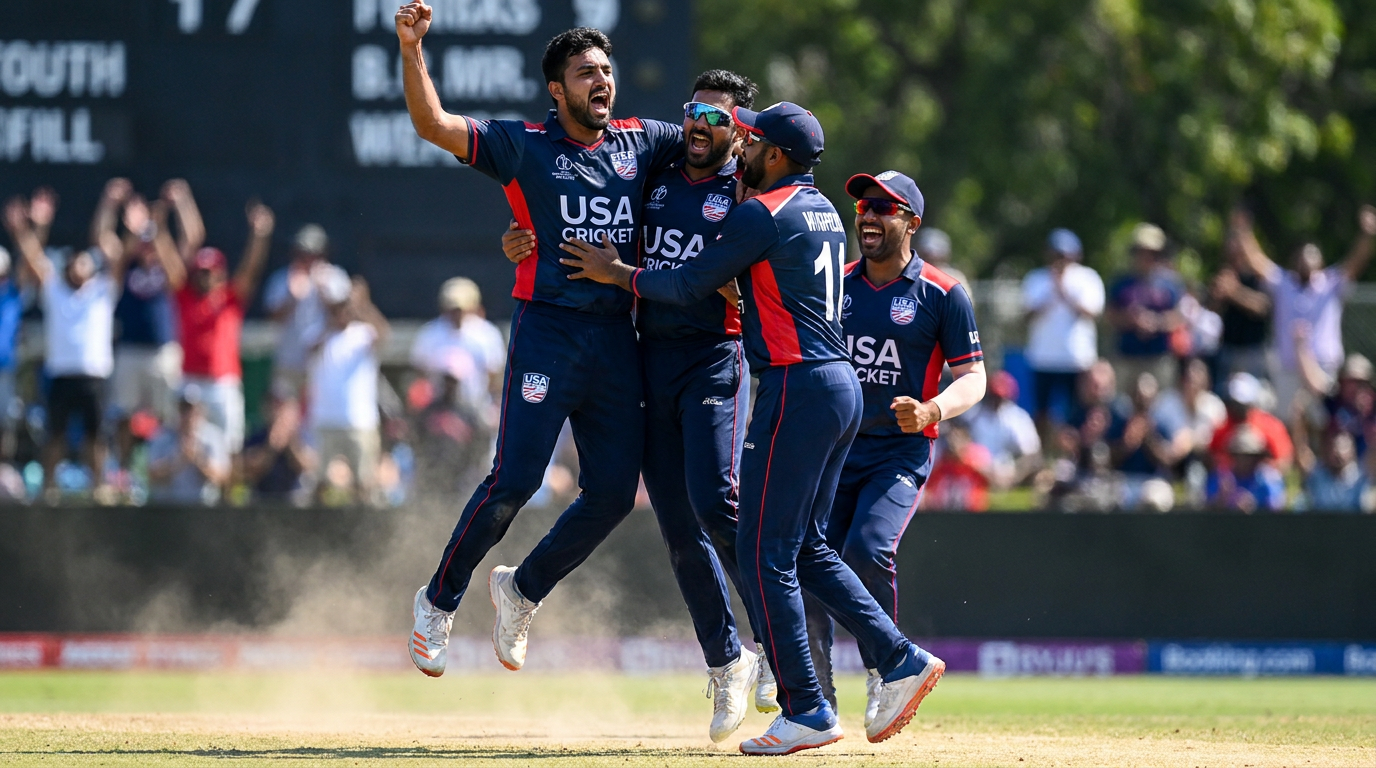
USA and Scotland Dominate World Cup League 2 Standings as Race for Qualifier Spots Intensifies
6 sources
Injury
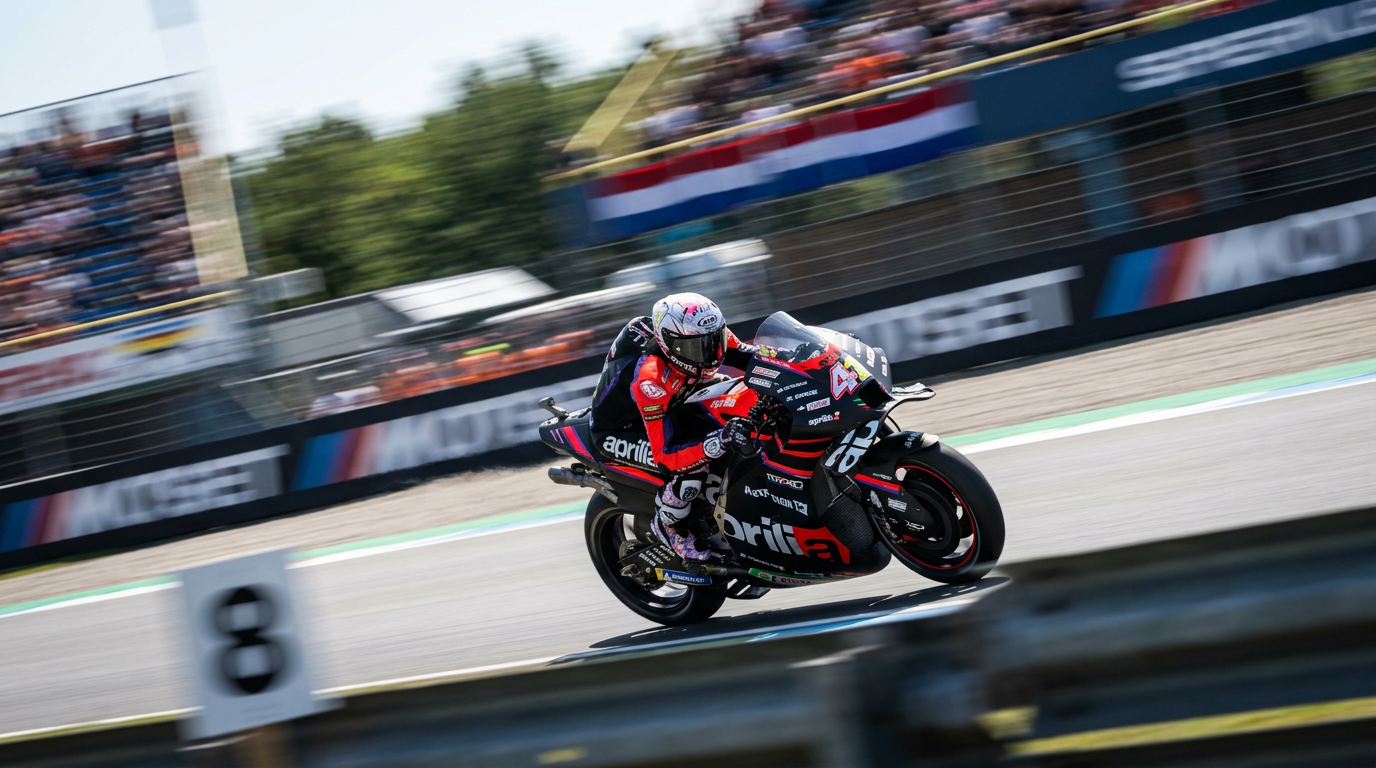
Marco Bezzecchi Cleared of Serious Injury Following Violent Assen Crash as Fermin Aldeguer Faces Summer Recovery
6 sources
Standings
Pato O'Ward Seizes IndyCar Championship Lead as Mid-Season Battle Tightens
6 sources
Injury
Falcons Edge Rusher Bralen Trice Cleared for 11-on-11 Drills After Missing First Two NFL Seasons
6 sources
Every angle. Every day.
Get sports stories with full source coverage and perspective breakdowns delivered to your inbox.