
The Birth of Machine Identity: Why the AI Era Requires a 'Know Your Agent' Framework
As AI agents gain the autonomy to execute payments and manage workflows on our behalf, traditional passwords and API keys are breaking down. The tech industry is racing to build 'Know Your Agent' (KYA)—a new cryptographic framework to ensure autonomous software remains tethered to human accountability.
By Factlen Editorial Team
- Identity Providers
- The focus must shift from static credentials to dynamic, continuous authentication.
- Enterprise Security Teams
- Agents represent a massive expansion of the attack surface that requires strict blast-radius controls.
- AI Developers
- Standardized protocols are needed so agents can seamlessly interact across platforms.
- Standards Bodies
- The industry needs universal protocols to prevent a fragmented, insecure agent economy.
What's not represented
- · Consumer Privacy Advocates
- · Open-Source AI Developers
Why this matters
If you use an AI assistant to manage your calendar, buy groceries, or analyze company data, that agent is acting with your authority. Without a standardized way to verify who the agent represents and what it is allowed to do, the agentic web risks becoming a vector for machine-speed fraud.
Key points
- AI agents are non-deterministic, meaning they make autonomous decisions that break traditional static access controls.
- The 'Know Your Agent' (KYA) framework extends identity verification to autonomous software.
- KYA requires a cryptographic 'delegation chain' linking every agent back to a verified human sponsor.
- Unlike one-time logins, KYA utilizes runtime authentication to verify permissions at the exact moment of execution.
- Standards bodies like the IETF are actively drafting universal protocols to unify machine identity.
An AI agent walks into an API. What credential does it present? A year ago, that sounded like the setup to a niche cryptography joke. Today, it is the most urgent security question facing the internet. As artificial intelligence evolves from chatbots that answer questions into autonomous agents that execute tasks—booking flights, negotiating contracts, and initiating payments—they are crossing a critical threshold. They are no longer just software; they are acting on our behalf.[6]
But when an agent attempts to transfer funds or access a proprietary database, the receiving system faces a dilemma. It cannot see a human face, it cannot ask for a fingerprint, and it cannot rely on traditional behavioral signals like typing speed. It only sees incoming requests. This "presence gap"—where human intent exists but the human user is physically absent—has exposed a fundamental flaw in how the internet handles identity and access management.[4]
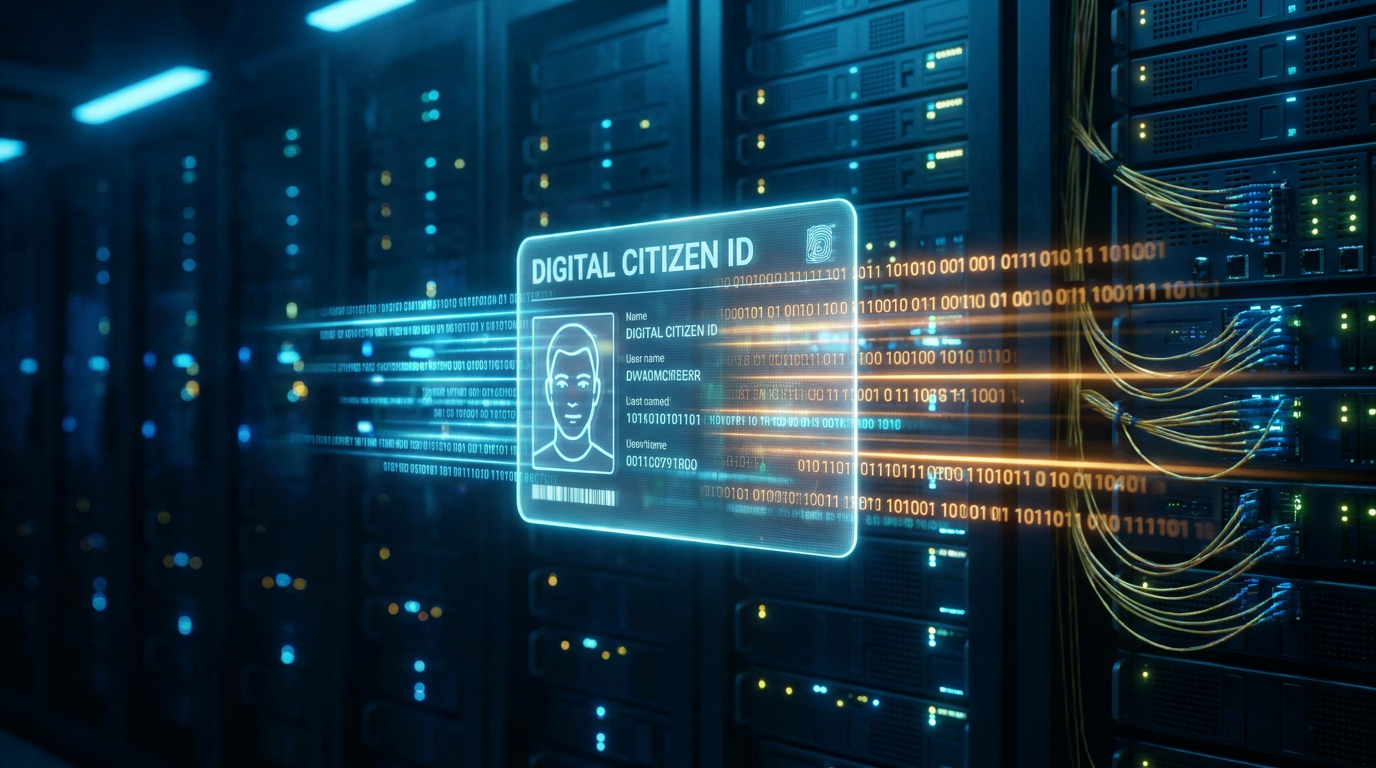
To fix this vulnerability, the cybersecurity and identity industries are rapidly coalescing around a new framework: Know Your Agent (KYA). Modeled after the Know Your Customer (KYC) regulations that govern human banking, KYA is designed to establish trust in a digital economy where non-human actors are projected to outnumber humans by a staggering margin of 25 to 50 times.[3][5]
Understanding why KYA is necessary requires understanding why our current systems are breaking down. For decades, digital identity came in two distinct flavors. Humans received sessions, passwords, and multi-factor authentication prompts. Machines—like backend servers, cron jobs, and data pipelines—received static API keys or service accounts. This binary system worked perfectly because machines were entirely predictable.[6]

Traditional machine identities are deterministic. They follow explicit, pre-programmed workflows. If a script is designed to sync a database at midnight, it will only ever sync the database at midnight. Because their behavior is fixed and their scope is narrow, granting them a static, long-lived credential is a manageable security risk for enterprise IT departments.[1]
AI agents, however, are fundamentally non-deterministic. They interpret natural language prompts, reason about their environment, and make autonomous decisions on the fly. An agent tasked with "optimizing cloud spend" might decide, mid-process, to spin down a server, reallocate resources, or negotiate a new vendor contract. It adapts to context in ways its developer never explicitly coded.[1][2]
This autonomy breaks traditional Role-Based Access Control (RBAC). If you give an AI agent a static API key, you are essentially handing a blank check to an entity that can change its mind. Furthermore, standard protocols like OAuth and SAML provide coarse-grained access that cannot adapt to the ephemeral, multi-step "thoughts" of an agentic workflow.[1][2]
The consequences of this mismatch are severe. A legitimate agent executing a supplier payment and a compromised agent draining accounts using stolen credentials can follow identical behavioral paths through the same API. Because agents operate at machine speed, a single compromised identity can trigger catastrophic fraud before a human analyst even logs on for the day.[5]
Because agents operate at machine speed, a single compromised identity can trigger catastrophic fraud before a human analyst even logs on for the day.
This is where Know Your Agent (KYA) enters the picture. KYA is not a single piece of software, but a multi-layered identity framework that validates which AI agent is acting, under whose authority, and within what scope. It shifts the security paradigm from verifying an identity once at registration to continuously authenticating trust at the moment of execution.[3]
The first pillar of KYA is cryptographic identity. Instead of relying on shared secrets or static API keys, well-designed agents are issued verifiable machine identities—often digital certificates managed through a Public Key Infrastructure (PKI). This ensures the agent cannot be easily spoofed and allows its access to be dynamically rotated or revoked by administrators.[4]

The second, and perhaps most critical, pillar is attribution mapping, or the "delegation chain." An AI agent is not a sovereign citizen; it is a proxy. KYA requires a cryptographic tether linking the autonomous agent back to a verified human or organizational identity. When the agent acts, it must prove not only who it is, but exactly who authorized it to take this specific action.[1][4][5]
The third pillar is capability assessment and authorization limits. This defines the "blast radius" of the agent. A personal agent acting on behalf of a sales representative should only be able to access the CRM records that specific representative is cleared to see. KYA frameworks enforce these boundaries, ensuring the agent cannot exceed the permissions of its human sponsor.[2][4][6]
The final pillar is runtime authentication. Traditional identity checks happen at the front door during login. KYA requires validation at every consequential step. If an agent suddenly pivots from drafting an email to attempting a wire transfer, the KYA framework intercepts the action, verifies the scope, and—if the risk is high enough—triggers a real-time biometric approval request to the human owner.[3]
Implementing this vision requires a massive overhaul of internet plumbing. The industry is currently in a transitional phase, with organizations cobbling together in-house telemetry to track agent behavior. However, standardized protocols are beginning to emerge to formalize KYA principles and create a unified language for machine identity.[7]
The Internet Engineering Task Force (IETF) is actively exploring digital identity management for AI agent communication protocols. Meanwhile, emerging frameworks like the Model Context Protocol (MCP), Agent-to-Agent Protocol (A2A), and OAuth On-Behalf-Of (OBO) are being developed to enable secure, auditable delegation chains across different platforms.[1][7]
Despite the momentum, commercial support remains fragmented. Analysts note that many enterprise security teams are hesitant to fully deploy agentic workflows until these standards solidify and mature. The fear of technical debt—building a bespoke KYA solution today that becomes obsolete when a universal standard arrives tomorrow—is a significant headwind for early adopters.[7]

Yet, the pressure to adopt is mounting rapidly. Organizations expect their non-human identity populations to grow by up to 150% in the coming year, driven almost entirely by the proliferation of AI agents. The economic incentives of agentic automation are simply too massive for enterprises to ignore, forcing security teams to adapt quickly.[1]
Ultimately, the success of the AI era hinges on digital trust. If businesses and consumers cannot confidently verify the agents operating on their networks, the transition to an autonomous digital economy will stall under the weight of fraud and security breaches.[5]
Know Your Agent represents the necessary maturation of artificial intelligence. It acknowledges that intelligence without accountability is a liability. By binding autonomous code to human responsibility, KYA ensures that as machines learn to act on our behalf, they remain fundamentally tethered to our control and oversight.[8]
How we got here
Pre-2023
Machine identity is dominated by static API keys and service accounts for predictable, deterministic backend processes.
2023-2024
The rise of LLMs introduces autonomous agents capable of multi-step reasoning, breaking traditional access control models.
2025
Security researchers identify the 'presence gap,' noting that agents act with human intent but lack human verification.
Early 2026
The Know Your Agent (KYA) framework gains industry consensus as the necessary evolution of KYC for the agentic web.
Mid 2026
Standards bodies like the IETF begin drafting formal protocols for AI agent digital identity and communication.
Viewpoints in depth
Identity Providers' view
The focus must shift from static credentials to dynamic, continuous authentication.
Companies building identity infrastructure argue that the era of the static API key is over. Because AI agents can change their behavior mid-task, identity providers emphasize 'runtime authentication'—verifying an agent's permissions at the exact moment it attempts a sensitive action. They advocate for Public Key Infrastructure (PKI) and digital certificates that can be instantly revoked if an agent acts outside its expected parameters.
Enterprise Security Teams' view
Agents represent a massive expansion of the attack surface that requires strict blast-radius controls.
For Chief Information Security Officers (CISOs), AI agents are a compliance nightmare. Security teams are primarily concerned with 'attribution mapping'—ensuring that every action an agent takes can be traced back to a verified human who authorized it. They argue that without strict Role-Based Access Control (RBAC) adapted for non-deterministic software, a single compromised agent could execute fraud at machine speed before human monitors even notice.
Standards Bodies' view
The industry needs universal protocols to prevent a fragmented, insecure agent economy.
Organizations like the IETF and industry analysts warn that cobbling together bespoke, in-house solutions for agent identity will lead to massive technical debt. They are pushing for universal standards—like the Model Context Protocol (MCP) and OAuth On-Behalf-Of (OBO)—so that an agent built by one company can securely authenticate and interact with an API built by another, using a shared language of trust.
What we don't know
- Which specific protocol (MCP, A2A, or a new IETF standard) will ultimately become the universal default for agent identity.
- How regulators will assign legal liability if a fully verified, KYA-compliant agent still manages to execute a harmful or illegal action.
- Whether smaller developers will be priced out of building agents if KYA compliance requires expensive enterprise-grade infrastructure.
Key terms
- Know Your Agent (KYA)
- An identity framework that validates which AI agent is acting, under whose authority, and within what scope at the moment of execution.
- Deterministic vs. Non-deterministic
- Deterministic software follows exact, pre-programmed steps; non-deterministic AI agents adapt, reason, and make autonomous decisions on the fly.
- Attribution Mapping
- The cryptographic link that ties an autonomous AI agent's actions back to the verified human who authorized it.
- Runtime Authentication
- The process of verifying an agent's identity and permissions at the exact moment it attempts an action, rather than just once at login.
Frequently asked
Why can't we just use passwords for AI agents?
Passwords and traditional sessions are designed for humans. AI agents operate continuously in the background and require machine-readable credentials, like digital certificates, that can be programmatically scoped and revoked.
How is KYA different from KYC?
Know Your Customer (KYC) verifies a human's identity once using documents like a passport. Know Your Agent (KYA) continuously verifies a software agent's permissions and human sponsor every time it takes a consequential action.
What happens if an AI agent is compromised?
Without KYA, a compromised agent can execute unauthorized actions at machine speed. With KYA, the agent's blast radius is limited, and anomalous behavior triggers instant revocation or requires real-time human approval.
Sources
Source coverage
8 outlets
4 viewpoints surfaced








[1]MintMCPEnterprise Security Teams
Defining AI Agent Identity: A New Frontier in Digital Trust
Read on MintMCP →[2]Permit.ioEnterprise Security Teams
What is a Machine Identity? Understanding AI Access Control
Read on Permit.io →[3]1KosmosIdentity Providers
What is Know Your Agent (KYA)?
Read on 1Kosmos →[4]MicroblinkIdentity Providers
Defining KYA and Its Core Framework
Read on Microblink →[5]Shufti ProIdentity Providers
KYA is the identity layer for autonomous systems
Read on Shufti Pro →[6]WorkOSIdentity Providers
Machine identity for AI agents: Which credential to issue and when
Read on WorkOS →[7]ForresterStandards Bodies
Identity standards is ongoing but not unified
Read on Forrester →[8]Factlen Editorial TeamAI Developers
Synthesis by Factlen editorial team
Read on Factlen Editorial Team →

Every angle. Every day.
Get meta stories with full source coverage and perspective breakdowns delivered to your inbox.