
Legendary Music Executive Clive Davis Dies at 94, Leaving a Half-Century Legacy of Pop Innovation
The visionary producer and label founder who discovered Whitney Houston, Bruce Springsteen, and Alicia Keys has passed away, prompting a global celebration of his unparalleled impact on modern music.
By Factlen Editorial Team
- Music Industry Executives
- Focuses on his business acumen and his role in defining modern A&R practices.
- Recording Artists
- Emphasizes his mentorship, his 'golden ear' for hits, and his personal dedication to their careers.
- Cultural Historians
- Analyzes his broader impact on American pop culture and how he bridged different musical eras.
What's not represented
- · Independent label owners who navigated the industry consolidation Davis helped pioneer.
- · Songwriters whose tracks were selected or rejected by Davis for his marquee artists.
Why this matters
Clive Davis did not just participate in the music industry; he actively engineered its modern structure. His ability to bridge the gap between raw artistic talent and global commercial success created the blueprint for contemporary pop, R&B, and rock, shaping the soundtracks of millions of lives over five decades.
Key points
- Legendary music executive Clive Davis has died at age 94 in New York.
- He is credited with discovering and mentoring icons like Whitney Houston, Bruce Springsteen, and Alicia Keys.
- Davis served as president of Columbia Records before founding Arista Records and J Records.
- He won five Grammy Awards and received the Recording Academy's Trustees Award in 2000.
- His annual Pre-Grammy Gala remained one of the most exclusive and influential events in the entertainment industry.
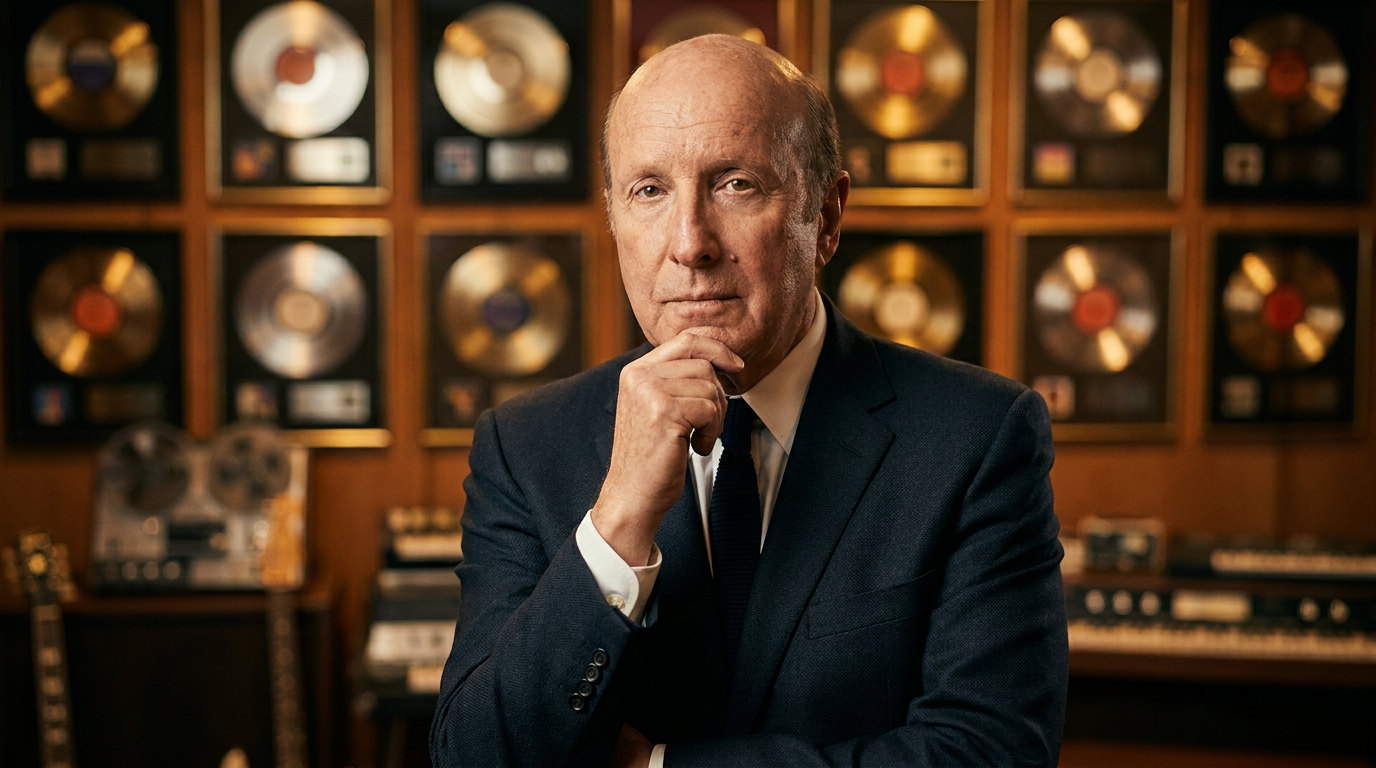
Clive Davis, the towering music executive whose preternatural ear for talent shaped the trajectory of popular music for more than half a century, died peacefully at his home in New York on Friday. He was 94. His passing marks the end of an era for the recording industry, drawing immediate tributes from generations of artists whose careers he launched, nurtured, or revived. Across social media and official statements, the entertainment world paused to reflect on a career that fundamentally altered the cultural landscape.[1][3][4]
Often referred to as 'The Man with the Golden Ear,' Davis possessed an uncanny ability to match vocalists with the exact songs that would propel them to global superstardom. He did not merely sign artists; he actively curated their sound, image, and repertoire. This hands-on approach redefined the role of the modern record executive, transforming the position from a purely administrative function into a deeply creative partnership that blurred the lines between executive and producer.[2][6]
Davis's legendary career began almost by accident. A Harvard-educated lawyer, he joined Columbia Records in 1960 as legal counsel before ascending to the presidency in 1967. His transformative moment arrived at the Monterey Pop Festival that same year, where a visceral performance by Janis Joplin convinced him to pivot the historically conservative label toward the burgeoning rock counterculture. He promptly signed Joplin, Santana, and Bruce Springsteen, fundamentally altering Columbia's DNA and proving his instincts to a skeptical old guard.[4][7]

Following his departure from Columbia, Davis founded Arista Records in 1974, building it into an independent powerhouse. It was at Arista that he made his most famous discovery: a 19-year-old Whitney Houston. Davis personally guided Houston's career, meticulously selecting the pop and R&B crossover tracks that would make her one of the best-selling artists of all time. Their partnership became the gold standard for executive-artist collaboration, yielding unprecedented chart success and cultural ubiquity.[1][5]
Following his departure from Columbia, Davis founded Arista Records in 1974, building it into an independent powerhouse.
Never one to rest on his laurels, Davis launched J Records in 2000 at the age of 68, proving his instincts remained razor-sharp by signing a young Alicia Keys. He later engineered one of the most successful comebacks in music history with Carlos Santana's multi-platinum album 'Supernatural.' His ability to navigate the shifting tastes of the public across distinct musical eras—from 1960s psychedelic rock to 1980s pop to 2000s R&B—remains unmatched in the industry.[3][6]
Beyond his direct work with artists, Davis was famous for his annual Pre-Grammy Gala. For decades, the exclusive Beverly Hills event served as the ultimate nexus of the music, film, and political worlds. An invitation to the party was considered the ultimate industry validation, and the event itself frequently featured impromptu, historic collaborations between veteran legends and rising stars, cementing Davis's role as the ultimate industry convener.[2][8]

The news of his passing triggered an immediate outpouring of gratitude across the entertainment world. The Recording Academy released a statement calling him 'the ultimate architect of the modern soundtrack,' while artists ranging from Barry Manilow to Kelly Clarkson shared personal stories of his mentorship. Many highlighted not just his commercial instincts, but his genuine, encyclopedic love for the mechanics of a hit song and his unwavering belief in the artists he championed.[1][8]
As the music industry grapples with algorithmic discovery and viral social media hits, Davis's legacy stands as a testament to the enduring power of human intuition and dedicated artist development. While the mechanics of how music is distributed have changed entirely since he first walked into Columbia Records, the fundamental blueprint he established—finding undeniable talent and pairing it with unforgettable songs—remains the industry's holy grail.[5][7]
How we got here
1967
Davis is appointed president of Columbia Records and signs Janis Joplin after the Monterey Pop Festival.
1974
Founds Arista Records, which becomes a powerhouse label for pop, rock, and R&B.
1983
Signs a 19-year-old Whitney Houston, guiding her to unprecedented global stardom.
2000
Launches J Records and signs Alicia Keys, proving his continued relevance in a new era.
2026
Passes away at age 94, leaving behind a monumental legacy in modern music.
Viewpoints in depth
The Artists' Perspective
Musicians remember Davis as a deeply involved mentor who prioritized long-term career building.
For the artists he championed, Davis was far more than a corporate suit; he was a creative sounding board and a fierce protector. Vocalists like Alicia Keys and Kelly Clarkson have frequently cited his willingness to listen and his insistence on finding the 'perfect song' rather than rushing a release. While his hands-on approach sometimes led to creative friction, artists widely respected his unparalleled track record and his genuine devotion to their success.
Industry Executives' View
Peers view Davis as the architect of the modern A&R system.
Within the boardroom, Davis is revered for transforming the role of the record executive. Before his tenure, label heads were largely administrators. Davis proved that an executive could be a creative force, actively shaping the cultural zeitgeist. Current label presidents frequently cite his tenure at Columbia and Arista as the definitive case studies in balancing artistic integrity with massive commercial scale, noting that his blueprint for artist development is still taught in music business programs today.
What we don't know
- Details regarding public memorials or tribute concerts have not yet been announced by his estate.
- How the Recording Academy will formally honor his legacy at the upcoming 2027 Grammy Awards.
Key terms
- A&R (Artists and Repertoire)
- The division of a record label responsible for talent scouting and overseeing the artistic development of recording artists.
- Crossover Track
- A song that achieves success on multiple different genre charts, such as moving from R&B to mainstream Pop.
- Trustees Award
- A Special Merit Award presented by the Recording Academy to individuals who have made significant contributions to music in a non-performing capacity.
Frequently asked
Who were Clive Davis's most famous discoveries?
Davis is most famously credited with discovering Whitney Houston and Alicia Keys, and he played a pivotal role in the early careers of Bruce Springsteen, Janis Joplin, and Aerosmith.
What record labels did Clive Davis run?
He served as the president of Columbia Records, and later founded both Arista Records and J Records.
What was the Clive Davis Pre-Grammy Gala?
It was an exclusive, annual invite-only party held the night before the Grammy Awards, famous for gathering the biggest names in music and featuring historic live performances.
Sources
Source coverage
8 outlets
3 viewpoints surfaced








[1]BillboardMusic Industry Executives
Clive Davis, Legendary Music Executive Who Shaped Generations of Pop, Dies at 94
Read on Billboard →[2]Rolling StoneRecording Artists
The Man With the Golden Ear: Remembering Clive Davis
Read on Rolling Stone →[3]VarietyMusic Industry Executives
Music Industry Titan Clive Davis Passes Away; Arista Founder Was 94
Read on Variety →[4]The New York TimesCultural Historians
Clive Davis, Hitmaker Who Discovered Whitney Houston and Bruce Springsteen, Dies at 94
Read on The New York Times →[5]BBC NewsCultural Historians
Clive Davis: The music mogul who defined the soundtrack of a century dies
Read on BBC News →[6]Los Angeles TimesRecording Artists
From Janis Joplin to Alicia Keys: How Clive Davis built the modern music industry
Read on Los Angeles Times →[7]NPRCultural Historians
Clive Davis, the ultimate music man, leaves behind an unmatched legacy
Read on NPR →[8]Grammy.comRecording Artists
Recording Academy Statement on the Passing of Clive Davis
Read on Grammy.com →

Every angle. Every day.
Get entertainment stories with full source coverage and perspective breakdowns delivered to your inbox.