
The 7,000mAh Era: How Silicon-Carbon Batteries Are Finally Solving the Smartphone Power Crisis
A new generation of semi-solid-state and silicon-carbon batteries is hitting mainstream smartphones in 2026, delivering up to 30% more capacity without increasing device size. The breakthrough promises true multi-day battery life and significantly longer device lifespans.
By Factlen Editorial Team
- Consumer Tech Analysts
- Analysts view the battery breakthrough as the necessary foundation for the next era of mobile computing.
- Materials Scientists
- Chemists and engineers emphasize the monumental technical hurdles overcome to stabilize silicon and semi-solid materials.
- Industry Strategists
- Market strategists see the longer-lasting batteries as a shift in the smartphone upgrade cycle and sustainability metrics.
What's not represented
- · Independent Repair Shops
- · Lithium and Graphite Miners
Why this matters
For the first time in a decade, consumers will not have to compromise between device performance and battery life. This chemical breakthrough means phones can comfortably last multiple days on a single charge and survive years longer before needing replacement, saving users money and drastically reducing e-waste.
Key points
- Smartphones in 2026 are adopting silicon-carbon anodes and semi-solid-state electrolytes.
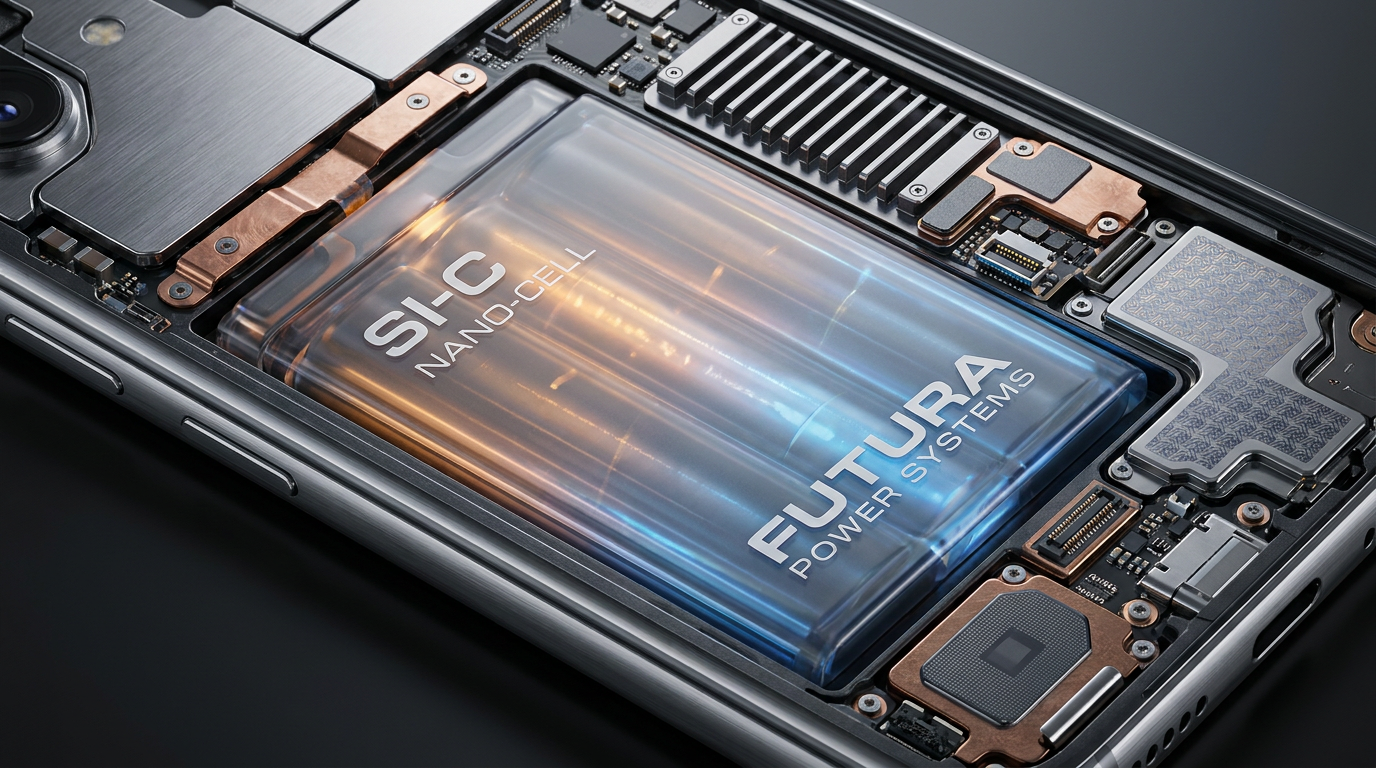
- The new chemistry allows for 7,000mAh capacities in the same space as older 5,000mAh batteries.
- The breakthrough enables the immense power requirements of new on-device AI processors.
- Slower battery degradation will extend device lifespans and reduce global electronic waste.
The smartphone industry has spent the last decade trapped in a zero-sum game. Every leap in processor speed, display brightness, or artificial intelligence came at the direct expense of battery life.[6]
Traditional lithium-ion technology, which relies on graphite anodes and liquid electrolytes, hit its theoretical energy density limit years ago. Manufacturers resorted to software tricks and faster charging speeds to mask the fact that phones still struggled to survive a heavy day of use.[5][6]
But in the summer of 2026, the industry is finally breaking the bottleneck. A new wave of flagship devices is hitting the market equipped with silicon-carbon anodes and semi-solid-state electrolytes, delivering a generational leap in power storage.[6]
The most dramatic evidence arrived this week with the unveiling of the Vivo X Fold6. Despite the space constraints inherent to foldable phones, the device packs a massive 7,000mAh battery.[1]

According to industry specifications, the battery utilizes a fifth-generation silicon anode paired with third-generation semi-solid-state technology. This allows the device to deliver nearly 10 hours of continuous, heavy-load usage—a 30% improvement over its predecessor.[1]
Vivo is not alone in this transition. The broader 2026 smartphone roadmap reveals that devices like the OnePlus 16 Pro and Honor Magic 7 are adopting similar silicon-carbon architectures, routinely squeezing 6,500mAh capacities into the physical footprint previously required for a 5,000mAh cell.[2]
To understand the breakthrough, one must look at the chemistry. Traditional batteries use graphite for the anode, which is stable but bulky. Silicon can hold up to ten times more lithium ions than graphite, but early silicon anodes swelled and degraded rapidly during charging cycles.[6]
To understand the breakthrough, one must look at the chemistry.
Materials scientists have spent the last five years perfecting silicon-carbon composites that stabilize the silicon, preventing the swelling while retaining the massive capacity gains.[6]
Simultaneously, the shift toward semi-solid-state electrolytes is making these dense batteries safer. By replacing the highly flammable liquid electrolytes of the past with a gel or semi-solid matrix, manufacturers can pack cells tighter without the risk of thermal runaway.[5][6]

This transition was previewed earlier in the year at CES 2026, where accessory makers like BMX debuted ultraslim power banks utilizing semi-solid-state tech. Their 5,000mAh units measured just 6.8 millimeters thick, proving the commercial viability of the chemistry.[3]
While the holy grail of pure solid-state batteries—which use a completely solid ceramic or glass electrolyte—remains slightly out of reach for mass-market smartphones, the current semi-solid hybrid approach offers the best of both worlds.[3][5]
The implications extend far beyond the convenience of leaving a charger at home. As on-device artificial intelligence becomes standard, processing complex algorithms locally requires immense sustained power.[4]
Analysts note that without this leap in energy density, the new wave of "AI-native" processors would drain traditional batteries in a matter of hours.[4][6]

Furthermore, these new batteries degrade at a significantly slower rate. While traditional lithium-ion cells often lose 20% of their capacity within two years, silicon-carbon and semi-solid cells are rated to maintain peak health for much longer.[1][6]
This durability translates directly to a reduction in electronic waste. If a smartphone's battery can comfortably survive four to five years of daily use, consumers are far less likely to discard the device prematurely. After years of incremental updates, the mobile industry has finally delivered a hardware revolution that users will actually feel every single day.[6]
How we got here
Pre-2024
Lithium-ion batteries hit a plateau, with flagship phones maxing out around 5,000mAh.
2024-2025
Early silicon-carbon batteries appear in select Asian-market phones, proving the concept.
January 2026
Accessory makers debut ultra-thin semi-solid-state power banks at CES.
June 2026
Major flagships launch with 7,000mAh semi-solid-state batteries, signaling mainstream adoption.
Viewpoints in depth
Consumer Tech Analysts
Analysts view the battery breakthrough as the necessary foundation for the next era of mobile computing.
For tech reviewers and market analysts, the arrival of 7,000mAh batteries is less about avoiding the wall charger and more about enabling the future. With the industry pivoting aggressively toward on-device artificial intelligence, smartphones require immense, sustained power to run complex local algorithms without tapping into the cloud. Analysts argue that without this leap in energy density, the promised "AI-native" features of 2026 would have rendered flagship phones unusable by mid-afternoon.
Materials Scientists
Chemists and engineers emphasize the monumental technical hurdles overcome to stabilize silicon and semi-solid materials.
The scientific community views this rollout as the culmination of decades of frustrating trial and error. Graphite anodes were safe but bulky; pure silicon offered massive capacity but swelled and shattered during charging. By perfecting silicon-carbon composites and replacing volatile liquid electrolytes with semi-solid matrices, researchers have threaded a nearly impossible needle. They caution, however, that while semi-solid tech is here, the holy grail of pure, 100% solid-state batteries for consumer electronics remains a few years away.
Industry Strategists
Market strategists see the longer-lasting batteries as a shift in the smartphone upgrade cycle and sustainability metrics.
From a strategic and environmental standpoint, batteries that degrade slower fundamentally alter the smartphone lifecycle. If a device can maintain peak battery health for four to five years, the primary driver of consumer upgrades—a dying battery—is eliminated. Strategists note this will force manufacturers to compete on actual feature innovation rather than planned obsolescence, while simultaneously delivering a massive win for global e-waste reduction efforts.
What we don't know
- When pure, 100% solid-state batteries (with zero liquid or gel components) will become cheap enough for mass-market smartphones.
- How quickly mid-range and budget smartphones will adopt silicon-carbon technology, which currently carries a premium price tag.
Key terms
- Silicon Anode
- The negative electrode of a battery made from silicon, which can store vastly more lithium ions than traditional graphite but required years of engineering to prevent physical swelling.
- Semi-Solid-State
- A battery architecture that replaces purely liquid electrolytes with a gel or hybrid matrix, improving safety and energy density.
- Energy Density
- The amount of energy a battery can store relative to its physical size or weight.
- Thermal Runaway
- A dangerous chain reaction in traditional batteries where overheating causes a fire or explosion; mitigated by newer solid and semi-solid designs.
Frequently asked
What is a silicon-carbon battery?
A battery that replaces the traditional graphite anode with a silicon-carbon composite, allowing it to store significantly more energy in the same physical space.
Are these new batteries safe?
Yes. The move toward semi-solid-state electrolytes actually makes them safer than traditional lithium-ion batteries by reducing the use of highly flammable liquids.
Will this make smartphones thicker?
No, the primary advantage of this technology is increased energy density, meaning manufacturers can increase capacity without adding bulk to the device.
When will all phones have this technology?
Flagship Android devices are adopting it throughout 2026, and the technology is expected to trickle down to mid-range phones over the next two years.
Sources
Source coverage
6 outlets
3 viewpoints surfaced






[1]GSMArenaConsumer Tech Analysts
vivo confirms X Fold6 battery capacity and durability ratings
Read on GSMArena →[2]GadgetSpecsConsumer Tech Analysts
2026 Smartphone Roadmap: Breakthrough Technologies
Read on GadgetSpecs →[3]The American Ceramic SocietyMaterials Scientists
Solid-state batteries turn heads at CES 2026
Read on The American Ceramic Society →[4]ForbesConsumer Tech Analysts
8 Smartphone Trends That Will Shape 2026
Read on Forbes →[5]PhoneArenaMaterials Scientists
Solid-state smartphone battery dream just suffered a major blow
Read on PhoneArena →[6]Factlen Editorial TeamIndustry Strategists
Synthesis by Factlen editorial team
Read on Factlen Editorial Team →

More in technology
See all 8 stories →Web Trust
How Algorithmic Choice and Decentralization Are Fixing Social Media
7 sources

AppSec Innovation
The Evidence Behind AI-Driven Code Remediation: Can LLMs Actually Fix Vulnerabilities?
7 sources

Battery Tech
Solid-State Batteries Finally Hit Mainstream Consumer Gadgets
7 sources
AI Defense
The AI Vulnerability Spike: Why a Record Number of Software Bugs is Actually Good News
8 sources

Every angle. Every day.
Get technology stories with full source coverage and perspective breakdowns delivered to your inbox.