
The 2026 Guide to Buying a Portable Power Station: LiFePO4, Sizing, and Avoiding the Spec-Sheet Trap
Portable power stations have evolved rapidly, with LiFePO4 batteries and expandable ecosystems becoming the new standard. This guide explains how to calculate your real-world power needs and choose the right unit for camping, van life, or home backup.
By Factlen Editorial Team
- Off-Grid Adventurers
- Value portability, ruggedness, and rapid solar charging for van life and remote camping.
- Emergency Preparedness Planners
- Prioritize massive capacity, expandability, and high continuous wattage to keep home appliances running during grid failures.
- Value-Conscious Consumers
- Focus on the cost-per-watt-hour and matching the unit's size strictly to their actual needs to avoid overpaying.
- Tech Enthusiasts
- Look for app connectivity, fast AC charging speeds, and the latest battery chemistries like Sodium-Ion.
What's not represented
- · Traditional Gas Generator Manufacturers
- · Apartment Renters with Limited Storage
Why this matters
Investing in the wrong power station can mean overpaying by thousands of dollars or finding yourself without power during an emergency. Understanding battery chemistry and real-world efficiency ensures you buy a reliable system that lasts for a decade.
Key points
- LiFePO4 (LFP) batteries are now the industry standard, offering over 4,000 charge cycles and superior safety.
- Buyers should use the '0.85 rule' to account for inverter loss when calculating how long a unit will run their devices.
- A 600Wh to 800Wh unit is the sweet spot for weekend camping, while 1,000Wh+ is needed for CPAP machines or power tools.
- High-capacity home backup units now feature modular designs, allowing users to daisy-chain expansion batteries as needed.
- Sodium-Ion batteries are emerging as a niche alternative for users who need reliable power in sub-zero winter conditions.
The era of loud, gas-guzzling generators is rapidly fading from campgrounds and suburban neighborhoods alike. In 2026, portable power stations—often marketed as solar generators when paired with foldable photovoltaic panels—have become the default solution for off-grid power, van life, and home emergency backup. These silent, fume-free devices can safely operate indoors, fundamentally changing how households prepare for severe storm outages and how campers power their weekend adventures. Unlike traditional combustion engines that require constant maintenance, fuel storage, and pull-starts, modern power stations offer a plug-and-play experience that appeals to a much broader demographic of consumers looking for reliable energy security.[4][6]
The market for these devices has matured significantly over the past few years, evolving from a niche hobbyist category into a mainstream appliance sector. Just a half-decade ago, early adopters had to settle for heavy, inefficient lead-acid units or early lithium-ion models that degraded noticeably after just a few seasons of heavy use. Today, rapid advances in battery chemistry, inverter efficiency, and software management systems have transformed these devices into highly reliable, multi-decade investments. The latest flagship models now rival the continuous electrical output of traditional combustion generators, capable of running everything from sensitive medical equipment to heavy-duty power tools without skipping a beat.[1][5]
However, the sheer volume of options, confusing marketing jargon, and rampant spec-sheet inflation makes choosing the right unit increasingly overwhelming for the average buyer. Consumers frequently fall into the trap of overpaying for massive battery capacity they do not actually need, driven by a fear of running out of power. Conversely, many buyers underestimate the continuous wattage required to run high-draw resistive heating appliances like microwaves, coffee makers, and space heaters, leading to tripped breakers and frustration. Navigating this landscape requires looking past the bold claims on the box and understanding the underlying math of personal energy consumption.[1][5]
The most critical technological shift in the 2026 portable power landscape is the near-universal adoption of Lithium Iron Phosphate (LiFePO4 or LFP) battery chemistry. LFP has become the undisputed gold standard for longevity, thermal stability, and overall safety, effectively replacing the older Nickel Manganese Cobalt (NMC) batteries that previously dominated the consumer electronics and early power station space. While NMC batteries are lighter, their shorter lifespan and higher risk of thermal runaway made them less ideal for heavy-duty, long-term power storage, prompting the industry-wide pivot to the far more robust LFP standard.[1][4]
The primary advantage of this chemical shift is an unprecedented increase in overall device lifespan. Premium LFP units now deliver between 3,000 and 4,000 charge cycles before their maximum capacity drops to 80 percent of its original factory rating. To put that massive number into perspective, even if a user fully charges and completely discharges the power station every single day of the year, a modern LFP unit will last for over ten years before showing any meaningful degradation. This durability transforms the purchase from a disposable tech gadget into a long-term household utility investment.[1][6]

Beyond sheer longevity, LFP batteries run significantly cooler under heavy electrical loads compared to their predecessors. This thermal stability provides a critical safety advantage during summer camping trips, outdoor job sites, or enclosed van life setups, where ambient temperatures can soar and ventilation might be limited. Because the batteries are inherently more stable, they require less aggressive cooling from internal fans, resulting in quieter operation. Almost every top-tier manufacturer has now transitioned their primary product lineups to LFP chemistry to meet consumer demand for durability and peace of mind.[1][3]
For extreme winter conditions, however, a new chemical contender has emerged on the market: Sodium-Ion technology. While standard LFP batteries are incredibly durable, they share a common lithium-ion weakness—they can lose 30 to 40 percent of their usable capacity in sub-zero temperatures and often cannot be recharged when frozen. Sodium-Ion units, by contrast, maintain their power output and accept charges in freezing environments without issue. This makes them a niche but highly valuable option for winter camping, ice fishing, and maintaining off-grid cabins in northern climates where traditional batteries would fail.[1][5]
When evaluating models, the biggest mistake buyers make is shopping for maximum watt-hours without understanding their real-world power draw. A power station's capacity is measured in watt-hours (Wh), which acts like a fuel tank and dictates how long the unit will run. Meanwhile, its continuous output is measured in watts (W), which acts like the engine's horsepower and dictates what appliances it can run simultaneously without tripping the internal breaker. Buying a massive battery with a weak inverter means you have power for days, but you still cannot boil a kettle of water.[5]
When evaluating models, the biggest mistake buyers make is shopping for maximum watt-hours without understanding their real-world power draw.
To calculate actual runtime and avoid spec-sheet traps, industry experts recommend using the "0.85 rule" to account for the energy lost during the inverter's DC-to-AC conversion process. The formula is straightforward: multiply the total watt-hours by 0.85, then divide by the device's wattage to get the total hours of runtime. Because most manufacturers skip this inverter loss in their marketing materials—often claiming a 1000Wh battery will run a 100W device for exactly 10 hours—buyers who do not run this calculation often find their CPAP machine or portable fridge dying earlier than expected.[1]

Sizing the unit correctly to your specific lifestyle is the absolute key to finding value in this market. The 200Wh to 400Wh tier is strictly designed for casual, low-draw use. These highly portable, lightweight units are perfect for charging smartphones, laptops, drone batteries, and running small LED lights around a campsite. However, their internal inverters are usually capped at around 300 watts, meaning they will immediately shut down if tasked with powering a heating element, a coffee maker, or any motorized appliance, making them unsuitable for serious emergency backup.[1][7]
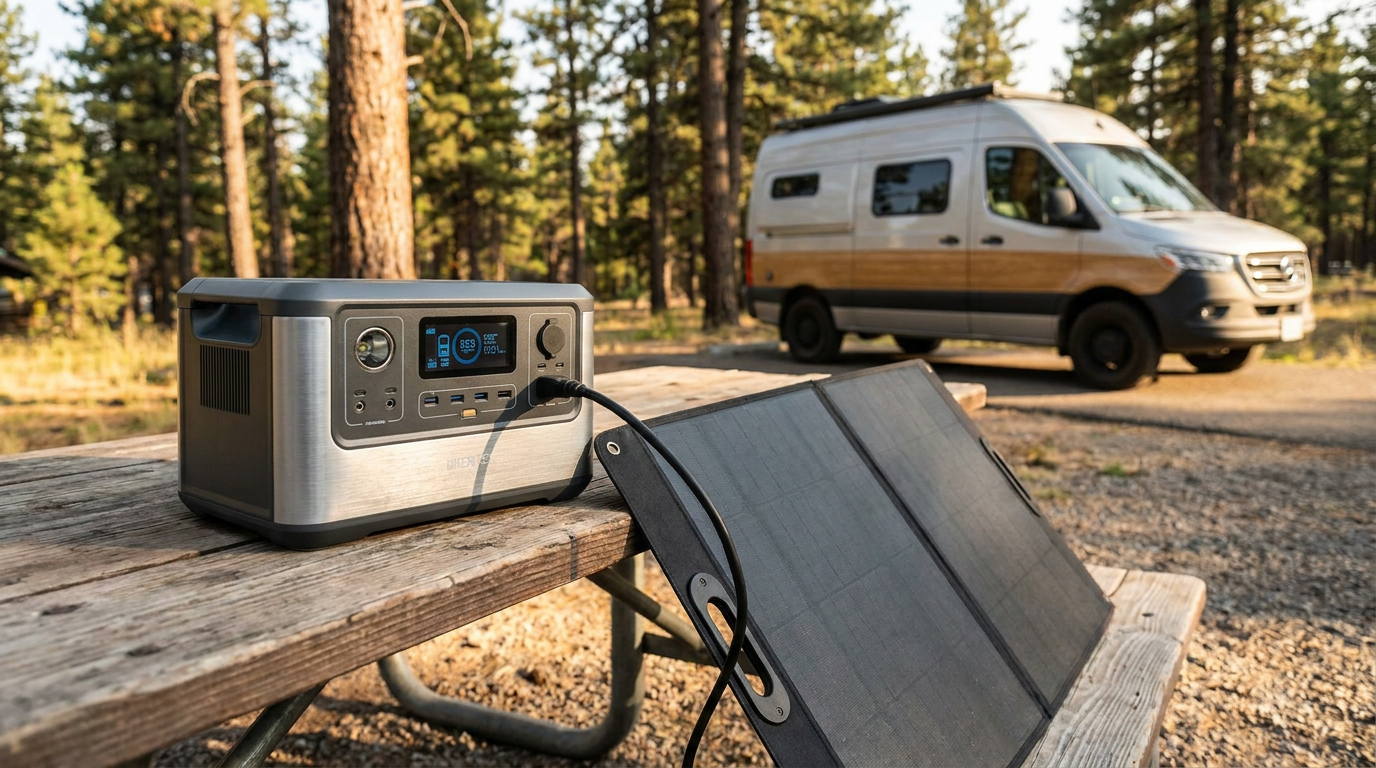
Stepping up the ladder, the 600Wh to 800Wh class represents the ultimate sweet spot for weekend camping and tailgating enthusiasts. These mid-sized units can comfortably run a 12V portable compressor refrigerator overnight, inflate multiple air mattresses, power a digital projector for an outdoor movie night, and keep a campsite illuminated without breaking the bank. Crucially, they remain light enough that a single person can easily carry them from the trunk of a car to a picnic table, striking the perfect balance between utility and physical portability.[1][4]
For multi-day power outages, dedicated CPAP machine users, or serious overlanding setups, the 1,000Wh to 1,500Wh tier is generally the required starting point. Models in this highly competitive space offer enough continuous wattage—often between 1,500 and 2,000 watts—to briefly run a microwave, a hair dryer, or heavy power tools. Despite this impressive output, they maintain a manageable physical footprint and a weight of around 25 to 30 pounds, making them the most versatile "do-it-all" option for the average consumer looking to bridge the gap between camping and home backup.[1][3][7]

Beyond the 2,000Wh threshold, the market enters the realm of dedicated van life infrastructure and whole-home emergency backup. These heavy-duty units feature massive 3,000-watt inverters capable of running full-size kitchen refrigerators, residential well pumps, and even window air conditioning units. For homeowners dealing with frequent grid instability, these large-scale systems effectively replace the need for a noisy, maintenance-heavy gas generator during a prolonged grid failure, allowing families to keep their essential appliances running silently and safely from inside the living room.[2][4][6]
Expandability has become the defining feature of these high-capacity models in 2026, fundamentally changing how consumers invest in backup power. Instead of forcing buyers to purchase a massive, immovable 6,000Wh battery upfront, manufacturers now design modular, plug-and-play ecosystems. Users can purchase a more affordable 2,000Wh base unit to cover immediate needs, and then daisy-chain expansion batteries later as their power requirements grow or their budget allows. This scalable approach provides incredible flexibility for users transitioning from weekend RV trips to full-time off-grid living.[2][6]

Charging speeds have also seen dramatic, quality-of-life improvements across the board. The best mid-range and high-capacity units can now charge from zero to 80 percent in under 50 minutes when plugged into a standard AC wall outlet. This rapid replenishment technology is a massive upgrade from the agonizing overnight charging times that were standard just a few years ago. It allows users to quickly top up their batteries during brief periods of grid power or right before a forecasted storm hits, ensuring they are always prepared.[2][3]
Solar charging remains the ultimate off-grid feature, turning a standard battery box into a true, self-sustaining solar generator. When evaluating solar capabilities, buyers must carefully check the unit's maximum solar input wattage. A unit with a low 200W solar input limit will take an entire day of perfect sunlight to charge, whereas premium models can accept 800W to 1,000W of solar input. This high-capacity input allows for rapid off-grid replenishment in just a few hours of direct sunlight, making indefinite off-grid living a practical reality rather than a marketing promise.[4][5]
Physical portability features are often completely overlooked by buyers until the unit is out of the box and needs to be moved across a campsite. Industry experts consistently note that anything weighing over 25 pounds should ideally feature built-in, ruggedized wheels and a telescoping luggage-style handle. A heavy power station without wheels is incredibly cumbersome to transport and will likely end up gathering dust in a garage or closet rather than being actively utilized on weekend trips and outdoor adventures.[3]
Ultimately, the best portable power station on the market is the one that accurately matches your heaviest real-world electrical load, not the one with the highest sticker price or the most aggressive marketing campaign. By taking the time to calculate your actual energy needs, prioritizing the longevity of LFP chemistry, and factoring in the reality of inverter efficiency, you can secure a reliable, clean power system that will seamlessly support your adventures and protect your home for the next decade.[1][5]
Viewpoints in depth
Off-Grid Adventurers
Focus on portability, ruggedness, and rapid solar charging.
For van lifers and overlanders, weight and form factor are just as critical as battery capacity. This camp prioritizes units with built-in wheels, ruggedized exteriors, and the ability to accept high-wattage solar input. They often prefer mid-sized units that can be easily moved around a campsite over massive, stationary home-backup systems.
Emergency Preparedness Planners
Prioritize massive capacity and high continuous wattage for grid failures.
Homeowners looking to replace gas generators focus on the ability to run essential appliances like refrigerators, well pumps, and medical devices. This perspective values expandable ecosystems where base units can be daisy-chained with extra batteries to provide days of uninterrupted power, alongside 240V split-phase output for heavy home loads.
Value-Conscious Consumers
Focus on cost-per-watt-hour and strict adherence to real-world needs.
This camp actively pushes back against spec-sheet inflation and the marketing push toward massive, expensive units. They advocate for calculating exact power draws using the '0.85 rule' and buying the smallest unit that comfortably meets those needs, avoiding the trap of paying for unused capacity.
What we don't know
- Whether Sodium-Ion batteries will eventually scale up to replace LiFePO4 as the dominant chemistry across all price tiers.
- How long current manufacturer warranties will hold up as the first generation of 10-year LFP batteries begins to age.
Key terms
- LiFePO4 (LFP)
- Lithium Iron Phosphate, the current gold-standard battery chemistry known for thermal safety and a lifespan of over 4,000 charge cycles.
- Watt-Hours (Wh)
- The measure of a battery's total energy capacity, which determines how long it can run your devices.
- Continuous Watts (W)
- The maximum amount of power the inverter can output steadily, determining which appliances can be plugged in simultaneously.
- Surge Watts
- The temporary spike in power a station can handle to start electric motors, like those found in refrigerators or power tools.
- Inverter Loss
- The energy lost (usually around 15%) when converting the battery's stored DC power into the AC power used by standard wall outlets.
Frequently asked
What is the difference between a portable power station and a solar generator?
They are the exact same device. A portable power station is simply marketed as a "solar generator" when it is connected to solar panels to recharge off-grid.
How long will a 1000Wh power station run my device?
Multiply the capacity (1000) by 0.85 to account for inverter loss, then divide by your device's wattage. For a 50W camping fridge, it would run for roughly 17 hours.
Should I wait for Sodium-Ion batteries?
Only if you frequently camp in sub-zero temperatures. For most users, current LiFePO4 (LFP) batteries offer double the lifespan and remain the best overall investment.
Can a portable power station run a space heater?
Yes, but not for long. Space heaters draw 1,500 watts of continuous power, meaning a standard 1,000Wh unit will be completely drained in under 45 minutes.
Sources
Source coverage
7 outlets
4 viewpoints surfaced







[1]Outdoor Tech LabValue-Conscious Consumers
How to Choose a Portable Power Station in 5 Steps
Read on Outdoor Tech Lab →[2]CNETTech Enthusiasts
Best Portable Power Stations of 2026
Read on CNET →[3]GearJunkieOff-Grid Adventurers
The Best Portable Power Stations of 2026
Read on GearJunkie →[4]Popular MechanicsEmergency Preparedness Planners
The Best Portable Solar Generators
Read on Popular Mechanics →[5]Popular ScienceValue-Conscious Consumers
The best solar generators: Reviews & Recommendations
Read on Popular Science →[6]Mighty GeneratorsEmergency Preparedness Planners
Best Solar Generators for Home Backup & RVs
Read on Mighty Generators →[7]OutdoorGearLabOff-Grid Adventurers
Best Portable Power Stations of 2026
Read on OutdoorGearLab →
Every angle. Every day.
Get shopping stories with full source coverage and perspective breakdowns delivered to your inbox.