
Personalized mRNA Cancer Vaccines Show Unprecedented 5-Year Survival Rates
Long-term clinical data reveals that custom-built mRNA vaccines halve the risk of melanoma recurrence and show remarkable durability against pancreatic cancer, marking a turning point in oncology.
By Factlen Editorial Team
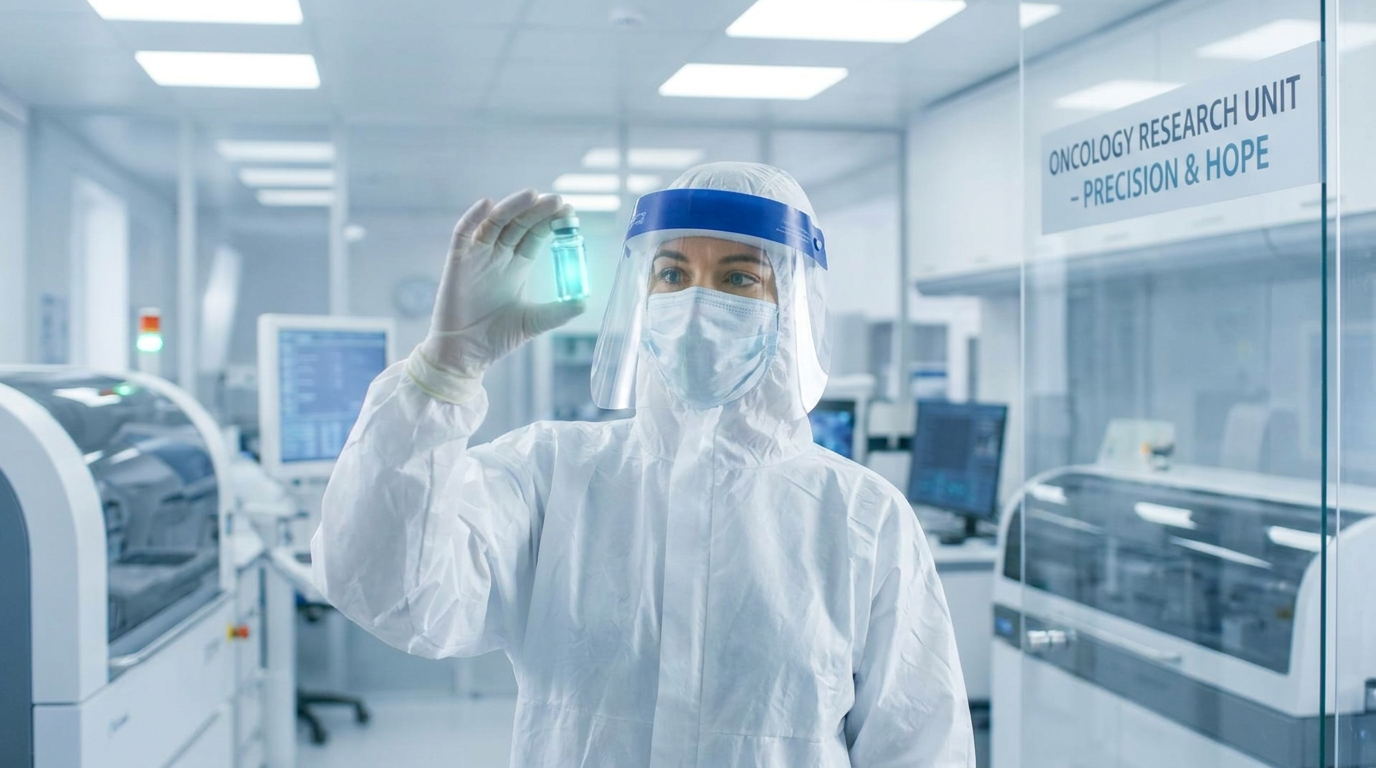
- Oncology Researchers
- Focus on the unprecedented durability of T-cell memory and the biological mechanism of neoantigen targeting.
- Biotech Industry
- View mRNA as a versatile, scalable platform that will replace lost pandemic revenues with a massive new oncology market.
- Patient Advocates & Health Economists
- Celebrate the survival breakthroughs but warn that the bespoke manufacturing process and high costs could exacerbate healthcare inequalities.
What's not represented
- · Patients in developing nations
- · Insurance providers
Why this matters
If you or a loved one faces a cancer diagnosis in the coming decade, the standard of care is fundamentally changing. Instead of relying solely on toxic chemotherapy, doctors are on the verge of using your tumor's unique genetic code to teach your own immune system to permanently eradicate the disease.
Key points
- Five-year data shows Moderna and Merck's personalized mRNA vaccine cuts the risk of melanoma recurrence or death by 49%.
- BioNTech's mRNA vaccine demonstrated sustained six-year survival in pancreatic cancer patients who mounted an immune response.
- The bespoke vaccines are custom-built for each patient by sequencing their tumor and encoding up to 34 unique genetic targets.
- With Phase 3 trials fully enrolled, the first commercial approvals for mRNA cancer vaccines are anticipated in 2026 or 2027.
Fifty years after the United States officially declared the "War on Cancer," a decisive new weapon is crossing the threshold from experimental theory to proven reality.[5][7]
For decades, oncologists have relied on blunt instruments—surgery, radiation, and chemotherapy—to eradicate tumors. But a new wave of clinical data released in 2026 confirms that personalized mRNA cancer vaccines are successfully teaching the human immune system to hunt down and destroy cancer cells with unprecedented precision and durability.[5][7]
The most compelling evidence to date comes from the treatment of advanced melanoma. Moderna, in partnership with Merck, has been testing a personalized mRNA vaccine known as intismeran autogene (or mRNA-4157) in patients with high-risk skin cancer who have undergone surgery.[1]
In early 2026, the companies released five-year follow-up data from their Phase 2b KEYNOTE-942 trial. The results demonstrated that patients receiving the custom vaccine alongside Merck's immunotherapy drug Keytruda saw a 49% reduction in the risk of recurrence or death compared to those receiving Keytruda alone.[1][3]

In the field of oncology, a five-year survival benefit is not just a statistical victory; it is widely considered a functional milestone for a potential cure. The fact that the 49% risk reduction held steady from year three to year five indicates that the vaccine successfully reprogrammed the patients' adaptive immune systems for long-term surveillance.[3][7]
The breakthroughs are not limited to skin cancer. BioNTech, the German firm that co-developed the first widely used COVID-19 vaccine, has been targeting pancreatic cancer—one of the most notoriously difficult and lethal malignancies to treat.[6][7]
Presenting at the American Association for Cancer Research meeting in 2026, researchers shared six-year follow-up data on BioNTech's autogene cevumeran vaccine. Out of 16 patients in the initial trial, eight mounted a strong immune response to the vaccine. Six years later, seven of those eight responders are still alive—a remarkable outcome for a disease with a historical relative survival rate of just 13%.[4]

The mechanism driving these outcomes represents a fundamental departure from traditional medicine. Rather than mass-producing a single drug for millions of people, these vaccines are bespoke treatments, engineered from scratch for every individual patient.[7]
The mechanism driving these outcomes represents a fundamental departure from traditional medicine.
The process begins with a biopsy of the patient's tumor. Scientists sequence the tumor's DNA to identify unique mutations, known as neoantigens, that are present on the cancer cells but absent from healthy tissue. Advanced algorithms then select up to 34 of the most prominent neoantigens to target.[3][7]
Those specific genetic targets are encoded into a synthetic strand of mRNA and wrapped in a microscopic lipid nanoparticle. When injected into the patient's arm, the mRNA instructs the body's dendritic cells to produce those exact tumor proteins, effectively showing the immune system a "wanted poster" of the cancer.[3][7]

To maximize the attack, the vaccines are paired with checkpoint inhibitors like Keytruda. If the mRNA vaccine provides the GPS coordinates for the immune system to find the cancer, the checkpoint inhibitor releases the biological "brakes" that tumors use to hide from T-cells.[1][3]
For the biotechnology industry, the sustained success of these trials marks a critical pivot. Companies like Moderna and BioNTech have faced immense pressure from investors to prove their mRNA platforms can generate revenue beyond the waning demand for pandemic-era respiratory vaccines.[2][6]
BioNTech is currently scaling its operations for "commercial readiness in oncology," with plans to launch its first wave of cancer treatments in 2026 and 2027. The company aims to have multiple commercialized cancer drugs on the market by 2030.[2][6]
The final hurdle for these therapies is the completion of massive Phase 3 clinical trials. Moderna and Merck's global Phase 3 trial in adjuvant melanoma, INTerpath-001, is fully enrolled, with pivotal data readouts expected later this year.[1][6]

Armed with proof of concept, the partnerships are aggressively expanding their pipelines. Phase 3 studies are already underway to test the personalized vaccines against non-small cell lung cancer, while Phase 2 trials are targeting renal cell carcinoma and bladder cancer.[1][3]
Despite the immense promise, transparent uncertainties remain. The most pressing clinical question is why the vaccines only trigger a robust immune response in roughly half of the patients treated. Researchers are currently investigating how the dense, immunosuppressive microenvironments of certain tumors might block the vaccine-induced T-cells from doing their job.[4][7]
There is also the looming challenge of cost and access. Because each dose requires a dedicated manufacturing run—sequencing a tumor, synthesizing custom mRNA, and shipping it at ultra-cold temperatures—analysts estimate the treatment could cost around $200,000 per patient.[1][7]
Health economists warn that without significant advancements in automated manufacturing, these bespoke therapies could exacerbate existing healthcare inequalities, leaving uninsured or under-resourced patients behind.[7]
How we got here
1971
The U.S. declares the 'War on Cancer', launching decades of research into chemotherapy and radiation.
2020
mRNA technology proves its safety and scalability on a global level during the COVID-19 pandemic.
2023
Moderna and Merck release 2-year data showing their personalized vaccine cuts melanoma recurrence by 44%.
2025
BioNTech publishes long-term data showing sustained immune responses in pancreatic cancer patients.
Mid-2026
Five-year follow-up data confirms the mRNA melanoma vaccine maintains a 49% risk reduction, marking a functional cure milestone.
Viewpoints in depth
Oncology Researchers
Focusing on the unprecedented durability of T-cell memory.
For decades, the holy grail of oncology has been teaching the body's immune system to recognize and destroy tumors. Researchers emphasize that the 5-year and 6-year data readouts are paradigm-shifting because they prove the mRNA platform generates durable 'memory T-cells.' Unlike chemotherapy, which stops working the moment it leaves the bloodstream, a trained immune system continues to patrol the body for microscopic cancer cells years after the initial injections. The focus in academia has now shifted to understanding the tumor microenvironment to help the 50% of patients who do not currently respond to the vaccines.
The Biotech Industry
Viewing mRNA as a versatile, scalable platform for the post-pandemic era.
Companies like Moderna and BioNTech are under immense pressure to prove their mRNA platforms are not one-hit wonders tied to COVID-19. Industry analysts view the 2026 oncology data as the validation needed to unlock a multi-billion-dollar market. By standardizing the manufacturing process—using the same lipid nanoparticles and synthesis machines, but simply swapping the digital sequence of the mRNA—biotech firms believe they can scale bespoke, personalized medicine in a way that was previously thought impossible. Their immediate goal is securing Phase 3 approvals and expanding into massive indications like lung cancer.
Health Economists
Warning about the financial strain of bespoke, six-figure treatments.
While celebrating the clinical breakthroughs, health economists and patient advocates are sounding the alarm over access. Because each vaccine is custom-manufactured for a single patient, the economies of scale that make traditional drugs cheap do not apply. With estimated price tags hovering around $200,000 per patient—often layered on top of the cost of checkpoint inhibitors like Keytruda—experts warn that mRNA cancer vaccines could severely strain public health budgets and exacerbate disparities, leaving uninsured or rural patients without access to the most advanced cures.
What we don't know
- Why the vaccines currently only trigger a robust, cancer-fighting immune response in roughly half of the patients treated.
- How public and private health insurance systems will absorb the estimated $200,000 per-patient cost of these bespoke therapies.
Key terms
- Neoantigen
- A unique mutated protein found only on the surface of a patient's cancer cells, which the immune system can be trained to attack.
- Adjuvant therapy
- Additional cancer treatment given after primary treatment (like surgery) to lower the risk that the cancer will come back.
- Checkpoint inhibitor
- A type of drug that blocks proteins from binding with T-cells, effectively releasing the 'brakes' on the immune system so it can kill cancer cells.
- Lipid nanoparticle
- A microscopic fat bubble used to safely deliver fragile mRNA instructions into the body's cells.
Frequently asked
Are these vaccines meant to prevent cancer like a flu shot?
No. These are therapeutic vaccines, meaning they are custom-built to treat a patient who already has cancer by preventing it from returning after surgery.
How long does it take to make a personalized vaccine?
Currently, it takes several weeks to sequence the tumor, identify the mutations, and manufacture the custom mRNA, though companies are working to reduce this turnaround time.
When will these mRNA cancer vaccines be available to the public?
They are currently in fully enrolled Phase 3 clinical trials. If the data remains strong, the first commercial approvals for melanoma are expected in 2026 or 2027.
Sources
Source coverage
7 outlets
3 viewpoints surfaced







[1]ReutersBiotech Industry
Moderna, Merck's Skin Cancer Vaccine Shows Sustained Benefit in Five-Year Follow-Up
Read on Reuters →[2]Fierce PharmaBiotech Industry
BioNTech plots first wave of cancer launches in 2026 as COVID vaccine sales continue to disappoint
Read on Fierce Pharma →[3]American Society of Clinical OncologyOncology Researchers
KEYNOTE-942: 5-year survival data for intismeran autogene in high-risk melanoma
Read on American Society of Clinical Oncology →[4]American Association for Cancer ResearchOncology Researchers
Long-term survival in pancreatic cancer patients treated with autogene cevumeran
Read on American Association for Cancer Research →[5]NPRPatient Advocates & Health Economists
A top pulmonologist reviews advancements in the 'War on Cancer' over the past 50 years
Read on NPR →[6]European Biotechnology MagazineBiotech Industry
2026: A year of reckoning for BioNTech
Read on European Biotechnology Magazine →[7]Factlen Editorial TeamPatient Advocates & Health Economists
Synthesis by Factlen editorial team
Read on Factlen Editorial Team →

More in health
See all 6 stories →Green Prescribing
The Evidence Behind 'Green Prescribing': Why Doctors Are Swapping Pills for Parks
7 sources

Longevity Science
The Science, the Skepticism, and the Truth About 'Blue Zones' and Human Longevity
6 sources

Gut-Brain Axis
The Science of Psychobiotics: How Gut Bacteria Shape Mental Health
6 sources
Nutritional Psychiatry
The Second Brain: How Gut Microbiome Science is Reshaping Mental Health
6 sources

Every angle. Every day.
Get health stories with full source coverage and perspective breakdowns delivered to your inbox.