
MLB Proposes 12-Round International Draft and 18-Year-Old Age Limit in New CBA Talks
Major League Baseball has formally proposed an international draft that would raise the signing age to 18 and establish a $200 million bonus pool, aiming to reform a system plagued by early handshake deals.
By Factlen Editorial Team
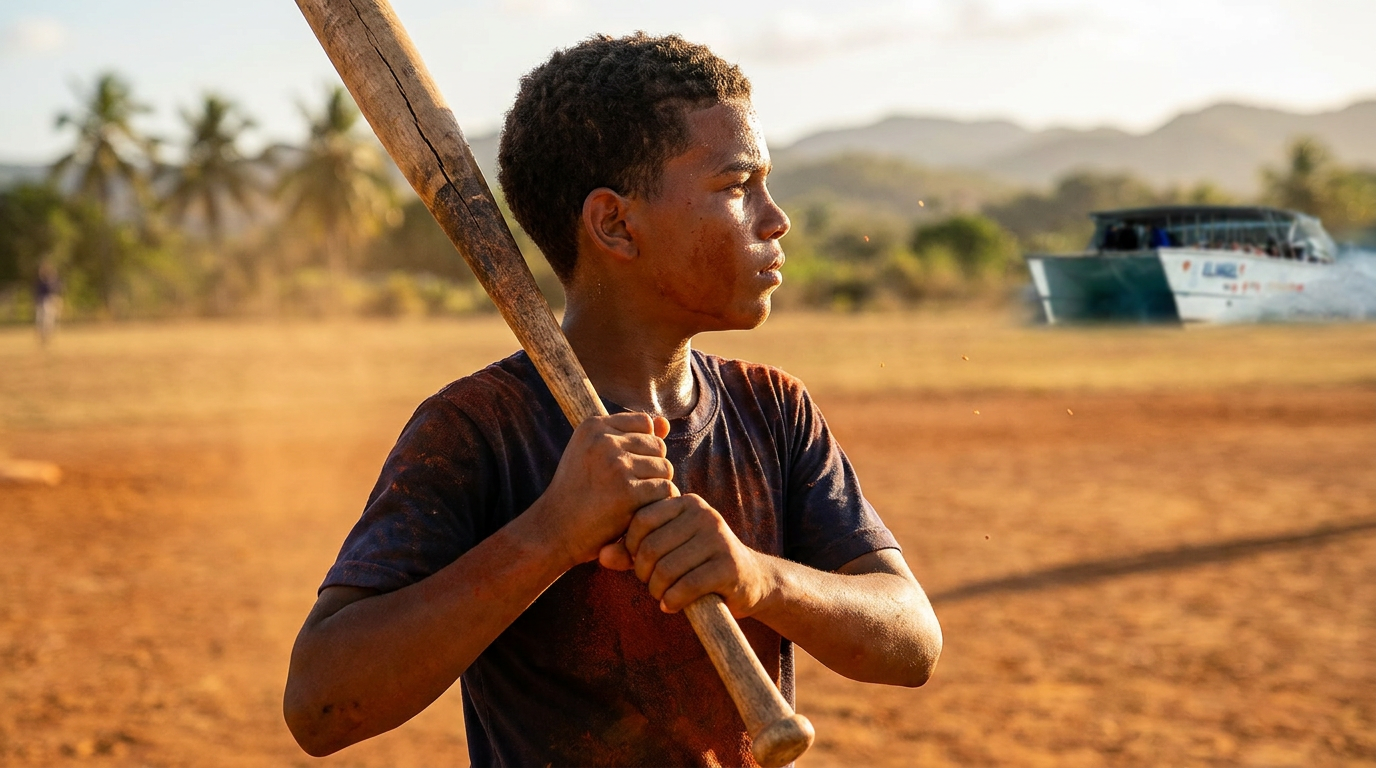
- Major League Baseball
- Argues the draft is necessary to end corruption, stop early handshake deals, and curb performance-enhancing drug use among minors.
- Latin American Academies
- Argues the draft will destroy the local baseball economy and disincentivize MLB teams from investing in regional infrastructure.
- MLB Players Association
- Concerned about capping player earning potential and stripping international amateurs of their right to choose their employer.
What's not represented
- · Undrafted late-bloomer prospects
- · Minor league development coaches
Why this matters
This proposal would fundamentally change how foreign-born baseball players enter the major leagues, potentially ending a corrupt early-signing system but risking the collapse of the grassroots baseball economy in Latin America. Because it is tied to the upcoming collective bargaining agreement, this issue could also trigger a labor dispute that affects the 2027 MLB season.
Key points
- MLB has proposed a 12-round international draft with a $200 million bonus pool for the 2026 CBA negotiations.
- The plan would raise the minimum signing age for international prospects from 16 to 18 years old.
- The league argues the draft is necessary to stop illegal early handshake deals and curb performance-enhancing drug use among minors.
- Critics fear the draft will cause MLB teams to pull funding from Latin American academies, devastating the local baseball economy.
- The proposal is part of a broader amateur overhaul that would also cut the domestic draft to 12 rounds and eliminate high school draftees.
- The MLB Players Association has historically opposed an international draft, arguing it artificially caps player earning potential.
Major League Baseball has formally proposed the creation of an international draft as part of its opening negotiations for a new collective bargaining agreement. The proposal, presented to the MLB Players Association, seeks to fundamentally restructure how foreign-born talent enters the professional ranks. By replacing the current international free agency system with a structured draft, the league aims to impose order on a talent pipeline that has grown increasingly chaotic, lucrative, and controversial. The pitch arrives just six months before the current labor agreement expires, setting the stage for a high-stakes battle over the future of amateur talent acquisition.[1][2]
Under the league's framework, the new international draft would consist of 12 hard-slot rounds, encompassing 360 amateur players residing outside the United States, Canada, and Puerto Rico. The proposal establishes an initial signing-bonus pool totaling $200 million, which is roughly in line with the $208 million teams are allotted under the current free agency system. Crucially, the draft would raise the minimum signing age from 16 to 18 years old. The first iteration of this draft would take place between the fall of 2027 and early 2028, giving the international baseball ecosystem a brief window to adapt to the new reality.[1][2]
The international draft is not an isolated pitch; it is packaged within a sweeping overhaul of MLB's entire amateur acquisition model. According to documents obtained by reporters, the league is simultaneously proposing to cut the domestic United States draft from 20 rounds down to 12. Furthermore, the proposal seeks to eliminate high school draftee eligibility entirely by 2028, forcing American prospects to play collegiately before turning professional. By aligning the domestic and international systems—both featuring 12 rounds and an 18-year-old age floor—MLB is attempting to create a unified, standardized entry point for all future players.[3]
To understand the magnitude of this proposal, one must look at the system it intends to replace. Currently, international prospects operate in a free-market environment, albeit one constrained by team-specific spending caps. Players become eligible to sign professional contracts at age 16, provided they turn 17 by September 1 of the following year. Each MLB franchise is granted an annual bonus pool—ranging from roughly $5 million to $8 million in 2026—which they can distribute among as many international amateurs as they choose. This system has produced roughly 30 percent of current major leaguers, including superstars like Ronald Acuña Jr. and Juan Soto.[4]

However, the intense competition for top talent within this free-market structure has birthed a dark and unregulated underbelly. Because teams are desperate to secure the best players before their rivals, scouts routinely bypass the 16-year-old eligibility rule by making illegal, verbal "handshake deals" with children as young as 12 or 13. These early agreements lock young teenagers into future signing bonuses years before they are legally allowed to put pen to paper. If a player's development stalls or they suffer an injury before their 16th birthday, teams frequently back out of these handshake deals or drastically reduce the promised financial figures, leaving the player with nothing.[2][5]
This environment has empowered a network of unregulated independent trainers, known locally as "buscones." In countries like the Dominican Republic and Venezuela, buscones pull children out of school at early ages to house, feed, and train them in specialized baseball academies. In exchange, the trainers take a massive percentage—often 30 to 50 percent—of the player's eventual signing bonus. Because a trainer's payout is entirely dependent on securing a lucrative handshake deal from an MLB team, the pressure to accelerate a child's physical development is immense, leading to widespread age fraud and the systemic use of performance-enhancing drugs.[5]
In exchange, the trainers take a massive percentage—often 30 to 50 percent—of the player's eventual signing bonus.
The human cost of this unregulated pipeline reached a tragic inflection point in July 2024 with the death of Ismael Ureña Pérez. The Dominican teenager died of organ failure after his family alleged he was repeatedly injected with performance-enhancing drugs at a local baseball academy. The tragedy dominated headlines across Latin America and sparked international outrage, casting a long shadow over the sport's talent procurement methods. For Major League Baseball, the incident provided a grim moral imperative, reinforcing the league's argument that the current free-for-all is not just corrupt, but actively dangerous to the children it relies upon.[2]
League officials argue that a draft with hard-slotted financial values and an 18-year-old age limit is the only viable mechanism to break this cycle of exploitation. By removing the incentive to secure players at age 12, MLB believes the draft will naturally dissolve the predatory early-agreement culture. If teams cannot guarantee they will acquire a specific player, they will no longer make under-the-table promises to middle-schoolers. Furthermore, the league contends that raising the signing age to 18 will allow players to mature naturally, reducing the pressure on trainers to use steroids to artificially inflate a 14-year-old's physical metrics.[1][5]

Despite these stated intentions, the proposal faces fierce opposition from stakeholders across Latin America, who fear a draft will decimate the region's grassroots baseball economy. Currently, MLB franchises invest tens of millions of dollars annually into building and maintaining state-of-the-art academies in the Dominican Republic and Venezuela. They do this because the free agency system guarantees a return on investment: if a team develops a player, they can sign him. Critics argue that if a draft is implemented, teams will have no reason to fund local infrastructure, as the players they scout and develop could simply be drafted by a rival organization.[5][6]
Opponents frequently point to Puerto Rico as a cautionary tale of what happens when a draft is imposed on a developing baseball economy. In 1990, MLB expanded its domestic draft to include players from Puerto Rico. Almost immediately, major league teams closed their island academies and pulled their full-time scouts, reallocating those resources to the United States. Without the financial incentive of free agency, the local baseball infrastructure withered, and the number of Puerto Rican players reaching the major leagues plummeted. Latin American trainers fear that an international draft will trigger a similar capital flight from the Dominican Republic and Venezuela.[6]
The MLB Players Association, which must agree to any changes in the collective bargaining agreement, has historically stood alongside these critics. The union rejected a similar international draft proposal in July 2022. From a labor perspective, the MLBPA argues that a draft artificially suppresses wages by replacing a competitive open market with fixed, non-negotiable slots. Furthermore, the union is philosophically opposed to stripping international amateurs of their right to choose their employer, a freedom that domestic draftees already lack. The union has previously countered that MLB could clean up the corruption by strictly enforcing its own tampering rules, rather than dismantling free agency.[1][5]

Another major sticking point in the current proposal is the treatment of players who are not selected in the 12-round draft. Under MLB's framework, an unlimited number of undrafted free agents would be permitted to sign, but their initial bonuses would be strictly capped at $10,000, with an additional $30,000 awarded only if they reach a full-season minor league affiliate. Critics argue this cap is devastatingly low for athletes coming from impoverished backgrounds. In the current system, late-bloomers who miss the initial wave of high-dollar signings can still negotiate six-figure bonuses; under the draft, their earning potential would be severely restricted.[2]
As the December expiration of the collective bargaining agreement looms, the international draft has once again emerged as a central and highly volatile battleground. The league views the reform as an existential necessity to clean up a broken system, while the union and Latin American stakeholders view it as an economic threat to the sport's most vulnerable pipeline. With both sides deeply entrenched in their positions, the fate of the international draft will likely dictate the tone of the upcoming labor negotiations, carrying profound implications for the future of the sport and the thousands of young athletes chasing a major league dream.[1][3][5]
How we got here
1990
Puerto Rico is added to the domestic MLB draft, leading to a long-term decline in the island's scouting and baseball infrastructure.
2012
MLB introduces hard-capped bonus pools for international free agency to curb runaway spending.
July 2022
The MLBPA formally rejects MLB's previous international draft proposal, maintaining the free agency status quo.
July 2024
The tragic death of Dominican teenager Ismael Ureña Pérez from alleged PED use at a baseball academy sparks renewed outrage over the current system.
June 2026
MLB formally proposes a 12-round international draft and an 18-year-old age limit as part of new CBA negotiations.
Viewpoints in depth
Major League Baseball's view
The league believes a draft is the only way to protect children from a predatory and corrupt system.
MLB executives argue that the current free-market system has completely failed to protect young athletes. Because teams are desperate to secure talent, they bypass the 16-year-old signing rule by making illegal handshake deals with children as young as 12. This creates a perverse incentive for trainers to use performance-enhancing drugs to artificially accelerate a child's physical development. The league contends that a draft with hard slots and an 18-year-old age limit will instantly dissolve this black market, as teams will no longer make under-the-table promises if they cannot guarantee they will acquire the player.
Latin American Academies' view
Local stakeholders fear a draft will destroy the region's grassroots baseball infrastructure.
Trainers and academy operators in the Dominican Republic and Venezuela argue that the draft will trigger a massive capital flight from their countries. Currently, MLB teams invest tens of millions of dollars into local academies because the free agency system guarantees they can sign the players they develop. If a draft is implemented, teams will have no incentive to fund this infrastructure, as their developed players could simply be drafted by rival organizations. They point to Puerto Rico, which saw its baseball pipeline wither after being added to the domestic draft in 1990, as a grim preview of their future.
The Players Association's view
The union opposes the draft on the grounds that it artificially suppresses player wages and restricts freedom of choice.
The MLBPA has historically resisted the international draft because it replaces a competitive open market with fixed, non-negotiable financial slots. The union argues this is a mechanism designed to save owners money by capping the earning potential of the sport's most vulnerable incoming athletes. Furthermore, the union is philosophically opposed to stripping international amateurs of their right to choose their employer. Instead of dismantling free agency, the MLBPA has suggested that the league could clean up the corruption by strictly enforcing its own tampering rules and penalizing teams that engage in early handshake deals.
What we don't know
- Whether the MLB Players Association will offer a counter-proposal or reject the draft concept entirely, as they did in 2022.
- How MLB plans to enforce the $10,000 bonus cap for undrafted players without creating a new black market of under-the-table incentives.
- Whether the league would commit to funding independent baseball infrastructure in Latin America if team-owned academies are closed.
Key terms
- Buscones
- Unregulated trainers and agents in Latin America who house, feed, and train young players in exchange for a significant percentage of their future signing bonuses.
- Hard-slot rounds
- A draft system where each specific pick has a predetermined, non-negotiable signing bonus value attached to it.
- Bonus pool
- The strictly capped total amount of money a team is allowed to spend on international amateur free agents in a given year.
Frequently asked
When would the international draft start?
Under the current proposal, the first draft would take place between the fall of 2027 and early 2028.
How much money is allocated for the draft?
The proposal includes a $200 million initial signing-bonus pool spread across 12 rounds.
What happens to players who aren't drafted?
Undrafted players would be eligible to sign for a maximum bonus of $10,000, with an additional $30,000 bonus upon reaching a full-season minor league affiliate.
Why are 16-year-olds currently allowed to sign?
The current international free agency system allows players to sign at 16, a practice that has spawned a massive early-development industry in Latin America.
Sources
Source coverage
6 outlets
3 viewpoints surfaced






[1]ESPNMajor League Baseball
Sources: MLB again proposes international draft
Read on ESPN →[2]TSNMajor League Baseball
MLB proposes international draft amid CBA negotiations
Read on TSN →[3]Baseball AmericaMajor League Baseball
MLB Proposes Elimination Of High School Draft Eligibility, International Draft
Read on Baseball America →[4]CBS SportsMLB Players Association
MLB international free agency opens: Top prospects to know, bonus pools and more for the 2026 signing period
Read on CBS Sports →[5]Los Angeles TimesLatin American Academies
Why haven't MLB and players agreed on an international draft?
Read on Los Angeles Times →[6]FanGraphsLatin American Academies
The Puerto Rican Problem and the International Draft
Read on FanGraphs →
More in sports
See all 13 stories →Standings
Hamilton's First Ferrari Victory Shakes Up 2026 F1 Standings as Antonelli Maintains Lead
6 sources

Grass Court Season
Alexandra Eala Stuns World No. 2 Elena Rybakina in Historic Berlin Open Upset
7 sources
Injury
NFL Quarterbacks Return to the Field: Minicamp Injury Updates Highlighted by Bo Nix's Early Comeback
8 sources
NBA Finals
New York Knicks Celebrate First NBA Championship in 53 Years with Historic Canyon of Heroes Parade
6 sources
Every angle. Every day.
Get sports stories with full source coverage and perspective breakdowns delivered to your inbox.