
Memory Stocks Are Having Their Best Year Ever. Why Do They Still Look So Cheap?
Despite posting record-breaking earnings growth driven by the artificial intelligence boom, the world's largest memory chip manufacturers are trading at single-digit valuations.
By Factlen Editorial Team
- Value Investors
- Focusing on the massive earnings growth and low multiples of memory stocks.
- Structural Shift Proponents
- Believing HBM has permanently changed the industry's economics and constrained supply.
- Cyclical Skeptics
- Warning that the historical boom-and-bust cycle of oversupply is inevitable.
What's not represented
- · Consumer Electronics Manufacturers facing higher memory costs
- · Retail PC Builders priced out of standard DRAM
Why this matters
The semiconductor supply chain is the physical backbone of the AI revolution. Understanding why the market is heavily discounting memory manufacturers offers critical insight into whether the AI boom is a durable structural shift or a temporary bubble.
Key points
- Memory giants like Micron and SK Hynix are posting record earnings but trading at single-digit multiples.
- Investors are hesitant due to the semiconductor industry's 30-year history of boom-and-bust cycles.
- High Bandwidth Memory (HBM) is essential for AI, allowing data to flow at up to 8 terabytes per second.
- HBM requires four times the manufacturing capacity of standard memory, naturally constraining overall supply.
- The global HBM market is projected to grow at a 26% annual rate, reaching nearly $25 billion by 2034.
- The primary risk remains a potential pullback in AI infrastructure spending by major tech companies.
The artificial intelligence boom has minted trillion-dollar valuations and sky-high multiples for logic chip designers, creating a gold rush mentality across the technology sector. Yet, the companies manufacturing the memory chips that make AI computation physically possible are trading at bargain-basement prices. This glaring disconnect has left analysts and investors debating whether the market is ignoring a massive opportunity or correctly anticipating a historical trap.[1]
During their most recent quarters, the world's memory giants posted staggering growth figures that would typically send stock prices into the stratosphere. Micron Technology saw its earnings per share skyrocket by 756% year-over-year, driven by insatiable demand from data centers. Samsung Electronics reported a nearly 500% surge in its own earnings per share, while SK Hynix posted similarly explosive growth metrics.[1]
Despite these eye-watering numbers, Wall Street is treating the sector with extreme caution. Micron currently trades at roughly 9 times its projected earnings over the next twelve months. SK Hynix and Samsung hover at even lower valuations, trading around 6.5 times forward earnings. For context, the broader S&P 500 index trades at over 20 times earnings, and AI hardware darling Nvidia commands a multiple of 23.[1]

To understand this massive valuation disconnect, one must look at the brutal, three-decade history of the memory semiconductor industry. It is a sector that has routinely destroyed shareholder value, bankrupted companies, and taught every veteran investor to never trust the phrase "this time is different."[4][6]
For decades, the market for Dynamic Random Access Memory (DRAM) and NAND flash storage has operated on a highly predictable, vicious cycle. When consumer demand for PCs or smartphones rises, memory prices boom, and the handful of manufacturers that control the market rake in extraordinary amounts of cash.[4]
Flushed with these profits, the major players inevitably over-invest in massive new fabrication plants to capture more market share. Two to three years later, those multi-billion-dollar plants come online simultaneously, flooding the global market with excess supply. Prices crash, profit margins evaporate, and the companies bleed red ink until the cycle eventually resets.[4]

Investors have been burned so many times by this boom-and-bust rhythm that they are preemptively pricing in the next crash. They view the current AI-driven windfall as a temporary peak rather than a structural shift, assuming that the memory oligopoly will inevitably overbuild and destroy its own pricing power once again.[1][6]
However, a growing chorus of industry analysts and semiconductor engineers argues that the artificial intelligence era is fundamentally rewriting the rules of memory economics. This shift is being driven almost entirely by a specialized technology known as High Bandwidth Memory, or HBM.[3][5]
This shift is being driven almost entirely by a specialized technology known as High Bandwidth Memory, or HBM.
Traditional computing workloads rely on standard DRAM, which acts as a temporary workspace for processors. But generative AI models require processing massive datasets simultaneously, creating a severe bottleneck where the processor starves while waiting for data to arrive from the memory banks.[3]
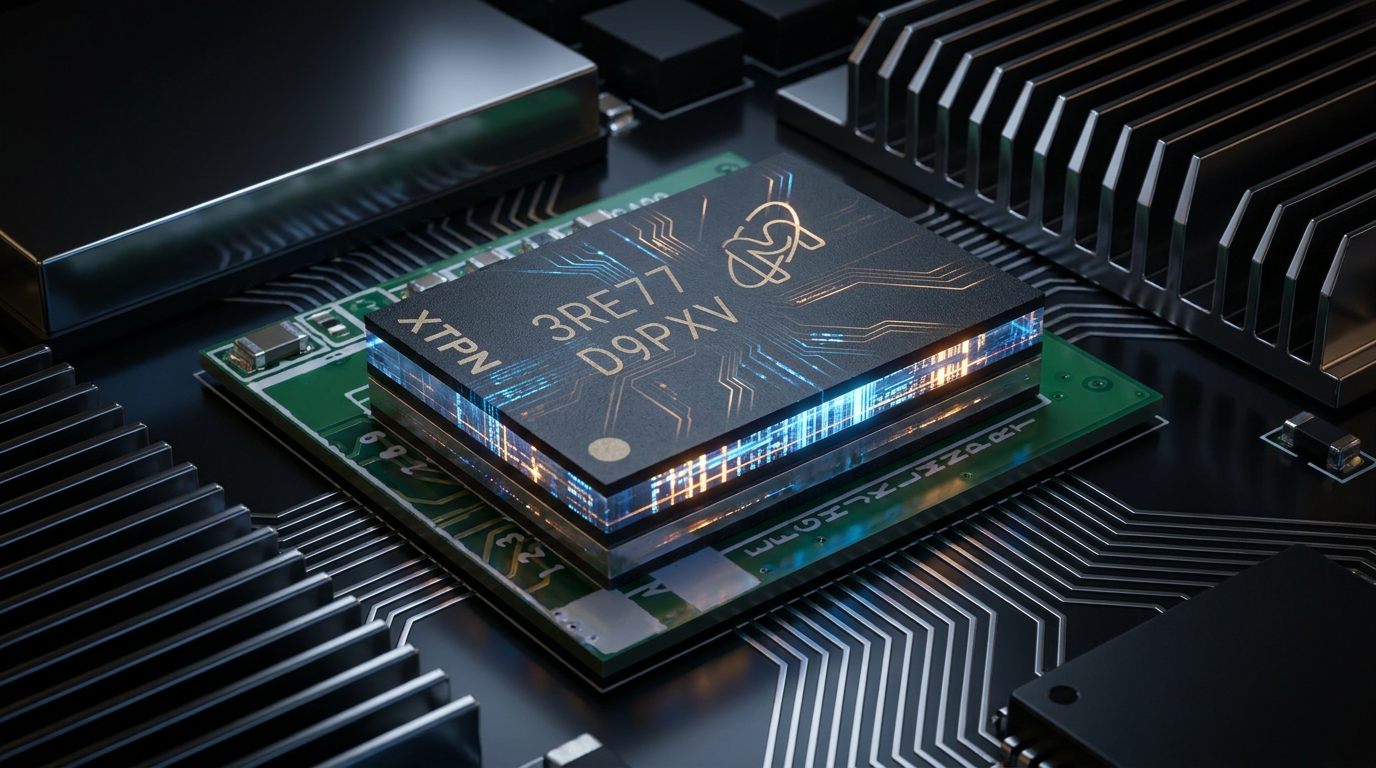
High Bandwidth Memory solves this physical bottleneck by stacking multiple memory chips vertically and connecting them with microscopic copper wires called Through-Silicon Vias. This 3D architecture allows data to flow directly to the graphics processing unit at astonishing speeds, ranging between 4.8 and 8 terabytes per second.[3]

Manufacturing HBM is incredibly complex, resource-intensive, and prone to lower yield rates than traditional chips. Producing a single HBM stack consumes roughly four times the silicon wafer capacity of standard DRAM, fundamentally altering the output math for fabrication plants.[4]
Because HBM is so difficult to make and requires so much raw silicon, it is actively constraining the overall supply of commodity memory. Manufacturers are diverting their factory lines to produce high-margin HBM for AI data centers, which naturally limits the supply of standard chips for PCs and smartphones, keeping prices elevated across the entire sector.[4][5]
Furthermore, the business model itself is shifting away from pure commoditization. Historically, memory was sold on the spot market, subject to wild daily price swings. Today, HBM is custom-built for specific AI accelerators and sold under long-term, binding contracts. Micron, for instance, has already sold out its entire HBM production capacity through the end of 2026.[4][5]
The sheer scale of the AI infrastructure build-out is transforming memory from a cyclical consumer electronics component into core industrial infrastructure. The global high-bandwidth memory market, valued at under $3 billion in 2024, is projected to grow at a 26.7% compound annual growth rate, surpassing $24 billion by 2034.[2]

Artificial intelligence and machine learning workloads alone now account for more than 55% of all HBM demand. This trajectory is supported by hyperscalers like Microsoft, Meta, and Google, who are collectively expected to spend hundreds of billions on AI infrastructure this year alone.[3]
Despite these structural improvements, significant risks remain that justify some of Wall Street's caution. The memory oligopoly is still pouring unprecedented sums into capital expenditures. Micron alone is planning $200 billion in new fabrication facilities across the United States over the coming years, while SK Hynix and Samsung are matching with massive investments of their own.[4]
If the hyperscalers suddenly pull back on their AI data center investments just as these new mega-fabs come online, the industry could face a supply glut of historic proportions, proving the cyclical skeptics right.[4][6]
For now, memory stocks remain the ultimate battleground between financial history and technological innovation. Investors must decide whether to trust the ghosts of past cycles or bet that the physical demands of the artificial intelligence revolution have finally broken the boom-and-bust wheel.[6]
How we got here
1990s–2020s
The memory industry operates on a brutal boom-and-bust cycle, training investors to expect price crashes every few years.
Late 2023
Generative AI creates a massive bottleneck for data processing, sparking unprecedented demand for High Bandwidth Memory (HBM).
Early 2026
Memory giants report record-breaking earnings growth of 500% to 750%, driven almost entirely by AI data center demand.
June 2026
Despite record profits, memory stocks continue to trade at single-digit price-to-earnings multiples as Wall Street anticipates a cyclical crash.
Viewpoints in depth
Value Investors
Focusing on the massive earnings growth and low multiples of memory stocks.
This camp argues that the market is fundamentally mispricing the memory sector. By anchoring to historical cycles, Wall Street is ignoring the reality of 500% to 750% earnings growth. They view companies like Micron and SK Hynix as the ultimate 'pick-and-shovel' plays of the AI gold rush, offering a much safer entry point than logic chip designers trading at massive premiums.
Cyclical Skeptics
Warning that the historical boom-and-bust cycle of oversupply is inevitable.
Skeptics point to the $25 billion-plus capital expenditure budgets of the major memory producers. They argue that whenever Samsung, SK Hynix, and Micron expand capacity simultaneously, oversupply follows within three years. If hyperscalers slow their AI investments just as new fabs come online, this camp believes memory prices will crash exactly as they have for the last three decades.
Structural Shift Proponents
Believing HBM has permanently changed the industry's economics and constrained supply.
Industry forecasters argue that 'this time is different' because High Bandwidth Memory consumes four times the wafer capacity of standard DRAM and is sold on long-term binding contracts. Because HBM is so difficult to manufacture, it naturally constrains the supply of commodity memory, effectively forcing the oligopoly to maintain pricing discipline and smoothing out the historical boom-and-bust curve.
What we don't know
- Whether hyperscalers will sustain their massive AI infrastructure investments through the end of the decade.
- How quickly competitors can scale up alternative memory architectures to challenge the current oligopoly.
- Whether the massive capital expenditures planned by memory giants will eventually lead to another supply glut.
Key terms
- High Bandwidth Memory (HBM)
- An advanced memory architecture that stacks chips vertically to drastically increase the speed at which data can be fed to a processor.
- DRAM
- Dynamic Random Access Memory, the standard type of temporary workspace memory used in computers, smartphones, and servers.
- Hyperscalers
- Massive cloud computing and internet companies, such as Google, Microsoft, and Amazon, that operate data centers on a global scale.
- Wafer Intensity
- The amount of raw silicon wafer space required to manufacture a specific type of semiconductor chip.
- Through-Silicon Vias (TSVs)
- Microscopic vertical copper connections that allow data to flow seamlessly between stacked memory chips.
Frequently asked
What is High Bandwidth Memory (HBM)?
HBM is an advanced type of memory that stacks chips vertically to allow massive amounts of data to travel to a processor instantly, which is essential for AI workloads.
Why are memory stocks considered cyclical?
Historically, memory companies overbuild factories when prices are high, leading to a flood of supply that crashes prices and profit margins every few years.
Why do memory stocks have low P/E ratios?
Investors are pricing in the historical boom-and-bust cycle, assuming that current record earnings are a temporary peak that will soon be followed by an oversupply crash.
How does AI change the memory market?
AI requires HBM, which consumes four times the manufacturing capacity of standard memory. This naturally constrains overall supply and helps maintain higher prices.
Sources
Source coverage
6 outlets
3 viewpoints surfaced






[1]MarketWatchValue Investors
Memory stocks are having their best year ever. Why do they still look so cheap?
Read on MarketWatch →[2]Fortune Business InsightsStructural Shift Proponents
High Bandwidth Memory (HBM) Market Overview 2026-2034
Read on Fortune Business Insights →[3]PatSnap InsightsStructural Shift Proponents
A Market Transformed by AI Demand: High Bandwidth Memory
Read on PatSnap Insights →[4]Uncover AlphaCyclical Skeptics
The history of memory economics and why AI changes everything
Read on Uncover Alpha →[5]SK HynixStructural Shift Proponents
The Memory Supercycle and the Role of the HBM Market
Read on SK Hynix →[6]Factlen Editorial TeamValue Investors
Synthesis by Factlen editorial team
Read on Factlen Editorial Team →



Every angle. Every day.
Get finance stories with full source coverage and perspective breakdowns delivered to your inbox.