
How Zero-Trust Networks and Privacy-First Hubs Are Securing the Smart Home
As IoT botnets increasingly target vulnerable connected devices, the tech industry is shifting toward zero-trust home networks and local-processing hubs to isolate threats and protect user privacy.
By Factlen Editorial Team
- Cybersecurity Advocates
- Argue that local isolation is the only mathematically sound way to secure consumer networks against escalating botnet threats.
- Consumer Hardware Manufacturers
- Embrace local hubs to reduce their own cloud server costs while marketing privacy as a premium feature.
- Network Engineers
- Focus on the technical challenge of automating complex VLAN and firewall rules so average consumers can benefit without IT knowledge.
What's not represented
- · Non-technical consumers navigating setup complexity
- · Manufacturers of legacy cloud-dependent hardware
Why this matters
With the average household now hosting dozens of connected devices, a single compromised smart plug can expose personal computers and cameras to global cyberattacks. Adopting zero-trust architecture and local hubs ensures that even if one device is breached, the rest of your home—and your data—remains secure.
Key points
- The traditional 'flat' home network allows any compromised smart device to access personal computers and data.
- Hackers are increasingly weaponizing cheap smart home gadgets into massive IoT botnets to launch cyberattacks.
- Zero-trust architecture uses micro-segmentation to isolate smart devices into virtual quarantines.
- Privacy-first hubs process automations locally, eliminating the need for devices to communicate with vulnerable cloud servers.
- Major router manufacturers are now automating these complex security protocols for average consumers.
For the better part of a decade, the consumer smart home operated on a fundamental, invisible flaw: absolute trust. When a user plugged in a $15 Wi-Fi lightbulb, that bulb was granted the same network privileges as the household's primary laptops, smartphones, and security cameras. This "flat network" design prioritized frictionless setup over security, creating a sprawling attack surface that cybercriminals have aggressively exploited.[2][5]
The consequences of this architecture have become impossible to ignore. Cybersecurity researchers track millions of vulnerable Internet of Things (IoT) devices being quietly co-opted into massive botnets. These networks of hijacked smart plugs, televisions, and refrigerators are routinely weaponized to launch devastating Distributed Denial of Service (DDoS) attacks against global infrastructure. Because the devices continue to function normally for the consumer, the infections often go entirely unnoticed.[4]
In response, the technology industry is executing a sweeping architectural pivot in 2026. The new standard for consumer networking is "Zero-Trust Architecture" (ZTA) paired with "Privacy-First Hubs." Once a concept reserved for enterprise IT departments and military contractors, zero-trust is now being baked directly into off-the-shelf consumer routers and smart home controllers.[2][6]
The mechanism driving this shift is micro-segmentation. In a zero-trust home network, devices are no longer allowed to communicate freely with one another by default. Instead, the router isolates each device into its own virtual quarantine. A smart thermostat can communicate with the central home hub, but it is cryptographically barred from pinging a user's laptop or accessing a network-attached storage drive.[3][5]

Historically, setting up this kind of segmented network required a deep understanding of Virtual Local Area Networks (VLANs) and firewall rules. Today, major router manufacturers have automated the process. When a new IoT device connects to a modern mesh network, the system uses machine learning to identify the device type and automatically assigns it to a restricted, internet-isolated sandbox.[3]
But isolating devices from the internet breaks the traditional smart home model, which relied heavily on cloud servers. If a smart switch cannot ping a server in another country, how does it turn on the lights? The answer lies in the second half of the 2026 security equation: the Privacy-First Hub.[1][5]
But isolating devices from the internet breaks the traditional smart home model, which relied heavily on cloud servers.
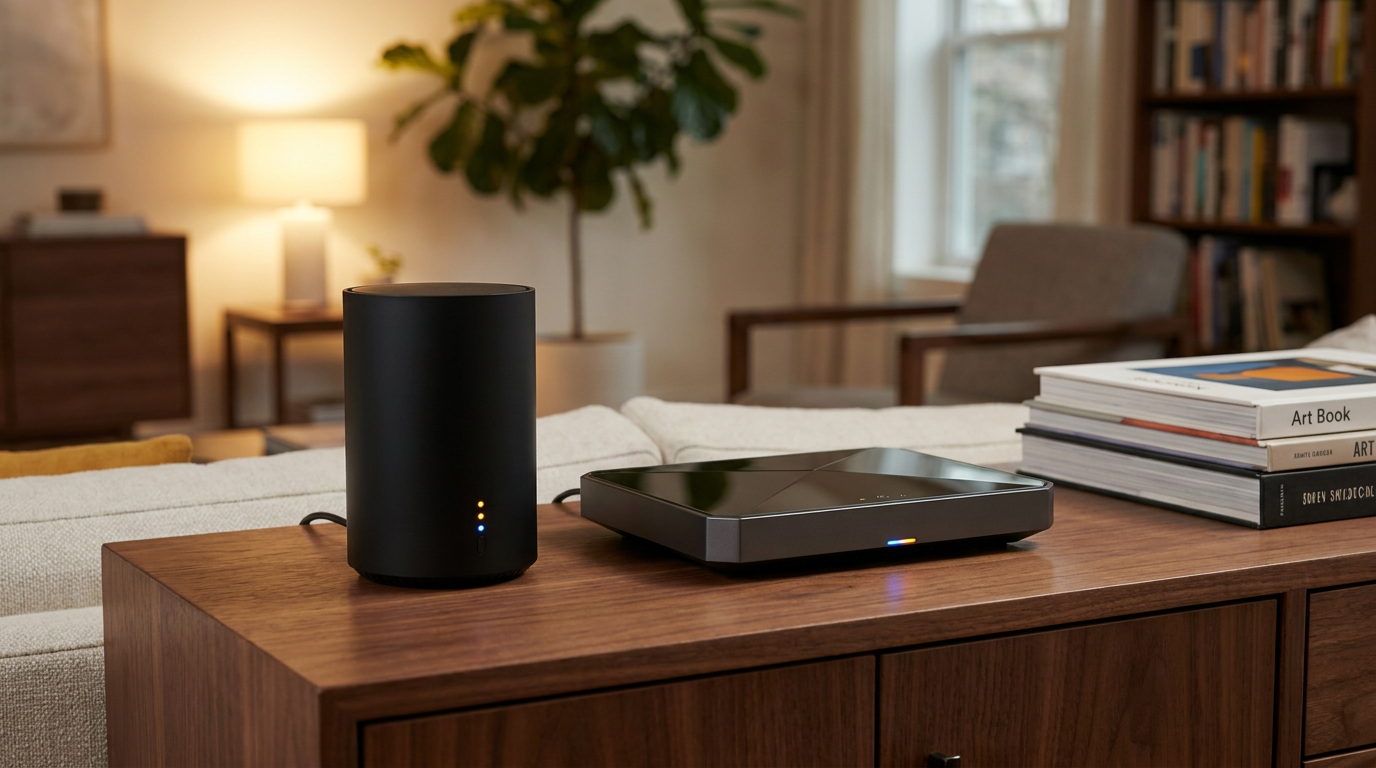
Privacy-first hubs are powerful, localized computers that act as the brain of the smart home, entirely independent of the cloud. Devices communicate directly with the hub over local protocols like Thread, Zigbee, or heavily restricted local Wi-Fi. When a user issues a voice command or triggers an automation, the hub processes the logic locally and executes the command in milliseconds.[1][7]
This local-first approach mathematically eliminates several categories of cyber threats. Because the devices themselves have no route to the public internet, they cannot be recruited into botnets, nor can they leak telemetry data to third-party brokers. Furthermore, if a manufacturer's cloud servers go offline—or if the company goes bankrupt—the user's smart home continues to function flawlessly.[4][5]

The transition is being accelerated by the maturation of the Matter smart home standard, which mandates local communication capabilities for certified devices. By standardizing how devices talk to each other without cloud mediation, Matter has provided the technical foundation necessary for privacy-first hubs to control hardware from dozens of different manufacturers seamlessly.[1][2]
Government regulators are also forcing the issue. Recent guidelines from federal cybersecurity agencies have explicitly recommended zero-trust principles for consumer IoT, pushing retailers and internet service providers to phase out hardware that relies on outdated, flat-network architectures. Some ISPs have even begun deploying firmware updates to existing routers to enforce basic device isolation.[6]
The shift also aligns with a changing economic reality for hardware manufacturers. Maintaining cloud infrastructure to process billions of daily pings from low-margin smart bulbs is increasingly unprofitable. By offloading the processing power to a local hub owned by the consumer, manufacturers can drastically reduce their recurring server costs while marketing the privacy benefits to users.[7]

Despite the momentum, the transition is not without friction. The primary uncertainty lies in legacy hardware. Millions of older smart devices hardcoded to require cloud connectivity will simply stop working if placed on a strict zero-trust network. Industry consortiums are currently debating how to handle these "orphan" devices without compromising the integrity of the new security models.[3][4]
How we got here
2016
The Mirai botnet hijacks hundreds of thousands of IoT devices, highlighting the vulnerability of consumer smart homes.
2022
The Matter 1.0 standard launches, laying the groundwork for standardized local communication between smart devices.
2024
Major router manufacturers begin introducing automated IoT isolation features in consumer mesh networks.
2026
Zero-trust architecture and local-processing hubs become the baseline standard for new smart home deployments.
Viewpoints in depth
Cybersecurity Advocates
Argue that local isolation is the only mathematically sound way to secure consumer networks.
Security researchers have long warned that the economics of cheap IoT devices make them impossible to secure individually. A manufacturer selling a $10 smart plug cannot afford to provide a decade of continuous security patches. Therefore, cybersecurity advocates argue that the network itself must become the primary defense. By assuming every IoT device is already compromised (the core tenet of zero-trust), micro-segmentation ensures that a breached lightbulb remains nothing more than a breached lightbulb, rather than a gateway to a user's financial data or a weapon in a global DDoS attack.
Consumer Hardware Manufacturers
Embrace local hubs to reduce their own cloud server costs while marketing privacy as a premium feature.
For hardware companies, the shift away from the cloud is as much about economics as it is about security. Maintaining the server infrastructure to process billions of daily status updates from low-margin devices is a massive, recurring expense. By shifting the processing burden to a local hub purchased by the consumer, manufacturers can dramatically lower their operational costs. Simultaneously, they are able to package this cost-saving measure as a premium 'privacy-first' feature, appealing to consumers who are increasingly wary of corporate data harvesting.
Network Engineers
Focus on the technical challenge of automating complex VLAN and firewall rules for average consumers.
The primary hurdle in deploying zero-trust architecture to millions of homes is user experience. Network engineers point out that while VLANs and strict firewall rules have existed for decades, they require specialized knowledge to configure and maintain. The engineering breakthrough of 2026 has been the application of machine learning to automate this process. Modern routers can now identify a device's behavior profile upon connection, automatically assign it to the correct isolated subnet, and configure the necessary local routing rules without the user ever opening a command line.
What we don't know
- How many legacy, cloud-dependent devices will be rendered obsolete or non-functional as strict zero-trust defaults are rolled out.
- Whether the average consumer is willing to pay the higher upfront cost for a powerful local-processing hub compared to cheap, cloud-tethered alternatives.
Key terms
- Zero-Trust Architecture (ZTA)
- A security model that assumes no device on a network is inherently safe, requiring explicit permission for every piece of data exchanged.
- Micro-segmentation
- The practice of dividing a home network into small, isolated zones so that a compromised device in one zone cannot access devices in another.
- IoT Botnet
- A network of hijacked internet-connected devices (like smart plugs or cameras) controlled by hackers to launch coordinated cyberattacks.
- Local Processing
- Executing computing tasks and automations directly on a device inside the home, rather than sending data to a remote cloud server.
Frequently asked
Will my older smart devices work on a zero-trust network?
It depends on the device. Devices that require a constant connection to a manufacturer's cloud server may lose functionality if strictly isolated. However, modern routers often provide 'legacy modes' that offer partial protection while maintaining connectivity.
Do I need to buy a new router to get zero-trust features?
Many recent mesh router systems (released after 2023) are receiving firmware updates that add automated IoT isolation. However, older routers may lack the processing power required for micro-segmentation, necessitating an upgrade.
How does a privacy-first hub differ from a standard smart speaker?
Standard smart speakers typically send your voice commands and device statuses to a cloud server for processing. A privacy-first hub contains enough onboard computing power to process those commands locally, meaning your data never leaves your house.
Sources
Source coverage
7 outlets
3 viewpoints surfaced







[1]The VergeConsumer Hardware Manufacturers
The Cloud is Dead: Why Your Next Smart Home Hub Will Process Everything Locally
Read on The Verge →[2]WiredCybersecurity Advocates
How 'Zero-Trust' Architecture Finally Made It to the Living Room
Read on Wired →[3]Ars TechnicaNetwork Engineers
Consumer Routers Embrace Micro-Segmentation to Quarantine Smart Devices
Read on Ars Technica →[4]BleepingComputerCybersecurity Advocates
IoT Botnets Reach Record Highs, Forcing Hardware Redesigns
Read on BleepingComputer →[5]IEEE SpectrumNetwork Engineers
Engineering the Zero-Trust Smart Home: Protocols and Mechanisms
Read on IEEE Spectrum →[6]CISACybersecurity Advocates
Securing Consumer IoT: Zero-Trust Guidelines for Home Networks
Read on CISA →[7]TechCrunchConsumer Hardware Manufacturers
Investors Pour Millions into 'Privacy-First' Smart Home Startups
Read on TechCrunch →

Every angle. Every day.
Get technology stories with full source coverage and perspective breakdowns delivered to your inbox.