
How the Human Brain Builds a Sentence, Neuron by Neuron
Researchers have successfully tracked the electrical activity of individual brain cells during natural conversation, revealing how neurons predict and encode speech before a word is ever spoken. The breakthrough paves the way for advanced brain-computer interfaces that could restore communication for paralyzed patients.
By Factlen Editorial Team
- Cognitive Neuroscientists
- Focus on the fundamental biological mechanisms of language and thought.
- BCI Developers
- Focus on translating neural signals into functional prostheses for paralyzed patients.
- Clinical Neurologists
- Focus on how these findings can improve treatments for stroke and aphasia.
- Bioethicists
- Focus on the privacy implications of decoding internal speech and semantic meaning.
What's not represented
- · Patients with speech disorders
- · Neurolinguistics theorists
Why this matters
By understanding exactly how individual brain cells generate language, scientists are unlocking the 'source code' of human speech. This breakthrough paves the way for advanced neural prostheses that could one day restore fluid, real-time communication for patients paralyzed by stroke or ALS.
Key points
- Researchers tracked single-neuron activity in the human brain during natural conversation.
- Individual neurons encode specific speech sounds, like plosive or nasal consonants.
- The brain predicts the syllables and meaning of upcoming words before they are spoken.
- Machine learning models successfully decoded grammar and context from the neural spikes.
- The findings could lead to advanced speech prostheses for patients with ALS or stroke.
Humans speak at a rapid pace of roughly three words per second, seamlessly orchestrating the lungs, vocal cords, and mouth to convey complex thoughts. For decades, the exact cellular mechanisms that allow the brain to perform this high-speed cognitive feat remained largely invisible to science. While functional MRI scans could highlight broad regions of the brain that light up during conversation, they lacked the resolution to show how individual cells process language. Researchers knew where speech was generated, but the fundamental biological "source code" of human communication was hidden behind the blended electrical noise of millions of neurons.[3][4]
Now, a landmark series of studies—highlighted in a June 2026 Nature briefing—has successfully tracked the electrical activity of individual brain cells during natural, unscripted conversation. By eavesdropping on the brain neuron by neuron, researchers have uncovered the fundamental building blocks of human language. The findings reveal that the brain's linguistic architecture is far more granular and predictive than previously understood, offering an unprecedented look at how thoughts are translated into spoken words in real time. This marks a major shift from mapping broad brain regions to understanding the exact cellular computations that drive human communication.[1][3]
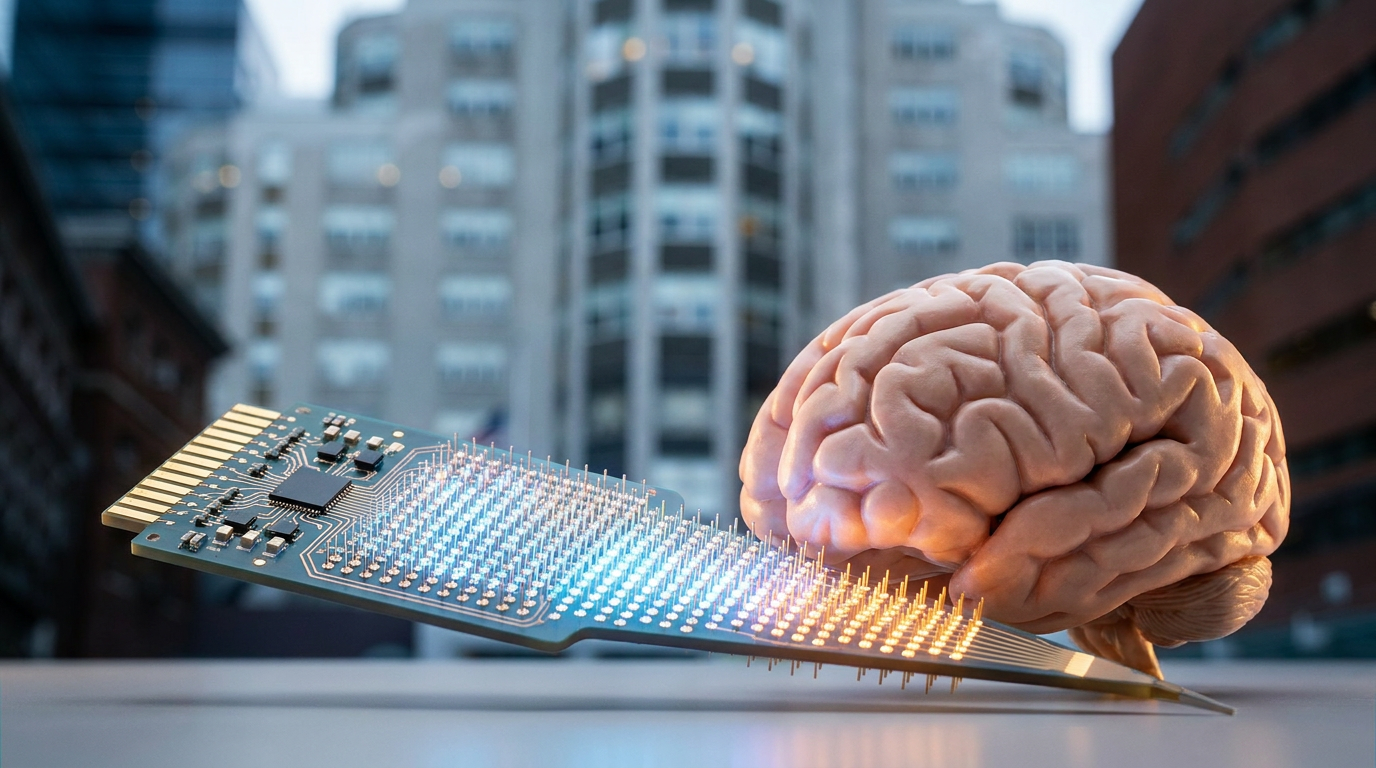
This breakthrough relies on Neuropixels probes, an advanced microelectrode technology originally developed for animal research. These state-of-the-art probes pack nearly 1,000 individual sensors onto a silicon shank thinner than a human eyelash. When inserted into the cortex, they allow scientists to record the millisecond-by-millisecond firing of hundreds of single neurons simultaneously across different layers of brain tissue. The adaptation of this technology for human use marks a major technological leap, providing a level of spatial and temporal resolution that was previously impossible to achieve in awake, behaving patients.[2][5]
Because inserting these probes is highly invasive, the research teams at Massachusetts General Hospital and the University of California, San Francisco worked with patients who were already undergoing neurosurgery for epilepsy monitoring. While the patients rested in their hospital beds and engaged in casual, free-flowing conversations with researchers, the microelectrode arrays captured the precise electrical spikes of their neurons. This unique clinical setup provided a rare opportunity to study human-specific cognitive functions—like language and abstract reasoning—that simply cannot be modeled in animals.[3][5]

The resulting data revealed that individual neurons in the superior temporal gyrus and prefrontal cortex are finely tuned to specific speech sounds. Rather than responding to whole words or broad concepts, some cells fire exclusively for plosive consonants like "p" and "b," which require a sudden release of air. Other neurons activate only for nasal sounds like "m" and "n." This division of labor demonstrates that the brain breaks down language into its most basic articulatory gestures at the cellular level, assigning specific phonetic tasks to distinct populations of neurons.[2][5]
Even more remarkably, the recordings demonstrated that the brain begins assembling a sentence long before the mouth actually moves. Neurons in the prefrontal cortex represent the specific order and structure of phonetic sequences, accurately predicting the syllables and morphemes of upcoming words up to 400 milliseconds before they are spoken. This predictive coding suggests that the brain does not generate speech on the fly; instead, it meticulously plans and queues up the exact sequence of muscle movements required for articulation well in advance of the utterance.[3][4]
Even more remarkably, the recordings demonstrated that the brain begins assembling a sentence long before the mouth actually moves.
Beyond just the mechanics of sound, researchers discovered that individual neurons also capture semantic meaning, acting as a microscopic "brain thesaurus." These cells can distinguish between words based on their context, continuously anticipating the most likely concept based on the surrounding sentence. For example, specific neurons can differentiate between the concept of an animal when hearing the word "dog" versus a vehicle when hearing "car," proving that high-level semantic comprehension is encoded at the level of single action potentials.[4]
To make sense of this massive influx of neural data, the researchers applied advanced machine-learning and natural language processing models. These artificial intelligence systems were able to align the neuronal recordings with the transcribed conversations, successfully decoding the grammar, meaning, and context of the spoken sentences directly from the cellular activity. The models could even distinguish between similar phrases, proving that the neural spikes contained enough rich, structured data to reconstruct the unique context of a patient's internal monologue.[1][3]

The studies also illuminated the intricate biological dance between listening and speaking. Researchers identified specialized "mirror" and "bridge" neurons that activate both when a person hears a specific speech sound and when they prepare to produce that exact same sound. This dual-activation provides a cellular basis for how humans learn, mimic, and process language, showing that the neural pathways for speech perception and speech production are deeply intertwined during natural conversation.[6]
For clinical neurologists and neuroengineers, this level of granularity is a transformative game-changer. Current brain-computer interfaces often rely on surface-level electrocorticography, which captures the blended noise of the brain's surface and can be imprecise. By proving that single neurons carry highly specific, decodable information about intended speech, these findings provide the exact blueprint needed to build next-generation neural prostheses that operate with unprecedented speed and accuracy.[2][5]
By tapping directly into the single-neuron level, developers hope to build highly accurate synthetic speech devices for patients who have lost the physical ability to communicate. For individuals paralyzed by amyotrophic lateral sclerosis (ALS), brainstem strokes, or severe dysarthria, these advanced decoders could eventually translate their intended thoughts into fluid, natural-sounding speech in real time. This would bypass damaged motor pathways entirely, restoring their voice, their autonomy, and their connection to the outside world with a level of fidelity that current assistive devices simply cannot match.[3][4]
Despite the profound medical implications, significant engineering hurdles remain before this technology can be widely deployed. The Neuropixels probes are currently used only in acute, short-term clinical settings. Ensuring the long-term stability of these delicate silicon sensors in the human brain over months or years—without the body's immune system degrading the signal or causing tissue damage—is a major challenge that materials scientists are actively working to solve.[2][7]

Furthermore, the ethical implications of decoding semantic meaning directly from single neurons are complex. As artificial intelligence models become more adept at translating neural spikes into intended concepts and unvocalized thoughts, bioethicists warn that the technology inches closer to functional "mind-reading." Establishing strict regulatory frameworks and robust privacy safeguards for neural data will be essential to ensure these tools are used exclusively for voluntary medical empowerment.[7]
Nevertheless, the ability to observe the human brain building a sentence neuron by neuron represents a watershed moment in cognitive neuroscience. It not only paves the way for transformative medical therapies that could give voice to the voiceless, but it also offers an unprecedented, high-resolution window into the biological machinery that makes us uniquely human. As researchers continue to decode the intricate electrical language of the mind, the boundary between science fiction and clinical reality continues to blur in profoundly uplifting ways.[1][7]
How we got here
1971
Researchers record single-neuron activity in an awake human for the first time during a seizure.
2000s-2010s
Brain surface mapping identifies broad language regions, but lacks cellular resolution.
Late 2010s
Neuropixels probes are developed, revolutionizing high-density neural recording in animal models.
Dec 2023
UCSF researchers publish the first large-scale single-neuron recordings of speech sounds across human cortical layers.
June 2026
NIH-funded teams successfully track and decode natural conversation neuron-by-neuron in real time.
Viewpoints in depth
Cognitive Neuroscientists
Viewing the findings as a fundamental leap in understanding human biology.
For researchers studying the brain's architecture, the ability to track single neurons during natural conversation solves a decades-old mystery. They emphasize that language is a uniquely human trait that cannot be fully modeled in animals. By proving that individual cells encode specific phonemes and semantic meanings, these scientists argue we are finally seeing the 'source code' of human thought, moving beyond broad regional brain mapping to the exact cellular computations that generate speech.
BCI Developers
Focusing on the engineering potential for next-generation speech prostheses.
Neuroengineers see these single-neuron recordings as the key to unlocking high-fidelity brain-computer interfaces. Current BCIs often rely on surface electrodes that capture the blended noise of millions of cells, limiting decoding speed and accuracy. By tapping directly into the high-resolution data of individual neurons, developers believe they can create synthetic speech devices that operate at the speed of natural conversation, drastically improving the quality of life for patients with paralysis.
Clinical Neurologists
Prioritizing therapeutic applications for speech and language disorders.
Physicians treating conditions like stroke, traumatic brain injury, and neurodegenerative diseases view this research through a rehabilitative lens. Understanding exactly how the brain plans and executes speech at the cellular level could lead to targeted therapies, such as precise electrical stimulation, to bypass damaged neural circuits. Their primary focus is translating these highly technical intraoperative findings into practical, non-invasive or minimally invasive treatments for the broader patient population.
Bioethicists
Raising concerns about neural privacy and the implications of decoding thought.
While celebrating the medical breakthroughs, ethicists caution that the ability to decode semantic meaning—essentially reading the concepts a person is thinking about before they speak—enters uncharted moral territory. They argue that as machine learning models become more sophisticated at interpreting single-neuron data, strict regulatory frameworks must be established to protect 'neuronal privacy.' Their goal is to ensure that neural decoding technology is used exclusively for voluntary medical communication and never for unauthorized surveillance.
What we don't know
- How to maintain the long-term stability of Neuropixels probes in the human brain without signal degradation.
- Whether these single-neuron decoding models can be effectively generalized across different languages and dialects.
- How the brain processes abstract, non-verbal thoughts before they are translated into linguistic concepts.
Key terms
- Neuropixels
- Advanced microelectrode probes thinner than a human hair that can record the electrical activity of hundreds of individual brain cells simultaneously.
- Phoneme
- The smallest unit of sound in speech that distinguishes one word from another, such as the 'p' in 'tap'.
- Prefrontal Cortex
- A region at the front of the brain involved in complex cognitive behavior, decision making, and the planning of speech.
- Brain-Computer Interface (BCI)
- A system that translates brain activity into commands for external devices, often used to help paralyzed patients communicate.
- Morpheme
- The smallest meaningful unit in a language, which can be a whole word or a suffix like '-ed' that changes a word's tense.
Frequently asked
Can this technology read my thoughts?
Currently, no. The technology requires highly invasive surgical implants and is only used in controlled medical settings. However, its ability to decode intended speech has prompted bioethicists to call for future neural privacy safeguards.
How fast does the human brain process speech?
During natural conversation, the brain processes and produces speech at a rapid rate of roughly three words per second, orchestrating complex sequences of sounds with remarkable precision.
Will this cure conditions like ALS or stroke?
While it is not a cure for the underlying diseases, this research paves the way for advanced speech prostheses that could restore fluid communication for patients who have lost the physical ability to speak.
Why couldn't scientists do this before?
Previous brain-mapping technologies were too coarse, capturing the blended activity of millions of cells. The recent adaptation of ultra-high-density Neuropixels probes for human use finally provided the necessary cellular resolution.
Sources
Source coverage
7 outlets
4 viewpoints surfaced







[1]NatureCognitive Neuroscientists
Daily briefing: The brain builds a sentence neuron by neuron
Read on Nature →[2]The TransmitterCognitive Neuroscientists
Tracking single neurons in the human brain reveals new insight into language and other human-specific functions
Read on The Transmitter →[3]National Institutes of HealthClinical Neurologists
Researchers discover single-cell brain activity that underlies human speech
Read on National Institutes of Health →[4]Massachusetts General HospitalClinical Neurologists
Study Discovers Neurons in the Human Brain that can Predict What We're Going to Say Before We Say It
Read on Massachusetts General Hospital →[5]UCSFBCI Developers
Large-scale Single Neuron Encoding of Speech Sounds Across the Depth of Human Cortex
Read on UCSF →[6]bioRxivCognitive Neuroscientists
Human precentral gyrus neurons link speech sequences from listening to speaking
Read on bioRxiv →[7]Factlen Editorial TeamBioethicists
Synthesis by Factlen editorial team
Read on Factlen Editorial Team →
Every angle. Every day.
Get science stories with full source coverage and perspective breakdowns delivered to your inbox.