
The End of the Cookie Era: Why Zero-Party Data and Retail Media Are Rewriting the 2026 Marketing Playbook
As privacy regulations tighten and third-party cookies vanish, brands are abandoning covert tracking in favor of 'zero-party data' and booming Retail Media Networks. Here is how the $200 billion shift is transforming digital advertising into a transparent, consent-driven ecosystem.
By Factlen Editorial Team
- Retail Media Operators
- Retailers view their platforms as the ultimate closed-loop advertising ecosystem.
- Brand Marketers & SEO Strategists
- Brands see massive opportunity but struggle with the fragmentation of the new landscape.
- Privacy & Compliance Advocates
- Privacy experts view the shift to zero-party data as a necessary correction to decades of overreach.
What's not represented
- · Independent retailers lacking the scale to build their own ad networks
- · Consumers who remain skeptical of any corporate data collection, regardless of consent
Why this matters
For businesses, adapting to zero-party data is the difference between thriving and losing access to customers. For consumers, it means the end of creepy background tracking and the rise of transparent, value-driven brand relationships.
Key points
- The global retail media market is projected to hit $203.9 billion in 2026.
- Third-party cookies are being replaced by zero-party data, which relies on explicit consumer consent.
- Retailers are expanding ad networks into physical stores using digital screens and AI.
- Over 80% of global internet users are now protected by strict privacy regulations.
- Brands using retail media networks see 1.8x better ad performance due to closed-loop attribution.
For two decades, the internet operated on a silent, invisible trade: free content in exchange for behavioral tracking. Third-party cookies followed users across the web, building profiles that fueled a multi-billion-dollar advertising complex. But in 2026, that era is effectively over. Driven by tightening global privacy regulations and browser-level blocks, the digital marketing playbook is being rewritten from the ground up.[8]
The death of the cookie has not killed digital advertising; it has merely shifted the power dynamics. Two massive, interconnected trends have emerged to fill the void: the explosive growth of Retail Media Networks (RMNs) and the pivot toward "zero-party data." Together, they represent a fundamental shift from covert surveillance to explicit, value-driven consent. For consumers, it means fewer creepy ads following them around the web. For brands, it means navigating a fragmented but highly lucrative new ecosystem.[6][8]
To understand the shift, one must look at the numbers. The global retail media market is projected to reach $203.9 billion in 2026, representing a 14% jump from the previous year. Industry analysts now refer to retail media as the "third great wave" of digital advertising, following the initial dominance of search engines and social media platforms. But unlike search or social, retail media operates much closer to the actual point of purchase, making it uniquely valuable to advertisers.[2][3]

What exactly is a Retail Media Network? In simple terms, it is an advertising business that a retailer builds on top of its own store and digital properties. Retailers like Amazon, Walmart, Target, and Kroger leverage their massive troves of first-party shopper data—actual purchase histories rather than inferred interests—to sell targeted ad placements to brands. When a consumer searches for "running shoes" on a retailer's app, the sponsored products that appear at the top of the results are retail media in action.[3]
The appeal for brands is undeniable. According to Kantar, retail media networks deliver results that are 1.8 times better than traditional digital ads, and nearly three times better for driving purchase intent. Because the retailer controls the entire ecosystem—from the initial ad impression to the final checkout—they can offer "closed-loop attribution." This means a brand can see exactly how many sales resulted from a specific ad campaign, without relying on probabilistic models or third-party trackers.[1][4]
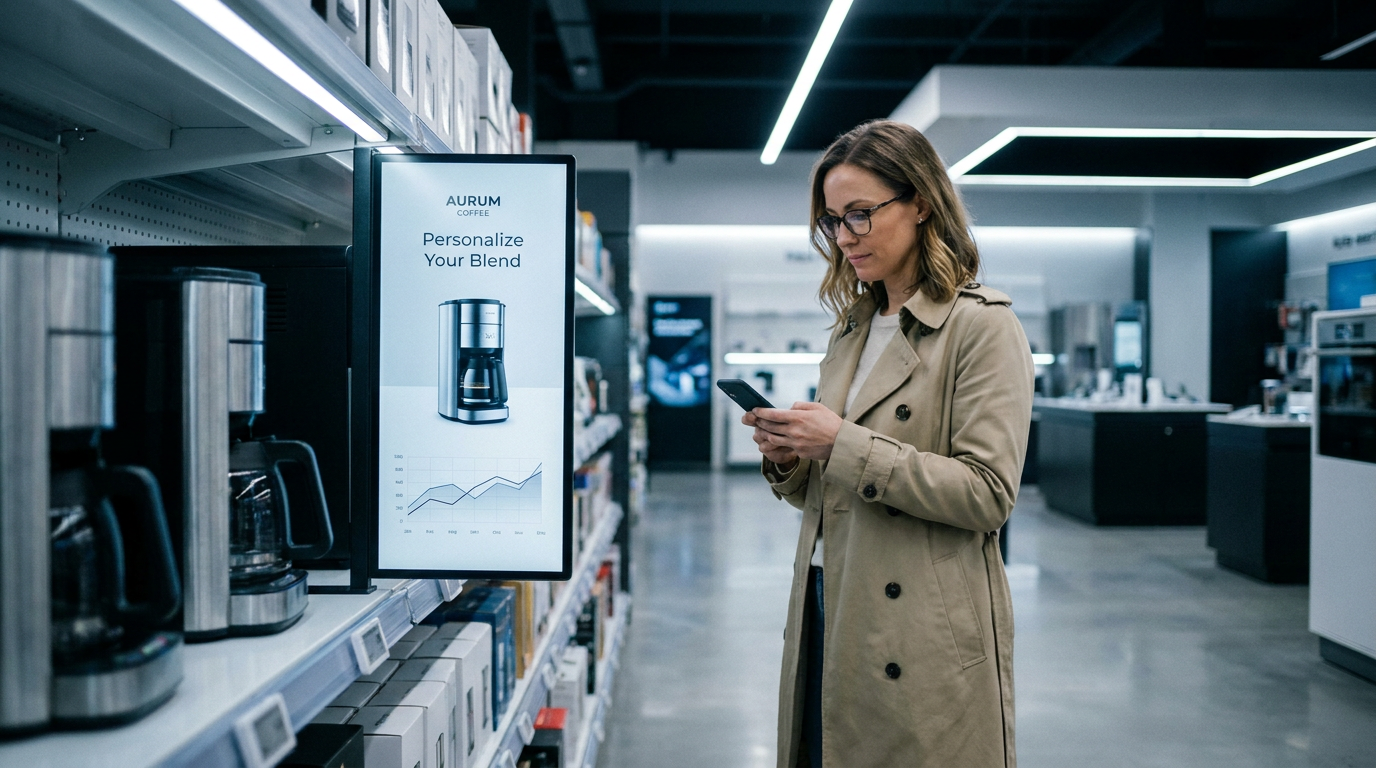
However, the retail media boom of 2026 extends far beyond digital search results. The fastest-growing frontier is the physical store itself. With 76% of purchases still happening in person, retailers are transforming their brick-and-mortar locations into dynamic advertising channels. Digital screens, smart audio systems, and connected point-of-sale displays can now update in real-time based on inventory levels, weather conditions, or the time of day.[2][4]
This convergence of physical and digital retail media is powered by advanced AI and computer vision. AI agents are now capable of streamlining the creation of ad formats and optimizing delivery to ensure the right message reaches the right shopper at the exact moment of decision. Yet, this technological leap introduces new challenges. The market is becoming highly fragmented, with over 200 distinct RMNs currently operating. Brands must navigate different platforms, metrics, and standards, leading to calls for independent verification and unified measurement.[1][2]
This convergence of physical and digital retail media is powered by advanced AI and computer vision.
Parallel to the rise of retail media is a profound shift in how brands collect and utilize customer information. Enter "zero-party data"—the new gold standard in a privacy-first world. While first-party data is passively observed (e.g., tracking what a user clicks or buys on a website), zero-party data is intentionally and proactively shared by the customer.[5][6]

Zero-party data captures intent and preference directly from the source. It is the information a customer hands over when they fill out a style quiz, update a preference center, or answer a post-purchase survey. As one industry expert noted, first-party data tells a brand what a user did, but zero-party data explains why they did it. This bridges the gap between raw analytics and genuine customer empathy.[5][6]
The urgency to adopt zero-party data is driven by a stark reality: over 80% of global internet users are now covered by stringent privacy regulations like Europe's GDPR, California's CCPA, and India's DPDP Act. In 2026, privacy is no longer just a compliance hurdle; it has become a core revenue architecture. Brands that rely on purchased or inferred data are seeing their targeting accuracy plummet, while those that earn direct consent are pulling ahead.[6][7]
Despite its clear advantages, the adoption of zero-party data remains surprisingly low. Current estimates suggest that only about 16% of marketers are effectively utilizing it. The hesitation often stems from a fear of introducing friction into the customer journey. Brands worry that asking questions will annoy shoppers or lead to abandoned carts.[6]
The reality, however, is that consumers are willing to share their data if there is a clear "value exchange." If a skincare brand asks a user about their skin type in order to recommend the perfect moisturizer, the customer receives immediate, personalized value. Transparency is key: 48% of consumers report feeling more comfortable with brands that clearly explain why they are collecting data and how it will benefit the shopping experience.[5][6]

Managing this new paradigm requires sophisticated infrastructure. Companies are increasingly deploying Preference Management Platforms (PMPs) that integrate directly with their marketing stacks. These tools allow customers to easily control their opt-ins, channel choices, and data permissions. When a customer updates their preferences, the changes instantly sync across the brand's email, SMS, and advertising systems, ensuring compliance and relevance.[7]
The intersection of zero-party data and retail media is where the future of commerce lies. Retailers are evolving from mere ad sellers into holistic data syndication platforms. By 2026, industry projections indicate that over 60% of RMN revenue growth will stem from non-advertising services, such as data licensing and strategic brand collaborations. Brands will increasingly partner with retailers in secure "data clean rooms" to match their zero-party insights with the retailer's purchase data, creating highly targeted campaigns without ever exposing personally identifiable information.[4]
What remains uncertain is how smaller brands will compete in this capital-intensive environment. Building the infrastructure to collect zero-party data and the budget to advertise across dozens of fragmented retail networks requires significant resources. There is a risk that the death of the cookie will disproportionately benefit massive retailers and established brands, leaving independent merchants struggling to reach new audiences.[3][8]
Ultimately, the marketing landscape of 2026 is defined by a return to fundamentals: asking customers what they want and delivering it to them where they are. The era of invisible tracking was a historical anomaly. As retail media networks mature and zero-party data becomes the norm, the industry is moving toward a more transparent, consent-driven model—one that respects the consumer while still driving undeniable business growth.[5][8]
How we got here
2018
The European Union implements the GDPR, setting a new global standard for digital privacy and consent.
2021
Apple introduces App Tracking Transparency, severely limiting the ability of third-party apps to track user behavior across iOS.
2024
Google begins the phased deprecation of third-party cookies in its dominant Chrome browser.
2026
The global retail media market surpasses $200 billion as brands fully pivot to first- and zero-party data strategies.
Viewpoints in depth
Retail Media Operators
Retailers view their platforms as the ultimate closed-loop advertising ecosystem.
For massive retailers, the shift represents a highly lucrative new revenue stream with margins far exceeding traditional retail. By monetizing their existing digital real estate and in-store screens, they can offer brands unprecedented access to shoppers at the exact moment of purchase. Operators argue that this model is inherently superior to traditional digital ads because it relies on actual purchase data rather than probabilistic tracking, allowing them to prove exact ROI to their brand partners.
Brand Marketers
Brands see both massive opportunity and frustrating fragmentation in the new landscape.
While marketers appreciate the high conversion rates of retail media and the accuracy of zero-party data, they are struggling with the sheer complexity of the 2026 ecosystem. Instead of buying ads through a single centralized platform, they must now manage budgets across dozens of different retail networks, each with its own metrics and pricing structures. Many brand leaders are pushing for independent verification and standardized measurement to ensure they aren't just paying a 'tax' to maintain their shelf space.
Privacy & Compliance Advocates
Privacy experts view the shift to zero-party data as a necessary correction to decades of overreach.
For privacy advocates, the death of the third-party cookie is a monumental victory. They argue that the internet's original sin was the normalization of invisible, non-consensual tracking. By forcing companies to rely on zero-party data—where consumers explicitly opt-in and share their preferences—the power dynamic shifts back to the user. Advocates emphasize that privacy is no longer just a legal compliance checklist, but a fundamental baseline for consumer trust.
What we don't know
- Whether smaller, independent brands will be priced out of the increasingly expensive retail media ecosystem.
- How quickly independent verification standards will be adopted to prevent retailers from grading their own advertising homework.
- The long-term impact of AI agents autonomously making purchasing decisions on behalf of consumers.
Key terms
- Retail Media Network (RMN)
- An advertising platform operated by a retailer that allows brands to buy ad space on the retailer's website, app, or physical stores.
- Zero-Party Data
- Information a customer intentionally and proactively shares with a brand, usually in exchange for a personalized experience.
- First-Party Data
- Information a company collects directly from its own customers based on their observed behavior and transactions.
- Closed-Loop Attribution
- The ability to track an advertising campaign from the initial ad view all the way to the final purchase within a single platform.
- Data Clean Room
- A secure environment where multiple companies can match and analyze their combined data without exposing any individual's private information.
Frequently asked
Why are third-party cookies disappearing?
Major browsers like Safari and Firefox blocked them, and tightening global privacy regulations made invisible tracking legally risky and technologically obsolete.
What is the difference between zero-party and first-party data?
First-party data is passively observed behavior (like clicking a link or buying a product). Zero-party data is intentionally shared by the user (like answering a style quiz).
Why are physical stores adding digital ad screens?
Because 76% of purchases still happen in person, retailers are monetizing their physical space by serving targeted, real-time ads to shoppers right at the point of decision.
Is zero-party data compliant with privacy laws?
Yes. Because it relies on explicit, voluntary consent from the user, zero-party data is inherently compliant with strict regulations like GDPR and CCPA.
Sources
Source coverage
8 outlets
3 viewpoints surfaced








[1]KantarBrand Marketers & SEO Strategists
Media Reactions 2026: The Rise of Retail Media
Read on Kantar →[2]Coresight ResearchRetail Media Operators
Retail Media Trends 2026: From In-Store to AI, What's Driving the $203.9B Market
Read on Coresight Research →[3]OsmosRetail Media Operators
Building Your Retail Media Network in 2026
Read on Osmos →[4]DMEXCORetail Media Operators
The Future of Retail Media Networks as Data Syndication Platforms
Read on DMEXCO →[5]Search Engine JournalBrand Marketers & SEO Strategists
How Zero-Party & First-Party Data Can Fuel Your Intent-Based SEO
Read on Search Engine Journal →[6]CookieYesPrivacy & Compliance Advocates
Zero-Party Data: A Guide to Privacy-First Marketing
Read on CookieYes →[7]DidomiPrivacy & Compliance Advocates
Privacy as a Revenue Architecture in 2026
Read on Didomi →[8]Factlen Editorial TeamBrand Marketers & SEO Strategists
Synthesis by Factlen editorial team
Read on Factlen Editorial Team →

Every angle. Every day.
Get business stories with full source coverage and perspective breakdowns delivered to your inbox.