
How Solarpunk and Hopepunk Are Rewriting the Future of Science Fiction
A new wave of speculative fiction is rejecting dystopian gloom, envisioning sustainable, community-driven futures where humanity successfully navigates the climate crisis.
By Factlen Editorial Team
- Solarpunk Advocates
- Argue that envisioning a sustainable, cooperative future is a necessary first step to building it.
- Cultural & Climate Analysts
- View the movement as a psychological antidote to the apathy caused by relentless climate doomerism.
- Literary Traditionalists
- Question whether stories lacking high-stakes, life-or-death conflict can sustain compelling narrative tension.
What's not represented
- · Mainstream blockbuster film producers, who still heavily favor dystopian narratives for their visual spectacle.
- · Authors from regions currently experiencing the most severe impacts of climate change, whose views on optimism may differ from Western writers.
Why this matters
As climate anxiety reaches record highs, the stories we tell about the future shape our ability to build it. By providing a roadmap for sustainable, cooperative living, these literary movements are directly inspiring real-world urban planning and climate activism.
Key points
- Solarpunk and hopepunk are rapidly growing subgenres of speculative fiction that reject the bleak cynicism of dystopian narratives.
- Solarpunk envisions sustainable futures powered by renewable energy, emphasizing ecological harmony and community-owned technology.
- Hopepunk focuses on the emotional narrative, framing radical kindness and optimism as deliberate acts of political resistance.
- The movements serve as a psychological antidote to 'climate doomerism,' providing readers with a roadmap for a better future.
- Critics question whether the genres sacrifice necessary narrative tension by prioritizing coziness and conflict resolution.
- The ethos of solarpunk is increasingly inspiring real-world sustainable architecture, urban planning, and climate activism.
For decades, the future has looked bleak. Science fiction has been heavily dominated by the neon-lit, corporate-controlled dystopias of cyberpunk, or the ash-choked, post-apocalyptic wastelands of climate fiction. These narratives asked a simple, terrifying question: how does civilization end? But as real-world climate anxiety reaches a fever pitch, a growing coalition of authors and readers are asking a radically different question: what if we actually get through this? Rejecting the fatalism of traditional dystopian narratives, a new wave of speculative fiction is envisioning futures where humanity successfully navigates its greatest crises. This shift represents more than just a change in scenery; it is a fundamental reimagining of what makes a compelling story, moving away from solitary survival and toward collective resilience.[1][3]
Enter 'solarpunk' and 'hopepunk'—two intertwined literary movements that are rapidly reshaping the landscape of speculative fiction. While they share a common DNA of optimism, they tackle the future from slightly different angles. Solarpunk provides the architectural and ecological blueprint, while hopepunk provides the emotional and philosophical engine. Together, they are not naive utopias where conflict ceases to exist. Instead, they are 'protopias'—worlds characterized by incremental, hard-won progress, ecological harmony, and radical community resilience. In these stories, the apocalypse has either been averted through massive collective effort, or society is actively and successfully rebuilding in its wake. The focus is no longer on the tragedy of the fall, but on the triumph of the recovery.[2][6]
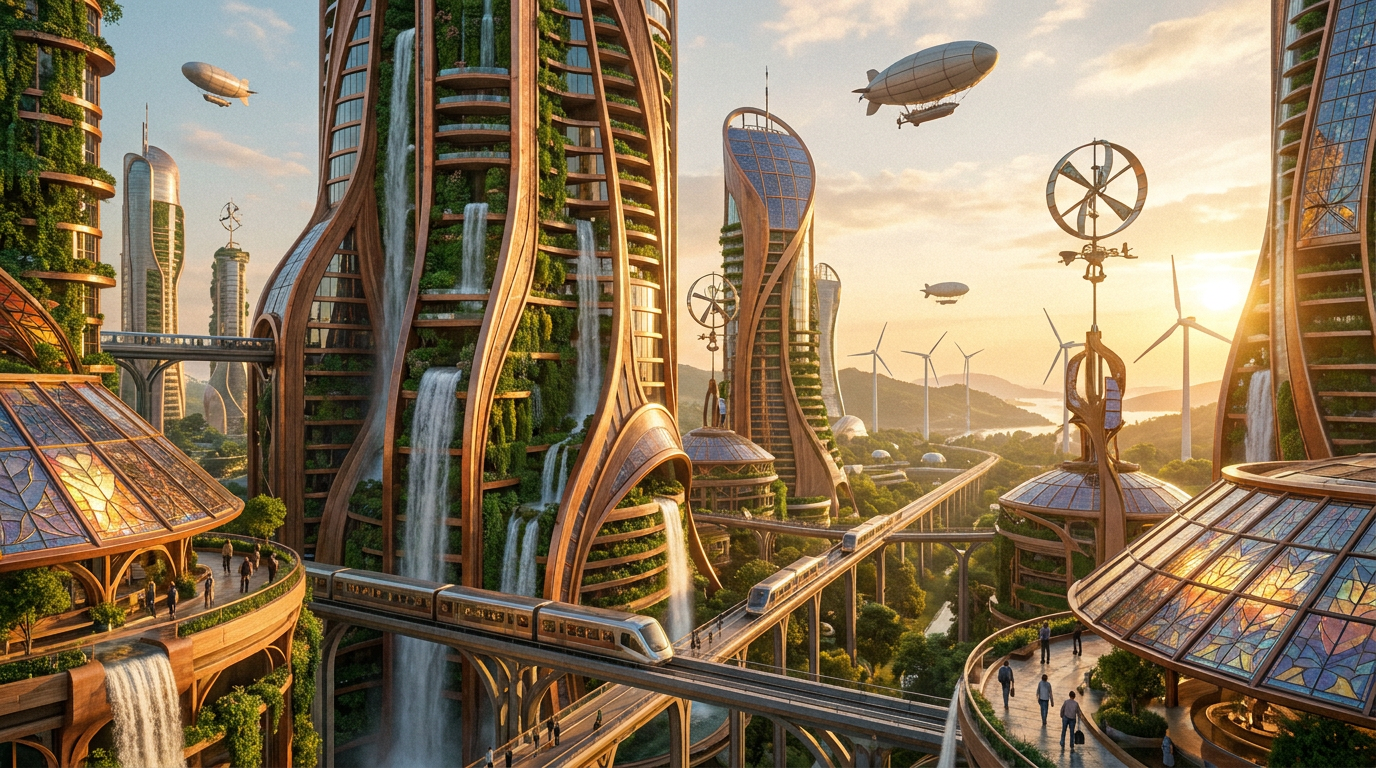
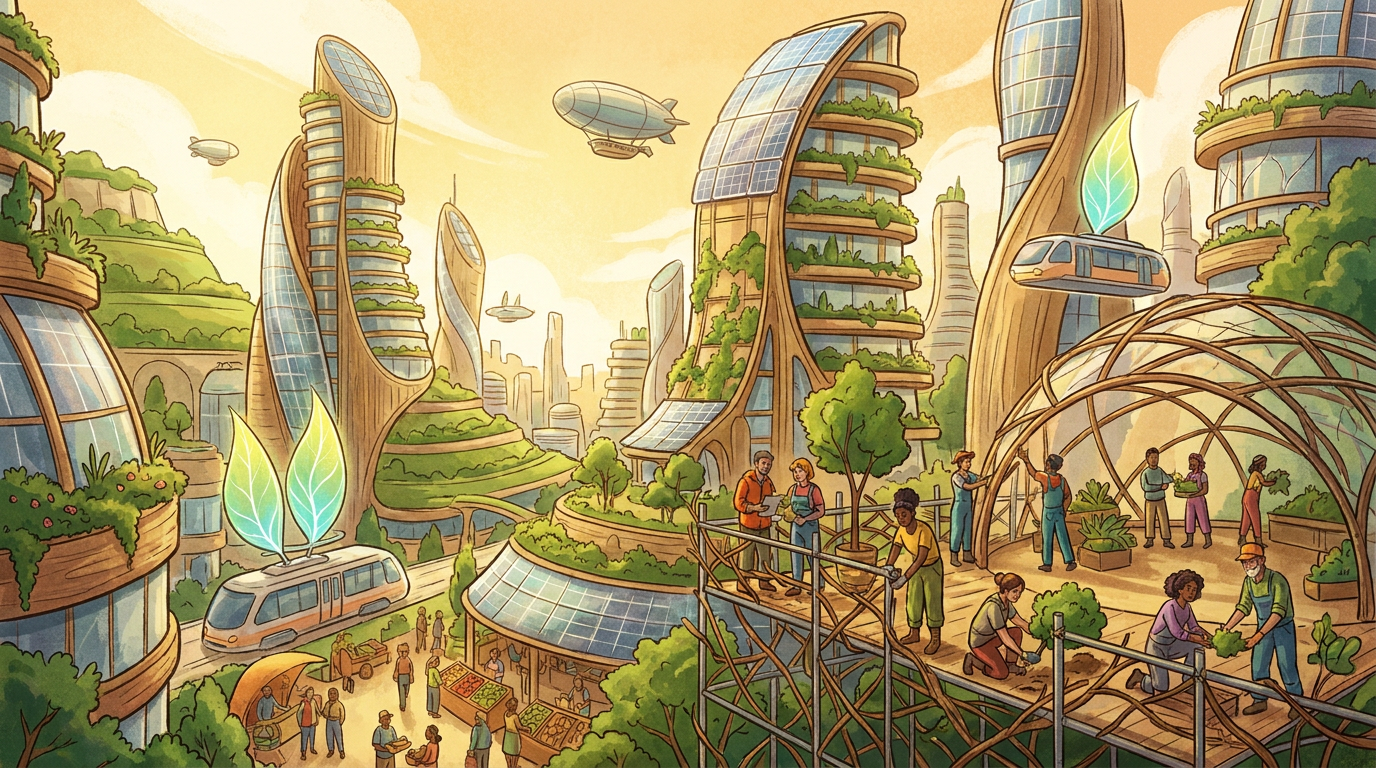
Solarpunk, which first emerged as an aesthetic concept on a 2008 blog post and gained literary traction with a 2012 Brazilian short story anthology, focuses heavily on world-building and infrastructure. The 'solar' prefix represents both renewable energy and a bright, optimistic outlook, while the 'punk' suffix denotes a rebellion against consumer capitalism, artificial scarcity, and fossil-fuel dependency. In a solarpunk world, technology is not an alienating force controlled by mega-corporations; it is a democratized, open-source tool used to integrate human society with the natural world. Picture high-speed rail lines cutting through restored forests, vertical farms feeding dense urban populations, and communities organized around mutual aid rather than profit.[2][4]

If solarpunk provides the physical setting for a better future, hopepunk dictates how characters behave within it. Coined in 2017 by author Alexandra Rowland in a viral social media post, hopepunk was explicitly defined as the opposite of 'grimdark'—a subgenre known for its cynical, amoral, and hyper-violent worldview. Hopepunk posits that in a world of brutal cynicism, choosing to be kind, soft, and cooperative is a deeply political act. It is a rejection of the idea that apathy is the only intelligent response to a broken world, arguing instead that caring about others requires immense strength and vulnerability.[1][2]
'Hopepunk says that kindness and softness doesn't equal weakness,' Rowland wrote, arguing that optimism can be weaponized as an act of rebellion. This ethos shifts the narrative focus away from solitary, heavily armed protagonists fighting to survive a wasteland. Instead, hopepunk stories center on communities working together to build, heal, and protect one another. The stakes are often relational rather than apocalyptic, proving that compelling fiction does not require the end of the world. A hopepunk narrative might revolve around a diplomatic negotiation, the restoration of a damaged ecosystem, or the simple, profound act of learning to understand an enemy.[2][3]
The contrast with cyberpunk is intentional and stark. Cyberpunk—popularized in the 1980s by authors like William Gibson—imagined a future of 'high tech and low life,' characterized by neon-lit urban decay, artificial intelligence run amok, and extreme wealth inequality. Solarpunk serves as its direct foil. Where cyberpunk features rain-slicked concrete and neon, solarpunk features Art Nouveau-inspired architecture, vertical gardens, and stained glass solar panels. Where cyberpunk emphasizes alienation and the loss of humanity to machines, solarpunk emphasizes connection, envisioning a future where technology allows humans to become better stewards of the Earth.[4][6]
Where cyberpunk features rain-slicked concrete and neon, solarpunk features Art Nouveau-inspired architecture, vertical gardens, and stained glass solar panels.
This shift is not merely aesthetic; it is a direct response to a profound psychological need. As the realities of climate change become increasingly tangible, readers are experiencing widespread 'dystopia fatigue.' Authors and cultural critics argue that constantly bombarding the public with images of inevitable ecological collapse breeds apathy and paralysis. If the end of the world is a foregone conclusion, there is no incentive to fight for a better outcome. Solarpunk authors aim to provide a roadmap out of this despair, arguing that society must be able to envision a sustainable, equitable future before it can actually build one.[1][2][3]

The genre's defining texts demonstrate this philosophy in action. Ursula K. Le Guin's 1974 novel *The Dispossessed* and Octavia Butler's 1993 *Parable of the Sower* are frequently cited as foundational ancestors to the movement, showcasing communities built on mutual aid and ecological adaptation long before the term 'solarpunk' existed. More recently, Becky Chambers' Hugo Award-winning *Monk and Robot* series has become the quintessential solarpunk text. The series follows a tea monk and a robot as they travel through a post-industrial, ecologically restored world, focusing entirely on philosophical conversations, emotional healing, and the beauty of the natural world.[4][5][6]
Similarly, Kim Stanley Robinson's *The Ministry for the Future* applies a hard-science approach to the solarpunk ethos. While the novel begins with a harrowing, mass-casualty climate disaster, it meticulously details the decades-long, bureaucratic, and technological struggle to decarbonize the global economy and save the planet. It pulls no punches regarding the difficulty of the task, featuring eco-terrorism, economic collapse, and political gridlock. Yet, it remains fundamentally optimistic, serving as a testament to the genre's core tenet: optimism is not a passive state of being, but a grueling, collective labor.[5]
Despite its growing popularity, the movement faces skepticism from traditional science fiction circles. Some critics argue that prioritizing 'coziness' and conflict resolution strips narratives of their necessary tension. They question whether stories lacking high-stakes, life-or-death struggles can sustain reader interest over the course of a novel, occasionally dismissing the genre as overly 'Pollyannaish' or naive about human nature. For readers accustomed to the adrenaline of space operas or the gritty realism of cyberpunk, the gentle pacing of a hopepunk novel can sometimes feel aimless or overly didactic.[1][7]

Proponents counter that this critique reveals a deeply ingrained cultural bias—the assumption that only violence and destruction are inherently interesting or realistic. They argue that the work of diplomacy, community-building, and ecological restoration is fraught with its own complex conflicts and setbacks. In hopepunk, evil is rarely vanquished permanently; it is simply beaten back for another day through the relentless, unglamorous work of ordinary people. The tension arises not from whether the hero will survive a gunfight, but whether a fragile community can hold together under pressure.[3][6]
The influence of solarpunk is now bleeding out of literature and into the real world. The movement has inspired urban planners, architects, and climate activists to incorporate its principles into real-life sustainable design. From the proliferation of community gardens and the design of eco-villages to the advocacy for open-source green technology, the genre is functioning as a tangible blueprint for climate action. It is providing a visual and philosophical vocabulary for activists who want to articulate what they are fighting for, rather than just what they are fighting against.[1][2][6]
As we move deeper into the 2020s, the publishing industry is taking note. Solarpunk and hopepunk titles are capturing a growing share of the speculative fiction market, driven by a readership desperate for narratives that offer comfort without sacrificing intellectual rigor. These stories remind us that while the future is uncertain, it is not yet written. By daring to imagine a world where humanity gets it right, these genres are proving that hope might be the most radical, transformative technology of all.[1][4]
How we got here
1974
Ursula K. Le Guin publishes 'The Dispossessed', introducing themes of anarcho-syndicalism and ecological balance that would later inspire solarpunk.
2008
An anonymous blog post titled 'From Steampunk to Solarpunk' coins the term, proposing a new aesthetic based on renewable energy.
2012
The first dedicated solarpunk anthology is published in Brazil, moving the concept from a visual aesthetic to a literary genre.
2017
Author Alexandra Rowland coins the term 'hopepunk' on Tumblr, defining it as the narrative opposite of grimdark.
2021
Becky Chambers publishes 'A Psalm for the Wild-Built', cementing the cozy, solarpunk ethos in mainstream, award-winning science fiction.
Viewpoints in depth
The Solarpunk Vision
Advocates argue that envisioning a sustainable future is the first step to creating it.
For proponents of the solarpunk movement, fiction is not merely escapism; it is an architectural blueprint. They argue that decades of dystopian media have conditioned society to accept ecological collapse and corporate dominance as inevitable. By deliberately constructing narratives where communities successfully transition to renewable energy, dismantle hyper-capitalism, and live in harmony with nature, solarpunk authors aim to break this psychological paralysis. They view optimism as a practical tool for inspiring real-world climate activism and sustainable design.
The Traditionalist Critique
Skeptics question whether stories without existential stakes can maintain narrative momentum.
A vocal contingent of literary critics and traditional science fiction fans remain skeptical of the hopepunk and solarpunk ethos. Their primary critique is structural: traditional storytelling relies on high-stakes conflict, often life-or-death struggles against insurmountable odds, to drive character development and plot. Critics argue that by prioritizing 'coziness,' emotional softness, and guaranteed positive outcomes, these subgenres risk becoming narratively stagnant or overly didactic. Some even view the forced optimism as a form of toxic positivity that ignores the darker, more complex realities of human nature.
The Psychological Imperative
Cultural analysts view the movement as a necessary antidote to widespread climate anxiety.
Beyond literary mechanics, cultural scholars analyze the rise of these genres as a direct psychological response to the 2020s. With daily news cycles dominated by extreme weather events, political polarization, and technological anxieties, readers are experiencing profound 'doomerism fatigue.' Analysts suggest that hopepunk's emphasis on radical kindness and solarpunk's focus on community resilience provide a safe, therapeutic space for readers to process their existential dread. In this view, the genres are less about predicting the future and more about providing the emotional fortitude required to survive the present.
What we don't know
- Whether solarpunk will eventually eclipse cyberpunk in mainstream pop culture and blockbuster film adaptations.
- How the genre will evolve as the real-world effects of climate change become more severe and immediate.
- Whether the 'cozy' elements of hopepunk will remain a permanent fixture of the genre, or if authors will begin introducing darker conflicts into solarpunk settings.
Key terms
- Solarpunk
- A literary and artistic movement envisioning a sustainable future where humanity lives in harmony with nature, powered by renewable energy.
- Hopepunk
- A subgenre of speculative fiction that frames optimism, radical kindness, and community-building as acts of political resistance.
- Cyberpunk
- A dystopian science fiction subgenre characterized by advanced technology, corporate dominance, and a breakdown of social order.
- Grimdark
- A subgenre of speculative fiction known for its bleak, cynical, and often hyper-violent portrayal of the world.
- Protopia
- A society that is not perfect, but is actively and incrementally improving over time through collective effort.
- Speculative Fiction
- An umbrella genre encompassing science fiction, fantasy, and horror, focusing on worlds that differ fundamentally from our own.
Frequently asked
What is the difference between solarpunk and hopepunk?
Solarpunk primarily describes the physical setting and aesthetic—a sustainable, green, renewable-powered world. Hopepunk describes the narrative ethos and character behavior, focusing on optimism and kindness as acts of rebellion.
Is solarpunk a utopian genre?
Not exactly. While it is highly optimistic, solarpunk is often described as 'protopian.' It features worlds that still face challenges and conflicts, but where society is actively working together to improve conditions rather than descending into chaos.
What are some foundational books in these genres?
Early inspirations include Ursula K. Le Guin's 'The Dispossessed' and Octavia Butler's 'Parable of the Sower.' Modern quintessential works include Becky Chambers' 'Monk and Robot' series and Kim Stanley Robinson's 'The Ministry for the Future.'
Why do these genres use the '-punk' suffix?
The '-punk' suffix denotes a counter-cultural rebellion. In solarpunk and hopepunk, the rebellion is against consumer capitalism, fossil-fuel dependency, and the cynical apathy of dystopian narratives.
Sources
Source coverage
7 outlets
3 viewpoints surfaced







[1]Factlen Editorial TeamCultural & Climate Analysts
Synthesis by Factlen editorial team
Read on Factlen Editorial Team →[2]WikipediaCultural & Climate Analysts
Solarpunk
Read on Wikipedia →[3]Literary HubCultural & Climate Analysts
Hopepunk and Solarpunk: On Climate Narratives That Go Beyond the Apocalypse
Read on Literary Hub →[4]Ooligan PressSolarpunk Advocates
Solarpunk: A Growing Subgenre
Read on Ooligan Press →[5]The PortalistSolarpunk Advocates
Solarpunk Books for When You Crave Optimistic Sci-Fi
Read on The Portalist →[6]Feminist Book ClubSolarpunk Advocates
Solarpunk: An Introduction
Read on Feminist Book Club →[7]Medium CommentaryLiterary Traditionalists
The Problem with Hopepunk's Forced Optimism
Read on Medium Commentary →

Every angle. Every day.
Get culture stories with full source coverage and perspective breakdowns delivered to your inbox.