
The Rise of 'Slow Content': Why the Creator Economy is Retreating to the 'Cozy Web'
Exhausted by algorithmic treadmills and AI-generated noise, creators and audiences are abandoning hyper-stimulating short-form video in favor of long-form ambient content and private digital communities.
By Factlen Editorial Team
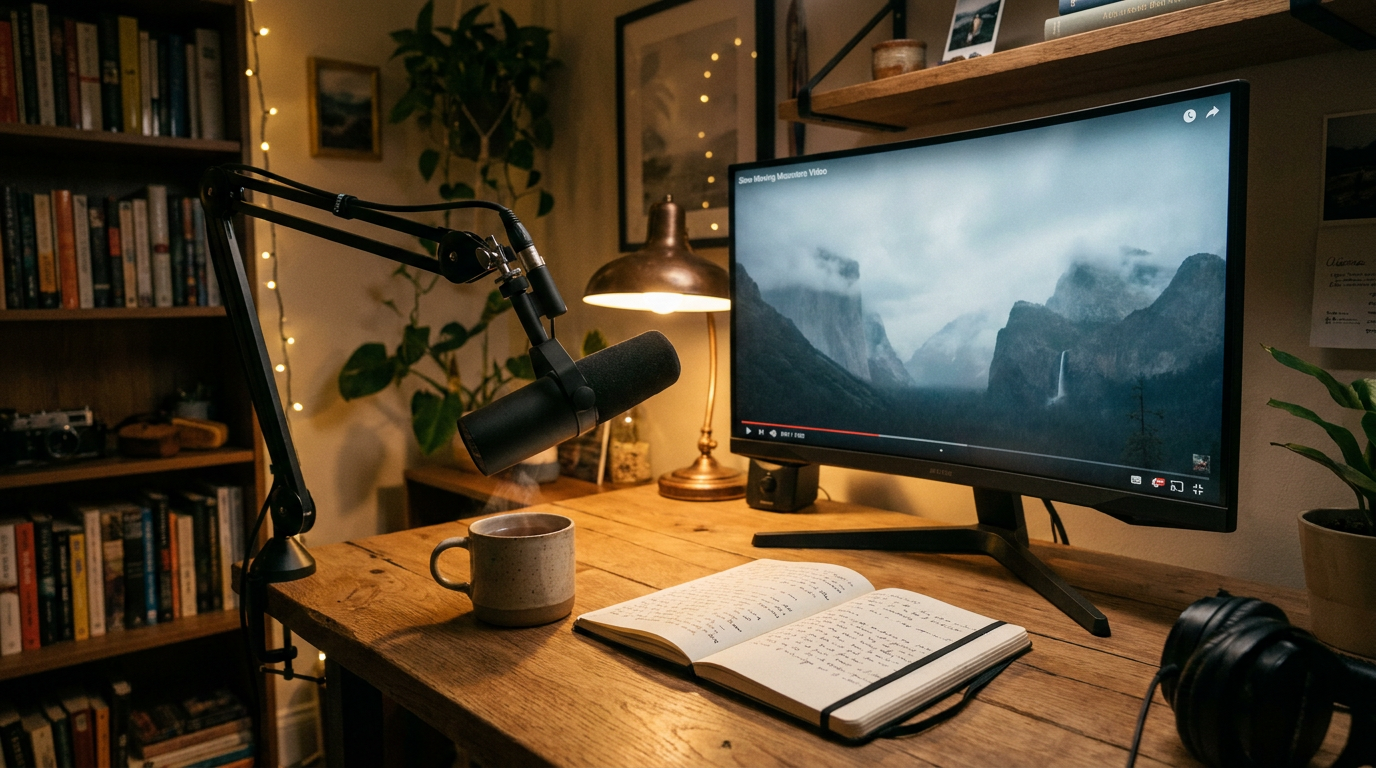
- Slow Content Creators
- Prioritizing sustainable publishing, mental health, and direct audience ownership over viral metrics.
- Digital Wellbeing Advocates
- Championing the psychological benefits of low-stimulation media and private digital spaces.
- Brand Strategists
- Adapting to the loss of organic reach by embracing 'quiet marketing' and high-trust partnerships.
- Hybrid Growth Analysts
- Balancing the intimacy of the Cozy Web with the necessary discovery power of legacy algorithms.
What's not represented
- · Algorithmic platform engineers
- · Early-stage creators struggling with discovery
Why this matters
The shift toward 'slow content' offers a blueprint for a healthier internet, proving that digital success no longer requires sacrificing mental health to appease an algorithm.
Key points
- Creators and audiences are shifting away from hyper-stimulating short-form video toward 'slow content.'
- The 'Cozy Web' represents a migration from public algorithmic feeds to private, high-trust communities.
- Organic reach on legacy platforms has dropped to 3-4%, making follower counts less valuable than direct subscriptions.
- The creator economy is projected to reach $480 billion by 2027, driven by sustainable, founder-led business models.
- Brands are adapting with 'quiet marketing,' focusing on deep engagement rather than loud, interruptive advertising.
The era of the fifteen-second dopamine hit is giving way to something decidedly quieter. Across the digital landscape, millions of viewers are bypassing hyper-edited, fast-paced shorts in favor of three-hour ambient train rides, silent vlogs, and sprawling video essays. This is the "Slow Content" movement, a deliberate pivot away from algorithmic hyper-stimulation toward depth, longevity, and intentionality.[3]
For years, the creator economy operated on a grueling treadmill. The unwritten rule of digital success was constant visibility: publish daily, chase trends, and optimize for the first hour of engagement. But by 2026, that relentless pace has broken the human nervous system of both creators and consumers. The result is a collective "content fatigue," where users are scrolling faster but trusting less, prompting a fundamental rewiring of how digital media is produced.[1][3]
The shift is partly a reaction to the flood of artificial intelligence. As generative AI makes it effortless to produce infinite volumes of what researchers call "workslop"—lazy, hyper-optimized, automated content—the internet has become saturated. In response, human nuance has become the premium product. Audiences are actively seeking out the messy, the lived-in, and the deeply researched, valuing a creator's unique perspective over algorithmic perfection.[1][5]
This exhaustion has triggered a mass migration away from public, algorithmic feeds into what digital theorists call the "Cozy Web." Coined by writer Venkatesh Rao, the Cozy Web represents a retreat from the performative "Dark Forest" of mainstream social media into smaller, high-trust digital burrows. These include private Discord servers, niche Substack newsletters, WhatsApp channels, and invite-only group chats.[2][4]

In these semi-private environments, authenticity and emotional safety trump viral reach. Gen Z, in particular, is leading this exodus. Recent industry data indicates that a significant portion of young users have deleted at least one major social app in the past year, citing content toxicity and the overwhelming density of sponsored posts. They are trading the public square for the digital living room.[4]
Economically, this migration is driven by the "Death of the Follower." In the early days of social media, a follow was a guarantee of distribution. Today, platforms have largely abandoned that contract in favor of engagement-based, AI-driven recommendation engines. Average organic reach for creators on legacy platforms has plummeted to a mere three to four percent, forcing a "pay-to-play" dynamic that homogenizes content.[4]

Consequently, follower counts have devolved into vanity metrics. The new currency of the creator economy is direct ownership and deep resonance. A creator with two thousand paid subscribers on a platform they control often wields more actual influence—and generates more reliable revenue—than an influencer with one hundred thousand passive scrollers on a short-form video app. The strategy has shifted from shouting in the town square to building a campfire.[2][6]
Consequently, follower counts have devolved into vanity metrics.
The financial stakes of this transition are massive. The broader creator economy is projected to double in value to nearly $480 billion by 2027. As the industry matures, creators are evolving into founders, prioritizing sustainable business models over viral spikes. By publishing on a steady, manageable cadence—often weekly or biweekly—they are building archives of evergreen work that compound in value over time, rather than expiring after twenty-four hours.[1][6]
This slower pace is also a matter of accessibility and mental health. The "slow creator economy" acknowledges that the old algorithmic demands were inherently exclusionary, benefiting those with boundless energy and punishing those needing recovery time. For creators managing chronic illness, neurodivergence, or simply the realities of a finite attention span, the shift to slow content allows for a sustainable career without the looming threat of burnout.[1]
Brands and marketers are being forced to adapt to this new reality. The traditional playbook of interrupting feeds with loud, fast-paced ads is increasingly ineffective in cozy digital spaces. Instead, forward-thinking companies are embracing "quiet marketing." Luxury hospitality brand Belmond, for instance, has launched ambient "Long Shot" videos of scenic destinations, while Nike has moved to Substack to foster deeper, text-based engagement with its community.[3][5]

Alongside slow content is the rise of "de-influencing." Originally a short-form video trend where creators advised audiences on what not to buy, it has matured into a broader cultural demand for honesty over sponsorships. Creators who are willing to criticize products or promote anti-consumption are earning the trust that traditional influencers have lost. In the Cozy Web, trust is the ultimate currency, and it is built through restraint.[3]
Visually, this movement is characterized by the "minimal core" aesthetic. It favors soft audio, clean visuals, negative space, and a distinct lack of clutter. Whether it is a three-hour podcast, a meticulously researched video essay, or a simple, text-heavy newsletter, the design language of slow content is meant to feel like a deep breath—a stark contrast to the flashing text and hyper-cuts of the engagement era.[3][6]

Despite its benefits, the slow content model presents new challenges. The primary hurdle is discovery. Because the Cozy Web is largely unindexed by search engines and hidden from algorithmic recommendation, new creators face a steep climb to build their initial audience. Many are adopting a hybrid approach: using legacy platforms as a "storefront" to capture attention, before funneling those users into their private, slow-paced communities.[2][6]
There is also the risk that platforms will eventually find ways to monetize and algorithmically manipulate these private spaces, effectively turning the Cozy Web back into the Dark Forest. As major tech companies integrate AI agents into group chats and direct messages, the boundaries of digital privacy and intimacy will be tested once again.[6]
Ultimately, the rise of slow content represents a new social contract between creators and their audiences. It is a mutual agreement to prioritize intentionality over engagement, and human connection over algorithmic velocity. By choosing depth over breadth, the creator economy is proving that sometimes, the best way to move forward is to simply slow down.[4]
How we got here
Early 2020s
Short-form video platforms dominate, establishing a high-volume, algorithmic standard for creators.
2024–2025
Generative AI floods public feeds with automated content, accelerating audience fatigue.
Late 2025
Organic reach for creators on legacy platforms drops to single digits, prompting a search for alternatives.
2026
The 'Cozy Web' and 'Slow Content' movements gain mainstream traction as creators migrate to private communities.
Viewpoints in depth
Slow Content Creators
Advocates for sustainable publishing cadences and audience ownership.
For this camp, the shift to slow content is fundamentally about occupational health and business sustainability. They argue that the daily upload grind of the early 2020s led to mass burnout and compromised content quality. By moving audiences to owned platforms like Substack or private community servers, they can publish less frequently but with higher quality, relying on direct subscriptions rather than volatile ad revenue.
Digital Wellbeing Advocates
Focuses on the psychological benefits of escaping algorithmic feeds.
Psychologists and digital wellbeing researchers view the 'Cozy Web' as a necessary public health correction. They point to the anxiety and attention fragmentation caused by short-form video algorithms. From their perspective, the embrace of ambient videos, long-form essays, and private group chats represents a collective attempt by consumers to regulate their nervous systems and reclaim their attention spans.
Brand & Marketing Strategists
Navigating the challenge of reaching consumers in private digital spaces.
Marketers are approaching the Cozy Web with a mix of adaptation and concern. While they recognize that traditional 'loud' advertising fails in these intimate spaces, they face significant hurdles in measuring ROI without public metrics. Their strategy is shifting toward 'quiet marketing'—sponsoring deep-dive newsletters, funding ambient entertainment, and partnering with creators who have high-trust, niche communities rather than massive, passive followings.
What we don't know
- Whether new creators can successfully build audiences without relying on the algorithmic reach of legacy platforms.
- How major tech platforms will attempt to monetize or index the currently private spaces of the Cozy Web.
Key terms
- Slow Content
- A media philosophy prioritizing high-quality, deeply researched, and less frequent publishing over constant algorithmic output.
- The Cozy Web
- Private, high-trust digital spaces like group chats, Discord servers, and newsletters, away from public algorithmic feeds.
- Workslop
- Lazy, hyper-optimized, and often AI-generated content designed purely to game algorithms rather than provide value.
- De-influencing
- A trend where creators actively advise their audiences against purchasing certain products to build trust and promote conscious consumption.
- Organic Reach
- The percentage of a creator's audience that sees their content naturally, without the creator paying for promotion.
Frequently asked
Why are creators posting less frequently?
Many creators are adopting a 'slow content' model to avoid burnout and focus on higher-quality, evergreen pieces that build long-term trust rather than chasing fleeting viral trends.
What is the Cozy Web?
It refers to private, intimate digital spaces—like Discord servers, newsletters, and group chats—where users interact away from the performative pressure of public social media feeds.
How do creators make money if they leave major platforms?
By moving to platforms they control, creators can monetize through direct subscriptions, memberships, and high-value sponsorships with a smaller but highly dedicated audience.
Are short-form videos disappearing?
No, but their role is changing. Many creators now use short-form videos merely as a 'storefront' to discover new viewers, eventually funneling them into long-form content or private communities.
Sources
Source coverage
6 outlets
4 viewpoints surfaced





[1]Dreamspace StudioSlow Content Creators
The Slow Creator Economy: Is Burnout Reshaping Publishing?
Read on Dreamspace Studio →[2]Beauty IndependentBrand Strategists
Why Consumers Are Leaving Public Feeds For The 'Cozy Web'
Read on Beauty Independent →[3]Davies MeyerBrand Strategists
Slow Content & De-Influencing: Why Less Is Now More
Read on Davies Meyer →[4]SynQ SocialDigital Wellbeing Advocates
From Scroll To Soul: Why Gen Z Is Abandoning Big Social For The Cozy Web
Read on SynQ Social →[5]Dentsu CreativeBrand Strategists
Dentsu Creative Trends 2026
Read on Dentsu Creative →[6]Factlen Editorial TeamHybrid Growth Analysts
Synthesis by Factlen editorial team
Read on Factlen Editorial Team →

Every angle. Every day.
Get entertainment stories with full source coverage and perspective breakdowns delivered to your inbox.