
Fecal Transplants from Young Mice Reverse Brain Aging and Restore Cognitive Function
Recent studies demonstrate that transferring the gut microbiome of young mice into elderly mice successfully reverses age-related cognitive decline and restores brain plasticity. The findings highlight the gut-brain axis as a primary driver of aging and a promising target for future neurodegenerative therapies.
By Factlen Editorial Team
- Gut-Brain Axis Researchers
- Argue that the microbiome is a master regulator of systemic aging and a primary driver of cognitive decline.
- Clinical Translation Experts
- Emphasize the complexity of human microbiomes and the regulatory hurdles of translating murine models to human therapies.
- Longevity Analysts
- Focus on the broader implications for healthspan and actionable dietary interventions while awaiting clinical trials.
What's not represented
- · Gastroenterologists treating human patients with FMT for infectious diseases
- · Bioethicists evaluating the implications of sourcing 'youthful' microbiomes for anti-aging therapies
Why this matters
This research fundamentally changes our understanding of cognitive decline, suggesting that age-related memory loss is not an irreversible brain disease, but a treatable symptom of gut dysfunction. It opens the door to preserving long-term brain health through targeted dietary and microbiome interventions rather than relying solely on neurological drugs.
Key points
- Fecal microbiota transplantation (FMT) from young mice to elderly mice successfully reverses age-related cognitive decline.
- The procedure restores youthful brain plasticity, improves spatial memory, and accelerates learning speed.
- Aging naturally causes gut dysbiosis, leading to a "leaky gut" that drives systemic inflammation and neurodegeneration.
- Young microbiomes repopulate the gut with beneficial bacteria that produce anti-inflammatory short-chain fatty acids (SCFAs).
- The physical benefits of the transplant also include improved grip strength and reduced frailty in older subjects.
- Translating these findings to human anti-aging therapies will require navigating complex regulatory and biological hurdles.
The search for cognitive rejuvenation has long focused on the brain itself—targeting amyloid plaques, tau proteins, and degrading neural networks. But a wave of emerging research suggests the key to reversing brain aging might actually reside in the gut.[4]
In a series of groundbreaking studies, researchers have demonstrated that transferring the gut microbiome of young mice into elderly mice can effectively rewind the biological clock. The procedure, known as fecal microbiota transplantation (FMT), rapidly restores youthful brain plasticity and cognitive function in older animals.[1][2]
For decades, the decline of memory and learning capacity was viewed as an inevitable, one-way consequence of aging. Mammalian brains naturally lose synaptic density, while chronic inflammation slowly degrades the neural architecture required for forming new memories.[4]
However, recent findings published in journals like Aging and Disease and by the American Society for Microbiology are upending this neuro-centric dogma. They reveal that the brain's aging process is heavily dictated by the trillions of bacteria living in the digestive tract.[1][2]

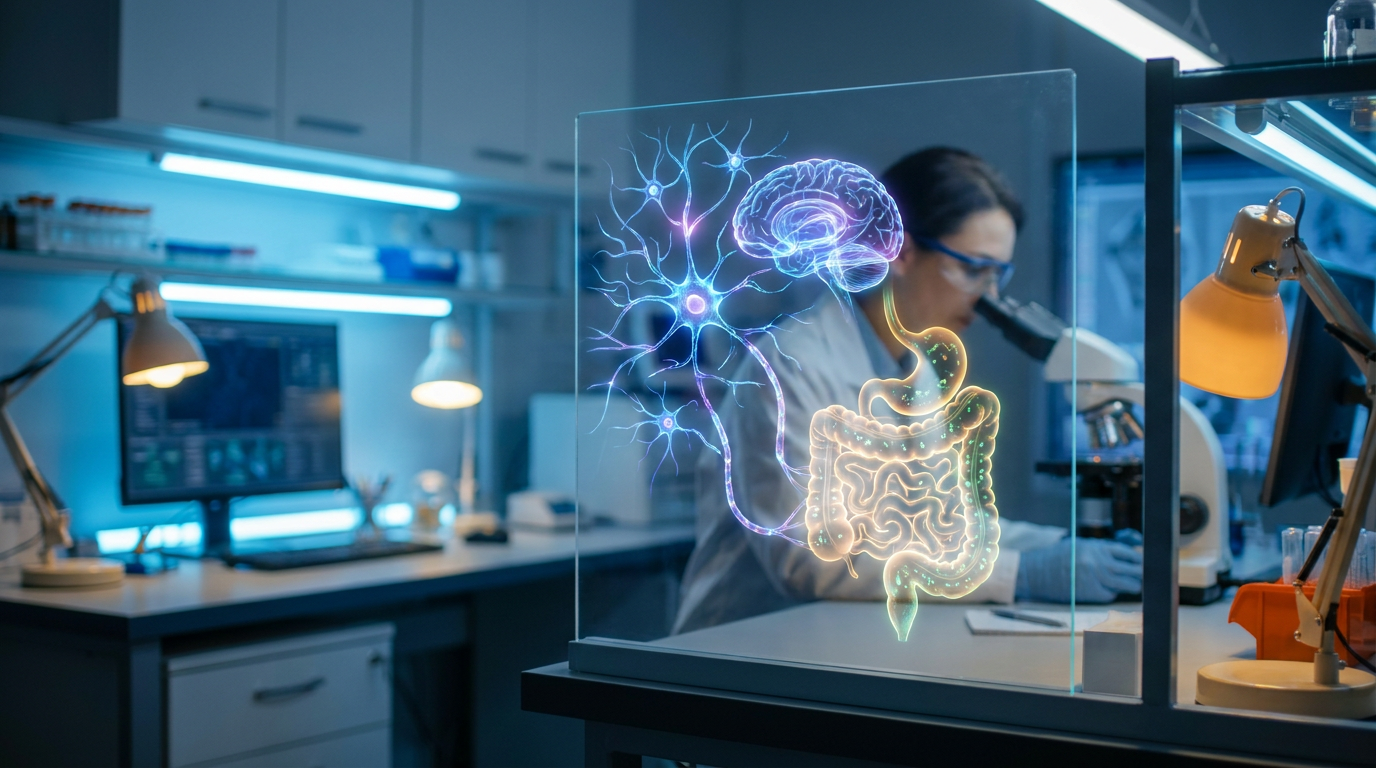
The mechanism connecting these two distant organs is the gut-brain axis, a complex biochemical superhighway. As mammals age, their microbiome undergoes a profound and detrimental shift—beneficial, metabolite-producing bacteria die off, while inflammatory species proliferate.[3]
This age-related microbial imbalance, known as dysbiosis, compromises the intestinal lining. The resulting "leaky gut" allows inflammatory cytokines and bacterial toxins to seep into the bloodstream, eventually crossing the blood-brain barrier and triggering a systemic immune response.[1][3]
Once inside the central nervous system, these inflammatory markers activate microglial cells—the brain's primary immune sentinels. In older animals, these cells enter a state of chronic overactivation, suppressing long-term potentiation (LTP), which is the cellular foundation of learning and memory.[1][3]
Introducing a young microbiome acts as a system-wide reset. When elderly mice receive FMT from young donors, the youthful bacteria rapidly repopulate the gut, sealing the intestinal barrier and halting the systemic leakage of inflammatory compounds.[1]
With the gut barrier secured, neuroinflammation plummets. The young microbiota introduces robust populations of beneficial bacteria, such as Akkermansia and Odoribacter, which are prolific producers of short-chain fatty acids (SCFAs) like butyrate and valerate.[1][4]

These SCFAs serve as potent anti-inflammatory agents and metabolic regulators. As they circulate from the gut to the brain, they trigger a cascade of restorative effects in the hippocampus, the brain's primary memory center.[1]
These SCFAs serve as potent anti-inflammatory agents and metabolic regulators.
Researchers observed a marked upregulation of synaptic plasticity modulators in the brains of the treated mice. Proteins like PSD-95 and the exercise-linked hormone irisin surged, allowing the older neurons to form new, robust connections—a hallmark of youthful brain function.[1]
The behavioral results are striking. Elderly mice that received the young microbiome exhibited rapid improvements in spatial memory, object recognition, and learning speed, effectively matching the cognitive performance of much younger animals.[1][3]
The physical benefits extended beyond the brain. The older recipients also demonstrated improved grip strength, reduced frailty, and better overall body composition, highlighting the microbiome's role as a master regulator of systemic aging.[2]

Conversely, the research also proved the destructive power of an aged microbiome. When young mice received FMT from elderly donors, they rapidly developed central nervous system inflammation, retinal degradation, and cognitive impairments, confirming the bidirectional nature of the gut-brain axis.[3]
Translating these murine models to human medicine represents the next major scientific hurdle. While FMT is already an FDA-approved treatment for severe Clostridioides difficile infections, using it as a generalized anti-aging or neurological therapy requires rigorous clinical trials.[4]
Human microbiomes are vastly more complex than those of laboratory mice, shaped by decades of individualized diet, environment, genetics, and antibiotic exposure. Standardizing a "young, healthy" donor profile for cognitive rejuvenation will be a monumental regulatory challenge.[4]

If the cognitive decline associated with aging and neurodegenerative diseases is partially rooted in the gut, the future of neurology may rely heavily on gastroenterology. Targeted microbiome therapies could eventually become a standard preventative measure for cognitive decline.[4]
For now, the research underscores the critical importance of maintaining microbiome health throughout life. While clinical "youth transplants" remain on the horizon, dietary interventions that promote SCFA-producing bacteria offer a practical, evidence-based way to support the gut-brain axis today.[4]
How we got here
Early 2010s
The concept of the gut-brain axis gains mainstream scientific traction, linking gut health to mood and neurological conditions.
2020
Initial studies demonstrate that transferring the microbiome of aged mice into young mice induces cognitive impairments.
2024
Researchers successfully reverse age-related cognitive decline in elderly mice using fecal transplants from young, trained donors.
2025–2026
Subsequent studies confirm that young microbiomes reduce neuroinflammation and upregulate synaptic plasticity modulators in the aging brain.
Viewpoints in depth
Gut-Brain Axis Researchers
Viewing the microbiome as the master clock of aging.
Researchers in this camp view the gut microbiome not as a passive passenger, but as a primary driver of the aging process. They point to the rapid reversal of cognitive decline and physical frailty in murine models as evidence that systemic inflammation—rooted in age-related gut dysbiosis—is the true culprit behind neurodegeneration. By identifying specific bacterial strains like Akkermansia and their metabolic byproducts, these scientists aim to develop targeted probiotic or postbiotic therapies that can mimic the effects of a youthful microbiome without the need for full fecal transplants.
Clinical Translation Experts
Highlighting the leap from laboratory mice to human medicine.
While acknowledging the groundbreaking nature of the murine studies, clinical experts urge caution regarding human applications. They emphasize that laboratory mice live in highly controlled environments with standardized diets, making their microbiomes relatively simple to manipulate. In contrast, the human microbiome is shaped by decades of variable diet, environmental exposures, genetics, and antibiotic use. Standardizing a 'young, healthy' donor profile and navigating the FDA's stringent regulatory framework for live biotherapeutic products represent monumental hurdles before these therapies can reach the clinic.
Longevity Analysts
Translating laboratory breakthroughs into actionable healthspan strategies.
Analysts focused on human longevity view these findings as a paradigm shift in how we approach aging. Even if clinical 'youth transplants' are years away, the underlying mechanism—reducing systemic inflammation by supporting short-chain fatty acid production—is actionable today. This perspective advocates for aggressive dietary interventions, such as high-fiber and polyphenol-rich diets, to cultivate a resilient, youthful microbiome. They argue that protecting the gut barrier is one of the most effective, evidence-based strategies currently available for preserving long-term cognitive health.
What we don't know
- Whether the cognitive rejuvenation observed in murine models will translate safely and effectively to human patients.
- The exact duration of the cognitive benefits following a single fecal microbiota transplant in older subjects.
- Which specific combinations of bacterial strains are most responsible for reversing neuroinflammation.
- How decades of individualized human diets and environmental exposures will complicate the standardization of donor microbiomes.
Key terms
- Gut-Brain Axis
- A bidirectional communication network linking the enteric nervous system of the gut with the central nervous system of the brain.
- Fecal Microbiota Transplantation (FMT)
- The transfer of gut microbiota from a healthy donor to a recipient to restore a balanced microbial environment.
- Dysbiosis
- An imbalance or disruption in the natural community of microorganisms living in the gut, often associated with disease or aging.
- Microglia
- The primary immune cells of the central nervous system that act as the first and main form of active immune defense in the brain.
- Short-Chain Fatty Acids (SCFAs)
- Beneficial compounds produced by gut bacteria during the fermentation of fiber, known for their anti-inflammatory effects.
- Long-Term Potentiation (LTP)
- A persistent strengthening of synapses based on recent patterns of activity, widely considered one of the major cellular mechanisms behind learning and memory.
Frequently asked
What is a fecal microbiota transplant (FMT)?
FMT is a medical procedure where stool from a healthy donor is processed and transferred into the gastrointestinal tract of a recipient. It is currently used to treat severe gut infections by restoring a healthy balance of bacteria.
How does the gut microbiome affect the brain?
The gut and brain communicate via the gut-brain axis. Beneficial gut bacteria produce short-chain fatty acids that reduce inflammation and support neural health, while harmful bacteria can trigger systemic inflammation that impairs cognitive function.
Can this procedure be done in humans to reverse aging?
Not yet. While FMT is FDA-approved for specific bacterial infections like C. diff, using it for anti-aging or cognitive rejuvenation in humans requires extensive clinical trials to ensure safety and efficacy.
What are short-chain fatty acids (SCFAs)?
SCFAs are metabolic byproducts created when beneficial gut bacteria ferment dietary fiber. They serve as a crucial energy source for cells and possess strong anti-inflammatory properties that protect the brain.
Sources
Source coverage
4 outlets
3 viewpoints surfaced



[1]Aging and DiseaseGut-Brain Axis Researchers
FMT from young-trained donors improves cognitive function and synaptic plasticity
Read on Aging and Disease →[2]American Society for MicrobiologyGut-Brain Axis Researchers
Metabolic reprogramming via young microbiota FMT improves physical and metabolic health
Read on American Society for Microbiology →[3]National Institutes of HealthClinical Translation Experts
Microbiota transfer from young to aged mice reverses hallmark aging phenotypes
Read on National Institutes of Health →[4]Factlen Editorial TeamLongevity Analysts
Synthesis by Factlen editorial team
Read on Factlen Editorial Team →
Every angle. Every day.
Get science stories with full source coverage and perspective breakdowns delivered to your inbox.