
How Fractional Real Estate and Tokenization Actually Work in 2026
Blockchain tokenization and crowdfunding platforms have transformed real estate investing, allowing retail investors to buy shares of rental properties for as little as $50. Here is how the legal, technical, and financial mechanics operate behind the screen.
By Factlen Editorial Team
- Retail Investors
- Value the ability to earn passive rental income and diversify their portfolios without the massive capital requirements or landlord responsibilities of traditional real estate.
- Real Estate Developers
- View tokenization as an efficient, borderless mechanism to raise capital directly from a global pool of investors, bypassing traditional bank financing.
- Regulatory Bodies
- Focus on ensuring that digital tokens map legally to physical property deeds and that platforms enforce strict KYC and anti-money laundering rules.
- Blockchain Advocates
- Champion the use of smart contracts to automate financial plumbing, reduce intermediary fees, and create liquid secondary markets for historically illiquid assets.
What's not represented
- · Traditional mortgage lenders losing market share
- · Tenants living in fractionally owned properties
Why this matters
For decades, real estate investing required massive capital, excellent credit, and a willingness to manage tenants. The maturation of fractional platforms and blockchain tokenization means everyday savers can now build diversified, income-producing property portfolios from their smartphones with minimal upfront cash.
Key points
- Fractional investing allows retail users to buy shares of real estate for as little as $50.
- Tokens represent legal equity in an LLC that holds the physical property deed.
- Investors earn proportional rental income and benefit from property appreciation.
- Smart contracts automate compliance, identity verification, and dividend distribution.
- The tokenized real estate market is projected to reach $19.4 billion by 2033.
- Secondary markets provide faster liquidity than traditional real estate sales.
For generations, the path to building wealth through real estate was guarded by steep financial and logistical barriers. An investor needed tens of thousands of dollars for a down payment, a pristine credit score to secure a mortgage, and the operational bandwidth to handle midnight plumbing emergencies. Those without deep pockets were largely locked out of the world's oldest and most reliable asset class.[7]
In 2026, that paradigm has fundamentally shifted. The convergence of crowdfunding regulations and blockchain technology has popularized "fractional real estate"—a model that allows multiple investors to collectively own shares of a single property. Instead of buying an entire building, a retail investor can purchase a proportional stake for as little as $10 to $50, earning a corresponding cut of the rental income and property appreciation.[2][7]
This is not a niche experiment. The tokenized real estate market, which represents the blockchain-powered evolution of fractional ownership, is projected to grow from $3.5 billion in 2024 to $19.4 billion by 2033, representing a staggering 21% compound annual growth rate. What began as a speculative crypto-adjacent concept has matured into regulated, institutional-grade financial infrastructure.[1]
To understand how we arrived here, it helps to look at the evolution of property investing. Real Estate Investment Trusts (REITs) were the first major innovation, allowing investors to buy shares in massive, professionally managed portfolios. However, REIT investors have no control over which specific buildings they own. The 2012 JOBS Act introduced real estate crowdfunding, letting people pool money for specific projects, but these platforms often required users to be "accredited investors" with high net worths, effectively locking out the middle class.[4][7]

Tokenization solved the remaining bottlenecks. By converting ownership rights into digital tokens on a blockchain, platforms can divide a $500,000 rental home into 10,000 shares priced at $50 each. These tokens are not cryptocurrencies; they are digital representations of legal equity, programmed with smart contracts that automatically distribute rental yields to the token holders' digital wallets.[1][3]
The legal mechanics behind this are surprisingly traditional. When a property is tokenized, the platform does not put the physical deed itself on the blockchain. Instead, they create a Special Purpose Vehicle (SPV)—typically a Limited Liability Company (LLC)—that holds the physical deed to the property. The digital tokens represent shares in that specific LLC. Therefore, owning the token means legally owning a piece of the company that owns the house.[1][3]
This structure provides a crucial layer of legal protection. If a tokenization platform were to go bankrupt, the underlying property and the LLC remain intact and belong to the token holders, not the platform's creditors. The digital cap table simply reflects the physical deed records, bridging the gap between decentralized technology and traditional property law.[3][7]

This structure provides a crucial layer of legal protection.
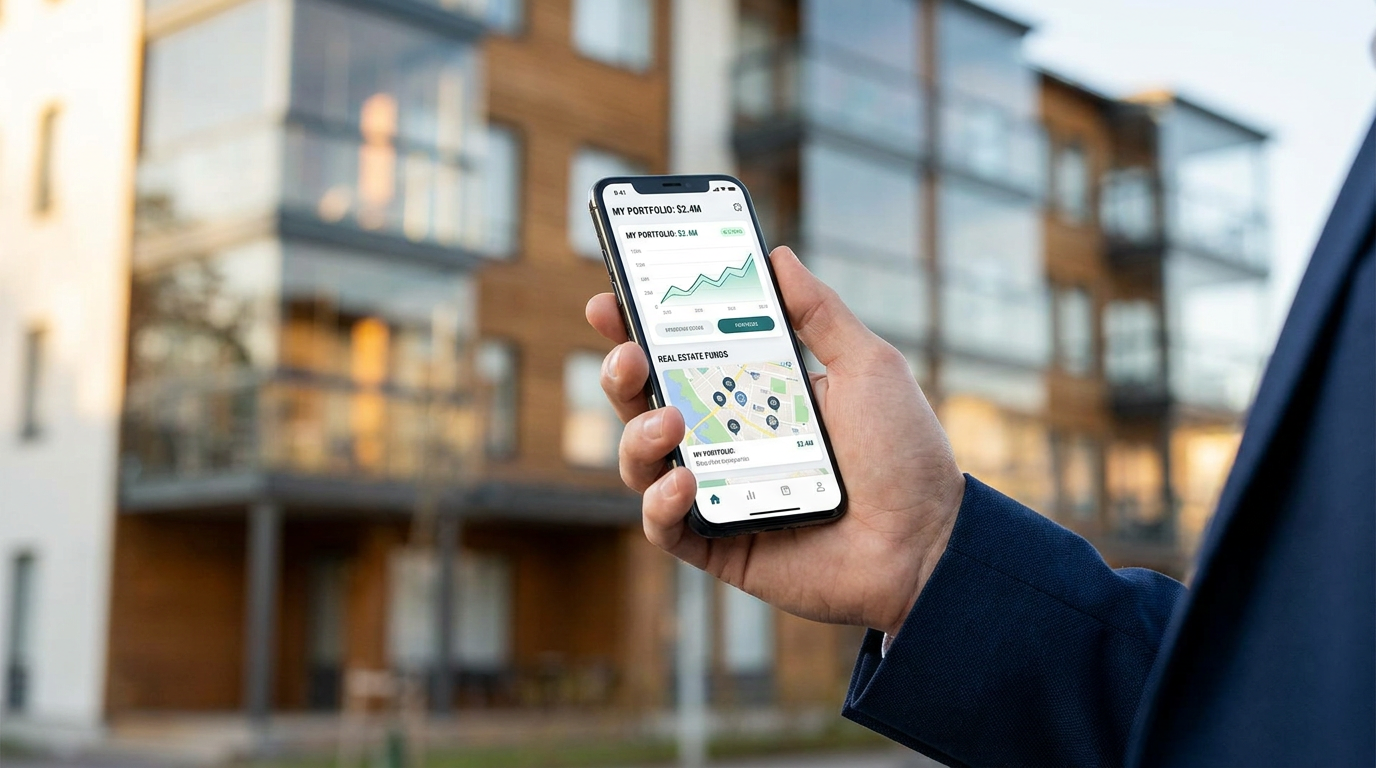
For the retail investor, the user experience is seamless. After selecting a platform and passing standard Know Your Customer (KYC) identity checks, users can browse a marketplace of available properties. They might allocate $100 to a single-family rental in Ohio, $200 to a vacation villa in Bali, and $50 to a commercial logistics center. The platform handles all tenant management, maintenance, and accounting.[1][2]
Returns typically come in two forms: rental dividends and capital appreciation. Platforms generally target combined annual returns of 5% to 12%. Rental income is usually distributed monthly or quarterly, yielding roughly 3% to 8% depending on the market. When the property is eventually sold—or if the investor sells their tokens on a secondary market—they capture their share of the property's appreciation.[1][2]
The ecosystem is divided into two main types of platforms. "Marketplace" platforms like Arrived or Lofty acquire properties, tokenize them, and sell the fractions to their own retail user base. Conversely, "Infrastructure" platforms like Tokenizer.Estate or Securitize provide the software and legal frameworks for independent real estate developers and asset owners to tokenize their own buildings and raise capital globally.[5]
Beyond equity ownership, fractional debt investing has also surged. Platforms like Groundfloor allow users to fund fractions of short-term loans given to house flippers and developers. Instead of owning the property, the investor acts as the bank, earning fixed interest rates that can range from 10% to 14% as the loan is repaid over a 6-to-12-month term.[2][7]
The most significant breakthrough in 2026 is liquidity. Historically, real estate was highly illiquid; selling a house took months and incurred massive broker fees. Tokenization introduces secondary markets. If an investor needs cash, they can list their $50 tokens on the platform's internal exchange. While liquidity depends on buyer demand and is not as instant as selling a blue-chip stock, it is exponentially faster than traditional real estate transactions.[1][6]

Institutional adoption has validated the underlying technology. Asset managers like BlackRock and Franklin Templeton have successfully deployed billions into tokenized treasury funds, proving that blockchain infrastructure can handle regulated financial products at scale. Real estate tokenization is simply applying those exact same rails to physical property.[6]
Governments have also caught up to the technology, providing the regulatory clarity needed for mass adoption. In Europe, the Markets in Crypto-Assets (MiCA) regulation is now fully operational. In the United States, over 30 states have adopted Article 12 of the Uniform Commercial Code (UCC), which explicitly governs digital assets. India has introduced the SM REIT framework to regulate fractional ownership platforms.[3]
The industry has coalesced around the ERC-3643 standard for tokenization. Unlike permissionless tokens like Bitcoin, ERC-3643 embeds compliance directly into the smart contract. Tokens can only be transferred to wallets that have passed KYC checks. Crucially, it includes a "clawback" feature: if an investor loses their private keys or a court mandates a seizure, the legal issuer can burn the lost tokens and reissue them, ensuring the digital record never permanently diverges from legal reality.[3]

Despite the benefits, fractional investing carries inherent risks. Investors are exposed to the same market forces as traditional real estate—if property values drop or a house sits vacant, returns will suffer. Furthermore, while the underlying asset is protected, platform fees can eat into yields, and secondary market liquidity is never guaranteed during a broader economic downturn.[2][7]
Ultimately, fractional tokenization is dismantling the friction that has long defined property markets. By lowering the entry barrier from a $50,000 down payment to a $50 digital transfer, it democratizes access to wealth generation. Technology has not replaced property law; it has simply modernized the plumbing, allowing anyone with a smartphone to become a real estate investor.[3][7]
How we got here
1960
The US Congress creates Real Estate Investment Trusts (REITs), allowing public investment in commercial property portfolios.
2012
The JOBS Act is signed into law, paving the way for online real estate crowdfunding platforms.
2018
The first experimental real estate tokenization projects launch, testing blockchain's viability for physical assets.
2024
The tokenized real estate market reaches $3.5 billion as institutional asset managers enter the space.
2026
Global regulatory frameworks like MiCA and UCC Article 12 solidify the legal standing of tokenized property assets.
Viewpoints in depth
Retail Investors
Everyday savers seeking access to real estate without the traditional barriers.
For retail investors, fractional real estate solves a massive structural inequality in wealth generation. Historically, those without $50,000 for a down payment were forced to keep their money in lower-yield savings accounts or volatile stock markets while wealthier individuals captured the steady appreciation and tax benefits of real estate. By lowering the entry point to $50 and removing the burden of property management, these platforms allow younger generations and middle-class savers to build diversified, income-producing portfolios that were previously out of reach.
Real Estate Developers
Property builders and owners looking for modern, efficient ways to raise capital.
From the developer's perspective, tokenization is a revolutionary fundraising tool. Traditionally, financing a new commercial build or a large-scale renovation required negotiating with banks for expensive loans or giving up significant equity to private equity firms. Infrastructure tokenization platforms allow these developers to bypass traditional gatekeepers and raise capital directly from a global pool of retail and institutional investors. This democratized access to capital can lower borrowing costs and accelerate project timelines.
Regulatory Bodies
Government agencies focused on investor protection and market stability.
Regulators view the rapid rise of tokenization with cautious optimism, prioritizing the safety of retail participants. Their primary concern is ensuring that a digital token legally maps to a physical asset in a way that holds up in court. Agencies have pushed for the adoption of standards like ERC-3643, which bakes Know Your Customer (KYC) and Anti-Money Laundering (AML) checks directly into the code. By establishing frameworks like the EU's MiCA and India's SM REIT rules, regulators aim to prevent fraud while allowing the technological efficiencies of blockchain to flourish.
What we don't know
- How secondary token markets will perform during a severe, prolonged real estate recession.
- Whether traditional banks will attempt to acquire tokenization platforms or build competing infrastructure.
- How varying international tax laws will ultimately treat cross-border fractional rental income at scale.
Key terms
- Tokenization
- The process of converting legal ownership rights of a physical asset into digital tokens on a blockchain.
- Special Purpose Vehicle (SPV)
- A subsidiary company, often an LLC, created specifically to hold the legal deed to a single property, isolating financial risk.
- Smart Contract
- Self-executing code on a blockchain that automatically enforces the terms of an agreement, such as distributing rental dividends to token holders.
- ERC-3643
- A specific blockchain token standard designed for regulated financial assets, ensuring that tokens can only be held by verified investors.
- Liquidity
- How quickly and easily an investment can be converted into cash without significantly affecting its market price.
Frequently asked
Do I actually own the physical property?
You own a legal share of a Special Purpose Vehicle (usually an LLC) that holds the physical deed to the property. Your digital tokens represent your equity in that company.
What happens if the investment platform goes bankrupt?
Because the property is held in an independent LLC, it is legally separated from the platform's corporate assets. The property and your shares remain intact and belong to the investors, not the platform's creditors.
How do I make money from fractional real estate?
Investors earn money through two channels: proportional monthly or quarterly rental income distributions, and capital appreciation when the property or the tokens are eventually sold.
Can I sell my fractional shares whenever I want?
Most platforms offer secondary markets where you can list your tokens for sale. However, liquidity depends on buyer demand, so it is not as instant as selling a stock on a major exchange.
Sources
Source coverage
7 outlets
4 viewpoints surfaced







[1]BinaryxRetail Investors
Fractional Real Estate Investing Guide: Tokenization and Yields
Read on Binaryx →[2]Fractional Property HubRetail Investors
How Fractional Real Estate Works: Platforms and Returns
Read on Fractional Property Hub →[3]Maheshwari & Co.Regulatory Bodies
From Deeds To Digital Assets: The 2026 Legal Framework For Real Estate Tokenization
Read on Maheshwari & Co. →[4]National Association of RealtorsRegulatory Bodies
Real Estate Crowdfunding and the JOBS Act
Read on National Association of Realtors →[5]Tokenizer EstateReal Estate Developers
Real estate tokenization platform comparison 2026
Read on Tokenizer Estate →[6]What DigitalReal Estate Developers
Why 2026 is an important year for RWA tokenization
Read on What Digital →[7]Factlen Editorial TeamBlockchain Advocates
Synthesis by Factlen editorial team
Read on Factlen Editorial Team →
Every angle. Every day.
Get real estate stories with full source coverage and perspective breakdowns delivered to your inbox.