
Global Markets Rally and Oil Prices Fall as U.S.-Iran Talks Show Progress on Hormuz Ceasefire
Mediators report 'encouraging progress' in U.S.-Iran peace talks, prompting a tentative reopening of the Strait of Hormuz and sending oil prices lower. The de-escalation has sparked a record rally in emerging-market stocks and raised hopes for sustained global economic relief.
By Factlen Editorial Team
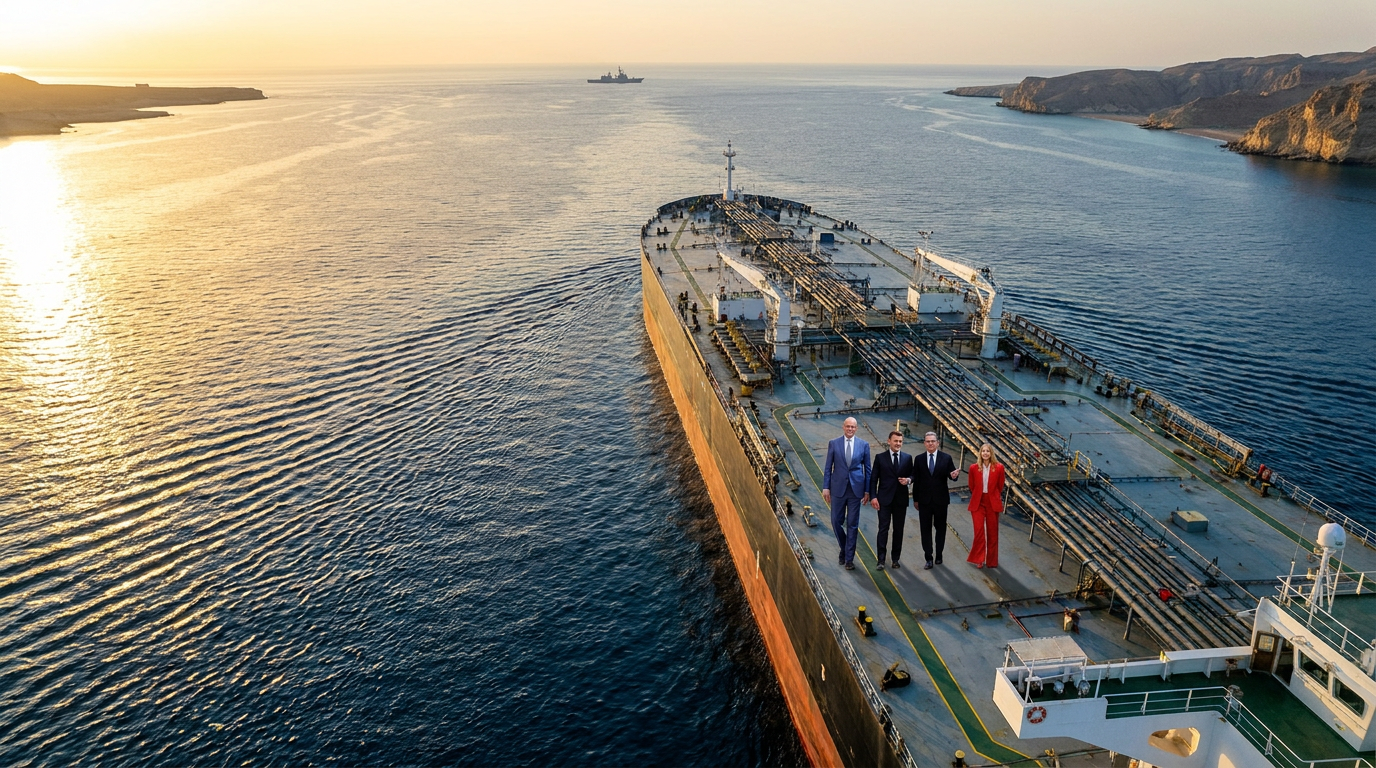
- Global Markets & Investors
- Focuses on the macroeconomic relief, celebrating lower inflation pressures and the resulting surge in emerging-market equities.
- Regional Stakeholders & Mediators
- Prioritizes the diplomatic roadmap and the swift, safe resumption of regional energy exports to stabilize local economies.
- Maritime Shipping Industry
- Welcomes the ceasefire but maintains a cautious, wait-and-see approach regarding the physical security of vessels before fully normalizing routes.
What's not represented
- · Environmental groups monitoring Gulf marine ecosystems
- · Alternative energy sectors facing lower fossil fuel prices
Why this matters
The Strait of Hormuz is the world's most critical energy chokepoint. A lasting ceasefire not only lowers gasoline prices and inflation pressures for everyday consumers but also removes a major geopolitical cloud over global trade.
Key points
- U.S. and Iran report encouraging progress in peace talks mediated by Qatar and Pakistan.
- Oil prices fell sharply as the threat of disruption in the Strait of Hormuz receded.
- Emerging-market stocks hit a record high on optimism over lower global energy costs.
- Kuwait is resuming deep-Gulf petroleum offers, signaling confidence in the shipping lanes.
- Lower oil prices may encourage central banks to ease interest rates later this year.
A major geopolitical breakthrough is sending ripples of relief through the global economy this week, as the United States and Iran report "encouraging progress" toward a comprehensive peace deal. Mediated by diplomats from Qatar and Pakistan, the high-level talks have successfully established a roadmap to de-escalate tensions that have disrupted international trade for months. Technical-level discussions are scheduled to continue throughout the week to cement the framework of the agreement.[1][5]
The immediate impact of the diplomatic thaw was felt across energy markets. Oil prices retreated sharply following the first session of talks, bolstered by comments from Iran's foreign minister citing "major progress" toward ending concurrent hostilities in Lebanon. The drop in crude prices offers a vital reprieve for energy-importing nations that have struggled with elevated fuel costs and persistent inflation over the past year.[2]
Financial markets responded to the de-escalation with overwhelming optimism. Emerging-market stocks surged to a fresh record high on Monday, driven by the prospect of a finalized U.S.-Iran peace roadmap. Investors are betting that a stabilized Middle East will lower energy import bills for developing nations, freeing up capital for domestic growth and infrastructure investment.[1][4]

Physical signs of the reopening are already visible in the Persian Gulf. Kuwait has begun asking international customers to pick up refined petroleum products from its ports located deep inside the Gulf. This move is widely interpreted as a strong signal of confidence from regional oil giants that traffic through the Strait of Hormuz—the world's most vital energy chokepoint—is safely resuming.[3]
Despite the positive diplomatic momentum, the maritime shipping industry is adopting a measured approach to the reopening. Bangkok-based Precious Shipping, whose vessel was struck by projectiles in the strait earlier in March, acknowledged the ceasefire but stated it remains cautious about immediately sending its entire fleet back through the corridor. Industry leaders emphasize that while the risk premium is dropping, physical security guarantees will take time to fully materialize.[6]
Despite the positive diplomatic momentum, the maritime shipping industry is adopting a measured approach to the reopening.
The logistics sector is also evaluating how the reopening will affect global supply chains. Limited new vessel supply and the resilience of older tonnage mean that while insurance premiums for traversing the Middle East may fall, baseline freight rates could remain relatively strong for the near future. Nonetheless, the removal of immediate military threats allows shipping companies to plan more efficient, direct routes, saving time and fuel.[6]

The macroeconomic implications of falling oil prices extend directly to monetary policy. Analysts at Citigroup Global Markets suggest that a sustained decline in energy costs could remove some of the hawkish bias from major central banks. If inflation driven by energy prices cools, central banks may have the leeway to pause interest rate hikes or even begin cutting rates, providing further stimulus to the global economy.[7]
This risk-on sentiment is already translating into concrete financial activity in developing economies. Global banks have driven India's asset-backed securities market to record sales this week, ramping up purchases to gain exposure to one of the world's fastest-growing major economies. The combination of lower oil prices and a stable geopolitical environment makes emerging markets particularly attractive to institutional capital.[4]
The diplomatic progress is also prompting strategic realignments in the West. European leaders are emphasizing the need for a united front to support the peace process and ensure the strait remains open, regardless of domestic political shifts in the United States. Maintaining this unified diplomatic posture is seen as crucial to keeping all parties committed to the roadmap.[1]

As technical teams from the U.S., Iran, Qatar, and Pakistan continue their work in Doha, the focus shifts from broad agreements to the granular details of maritime security and sanctions relief. Observers note that while the talks have proceeded in fits and starts in the past, the current momentum represents the most significant diplomatic breakthrough in the region in years.[1][5]
If the ceasefire holds and the Strait of Hormuz fully normalizes, the second half of 2026 could see a profound economic uncoiling. Lower freight costs, reduced energy bills, and a more dovish approach from central banks would collectively act as a massive stimulus package for the global economy, turning a geopolitical win into tangible financial relief for consumers worldwide.[2][4][7]
How we got here
Early 2026
Tensions escalate in the Strait of Hormuz, disrupting commercial shipping and spiking insurance premiums.
March 2026
Commercial vessels are struck by projectiles, leading many shipping companies to reroute or pause operations.
June 2026
Qatar and Pakistan mediate high-level talks, resulting in a tentative ceasefire and a roadmap to a final peace deal.
Viewpoints in depth
Global Investors
Markets view the de-escalation as a massive catalyst for economic growth and inflation relief.
For institutional investors and central bankers, the reopening of the Strait of Hormuz is the exact macroeconomic relief valve they have been waiting for. High energy prices act as a regressive tax on global growth, forcing central banks to keep interest rates painfully high to fight inflation. By removing the geopolitical risk premium from crude oil, this ceasefire directly lowers input costs for manufacturers and transportation networks worldwide. The immediate record-breaking rally in emerging-market stocks reflects a consensus that developing economies—which are highly sensitive to energy import costs—will be the biggest beneficiaries of this peace dividend.
Regional Energy Exporters
Gulf nations are eager to normalize trade and capitalize on reopened shipping lanes.
For countries like Kuwait, the UAE, and Saudi Arabia, the physical security of the Persian Gulf is an existential economic requirement. The recent disruptions forced these nations to absorb higher logistics costs and deal with delayed shipments. The swift move by Kuwait to offer refined petroleum products from ports deep inside the Gulf demonstrates a strong desire to project stability and reassure international buyers. Regional stakeholders are heavily invested in the success of the Qatar and Pakistan-mediated talks, as a permanent peace deal secures their primary revenue streams and funds domestic economic diversification efforts.
Maritime Logistics Sector
Shipping companies welcome the news but require concrete security guarantees before fully returning.
The maritime industry operates on physical realities rather than diplomatic promises. While shipping executives universally welcome the ceasefire, the memory of vessels being struck by projectiles in March remains fresh. Companies like Precious Shipping are adopting a phased approach, waiting to see if the technical-level discussions produce verifiable security protocols in the strait. Until maritime insurance syndicates significantly lower their war-risk premiums for the region, the logistics sector will balance the cost savings of the direct Hormuz route against the lingering threat to their crews and multi-million-dollar assets.
What we don't know
- Whether the technical-level discussions this week will result in a formally signed, binding peace treaty.
- How quickly maritime insurance companies will lower war-risk premiums for vessels entering the Persian Gulf.
- If the drop in oil prices will be sustained long enough to definitively alter central bank interest rate policies.
Key terms
- Strait of Hormuz
- A narrow waterway between the Persian Gulf and the Gulf of Oman, through which roughly a fifth of the world's oil consumption passes.
- Hawkish Bias
- A monetary policy stance where central banks favor higher interest rates to combat inflation.
- Emerging-Market Stocks
- Equities from developing nations, which are highly sensitive to global energy prices and U.S. interest rates.
Frequently asked
Why did global oil prices fall?
Markets reacted to the easing of geopolitical tensions and the safe resumption of oil transport through the Strait of Hormuz, which increases global supply confidence.
Is the Strait of Hormuz fully open?
While a ceasefire is in place and regional exporters like Kuwait are resuming shipments, some international shipping companies remain cautious and are slowly reintroducing their fleets.
How does this affect inflation and interest rates?
Lower oil prices reduce transportation and manufacturing costs globally. This can ease overall inflation, potentially allowing central banks to pause rate hikes or lower interest rates.
Sources
Source coverage
7 outlets
3 viewpoints surfaced







[1]BloombergGlobal Markets & Investors
US and Iran Make ‘Progress’, Aim to Keep Hormuz Open
Read on Bloomberg →[2]The New York TimesGlobal Markets & Investors
Oil Prices Fall as U.S.-Iran Talks Show Signs of Progress
Read on The New York Times →[3]ReutersRegional Stakeholders & Mediators
Kuwait signals Hormuz reopening with deep-Gulf petroleum offers
Read on Reuters →[4]Financial TimesGlobal Markets & Investors
Emerging-market stocks mark fresh high on US-Iran peace roadmap
Read on Financial Times →[5]Al JazeeraRegional Stakeholders & Mediators
Qatar and Pakistan mediate crucial US-Iran technical discussions
Read on Al Jazeera →[6]The Wall Street JournalMaritime Shipping Industry
Shippers remain cautious in Strait of Hormuz despite ceasefire
Read on The Wall Street Journal →[7]CNBCGlobal Markets & Investors
Oil decline could ease central bank rate paths, analysts say
Read on CNBC →
Every angle. Every day.
Get business stories with full source coverage and perspective breakdowns delivered to your inbox.