
Europe's Night Train Renaissance Accelerates With New Routes and Next-Gen Sleeper Cars
Driven by climate consciousness and a desire for slow travel, Europe's overnight rail network is rapidly expanding in 2026. New routes connecting major capitals and the rollout of modern 'mini-cabin' trains are transforming the continent's transportation landscape.
By Factlen Editorial Team
- Climate-Conscious Travelers
- Value massive carbon reductions and the mindful 'slow travel' experience over the pure speed of aviation.
- State-Backed Operators
- Leverage national subsidies and geographic positioning to build massive, modernized sleeper fleets.
- Private Rail Cooperatives
- Argue for agile, crowdfunded route expansion and demand EU-wide financial guarantees to compete with state monopolies.
- Aviation & Transport Realists
- Maintain that short-haul flights still offer unmatched speed and baseline cost-efficiency for the mass market.
- Policy & Data Observers
- Track the macro-level shifts in passenger volume and the regulatory hurdles of cross-border rail.
What's not represented
- · Overnight Freight Operators
- · Budget Airline Executives
Why this matters
Transportation accounts for a massive portion of global carbon emissions. The successful revival of Europe's night train network provides a viable, comfortable blueprint for decarbonizing long-distance travel without sacrificing connectivity.
Key points
- Europe's night train network is experiencing a massive revival, growing from 90 connections in 2020 to over 200 today.
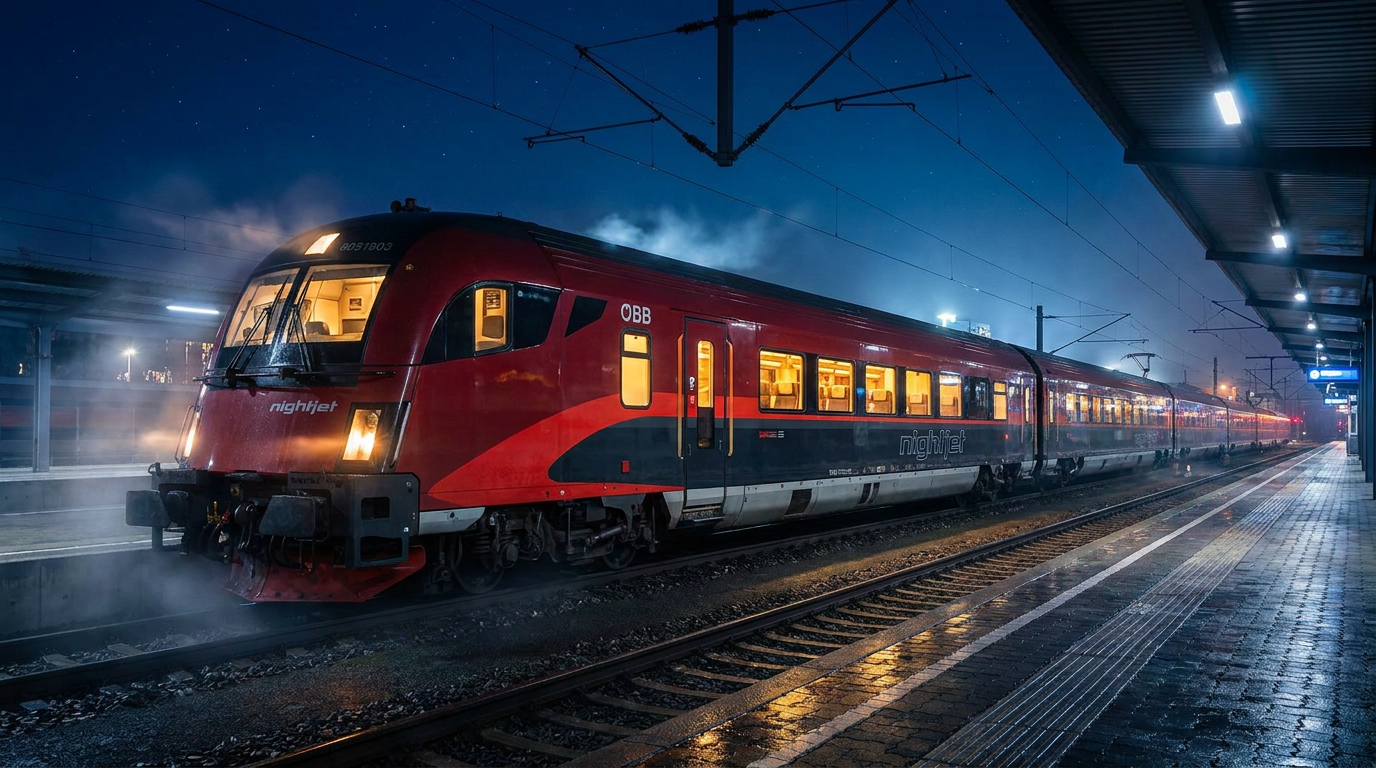
- State-backed operators like Austria's ÖBB are rolling out fleets of next-generation sleeper cars featuring single-occupancy 'mini-cabins' and en-suite showers.
- Private cooperatives like European Sleeper are expanding rapidly, launching new routes connecting Brussels to Milan and Paris to Hamburg in 2026.
- The shift is heavily driven by climate-conscious travelers seeking to avoid the high carbon emissions associated with short-haul flights.
Just a decade ago, the European night train seemed destined for the history books. National railways across the continent were quietly retiring their aging sleeper cars, unable to compete with the aggressive pricing and rapid transit times of budget airlines like Ryanair and EasyJet. The concept of a "hotel on rails" was widely dismissed as an unprofitable anachronism. But as Europe enters the summer of 2026, the sleeper train has not only survived—it is experiencing a massive, continent-wide renaissance. Driven by a surge in climate consciousness and a cultural shift toward "slow travel," overnight rail is once again connecting Europe's major capitals.[1][3]
The resurgence is visible on platforms from Bologna to Berlin, where bleary-eyed passengers now gather late at night to board sleek, modern carriages. According to Eurostat, Europeans traveled a staggering 443 billion kilometers by train in 2024, a nearly 6 percent increase from the previous year. A significant and growing portion of those kilometers are being logged while passengers sleep. Operators are reporting that sleeper options are frequently the first to sell out, with demand consistently outpacing the supply of available beds.[2][6]
This revival is being driven by two distinct operational models. On one side are state-backed behemoths, most notably Austria's national railway, ÖBB. While traditional rail giants in France and Germany largely abandoned the night market to focus on high-speed daytime routes, ÖBB leaned in. Leveraging Austria's central geographic position, the company launched its Nightjet service in 2016 and has since built a sprawling network that reaches into eight neighboring countries. Their willingness to absorb initial losses and cross-subsidize routes has made them the undisputed anchor of Europe's night train revival.[1][7]
On the other side of the industry are agile, privately funded startups attempting to fill the gaps left by national carriers. The most prominent is European Sleeper, an initiative organized as a cooperative. Launched in 2021, the company raised its initial €500,000 in start-up capital in just 15 minutes. Today, backed by more than 4,000 grassroots investors who have collectively injected over €5 million, the cooperative operates routes connecting Brussels, Amsterdam, Berlin, and Prague. These private operators rely on community enthusiasm and targeted route planning rather than state subsidies.[4][8]

For years, the biggest hurdle facing the night train renaissance was the hardware itself. Many routes were operating with carriages pushing 50 years old, leading to complaints about reliability, noise, and a lack of modern amenities. But 2026 marks a turning point in passenger comfort, as a massive wave of new rolling stock finally enters widespread service. ÖBB has invested heavily in a fleet of 33 next-generation trains developed by Siemens Mobility, which are rolling out across the continent through mid-2026.[1][7]
These new trains represent a radical rethink of the overnight passenger experience. The traditional six-berth couchette—often requiring travelers to share cramped quarters with snoring strangers—is being phased out in favor of four-berth compartments that offer more space and privacy. More innovatively, operators are introducing "mini-cabins." Modeled after Japanese capsule hotels, these single-occupancy sleeping pods provide solo travelers with complete privacy, secure luggage storage, and a flat bed without the premium price tag of a full sleeper compartment.[5][7]

These new trains represent a radical rethink of the overnight passenger experience.
At the higher end of the market, the new generation of sleeper cars is blurring the line between train travel and boutique hotels. Premium compartments now frequently feature en-suite bathrooms equipped with private showers and toilets, a massive upgrade from the communal facilities at the end of the carriage. While these premium tickets can cost upwards of €150, they consistently sell out months in advance, proving that a significant segment of travelers is willing to pay a premium for comfort and the convenience of waking up refreshed in a city center.[5][7]
The route map is expanding just as rapidly as the train interiors are improving. In 2026, European Sleeper is executing its most ambitious expansion to date. After stepping in to fill the gap left by ÖBB on the Paris-to-Berlin route, the cooperative is extending that service to Hamburg in July 2026. This creates a vital new artery connecting the French capital directly to northern Germany, catering to both business travelers and summer tourists looking to bypass congested airports.[4][8]
Even more highly anticipated is the launch of a brand new north-south corridor. In September 2026, European Sleeper will inaugurate a route connecting Brussels to Milan. Winding through Cologne and the Swiss Alps via the Gotthard line before crossing into Italy, the route establishes a direct overnight link between the Benelux countries and the economic heart of northern Italy. Industry insiders view this route as a critical test of whether private operators can successfully navigate the complex logistics of crossing four distinct national rail networks in a single night.[4][8]

That logistical complexity is the hidden mechanism dictating where night trains can and cannot go. Running an international sleeper train requires navigating a maze of track access charges—the fees operators pay to national infrastructure managers to use their rails. Furthermore, trains must achieve technical interoperability, meaning the locomotives and carriages must be compatible with the varying electrical voltages and signaling systems used by different European countries. Brussels is steadily working to harmonize these diverging national rules, but the process remains painfully slow.[1][5]
Despite the bureaucratic hurdles, the environmental math makes the expansion of night trains a political imperative for the European Union. In an era of acute climate anxiety, replacing short-haul flights with rail travel is one of the most effective ways to decarbonize transport. Modern electric sleeper trains run largely on renewable energy, reducing CO2 emissions by hundreds of kilograms per passenger compared to flying. For eco-conscious travelers, the journey itself becomes an act of climate mitigation, transforming a logistical necessity into a statement of values.[2][3]
The economic calculus for passengers is also shifting. While a budget airline ticket might appear cheaper at first glance, the true cost of flying includes expensive airport transfers, exorbitant baggage fees, and the cost of an extra night in a hotel. Night trains consolidate transportation and accommodation into a single purchase. When factoring in the generous luggage allowances, the ability to bring bicycles or pets, and the time saved by traveling while asleep, the sleeper train often emerges as the more cost-effective and efficient option.[5]

Yet, the renaissance is not without its vulnerabilities. As demand booms, operators are fighting for limited track capacity. Nighttime is traditionally when national rail networks conduct essential maintenance and run heavy freight trains. Passenger sleeper services must thread the needle between these competing priorities, which can lead to semi-frequent stops, delays, and schedule adjustments. Without dedicated EU-wide financial guarantees to help operators secure track access and purchase expensive new carriages, the pace of expansion could stall.[1][4]
For now, however, the momentum is firmly on the side of the railways. The revival of the European night train is more than just a nostalgic pipedream; it is a tangible shift in how the continent moves. By combining the romance of yesteryear with the climate imperatives and technological comforts of the 21st century, operators are proving that the journey can be just as valuable as the destination. As new routes open and next-generation trains roll out across the continent, the golden age of sleeper travel may not be in the past, but in the years ahead.[2][3][5]
How we got here
Mid-1990s
The rise of budget airlines like Ryanair and EasyJet triggers a two-decade decline in European sleeper train ridership.
December 2016
Austria's ÖBB launches the Nightjet brand, bucking the continent-wide trend of abandoning overnight rail services.
2021
European Sleeper is founded as a cooperative, raising its initial €500,000 in start-up capital in just 15 minutes.
December 2023
The first of ÖBB's next-generation Nightjet trains enter service, introducing single-occupancy mini-cabins.
July 2026
European Sleeper extends its Paris-to-Berlin route to Hamburg, creating a vital new artery into northern Germany.
September 2026
A highly anticipated new overnight route launches, connecting Brussels directly to Milan via the Swiss Alps.
Viewpoints in depth
State-Backed Operators
Viewing night trains as a public utility that requires heavy initial investment and cross-subsidization.
National carriers like Austria's ÖBB argue that reviving the sleeper train network requires massive economies of scale that only state-backed entities can provide. By leveraging government subsidies and central geographic hubs, they can absorb the steep upfront costs of ordering billions of euros worth of new rolling stock. They view the night train not just as a profitable venture, but as a vital public utility necessary to meet national and EU-wide climate targets, arguing that private operators alone cannot build the required infrastructure.
Private Rail Cooperatives
Pushing for grassroots funding and demanding a level playing field regarding track access charges.
Startups and cooperatives like European Sleeper argue that state monopolies move too slowly and ignore lucrative point-to-point routes. By crowdfunding capital directly from enthusiastic travelers, they can agilely launch services that connect underserved markets. However, they express deep frustration with the current regulatory environment. They argue that without EU-wide financial guarantees for purchasing carriages and standardized, lowered track access charges, private operators are unfairly disadvantaged against heavily subsidized national carriers.
Climate-Conscious Travelers
Prioritizing the environmental benefits and the 'slow travel' experience over pure transit speed.
For a growing demographic of eco-conscious passengers, the choice to take a night train is fundamentally about carbon mitigation. They point to data showing that trains emit a fraction of the greenhouse gases produced by short-haul flights. Beyond the environmental math, this camp advocates for a cultural shift toward 'slow travel'—valuing the journey, the scenery, and the romance of the rails over the stressful, high-speed efficiency of budget airlines and congested airport terminals.
What we don't know
- Whether the European Union will introduce standardized financial guarantees to help private operators purchase expensive new rolling stock.
- How aggressively budget airlines will adjust their pricing models to compete with the growing popularity of overnight rail.
- If national infrastructure managers will prioritize night trains over lucrative overnight freight traffic when allocating limited track capacity.
Key terms
- Couchette
- A basic sleeping carriage on European trains, typically featuring four to six fold-down bunks per compartment, offering a budget-friendly alternative to private sleepers.
- Track access charges
- Fees paid by train operators to national infrastructure managers for the right to run trains on their rail networks.
- Interoperability
- The technical ability of trains to cross national borders seamlessly, requiring compatibility with different electrical voltages and signaling systems.
- Mini-cabin
- A single-occupancy sleeping pod introduced on modern European night trains, designed to offer privacy for solo travelers without the cost of a full sleeper compartment.
Frequently asked
Are European sleeper trains cheaper than flying?
Not always on base fare alone. However, when factoring in the savings of a hotel night, expensive airport transfers, and baggage fees, sleeper trains often become the more cost-effective option.
Do modern sleeper trains have showers?
Yes, many next-generation trains, such as the latest ÖBB Nightjets, feature en-suite bathrooms with private showers in their premium sleeper compartments.
What new routes are opening in 2026?
Major additions in 2026 include European Sleeper's extension from Paris to Hamburg in July, and a new north-south corridor connecting Brussels to Milan launching in September.
How much CO2 does a night train save?
Replacing a short-haul flight with an electric sleeper train can save hundreds of kilograms of CO2 per passenger, making it one of the most effective ways to decarbonize personal travel.
Sources
Source coverage
8 outlets
5 viewpoints surfaced








[1]The GuardianClimate-Conscious Travelers
Romance, excitement and sustainability: the EU night train renaissance
Read on The Guardian →[2]ForbesAviation & Transport Realists
Overnight Train Travel Revival
Read on Forbes →[3]CBC NewsAviation & Transport Realists
In an age of climate anxiety, replacing planes with trains looks increasingly like the way of the future
Read on CBC News →[4]HourrailPrivate Rail Cooperatives
Brussels-Milan European Sleeper night train: itinerary, timetable, fares
Read on Hourrail →[5]EcoTourism WorldClimate-Conscious Travelers
European Sleeper Trains: The New Way to Travel
Read on EcoTourism World →[6]EurostatPolicy & Data Observers
Railway passenger transport statistics
Read on Eurostat →[7]ÖBB PressState-Backed Operators
The new Nightjet generation: More comfort and privacy
Read on ÖBB Press →[8]European SleeperPrivate Rail Cooperatives
New routes and destinations for 2026
Read on European Sleeper →
Every angle. Every day.
Get world stories with full source coverage and perspective breakdowns delivered to your inbox.