
Xbox CEO Cites Layoffs and Shifting Strategy, Says It's 'Hard to Say' if $68.7 Billion Activision Deal is Paying Off
Newly appointed Xbox CEO Asha Sharma openly questioned the timing of Microsoft's historic Activision Blizzard acquisition, citing the post-pandemic market and the company's pivot to AI.
By Factlen Editorial Team
- Corporate Realists
- Argue that the post-pandemic market correction necessitated a strategic pivot away from console exclusivity.
- Consumer Advocates
- Highlight that the cost of the merger is being passed down to players through price hikes and studio closures.
- Multiplatform Proponents
- Believe Microsoft's best path forward is to operate purely as a massive third-party publisher across all devices.
What's not represented
- · Independent Game Developers
- · PlayStation and Nintendo Executives
Why this matters
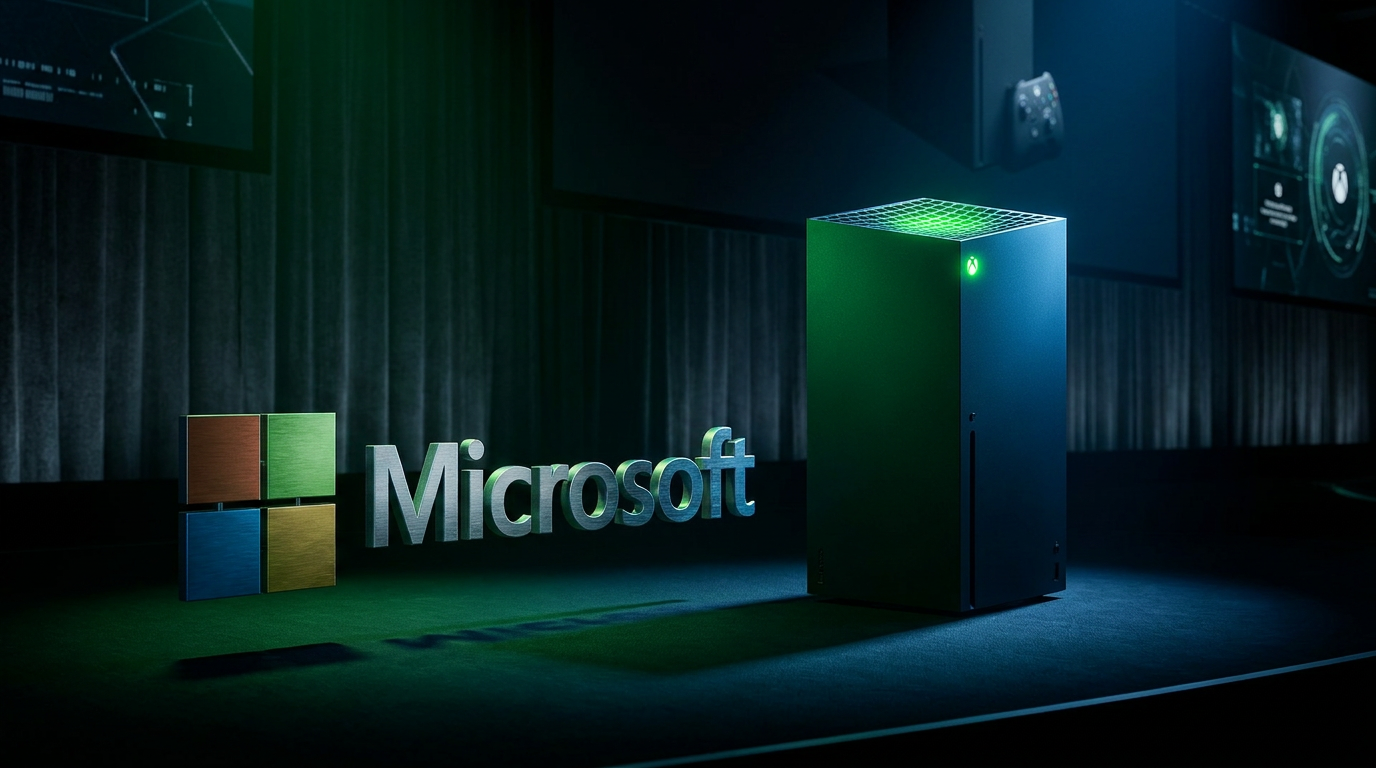
Microsoft's $68.7 billion acquisition fundamentally reshaped the gaming industry. The new leadership's skepticism signals that the era of massive console exclusivity is ending, directly impacting where and how consumers will play major franchises like Call of Duty in the future.
Key points
- New Xbox CEO Asha Sharma expressed uncertainty about the $68.7 billion Activision Blizzard merger.
- Sharma noted the deal was made before the AI boom and during the COVID-19 gaming peak.
- Microsoft has executed four major rounds of layoffs in its gaming division since the acquisition.
- The company is currently undergoing a 100-day 'reset' to stabilize the Xbox business.
- Sharma canceled the Xbox Copilot AI initiative to focus on core gaming priorities.
The $68.7 billion acquisition of Activision Blizzard was supposed to be the crowning achievement of Microsoft's gaming era, cementing Xbox as an unstoppable force in the interactive entertainment industry. But two and a half years after the ink dried on the largest buyout in video game history, the new head of Xbox is openly questioning the timing and strategy behind the historic deal. The candid admission marks a stark departure from the usual corporate victory laps, signaling a profound shift in how Microsoft views its gaming division and its future in the hardware market.[2][3]
Speaking at the Bloomberg Tech 2026 summit, newly appointed Xbox CEO Asha Sharma delivered a surprisingly blunt assessment of Microsoft's gaming portfolio. When asked directly by interviewers if the record-breaking merger was paying off for the broader company, Sharma declined to give a definitive yes. Instead, she admitted it was "hard to say how to think about those decisions," acknowledging the complex reality of inheriting a massive corporate integration during a period of industry-wide contraction. Her comments immediately sent ripples through the gaming community, as executives rarely express public doubt about acquisitions of this magnitude.[1][6]
Sharma, who took over the division in early 2026 following the departure of long-time chief Phil Spencer, emphasized that the technological and economic landscape has fundamentally shifted since the deal was first proposed. "It was bought at a time before ChatGPT," she noted, highlighting how Microsoft's broader corporate priorities have pivoted aggressively toward artificial intelligence and enterprise cloud services over the past three years. In the current climate, a massive capital expenditure on legacy gaming assets looks increasingly out of step with the tech giant's overarching focus on generative AI.[2][4]
The executive also pointed to the unique pandemic-era context of the acquisition, suggesting the initial valuation was based on an unsustainable market peak. "It was bought at a time when our strategy was predominantly on the core consoles," Sharma explained to the Bloomberg audience. She added that the industry was "right in the middle of COVID" when gaming engagement and hardware sales were at an all-time high. That temporary bubble has since burst across the entire interactive entertainment sector, leaving hardware manufacturers grappling with stagnant growth and ballooning development budgets.[1][4]

Despite her skepticism regarding the initial strategic timing, Sharma was quick to praise the actual intellectual property Microsoft acquired in the deal. She highlighted that the Call of Duty franchise now generates more annual revenue than the entire Marvel Cinematic Universe, a staggering metric that underscores the sheer scale of blockbuster gaming. She also pointed to the enduring subscription dominance of World of Warcraft and the massive mobile footprint of Candy Crush, calling them "incredible assets" that the company intends to continue investing in for the long haul.[1][2]
Despite her skepticism regarding the initial strategic timing, Sharma was quick to praise the actual intellectual property Microsoft acquired in the deal.
However, integrating those massive assets has come at a steep human and structural cost. Since finalizing the merger in late 2023, Microsoft has executed four major rounds of layoffs across its gaming divisions. These cuts eliminated thousands of roles and resulted in the closure of beloved, critically acclaimed development studios like Arkane Austin and Tango Gameworks. The closures sparked widespread frustration among the gaming community, who had initially been promised that the acquisition would lead to more resources and creative freedom for independent studios under the Xbox umbrella.[1][5]
The financial realities of the $68.7 billion capital expenditure have also trickled down directly to consumers. Microsoft recently implemented another price hike for its flagship Game Pass subscription service, a move industry analysts view as a necessary step to recoup the massive costs of the Activision Blizzard buyout. The price increases come at a time when consumer spending on gaming subscriptions has largely plateaued, forcing Microsoft to extract more revenue from its existing user base rather than relying entirely on rapid subscriber growth.[2][5]

Sharma told the summit audience that her first 100 days in the role are entirely focused on "resetting the business." She noted that her mandate from Microsoft CEO Satya Nadella is not to hit standard enterprise software profit margins—which often hover around 30 percent—but rather to position Xbox sustainably as the premier gaming and entertainment company globally. This reset involves taking a hard look at which projects are actually driving engagement and which are simply burning through cash in an increasingly risk-averse market.[3][6]
Part of that operational reset involves unwinding certain tech initiatives that do not serve the core gaming audience. Sharma revealed she personally made the decision to kill the "Xbox Copilot" AI integration project. This marks a notable divergence from Microsoft's company-wide mandate to embed its Copilot assistant into every consumer and enterprise product. By successfully pushing back against the AI mandate, Sharma has signaled that she has secured significant autonomy to run the gaming division pragmatically, prioritizing actual player experience over corporate synergy.[3]
The future of Xbox hardware exclusivity also remains a major question mark under the new regime. While Sharma acknowledged that platforms need exclusive content to attract hardware buyers, she also noted the mathematical reality of modern game development. As the world's second-largest publisher, Xbox must ensure its games reach the largest possible audience to offset budgets that routinely exceed $200 million. This economic pressure strongly signals a continued push toward multiplatform releases, bringing historically exclusive franchises to competing consoles like the PlayStation 5.[3][5]

Industry observers note that Sharma's willingness to distance herself from the previous regime's strategy reflects a broader reckoning within the video game industry. As hardware sales slump and development cycles stretch past the five-year mark, the era of massive consolidation and limitless spending appears to be over. Microsoft's public pivot suggests that the industry is entering a period of painful, necessary contraction, where even the wealthiest tech giants must prioritize sustainable publishing models over the traditional, loss-leading console wars.[1][5]
How we got here
Late 2023
Microsoft officially completes its $68.7 billion acquisition of Activision Blizzard after a lengthy regulatory battle.
Early 2024
Microsoft executes its first major post-merger layoff, cutting 1,900 jobs across Xbox and Bethesda.
Early 2026
Asha Sharma replaces Phil Spencer as the CEO of Microsoft Gaming.
June 2026
Sharma publicly questions the timing and strategy of the Activision Blizzard deal at the Bloomberg Tech summit.
Viewpoints in depth
Corporate Strategy View
Focuses on the macroeconomic shifts that made the deal less viable.
Analysts and corporate strategists point out that Microsoft bought Activision Blizzard at the absolute peak of the pandemic gaming boom. With the subsequent rise of generative AI demanding massive capital investment, the $68.7 billion spent on legacy console gaming assets now looks like a misallocation of resources. From this perspective, Sharma is simply acknowledging the reality that Microsoft's broader enterprise goals have moved on from the hardware wars.
Consumer Advocate View
Focuses on the negative downstream effects on players and developers.
Consumer advocates and gaming critics argue that the massive acquisition has actively harmed the Xbox ecosystem. To recoup the historic purchase price, Microsoft has been forced to raise Game Pass subscription fees and shutter beloved, creative studios like Tango Gameworks. This camp views the merger as a classic case of corporate consolidation where executives secure massive payouts while developers lose their jobs and players pay higher prices for fewer innovative games.
What we don't know
- Whether Microsoft plans to spin off or sell any of the studios it acquired in the merger.
- Which specific Xbox exclusive titles will be ported to competing consoles like the PlayStation 5.
Key terms
- Game Pass
- Microsoft's video game subscription service that provides users with access to a rotating catalog of games for a monthly fee.
- Activision Blizzard King
- The massive gaming conglomerate acquired by Microsoft, responsible for franchises like Call of Duty, World of Warcraft, and Candy Crush.
- Multiplatform Release
- The strategy of publishing a video game on multiple competing systems, such as Xbox and PlayStation, rather than keeping it exclusive.
Frequently asked
Who is the current CEO of Xbox?
Asha Sharma took over as the CEO of Microsoft Gaming in early 2026, succeeding long-time head Phil Spencer.
How much did Microsoft pay for Activision Blizzard?
Microsoft acquired Activision Blizzard for $68.7 billion, completing the transaction in late 2023.
Why is the new CEO questioning the deal?
Sharma noted the deal was made during the COVID-19 pandemic and before the generative AI boom, a time when Microsoft's strategy was heavily focused on traditional console gaming.
Sources
Source coverage
6 outlets
3 viewpoints surfaced






[1]Game DeveloperCorporate Realists
Xbox CEO unsure whether Activision Blizzard merger is paying off
Read on Game Developer →[2]Rock Paper ShotgunMultiplatform Proponents
Is Microsoft's $69 billion Activision Blizzard deal paying off? Xbox boss Asha Sharma says it's 'hard to say'
Read on Rock Paper Shotgun →[3]KotakuConsumer Advocates
Xbox CEO Says It's Not In A Healthy Spot: 'The Next 100 Days Is Going To Be About Resetting The Business'
Read on Kotaku →[4]Pure XboxMultiplatform Proponents
Xbox CEO Unsure If Activision Blizzard Deal Was A Good Idea
Read on Pure Xbox →[5]TechdirtConsumer Advocates
Xbox: A Mess, Moving Back To Exclusivity Deals, & The Layoffs Microsoft Promised Wouldn't Happen
Read on Techdirt →[6]BloombergCorporate Realists
Xbox CEO Asha Sharma on the Future of Microsoft Gaming
Read on Bloomberg →

Every angle. Every day.
Get entertainment stories with full source coverage and perspective breakdowns delivered to your inbox.