
U.S. and Iran Sign 14-Point Peace Deal, Reopening Strait of Hormuz and Halting Hostilities
The United States and Iran have agreed to a 60-day ceasefire that lifts the naval blockade, unfreezes Iranian assets, and places enriched uranium under IAEA supervision. The deal immediately lowers global oil prices, though disputes remain over future transit fees in the Strait of Hormuz.
By Factlen Editorial Team
- US Administration
- The deal is a victory achieved through military strength that secures nuclear compliance without American financial burden.
- Iranian Government
- The agreement successfully breaks the U.S. naval blockade and secures vital economic relief while preserving domestic sovereignty.
- Global Markets & Central Banks
- The ceasefire averts a catastrophic energy shock, providing immediate relief to inflation-weary economies.
- Regional Partners
- The reopening of trade routes is essential, but mandatory transit tolls on international waterways are unacceptable.
What's not represented
- · Lebanese Civilians
- · Commercial Shipping Companies
Why this matters
The reopening of the Strait of Hormuz immediately lowers global oil prices, averting a severe energy crisis and allowing central banks to avoid punishing interest rate hikes. However, the fragile 60-day window means the threat of renewed conflict and inflation remains if a permanent settlement is not reached.
Key points
- The US and Iran signed a 14-point interim agreement establishing a 60-day ceasefire.
- The deal halts military operations across all fronts, including in Lebanon.
- Iran agreed to place enriched uranium under IAEA supervision for down-blending.
- A $300 billion reconstruction fund for Iran will be financed by regional partners.
- The Strait of Hormuz will reopen toll-free for 60 days, dropping oil prices below $80/bbl.
- Iran plans to charge transit fees after 60 days, sparking opposition from the US and Oman.
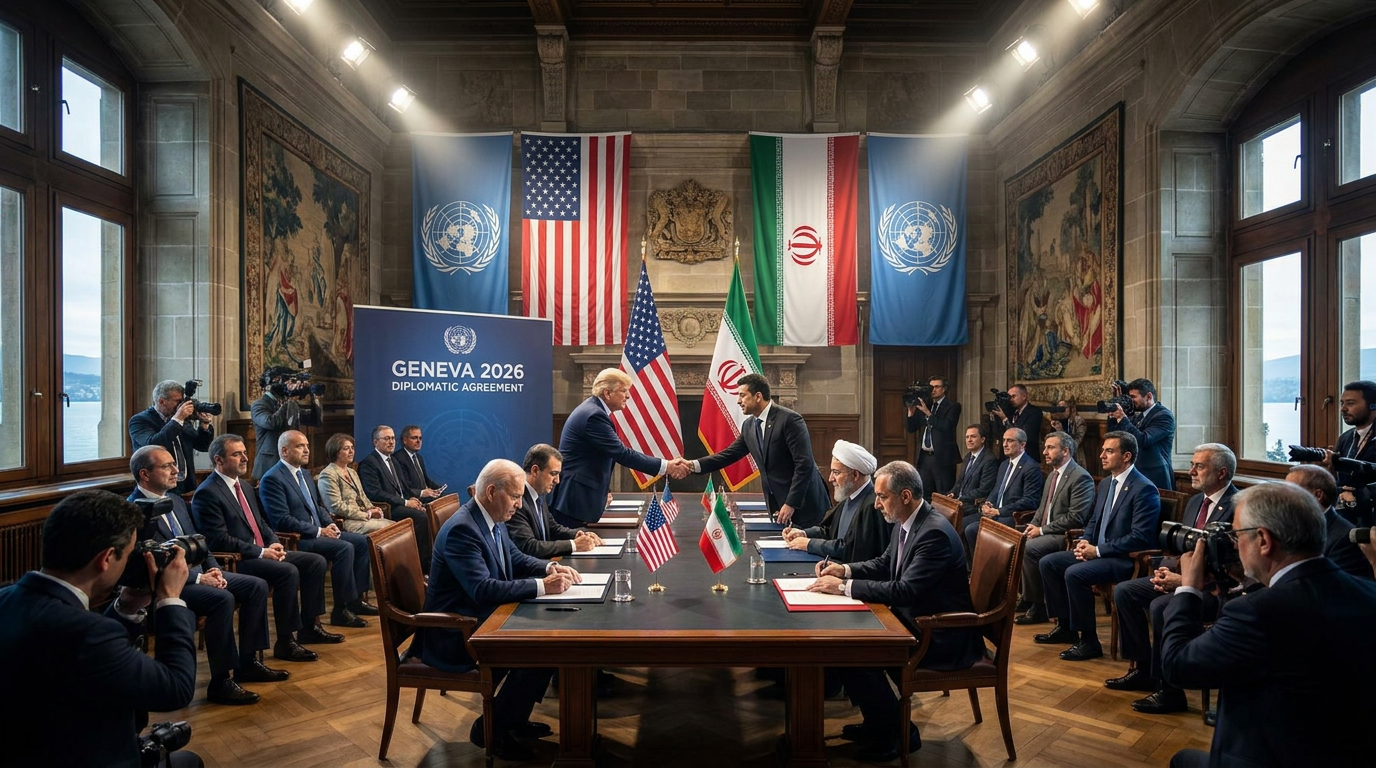
After four months of escalating conflict that severely disrupted global energy markets and threatened broader regional stability, the United States and Iran have signed a sweeping 14-point interim peace agreement. The memorandum of understanding, signed by U.S. President Donald Trump and Iranian President Masoud Pezeshkian, establishes an immediate 60-day ceasefire and halts military operations across all fronts. The framework is designed to pull the two nations back from the brink of a wider war while reopening the Strait of Hormuz, a vital maritime artery that handles roughly one-fifth of the world’s seaborne oil. By pausing hostilities, the agreement provides a critical two-month window for diplomats to negotiate a permanent settlement, fundamentally altering the geopolitical landscape of the Middle East.[1][2][3][4]
Beyond the direct U.S.-Iran engagements, the memorandum explicitly addresses proxy conflicts that have inflamed the region. A central pillar of the agreement is the immediate and permanent termination of military operations in Lebanon. Both nations have committed to refraining from the threat or use of force in the Levant, with specific language guaranteeing the territorial integrity and sovereignty of Lebanon. This provision is crucial for de-escalating the broader proxy war, as Iran has agreed to restrain its foreign allies, including Hezbollah, in exchange for the cessation of U.S. and allied strikes on Lebanese infrastructure.[1][2][3]
At the core of the diplomatic breakthrough is a carefully calibrated compromise regarding Iran’s nuclear ambitions. Under the terms of the memorandum, Tehran has formally reaffirmed its commitment not to procure or develop nuclear weapons. Rather than forcing the complete removal of nuclear material from Iranian soil—a maximalist demand previously sought by Washington—the agreement mandates that portions of Iran's enriched uranium stockpile be placed under the direct supervision of the International Atomic Energy Agency (IAEA). This material will be subject to rigorous monitoring and on-site processing to ensure it cannot be weaponized.[1][3][4]

The specific mechanism agreed upon for the nuclear material is "down-blending"—a process where highly enriched uranium is mixed with natural or depleted uranium to reduce its concentration of the U-235 isotope, rendering it unusable for military purposes but still viable for civilian energy. This technical compromise allows Iran to maintain its domestic nuclear infrastructure and save face domestically, while providing the international community with verifiable, physical safeguards against proliferation during the 60-day negotiation window.[3][4]
In exchange for these security and nuclear commitments, the agreement outlines a massive package of financial incentives and sanctions relief for the Iranian economy. The framework calls for the immediate lifting of the U.S. naval blockade on Iranian ports, which had severely crippled the nation's export capabilities. Furthermore, the deal initiates the unfreezing of billions of dollars in foreign assets and the issuance of waivers allowing Iranian crude oil to legally re-enter the global market, providing an immediate injection of capital into Tehran's depleted treasury.[2][4]
The most ambitious and controversial economic provision is a proposed $300 billion reconstruction and economic development fund for the Islamic Republic. U.S. officials were quick to clarify that this staggering sum would not be financed by American taxpayers. Instead, the United States will work with regional partners over the next 60 days to establish a financing mechanism, largely expected to be bankrolled by Gulf states that host U.S. military bases. The U.S. administration has emphasized that any payouts from this fund will be strictly conditional on Iran's continued compliance with the peace terms and its broader geopolitical behavior.[2][3][4]
The most ambitious and controversial economic provision is a proposed $300 billion reconstruction and economic development fund for the Islamic Republic.
The immediate economic relief for the rest of the world hinges on the unblocking of the Strait of Hormuz. Since the conflict escalated, traffic through the 21-nautical-mile chokepoint plummeted by up to 95 percent, creating a daily supply shortfall of roughly 13 million barrels of oil. The 14-point plan dictates that Iran must immediately clear technical and military obstacles, including naval mines, to restore commercial shipping to pre-war volumes within a maximum of 30 days. For the duration of the 60-day ceasefire, Iran has guaranteed the safe and toll-free passage of all commercial vessels traveling between the Persian Gulf and the Sea of Oman.[3][4][8]

Despite the promise of toll-free transit in the short term, a major geopolitical clash is already brewing over the long-term management of the strait. Iranian officials, including Foreign Ministry spokesman Esmail Baghaei, have publicly stated that once the 60-day window expires, Tehran intends to charge a "payment for services" for ships navigating the waterway. Iran frames these proposed fees as voluntary compensation for maritime security, environmental protection, and navigational assistance. This is a highly strategic legal argument designed to bypass the United Nations Convention on the Law of the Sea (UNCLOS), which strictly prohibits coastal states from levying mandatory transit tolls on international straits.[7][8]
Maritime legal experts and Western diplomats have quickly highlighted the fundamental weakness in Tehran's service-charge argument: compulsion negates voluntariness. If commercial vessels cannot transit the strait without engaging these Iranian services and paying the associated fees, the transaction functions as a mandatory toll in practice. Consequently, this proposal faces fierce opposition from the United States, European nations, and neighboring Gulf states, who view the fees as an unacceptable extortion tactic that would set a dangerous precedent for global freedom of navigation.[8]
The enforcement of any future toll system remains highly complex, largely due to the role of Oman, which shares territorial stewardship of the Strait of Hormuz. While Oman has maintained diplomatic ties with Tehran and participated in the crisis negotiations, it faces intense pressure from Washington to reject the toll scheme. Oman's ambassador to the U.S. recently reassured Western allies that the sultanate staunchly opposes any mandatory fee system. Omani officials have insisted that any new management regime for the strait must strictly comply with international law and can only be implemented after extensive consultations with the UN’s International Maritime Organization.[8]

The mere announcement of the 14-point plan sent immediate shockwaves through global financial markets, rapidly deflating the risk premiums that had built up over months of warfare. Brent crude oil, which had surged on fears of a prolonged blockade and potential strikes on Gulf export terminals, sharply reversed course, falling below the $80 per barrel threshold. The swift drop in energy costs provided a lifeline to importing nations that had been bracing for a severe stagflationary shock—a toxic economic cocktail of stagnant growth and soaring consumer prices. Sovereign bond yields also fell to multi-month lows as investors adopted a more dovish outlook on future interest rates.[3][6]
The stabilization of energy markets directly altered the trajectory of global monetary policy, most notably in the United Kingdom. Prior to the agreement, the Bank of England was facing intense pressure to aggressively hike interest rates to combat inflation driven by the Hormuz blockade. However, in the wake of the peace deal, the central bank opted to hold its benchmark interest rate steady at 3.75 percent. While British officials warned that underlying inflationary pressures will linger and require a cautious "wait-and-see" approach, the resumption of oil flows effectively eliminated the Bank's worst-case scenarios, keeping projected inflation below the critical 4 percent threshold.[5][6]

The ultimate success of the 14-point plan rests entirely on the next 60 days of high-stakes negotiations. While the interim agreement has successfully paused the violence and reopened vital trade routes, the underlying disputes over nuclear enforcement, reconstruction funding, and maritime tolls remain largely unresolved. The U.S. president has explicitly threatened to resume military bombardment if a permanent agreement is not reached or if Tehran violates the current terms. As the 60-day clock ticks down, diplomats face the monumental task of converting a fragile ceasefire into a durable geopolitical settlement.[2][4]
How we got here
Late February 2026
Conflict escalates, leading to a US naval blockade and a 95% drop in commercial traffic through the Strait of Hormuz.
March - May 2026
Global oil prices surge, raising fears of severe stagflation and forcing central banks to consider aggressive rate hikes.
June 13-17, 2026
Details of a 14-point interim peace plan leak to the press following negotiations mediated by regional partners.
June 18, 2026
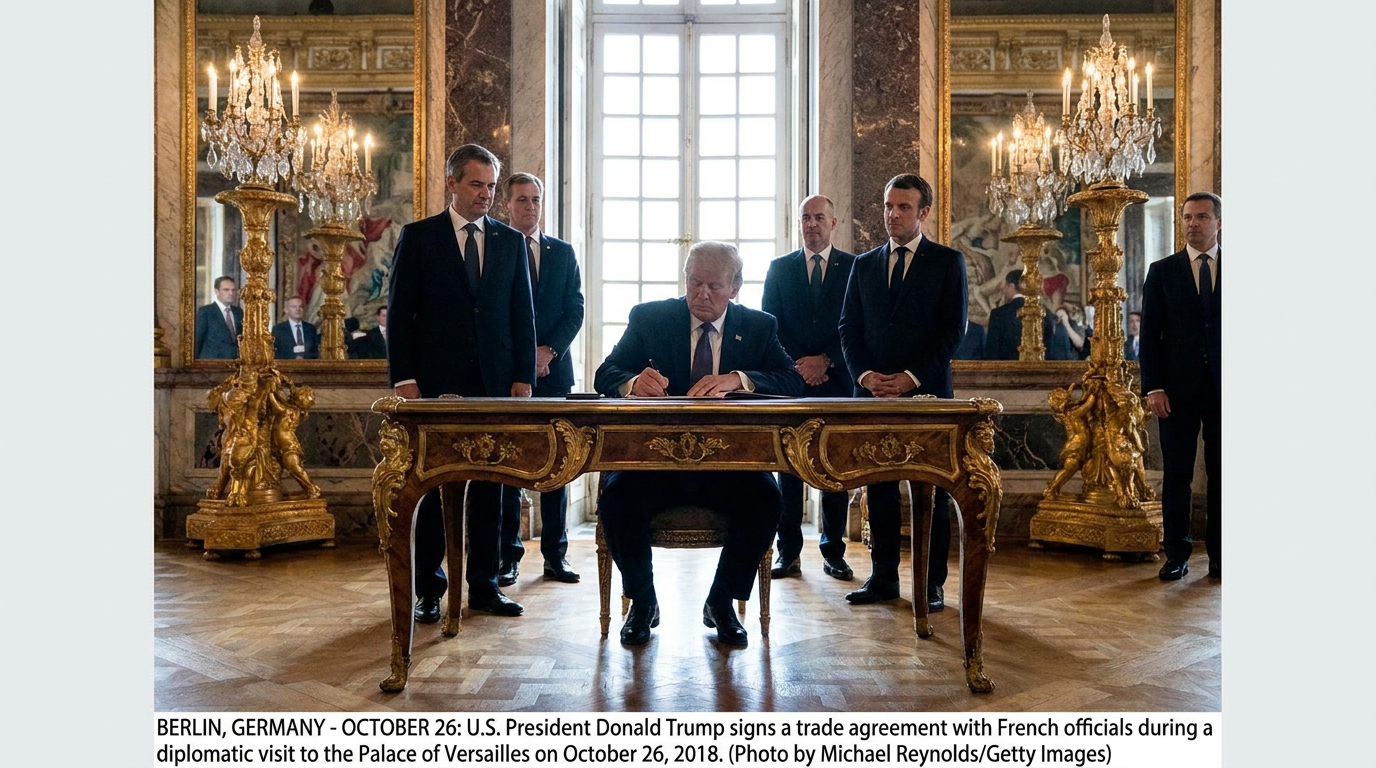
The US and Iran officially sign the memorandum of understanding, initiating a 60-day ceasefire and reopening the strait.
Viewpoints in depth
US Administration's view
The deal is a victory achieved through military strength that secures nuclear compliance without American financial burden.
U.S. officials frame the 14-point plan as a total vindication of their aggressive military posture, arguing that the threat of overwhelming force brought Tehran to the negotiating table. The administration emphasizes that the $300 billion reconstruction fund will be financed by Gulf partners, not U.S. taxpayers, and remains strictly conditional on Iran's behavior. Furthermore, the White House views the IAEA's on-site down-blending of uranium as a concrete safeguard that neutralizes the nuclear threat without requiring a protracted ground campaign.
Iranian Government's view
The agreement successfully breaks the U.S. naval blockade and secures vital economic relief while preserving domestic sovereignty.
Tehran presents the memorandum as a strategic success that forces the withdrawal of the U.S. naval blockade and unfreezes billions in desperately needed foreign assets. Iranian officials highlight that they did not surrender their nuclear infrastructure, framing the down-blending compromise as a sovereign choice rather than a capitulation. Additionally, Iran's insistence on implementing a 'payment for services' in the Strait of Hormuz after 60 days is viewed domestically as a legitimate exercise of territorial rights and a necessary mechanism to fund national development.
Global Markets' view
The ceasefire averts a catastrophic energy shock, providing immediate relief to inflation-weary economies.
Financial analysts and central bankers are breathing a collective sigh of relief. The reopening of the Strait of Hormuz immediately drove Brent crude prices below $80 a barrel, dismantling the worst-case stagflation scenarios that had haunted markets since February. For institutions like the Bank of England, the deal provides the necessary breathing room to hold interest rates steady. However, market optimism remains cautious; traders are acutely aware that the agreement is only a 60-day interim measure, and any collapse in negotiations could trigger an immediate resurgence in energy costs.
What we don't know
- Whether Iran will actually enforce its proposed 'payment for services' transit fees after the 60-day window expires.
- Exactly which Gulf nations will contribute to the $300 billion reconstruction fund and under what specific conditions.
- If the U.S. will follow through on threats to resume military action if a permanent agreement is not reached within 60 days.
Key terms
- Memorandum of Understanding (MOU)
- A formal agreement between two or more parties that outlines the terms and details of a mutual understanding, often serving as the foundation for a final treaty.
- Down-blending
- The process of mixing highly enriched uranium with natural or depleted uranium to reduce its concentration, making it unusable for nuclear weapons.
- Strait of Hormuz
- A narrow, strategically critical waterway between the Persian Gulf and the Gulf of Oman through which roughly one-fifth of the world's seaborne oil passes.
- UNCLOS
- The United Nations Convention on the Law of the Sea, an international treaty that establishes guidelines for businesses, the environment, and the management of marine natural resources, including prohibiting tolls on international straits.
- Stagflation
- An economic condition characterized by slow growth, high unemployment, and rising prices (inflation), often triggered by a sudden shock in energy costs.
Frequently asked
What does the 14-point plan actually do?
It establishes a 60-day ceasefire between the US and Iran, halts military operations in Lebanon, reopens the Strait of Hormuz, and places Iranian enriched uranium under IAEA supervision.
Who is paying for the $300 billion reconstruction fund?
The US administration stated the fund will not use American taxpayer money, but will instead be financed by regional partners and Gulf states over the next 60 days.
Will ships have to pay to use the Strait of Hormuz?
Passage is toll-free for the first 60 days. After that, Iran intends to charge a 'payment for services' fee, though the US, Europe, and Oman strongly oppose this.
How does this deal affect global inflation?
By reopening the Strait of Hormuz, oil prices dropped below $80 a barrel. This eased energy costs, allowing central banks like the Bank of England to hold interest rates steady rather than raising them.
Sources
Source coverage
8 outlets
4 viewpoints surfaced








[1]Al JazeeraIranian Government
What the Trump-Iran 14-point plan says about Lebanon, Hormuz and uranium
Read on Al Jazeera →[2]The GuardianUS Administration
Donald Trump has signed a 14-point agreement with Iran
Read on The Guardian →[3]The NationalIranian Government
Full text of the 14-point plan to end the US-Iran war
Read on The National →[4]The IndependentUS Administration
Trump's 14 point Iran peace deal in full after US announces signing of agreement
Read on The Independent →[5]NYTGlobal Markets & Central Banks
Inflation Will Linger Despite U.S.-Iran Deal, British Officials Warn
Read on NYT →[6]FXStreetGlobal Markets & Central Banks
Iran deal takes Bank of England rate hike back off table
Read on FXStreet →[7]Iran InternationalIranian Government
Iran says it will charge a ‘payment for services’ in the Strait of Hormuz
Read on Iran International →[8]Gulf NewsRegional Partners
Iran and Oman to reopen Strait of Hormuz with new ship transit fees
Read on Gulf News →
More in news politics
See all 7 stories →NATO Posture
Defense Secretary Hegseth Announces Review of U.S. Forces in Europe, Cuts Crisis Commitments
7 sources
Nuclear Diplomacy
Full Text of U.S.-Iran Memorandum of Understanding Released, Outlining Ceasefire and Nuclear Framework
7 sources
Iran Peace Deal
U.S. and Iran Sign 14-Point Memorandum to Halt War and Reopen Strait of Hormuz
8 sources
Ranked-Choice Voting
Evidence Pack: Does Ranked-Choice Voting Actually Reduce Political Polarization?
7 sources
Every angle. Every day.
Get news politics stories with full source coverage and perspective breakdowns delivered to your inbox.