
The Swiss Watch: How Murat Yakin Built a Chameleon System for the 2026 World Cup
An in-depth tactical breakdown of Switzerland's fluid 3-4-2-1 formation, highlighting how Granit Xhaka's control and Manuel Akanji's build-up play make them the ultimate tournament dark horse.
By Factlen Editorial Team
- System Purists
- Focuses on the structural brilliance of the 3-4-2-1 shape, possession control, and Akanji's elite ball progression.
- Transition Advocates
- Values the speed of Switzerland's counter-attacks, Ndoye's width, and Embolo's physical hold-up play.
- Mentality Analysts
- Highlights the squad's psychological resilience, Xhaka's leadership, and Yakin's empowering man-management.
What's not represented
- · Domestic Swiss club coaches adapting to Yakin's national team blueprint
- · Opposition analysts tasked with breaking down the Swiss low block
Why this matters
Understanding Switzerland's tactical evolution reveals how smaller nations can systematically dismantle footballing giants through structural intelligence rather than raw star power. Their blueprint offers a masterclass in adaptability that coaches and fans alike can learn from.
Key points
- Murat Yakin has transformed Switzerland into a tactically fluid side capable of shifting between a 3-4-2-1 and a 4-2-3-1.
- Granit Xhaka operates as the undisputed metronome, dictating the tempo and organizing the team's structure.
- Manuel Akanji's elite ball-playing ability from the back line is foundational to the team's possession-based build-up.
- Breel Embolo's physical hold-up play is essential for unlocking space for advancing midfielders.
- The team relies heavily on creating numerical overloads in the wide areas, particularly on the left flank.
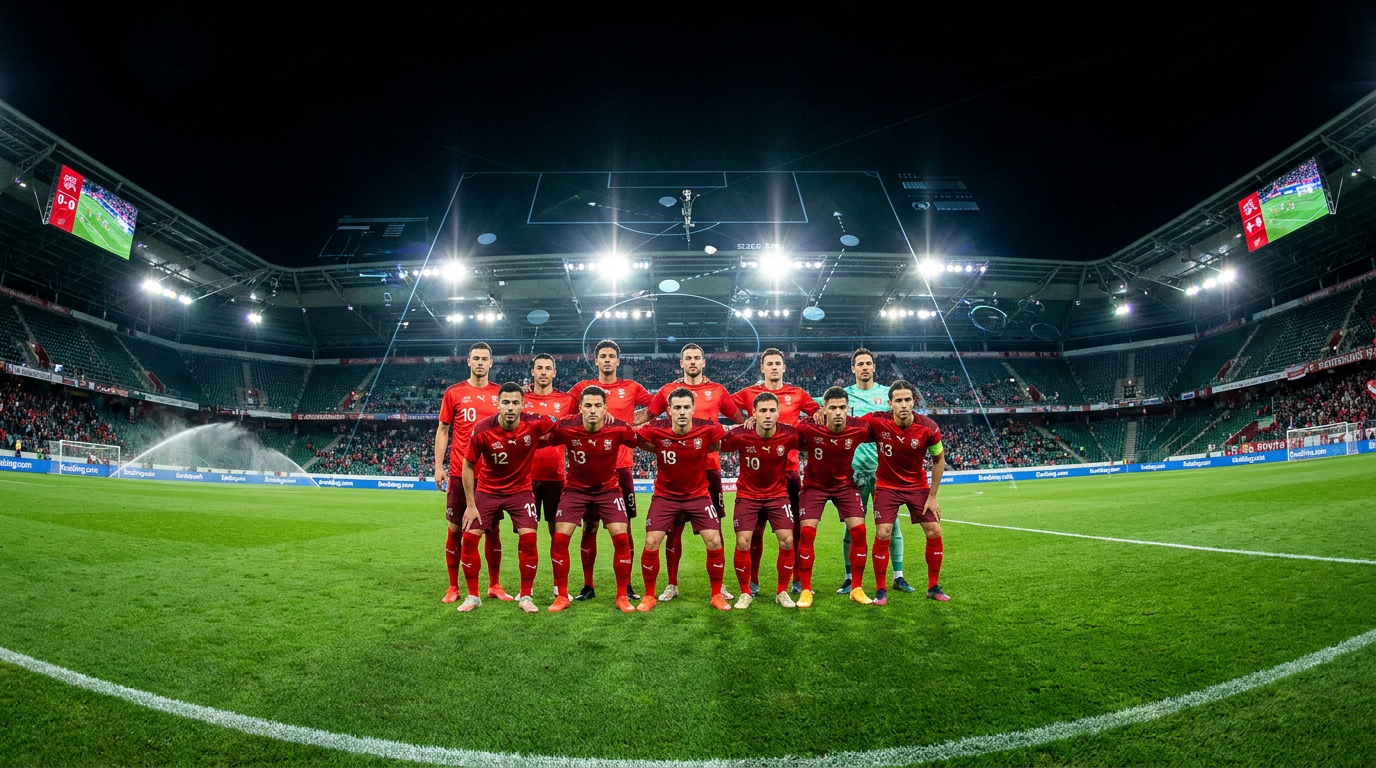
For decades, the Swiss national football team has been defined by a quiet, unyielding consistency. They are rarely the loudest team in the tournament, nor do they boast the glittering, star-studded rosters of their European neighbors. Yet, when the lights shine brightest on the global stage, Switzerland inevitably arrives with the precision of a finely tuned timepiece. Under the guidance of head coach Murat Yakin, this reputation for reliability has evolved into something far more dangerous: profound tactical flexibility. As they navigate the expanded landscape of the 2026 World Cup, Switzerland is no longer just a stubborn defensive block hoping to frustrate superior opponents. They have transformed into a chameleon-like collective, capable of dominating possession, orchestrating lethal transitions, and suffocating attacks with equal proficiency. This evolution is not the result of a sudden influx of generational talent, but rather the meticulous optimization of a core group of veterans who understand their roles with absolute clarity. Yakin has built a system that amplifies the collective intelligence of his squad, turning a nation of eight million people into a perennial nightmare for the world's footballing elite.[1][4]
When Murat Yakin inherited the managerial reins from Vladimir Petkovic in the summer of 2021, he took over a squad that had already proven its mettle by reaching the latter stages of major tournaments. However, Yakin recognized that to take the next step, the team needed to shed its rigid adherence to a single way of playing. He began implementing a philosophy rooted in adaptability, demanding that his players become comfortable shifting shapes seamlessly depending on the phase of play and the specific weaknesses of the opposition. This tactical awakening was on full display during their impressive run to the quarter-finals of Euro 2024, where they systematically dismantled reigning champions Italy before pushing England to the absolute limit. Yakin’s approach requires immense cognitive discipline from his players, asking them to read the game in real-time and adjust their positioning without waiting for instructions from the touchline. The result is a team that rarely looks panicked, operating with a collective calm that stems from knowing they have a structural answer for whatever problem the opposition presents.[2][5]
At the heart of this tactical revolution is a fluid formation that nominally looks like a 3-4-2-1 on paper, but behaves entirely differently in practice. When Switzerland has established possession, the shape often expands into a 3-2-5, stretching the pitch to its absolute limits and forcing the opposing defensive line to make impossible choices. Conversely, when forced to defend deep, the wing-backs retreat to form an impenetrable 5-4-1 low block that denies any space in the central channels. This fluidity is made possible by the versatility of the squad's personnel, many of whom have been educated in the demanding tactical environments of the Bundesliga, Serie A, and the Premier League. Yakin does not view formations as static cages, but rather as starting points for dynamic rotations. By prioritizing players who can operate comfortably in multiple zones, he ensures that the team can overload specific areas of the pitch, create numerical superiorities, and manipulate the opposition's defensive structure without sacrificing their own defensive solidity.[2][3]
The foundation of Switzerland's possession game begins at the very back, starting with the distribution skills of their goalkeeper, Gregor Kobel. The Borussia Dortmund shot-stopper is not merely a last line of defense; he is the first attacker, tasked with initiating the build-up phase through precise, varied passing. Kobel’s comfort on the ball allows the Swiss to invite pressure from opposing forwards, deliberately drawing them high up the pitch to create space behind the first line of the press. Once the opposition commits, Kobel can either play short, incisive passes into the double pivot or launch accurate long balls toward the flanks to bypass the press entirely. This deliberate provocation requires immense composure, but it is a calculated risk that consistently pays dividends. By using the goalkeeper as an active participant in the build-up, Switzerland ensures they always have a numerical advantage in their own defensive third, making it incredibly difficult for teams to successfully execute a high press against them.[1][6]

Operating just ahead of Kobel is the undisputed anchor of the defensive line, Manuel Akanji. The Manchester City center-back brings a wealth of elite-level education to the national team, serving as the primary orchestrator of Switzerland's progression from deep areas. Akanji possesses a rare combination of physical dominance and exceptional technical ability, allowing him to carry the ball out of defense with the confidence of a seasoned midfielder. When opponents attempt to block the passing lanes into the Swiss midfield, Akanji frequently steps forward into the space, breaking the first line of pressure through his own dribbling. His ability to execute line-breaking passes with both feet ensures that the team's build-up play remains unpredictable and highly efficient. Furthermore, Akanji’s elite reading of the game allows him to organize the defensive structure during transitions, ensuring that the backline remains compact and protected even when the wing-backs have pushed high up the pitch to join the attack.[2][5]
If Akanji is the architect of the build-up, Granit Xhaka is the undisputed metronome of the entire system. The Swiss captain operates at the base of the midfield, bringing the unparalleled tactical intelligence and tempo-setting ability that defined his historic domestic campaigns. Xhaka is the gravitational center of the team; every attack flows through him, and every defensive shape is organized around his positioning. He possesses an elite understanding of when to slow the game down to establish control and when to accelerate the tempo with a piercing, vertical pass. Against teams that sit deep in a low block, Xhaka’s patience is vital, as he continuously circulates the ball from side to side, probing for structural weaknesses without forcing high-risk passes that could trigger a counter-attack. His leadership extends far beyond his technical contributions; he is Yakin’s general on the pitch, constantly communicating with his teammates, adjusting their positioning, and ensuring that the collective focus never wavers.[3][4]
Partnering Xhaka in the midfield engine room is typically Remo Freuler or Denis Zakaria, forming a double pivot that balances the captain's orchestrating role with relentless physical output. While Xhaka dictates the rhythm from deep, his partner is tasked with the gritty, unglamorous work of disrupting opposition attacks and providing dynamic runs into the final third. Freuler, in particular, excels in this box-to-box role, utilizing his immense stamina to press aggressively when possession is lost and to arrive late in the penalty area to offer an additional goal-scoring threat. This dynamic ensures that the Swiss midfield is never static or easily bypassed. The double pivot operates on a string; when one pushes forward to join the press or support an attack, the other drops slightly deeper to provide defensive cover and maintain structural balance. This synchronized movement is the bedrock of Switzerland's ability to control the center of the pitch, suffocating opposing playmakers while simultaneously providing a secure platform for their own attacking sequences.[3][5]
This dynamic ensures that the Swiss midfield is never static or easily bypassed.
A defining characteristic of Yakin’s tactical blueprint is the deliberate creation of numerical overloads in the wide areas, particularly on the left flank. This strategy relies heavily on the unique profile of Ricardo Rodriguez, a veteran who has masterfully transitioned from a traditional overlapping full-back into a hybrid left-sided center-back. In possession, Rodriguez frequently pushes wide and high, allowing the left wing-back—often Michel Aebischer or Dan Ndoye—to invert into the half-spaces. This rotation confuses opposing marking schemes, forcing right-backs to decide whether to track the inverted runner into the center or stay wide to deal with Rodriguez’s overlapping threat. By committing multiple players to this side of the pitch, Switzerland draws the opposition's defensive block toward the left, systematically creating vast expanses of open grass on the opposite flank. Once the defense is sufficiently tilted, Xhaka or Akanji will execute a rapid, sweeping switch of play to the isolated right wing-back, instantly turning a congested possession phase into a dangerous attacking opportunity.[2][3]

The effectiveness of these wide overloads is entirely dependent on the intelligent movement of the attacking midfielders operating in the half-spaces. Players like Ruben Vargas and emerging young talents such as Johan Manzambi are tasked with finding the delicate pockets of space between the opposition's midfield and defensive lines. Rather than hugging the touchline, these creative hubs drift centrally, acting as the connective tissue between the midfield pivot and the lone striker. Their ability to receive the ball on the half-turn under intense pressure is crucial for accelerating the attack and unlocking stubborn defenses. When the ball is progressed into these advanced central areas, it forces opposing center-backs to step out of their defensive line to engage the ball carrier, which in turn creates gaps for penetrating runs from the wing-backs or the striker. This intricate, synchronized movement requires a high degree of technical precision and spatial awareness, transforming the final third into a complex geometric puzzle for the opposition to solve.[2][6]
At the absolute tip of the Swiss spear is Breel Embolo, a striker whose value to the system far exceeds his raw goal-scoring statistics. While he may not possess the prolific finishing numbers of a traditional golden boot contender, Embolo’s physical profile and hold-up play are the indispensable linchpins that make Yakin’s entire attacking structure function. Operating as a lone target man, Embolo is tasked with pinning the opposition's center-backs deep, wrestling with them physically to secure long passes and long clearances. When Switzerland is under pressure and needs an outlet to bypass the midfield, Embolo’s ability to receive the ball with his back to goal, shield it from aggressive defenders, and lay it off to the advancing midfielders is unparalleled. This hold-up play acts as a pressure release valve, allowing the team to transition from a defensive posture into an established attacking phase. Without his physical presence occupying the central defenders, the intricate movements of the attacking midfielders in the half-spaces would be easily smothered.[3][5]
While Switzerland excels at methodical, possession-based build-up, they are equally lethal when executing rapid offensive transitions. Yakin has instilled a ruthless counter-attacking mentality that triggers the moment possession is regained in the middle or defensive thirds. Rather than automatically slowing the game down to establish control, the first instinct of the ball-winner is to look forward, seeking to exploit the disorganized state of the opposition's defense. The blistering pace of players like Dan Ndoye on the flanks becomes a devastating weapon in these moments, as they immediately sprint into the channels left vacant by advancing full-backs. Xhaka’s vision is paramount here; his ability to instantly locate these vertical runs and deliver perfectly weighted through-balls allows Switzerland to transition from defense to a high-quality shooting opportunity in a matter of seconds. This dual threat—the ability to patiently dismantle a low block or punish a high line with blinding speed—makes them incredibly difficult to prepare against.[2][3]
Defensively, Switzerland’s success is built upon a highly coordinated and aggressive counter-press. The moment possession is lost in the attacking half, the nearest players immediately swarm the ball carrier, seeking to win it back before the opposition can organize a structured counter-attack. This pressing trap is not a chaotic, individual effort, but a synchronized collective movement designed to cut off passing lanes and force turnovers in dangerous areas. By keeping their attacking structure compact and ensuring short distances between players while in possession, the Swiss naturally position themselves to execute this counter-press effectively. If the initial wave of pressure is bypassed, the team does not panic; instead, they rapidly transition into a disciplined defensive shape. The attacking midfielders drop back to support the double pivot, and the wing-backs retreat to form a flat back five, seamlessly shifting from an aggressive high press into a resilient, impenetrable low block.[2][3]

When forced into this low block, Switzerland transforms into one of the most frustrating teams in international football to break down. The 5-4-1 defensive shape leaves virtually no space between the lines, forcing opponents to circulate the ball harmlessly in wide areas or attempt low-percentage crosses into a penalty box dominated by Akanji and his fellow center-backs. Yakin’s defensive organization ensures that the team shifts laterally as a single, cohesive unit, maintaining their compactness regardless of how quickly the opposition moves the ball. The midfield quartet works tirelessly to screen the passing lanes into the central strikers, while the wing-backs are perfectly positioned to step out and engage the opposing wingers. This pragmatic approach requires immense discipline and concentration, as a single lapse in positioning can be fatal. However, the Swiss have mastered the art of suffering without breaking, absorbing prolonged periods of pressure with a calm, unwavering resilience that routinely demoralizes their opponents.[2][5]
In the tight, high-stakes environment of major tournament football, the ability to capitalize on set-pieces often separates the contenders from the early exits. Switzerland has elevated this aspect of the game to an art form, utilizing dead-ball situations as a primary weapon to break deadlocks against stubborn defenses. The delivery is consistently elite, whether it comes from the cultured left foot of Ricardo Rodriguez or the precise crossing of the wide midfielders. More importantly, the attacking routines are highly choreographed, utilizing screens, decoy runs, and clustered positioning to create free headers for their towering center-backs. Akanji and Nico Elvedi are constant threats in the penalty area, attacking the ball with a ferocity that is incredibly difficult to defend against. This mastery of set-pieces provides Switzerland with a reliable source of goals even on days when their open-play creativity is stifled, adding yet another layer of danger to their multifaceted tactical arsenal.[3][6]
Beyond the intricate tactics and structural discipline, the true defining characteristic of this Swiss team is their unbreakable psychological fortitude. Years of navigating grueling qualification campaigns, surviving penalty shootouts, and battling the traditional heavyweights of European football have forged a collective mentality that is impervious to intimidation. They do not view themselves as underdogs, but rather as tactical equals capable of out-thinking and out-working any opponent on the globe. This belief is cultivated by Yakin’s calm, communicative management style; he empowers his players, seeking their input and trusting their on-field intelligence. When they fall behind in a match, there is no panic, no abandonment of the game plan. They simply recalibrate, trusting that their system and their collective cohesion will eventually provide a solution. It is this profound mental resilience, combined with their tactical sophistication, that transforms Switzerland from a mere participant into a genuine threat.[1][4]
As the 2026 World Cup unfolds across North America, the footballing world will inevitably focus its attention on the traditional superpowers and their roster of global superstars. Yet, lurking quietly in the shadows is Murat Yakin’s Swiss Watch—a team that operates with mechanical precision, tactical fluidity, and a ruthless collective spirit. They are the ultimate tournament dark horse, a squad that has systematically eliminated its own weaknesses while maximizing the unique strengths of its veteran core. Whether they are dominating possession through Granit Xhaka, launching lightning-fast transitions via Breel Embolo, or suffocating attacks with a disciplined low block, Switzerland possesses the tactical vocabulary to answer any question posed to them. They are a testament to the power of organization, intelligence, and adaptability, proving that on the grandest stage of all, a perfectly executed system can conquer even the most dazzling individual brilliance.[1][5]

How we got here
August 2021
Murat Yakin is appointed head coach, succeeding Vladimir Petkovic and beginning his tactical overhaul.
December 2022
Switzerland reaches the Round of 16 at the Qatar World Cup, showcasing their evolving defensive resilience.
July 2024
The team reaches the Euro 2024 quarter-finals, narrowly losing to England on penalties after a tactical masterclass.
June 2026
Switzerland enters the expanded 48-team World Cup with a highly refined, flexible tactical system.
Viewpoints in depth
The Possession Purists
Analysts who believe Switzerland's success is entirely dependent on their ability to control the ball through Xhaka and Akanji.
This perspective argues that Switzerland's evolution from a plucky underdog into a genuine tournament threat is rooted in their mastery of possession. By utilizing Manuel Akanji as a secondary playmaker from the backline and Granit Xhaka as the central metronome, the team dictates the rhythm of the match regardless of the opponent. Proponents of this view point to the team's ability to patiently dismantle low blocks by circulating the ball and waiting for structural weaknesses to appear, arguing that their defensive solidity is actually a byproduct of keeping the ball away from the opposition.
The Transition Advocates
Observers who emphasize the lethal speed of Switzerland's counter-attacks and the physical dominance of Breel Embolo.
For transition advocates, the true danger of Yakin's system lies not in their patient build-up, but in their ruthless efficiency when possession changes hands. This camp highlights the blistering pace of wide players like Dan Ndoye and the indispensable hold-up play of Breel Embolo. They argue that Switzerland is most effective when they invite pressure, win the ball back via a coordinated counter-press, and immediately launch vertical strikes into the channels. In this view, possession is merely a tool to draw opponents out of position before delivering the fatal blow on the break.
The Defensive Pragmatists
Tacticians who credit Switzerland's tournament consistency to their impenetrable 5-4-1 low block and organizational discipline.
This camp maintains that tournament football is ultimately decided by defensive resilience, and Switzerland's ability to suffer without breaking is their greatest asset. Defensive pragmatists focus on the team's seamless transition into a compact 5-4-1 shape when forced deep, praising the lateral shifting of the midfield quartet and the aerial dominance of the center-backs. They argue that Yakin's true genius lies in organizing a structure that denies space in the central channels, forcing opponents into low-percentage crosses and ensuring that the Swiss remain in every match, even when out-possessed.
What we don't know
- Whether the team can consistently convert high possession metrics into goals against elite, low-block defenses.
- How the aging core of the squad will manage the physical demands of a deep run in a 48-team tournament.
- If emerging young talents can fully replace the creative output historically provided by Xherdan Shaqiri.
Key terms
- Double Pivot
- Two central defensive midfielders who operate together to protect the defense and initiate attacks from deep areas.
- Half-Spaces
- The vertical channels on the pitch between the wide wing areas and the center, often exploited by creative attacking midfielders.
- Low Block
- A defensive strategy where the team defends deep in their own half, prioritizing compactness and denying space over pressing high up the pitch.
- Overload
- Positioning more attacking players in a specific area of the pitch than the opponent has defenders, creating a deliberate numerical advantage.
- PPDA
- Passes Per Defensive Action, a statistical metric used to quantify pressing intensity; a lower number indicates a more aggressive, high-tempo press.
Frequently asked
What formation does Switzerland use?
Murat Yakin typically deploys a flexible 3-4-2-1 that seamlessly transitions into a 4-2-3-1 in possession or a 5-4-1 low block when defending.
Who is Switzerland's most important tactical player?
Captain Granit Xhaka is the tactical heartbeat of the team, dictating the tempo from the base of midfield and organizing the squad's pressing structure.
How does Switzerland build attacks from the back?
They rely heavily on patient, possession-based build-up starting from goalkeeper Gregor Kobel and center-back Manuel Akanji, who frequently steps into midfield to break the press.
What role does Breel Embolo play in the system?
Embolo operates as a physical target man, using his elite hold-up play to pin opposing center-backs and create space for advancing midfielders to exploit.
Sources
Source coverage
6 outlets
3 viewpoints surfaced






[1]Factlen Editorial TeamMentality Analysts
Synthesis by Factlen editorial team
Read on Factlen Editorial Team →[2]The Coaches' VoiceTransition Advocates
Switzerland Euro 2024 Tactical Analysis
Read on The Coaches' Voice →[3]Total Football AnalysisSystem Purists
Murat Yakin's Switzerland Tactics
Read on Total Football Analysis →[4]FIFAMentality Analysts
Murat Yakin discusses Switzerland's World Cup prospects
Read on FIFA →[5]The GuardianTransition Advocates
Switzerland World Cup 2026 team guide
Read on The Guardian →[6]SofascoreSystem Purists
Switzerland tactical data and passing networks
Read on Sofascore →
More in sports
See all 22 stories →Standings
3ICE Standings Race Tightens as Summer Hockey Prepares for Inaugural World Cup
6 sources
Injury
Progress on the Diamond: Bieber, Rutschman, and Bregman Clear Major Rehab Hurdles
8 sources
Standings
Late June Baseball Standings: Milwaukee Brewers Set Pace as NPB Central League Enters Three-Way Tie
6 sources
Injury
Stefan Bajcetic Cleared for Liverpool Pre-Season After Two-Year Injury Nightmare
6 sources
Every angle. Every day.
Get sports stories with full source coverage and perspective breakdowns delivered to your inbox.