
The 28-Year Wait: How Ståle Solbakken Built a Tactical Machine to Unleash Erling Haaland at the 2026 World Cup
After nearly three decades in the international wilderness, Norway has arrived in North America with a golden generation. Manager Ståle Solbakken has crafted an asymmetric tactical blueprint designed to maximize the devastating partnership of Martin Ødegaard and Erling Haaland.
By Factlen Editorial Team
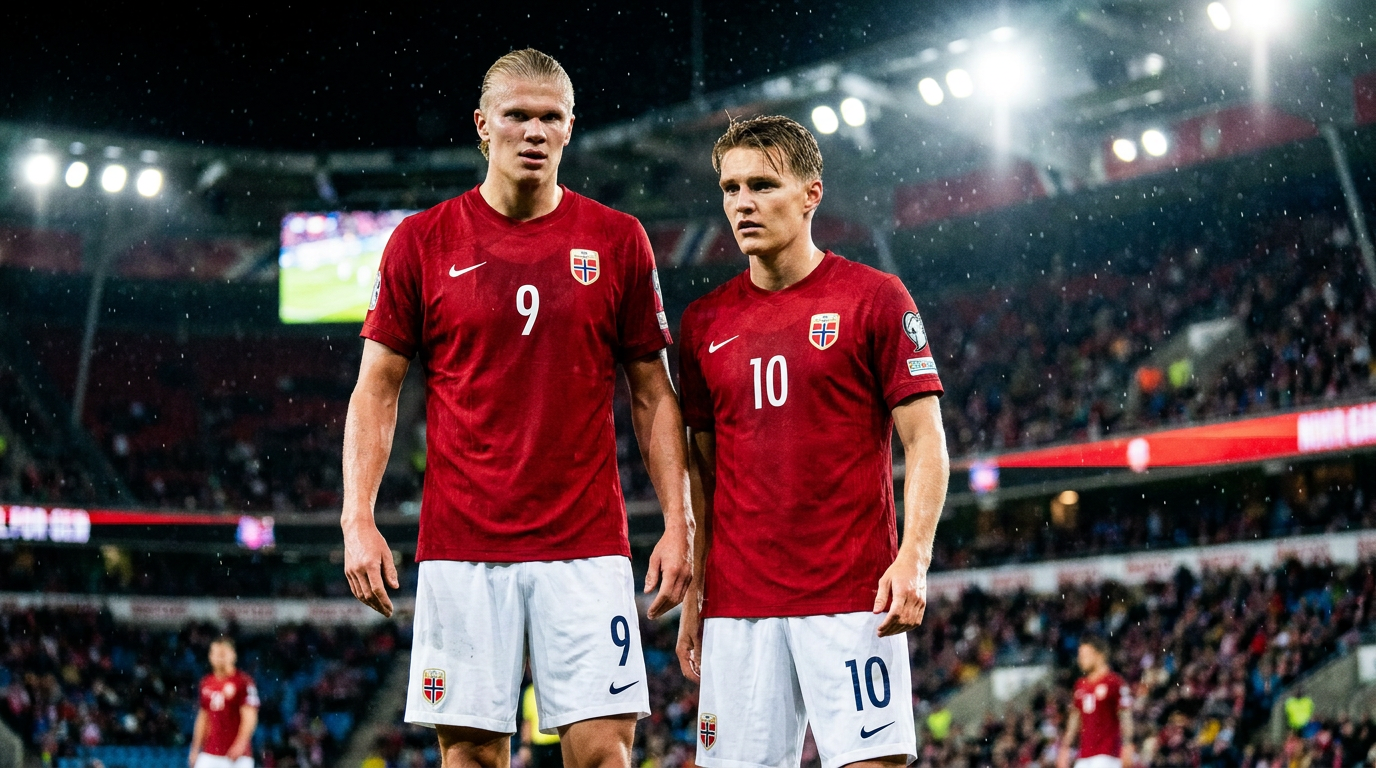
- Norwegian Supporters
- View this tournament as the long-overdue arrival of a golden generation that must capitalize on its elite attacking talent.
- Tactical Analysts
- Focus on Solbakken's asymmetric system and how it masks defensive frailties while maximizing Haaland's output.
- Tournament Realists
- Acknowledge the world-class attack but question whether the team's defensive depth can withstand elite knockout-stage pressure.
What's not represented
- · Grassroots Norwegian Development Coaches
- · Opposing Group I Managers
Why this matters
For years, the world's most lethal striker was sidelined during major international tournaments. Norway's return not only introduces Haaland to the World Cup but showcases an innovative tactical system that proves they are more than just a two-man team, offering a blueprint for smaller nations to maximize elite talent.
Key points
- Norway returns to the FIFA World Cup for the first time since 1998, ending a 28-year absence from the tournament.
- Manager Ståle Solbakken has implemented a fluid, asymmetric 4-3-3 system designed to maximize Erling Haaland's output.
- Martin Ødegaard serves as the creative fulcrum, connecting the midfield to the attack and orchestrating possession.
- The use of Alexander Sørloth as an inverted forward occupies defenders and creates space for Haaland in the right half-spaces.
- Despite a fearsome attack, analysts question whether Norway's defensive depth can withstand elite knockout-stage pressure.
For 28 years, the World Cup proceeded without Norway. Since the days of Egil "Drillo" Olsen and the 1998 tournament in France, a nation of 5.5 million football obsessives has been forced to watch the sport's greatest spectacle from the outside looking in. They endured near-misses, playoff heartbreaks, and the agonizing reality of possessing world-class individual talent without a cohesive national team. But the 2026 FIFA World Cup marks the end of that exile. Led by a generational core, Norway has finally returned to the global stage, carrying the weight of nearly three decades of anticipation and the hopes of a fanbase desperate to see their superstars tested against the world's elite.[1][2]
At the center of this resurgence is Erling Haaland. The Manchester City striker arrives in North America as his country's all-time leading scorer, boasting an astonishing 55 international goals by the age of 25. For years, pundits lamented that the apex predator of world football was missing from the sport's biggest international tournament. Haaland's sheer physical dominance, explosive pace, and ruthless efficiency inside the penalty area make him a unique proposition for any defense. During UEFA qualifying, he netted 16 times, single-handedly dismantling defensive blocks that had historically frustrated Norwegian sides.[2][3]
Yet, the narrative that Norway is merely a two-man show fundamentally misunderstands the tactical machine built by manager Ståle Solbakken. Appointed in December 2020 to replace Lars Lagerbäck, Solbakken inherited a squad with immense potential but a fragile mentality. A highly respected figure who won eight Danish Superliga titles with Copenhagen, Solbakken immediately set about modernizing Norway's approach. He moved away from the rigid, deeply defensive setups of the past, instilling a modern philosophy based on possession control, fluid movement, and highly organized pressing.[6][7]
Solbakken’s tactical blueprint typically starts as a 4-3-3 on paper, but it operates with distinct asymmetry to maximize the specific personnel at his disposal. The system is designed not just to feed Haaland, but to stretch opponents in unconventional ways, tilting the pitch to create isolated matchups. This is not a team built on old-fashioned, chalk-on-the-boots wingers crossing blindly into the box; it is a meticulously calibrated attacking structure that uses physical decoys and inverted runs to shatter defensive lines.[4][5]

If Haaland is the ruthless finisher, Martin Ødegaard is the undisputed conductor. The Arsenal captain operates as the creative fulcrum, connecting the midfield engine room to the attacking third. At the international level, Ødegaard strips away any lingering inconsistency, dictating the tempo and seeing passing lanes fractions of a second before anyone else on the pitch. During the qualifying campaign, he led Europe in big chances created, providing seven assists in just five appearances during a stretch disrupted by minor injuries. Every attacking sequence flows through his left foot.[3][4]
The most fascinating tactical wrinkle in Solbakken's system is the deployment of Alexander Sørloth. The towering Atlético Madrid forward often starts on the right flank but plays nothing like a traditional winger. In possession, Norway frequently transitions into a flat 4-4-2, with Sørloth drifting inside to operate as a second center-forward. This movement serves a dual purpose: it provides a massive target man to hold up play and, crucially, it occupies central defenders, allowing Haaland the freedom to exploit his favored right half-spaces with explosive runs from deep.[4][5]
Sørloth's inverted movement also clears the runway for Julian Ryerson. The Borussia Dortmund full-back is given license to surge forward, effectively operating as a wing-back in the attacking phase. Ryerson’s final-ball quality is elite—he registered 18 Bundesliga assists in the 2025-26 season—and his cut-backs to a crowded penalty area featuring both Haaland and Sørloth create a constant, overwhelming physical threat. Furthermore, Ryerson's dead-ball delivery turns wide restarts and corners into highly dangerous attacking platforms that opponents struggle to defend.[4]
Sørloth's inverted movement also clears the runway for Julian Ryerson.
On the opposite flank, Norway possesses a completely different profile in Antonio Nusa. The 21-year-old RB Leipzig winger brings raw pace, flair, and an elite dribbling ability that gives the attack vital unpredictability. Averaging over five successful dribbles per 90 minutes during qualifying, Nusa consistently beats his man, forcing opponents to commit double-teams. This isolation on the left wing naturally stretches the opposing defense, creating the very gaps in the center that Ødegaard and Haaland are primed to exploit.[3][5]

To balance this heavy attacking investment, Solbakken relies on a robust, physical midfield pivot. Sander Berge, the imposing Fulham midfielder, serves as the defensive anchor. Berge dominates aerial duels, recycles possession, and protects the backline during defensive transitions. He is often partnered with Patrick Berg, the composed Bodø/Glimt captain who brings tireless work rate and tactical discipline. Together, they provide the solid foundation that grants Ødegaard the complete freedom to roam and orchestrate in the final third without neglecting defensive duties.[3][5]
Despite their fearsome attacking metrics, Norway is not without vulnerabilities. The defensive unit lacks the elite depth found in their midfield and forward lines. Relying on veterans like Sevilla goalkeeper Ørjan Nyland and center-backs Leo Østigård and Kristoffer Ajer, the backline has historically struggled against quick, transition-based attacks. Solbakken’s aggressive pressing system requires a high defensive line, leaving space in behind that elite international opponents can punish if the midfield press is bypassed or broken with a single pass.[2][5]
The true test of this tactical evolution came during the UEFA Group I qualification campaign. Norway did not just scrape through; they dominated. Finishing top of their group, they secured their ticket to North America with a flawless record of eight wins in eight matches, scoring 37 goals in the process. The crowning achievement was a ruthless 4-1 dismantling of Italy at the San Siro, a statement victory that proved Solbakken's men could execute their complex game plan against traditional European heavyweights in hostile environments.[2][7]

Beyond tactics, Solbakken has masterfully managed the psychological burden placed on his stars. Haaland and Ødegaard carry the immense expectations of a nation that has been starved of international success, a suffocating pressure that has historically crushed previous golden generations in other countries. The manager has deliberately fostered a relaxed, insulated camp environment, emphasizing collective responsibility and ensuring that the supporting cast—players like Oscar Bobb and Morten Thorsby—feel equally vital to the project, preventing the squad from fracturing into superstars and subordinates.[1][8]
Drawn into a highly competitive World Cup group alongside France, Senegal, and Iraq, Norway faces a steep learning curve in tournament football. While France remains the overwhelming favorite to top the group, Norway's tactical setup is uniquely designed to cause problems for possession-dominant teams. Their ability to absorb pressure and launch devastating counter-attacks through Ødegaard's vision and Haaland's pace makes them a nightmare matchup in a knockout scenario, where a single moment of brilliance can decide a match.[3][5]

The ceiling for this Norwegian side is a subject of intense debate among analysts. A quarter-final appearance is widely considered the absolute maximum for a squad with defensive question marks, but their attacking firepower means no manager in the tournament will want to face them. In a 48-team World Cup era where margins are razor-thin, the presence of a singular, transcendent goalscorer can often mask systemic flaws and turn tight matches on their head when the stakes are highest.[2][3]
Regardless of how deep they run in North America, this tournament represents a monumental milestone for Norwegian football. The 28-year wait is over. Ståle Solbakken has built a modern, tactically sophisticated side that is far more than a mere vehicle for Erling Haaland. They have arrived at the World Cup not just to participate, but to leave a lasting mark, proving that a small nation with a golden generation can engineer a system capable of challenging the established global order.[6][8]
How we got here
1998
Norway makes its last World Cup appearance in France under manager Egil Olsen.
Dec 2020
Ståle Solbakken is appointed manager of the national team, tasked with modernizing their tactical approach.
2025
Norway dominates UEFA Group I, scoring 37 goals in eight matches to secure World Cup qualification.
June 2026
Erling Haaland and Martin Ødegaard lead Norway onto the pitch in North America, ending a 28-year drought.
Viewpoints in depth
The Tactical Purists
Fascination with how Solbakken balances a top-heavy squad.
Tactical analysts view Norway as a fascinating case study in asymmetric football. Rather than forcing Alexander Sørloth to the bench, Solbakken's decision to deploy him as a wide target man who drifts centrally solves multiple problems at once. It provides an aerial outlet, occupies center-backs, and creates the exact pockets of space Erling Haaland needs to accelerate. This camp argues that Solbakken's system is one of the most innovative approaches to maximizing a superstar at the international level.
The Defensive Skeptics
Concerns over Norway's ability to stop elite attacking nations.
While the attacking metrics are undeniable, defensive realists point to Norway's lack of depth across the backline. Relying on a midfield pivot of Sander Berge and Patrick Berg provides some protection, but the high line required for Solbakken's pressing system leaves them vulnerable to rapid counter-attacks. This perspective warns that against tier-one nations like France, Norway's transition defense could be ruthlessly exposed, putting a hard ceiling on their tournament run.
What we don't know
- How Norway's relatively untested defensive line will hold up against top-tier transition attacks in a knockout scenario.
- Whether the squad's lack of recent major tournament experience will affect their composure in high-stakes moments.
Key terms
- Asymmetric Formation
- A tactical setup where the left and right sides of the team operate with different roles and positioning, rather than mirroring each other.
- Half-Spaces
- The vertical channels on a football pitch between the wing and the center, often exploited by attacking players to avoid central congestion.
- Inverted Winger
- A wide player who cuts inside toward the center of the pitch rather than staying near the touchline to cross the ball.
- Double Pivot
- Two defensive midfielders playing side-by-side to protect the defense and distribute the ball.
Frequently asked
When was the last time Norway played in a World Cup?
Norway's last appearance at a FIFA World Cup was in 1998 in France, marking a 28-year absence before the 2026 tournament.
Who is the manager of the Norway national team?
Ståle Solbakken, a former Norwegian international and successful club manager, took charge of the national team in December 2020.
How does Norway's tactical system support Erling Haaland?
Norway uses a fluid 4-3-3 that often shifts into a 4-4-2 in possession, utilizing Alexander Sørloth to occupy defenders and Martin Ødegaard to provide elite playmaking, freeing Haaland to attack the half-spaces.
Sources
Source coverage
8 outlets
3 viewpoints surfaced








[1]FourFourTwoNorwegian Supporters
Norway World Cup 2026 squad: Stale Solbakken's final 26-man selection
Read on FourFourTwo →[2]OneFootballNorwegian Supporters
Norway Football Team 2026 World Cup Preview: Can Haaland And Ødegaard Deliver?
Read on OneFootball →[3]Mundial AnalyticsTactical Analysts
Norway World Cup 2026 Team Analysis: Tactics, Key Players and Predictions
Read on Mundial Analytics →[4]PitchGistTactical Analysts
Norway's Unique Strategy for Haaland Ahead of World Cup
Read on PitchGist →[5]PlayMakersTactical Analysts
Norway 2026 World Cup Tactical Analysis
Read on PlayMakers →[6]FWC TimesTournament Realists
Stale Solbakken Norway coach profile quick answer
Read on FWC Times →[7]WikipediaTournament Realists
Ståle Solbakken
Read on Wikipedia →[8]Factlen Editorial TeamTactical Analysts
Synthesis by Factlen editorial team
Read on Factlen Editorial Team →
More in sports
See all 20 stories →Standings
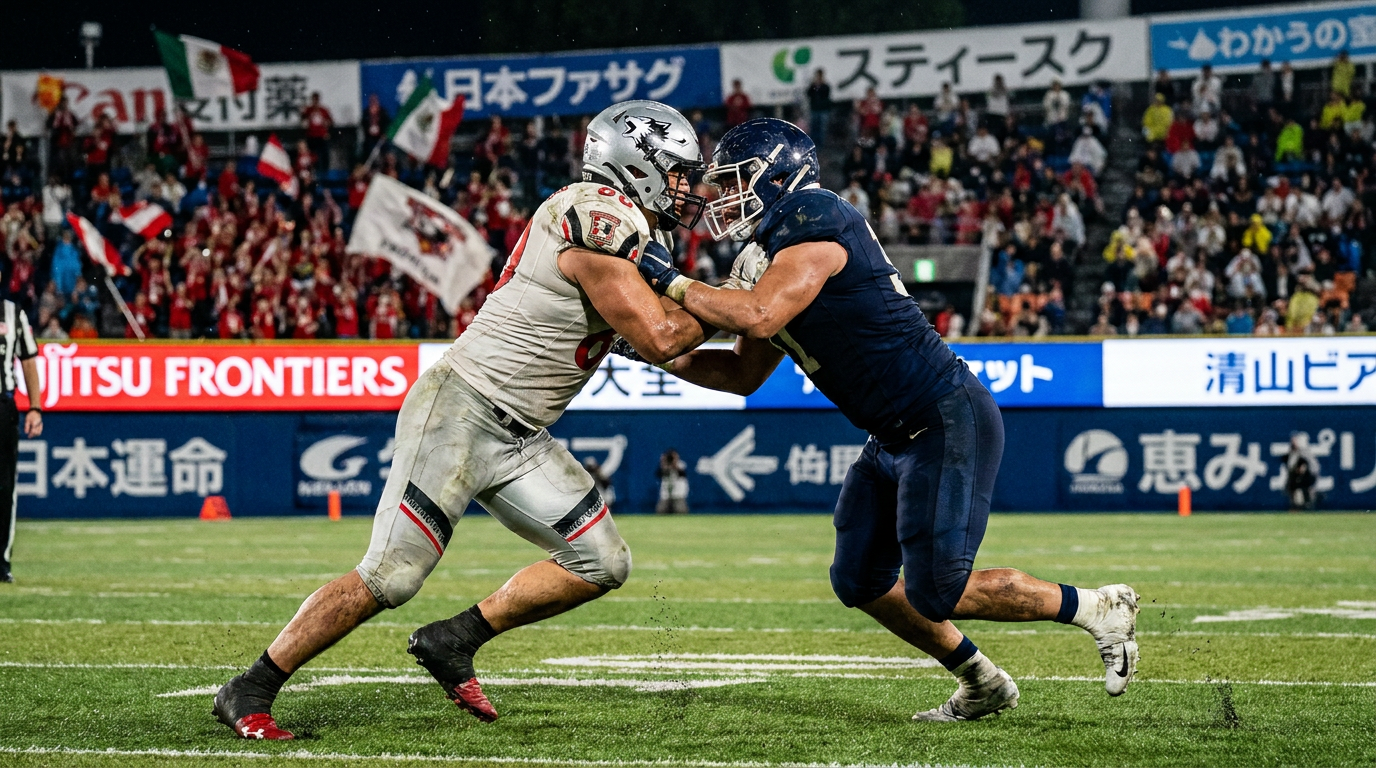
Japan's X-League Premier Standings Tighten as New Year-Round Format Shakes Up the Gridiron
6 sources
Injury
Global Ice Hockey Injury Report: Demko Returns to Ice, Poulin Set for Surgery Following Heroic Run
6 sources
Standings
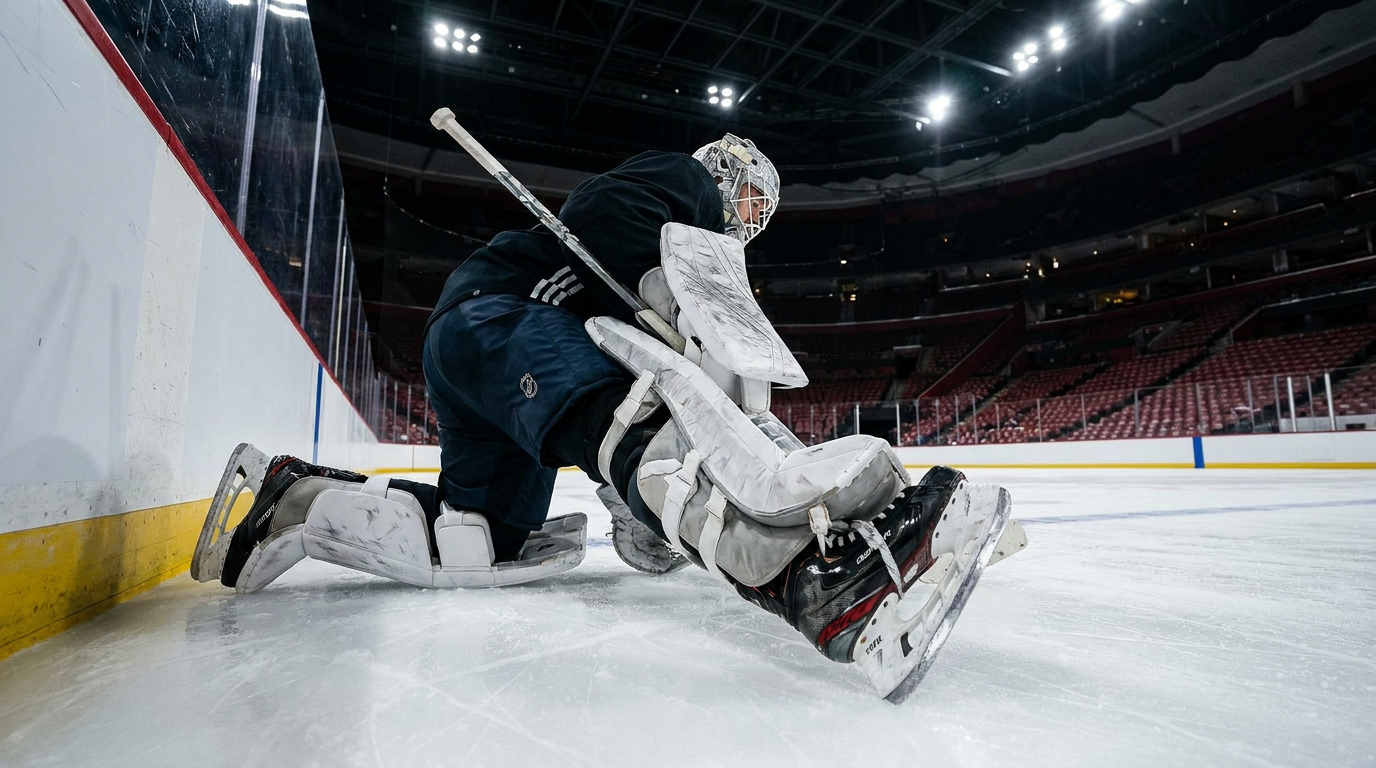
3ICE Standings Race Tightens as Summer Hockey Prepares for Inaugural World Cup
6 sources
Injury
Progress on the Diamond: Bieber, Rutschman, and Bregman Clear Major Rehab Hurdles
8 sources
Every angle. Every day.
Get sports stories with full source coverage and perspective breakdowns delivered to your inbox.