
Supreme Court Clears Way for Revival of 'Metering' Policy Limiting Asylum Seekers
In a 6-3 decision, the Supreme Court ruled that border officials can limit the daily number of asylum seekers processed at ports of entry, reviving a controversial practice known as 'metering.'
By Factlen Editorial Team
- Border Enforcement Advocates
- Argue that metering is a necessary logistical tool to prevent U.S. border facilities from becoming dangerously overcrowded.
- Asylum & Human Rights Advocates
- Contend that metering illegally circumvents asylum laws by preventing migrants from reaching U.S. soil to make their claims.
- Legal & Constitutional Analysts
- Focus on the ruling's expansion of executive branch authority over immigration and the narrowing of judicial oversight.
What's not represented
- · Mexican border city mayors
- · Frontline CBP processing agents
Why this matters
This ruling fundamentally alters the U.S. asylum process by allowing border agents to physically turn away migrants before they can legally claim asylum on U.S. soil. It effectively shifts the bottleneck of the immigration system to the Mexican side of the border, impacting thousands of waiting migrants and reshaping border enforcement strategy.
Key points
- The Supreme Court ruled 6-3 to allow the revival of border 'metering.'
- The policy allows CBP to cap the daily number of asylum seekers processed at ports of entry.
- The conservative majority cited the executive branch's broad discretion to manage facility capacity.
- Liberal dissenting justices argued the policy illegally prevents migrants from exercising their right to claim asylum.
The Supreme Court ruled 6-3 on Thursday to allow the federal government to reinstate "metering," a border enforcement policy that caps the daily number of undocumented migrants permitted to request asylum at U.S. ports of entry. The decision marks a significant victory for the administration's border management strategy and a major defeat for immigration advocates.[2][3][5]
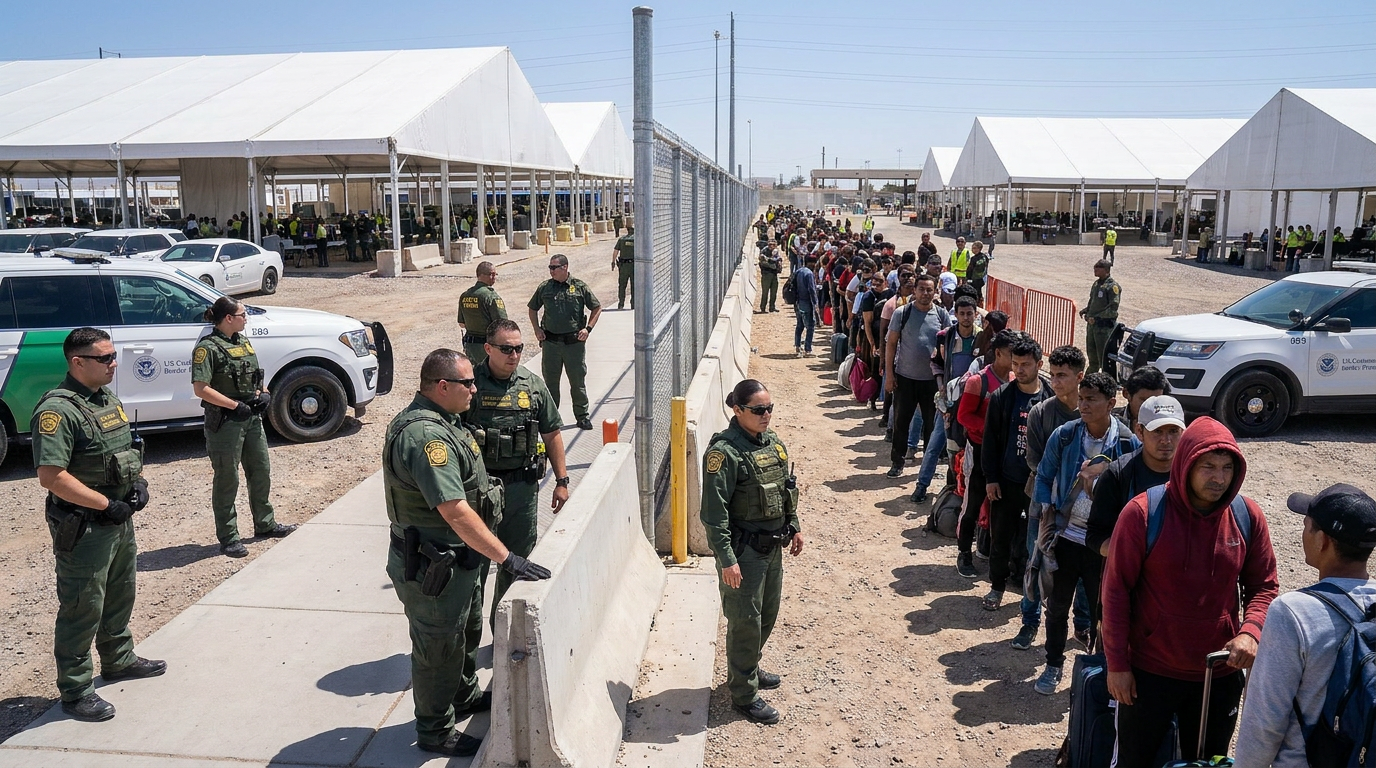
The ruling overturns a nationwide injunction that had previously blocked the practice. Under metering, Customs and Border Protection (CBP) officers can station themselves at the international boundary line and physically turn back asylum seekers when processing facilities are deemed to be at full capacity.[4][6]
Writing for the conservative majority, the Court argued that the executive branch possesses broad statutory discretion to manage border facility capacity. The majority opinion concluded that the Immigration and Nationality Act does not mandate the immediate processing of every individual who approaches the border, particularly when doing so would overwhelm physical infrastructure and personnel.[5][6]
In a sharp dissent, the three liberal justices argued the decision "circumvents" established U.S. and international law. They wrote that the ruling allows agents to effectively deny the statutory right to seek asylum by preventing migrants from ever setting foot on U.S. soil to initiate a legal claim.[1][4]

The practice of metering first gained prominence during the Obama administration to handle surges of Haitian migrants, but it was institutionalized and expanded significantly during the first Trump administration. Lower courts had previously ruled that turning away asylum seekers before they could be processed violated their due process rights and statutory protections.[3][4]
Lower courts had previously ruled that turning away asylum seekers before they could be processed violated their due process rights and statutory protections.
Border enforcement advocates and the current administration praised the ruling as a necessary tool to prevent the overwhelming of port infrastructure. They argue that without the ability to meter, CBP facilities quickly become dangerously overcrowded, creating severe humanitarian and security crises inside the United States.[2][5]
Conversely, human rights organizations warn the decision will exacerbate a humanitarian disaster in northern Mexico. Migrants turned away at the border are often forced into makeshift encampments in dangerous border cities, where they become highly vulnerable targets for cartels, extortion, and kidnapping.[1][4]

The immediate practical effect of the ruling is expected to be a sharp reduction in daily asylum processing at major crossings like San Ysidro in California and El Paso in Texas. CBP has indicated it will begin implementing capacity-based limits as early as next week, coordinating with Mexican authorities to manage the anticipated buildup of waiting migrants.[3][5]
Legal experts note the ruling also sets a broader precedent regarding executive power over immigration. By deferring to the administration's assessment of "operational capacity," the Court has significantly narrowed the avenues for judicial review of day-to-day border management decisions, making it harder for advocates to challenge future border restrictions.[4][6]
How we got here
2016
The Obama administration begins using metering to manage a surge of Haitian migrants at the southern border.
2018
The Trump administration institutionalizes and expands metering as a formal, border-wide policy.
2021
A federal judge blocks the use of metering, ruling it violates the due process rights of asylum seekers.
June 2026
The Supreme Court overturns lower court injunctions, clearing the way for the policy's revival.
Viewpoints in depth
Border Enforcement Advocates
Argue that metering is a necessary logistical tool to prevent U.S. border facilities from becoming dangerously overcrowded.
Supporters of the ruling emphasize the physical and logistical limitations of U.S. border infrastructure. They argue that without the ability to meter, Customs and Border Protection facilities quickly exceed their holding capacity, leading to unsafe conditions for both migrants and agents. From this perspective, metering is not a denial of asylum, but a necessary queueing system that ensures orderly processing and prevents the system from collapsing under sudden surges in migration.
Asylum & Human Rights Advocates
Contend that metering illegally circumvents asylum laws by preventing migrants from reaching U.S. soil to make their claims.
Human rights organizations and immigration lawyers view metering as a violation of both U.S. statute and international treaty obligations, which guarantee the right to seek asylum to anyone arriving at the border. They argue that by physically blocking migrants at the international boundary line, the government is artificially preventing them from triggering their legal rights. Furthermore, advocates highlight the severe human cost, noting that bottlenecked migrants are forced to wait in dangerous Mexican border towns where they are frequently targeted for kidnapping, extortion, and assault by cartels.
Legal & Constitutional Analysts
Focus on the ruling's expansion of executive branch authority over immigration and the narrowing of judicial oversight.
Legal scholars note that the 6-3 decision continues a trend of the Supreme Court deferring heavily to the executive branch on matters of border security and immigration enforcement. By accepting the administration's argument that 'operational capacity' justifies turning away asylum seekers, the Court has established a precedent that makes it exceedingly difficult for lower courts to second-guess the day-to-day management decisions of border agencies. This shift limits the ability of advocates to use the judicial system to mandate the processing of migrants.
What we don't know
- Exactly how many asylum seekers CBP will process daily under the revived policy.
- How the Mexican government will respond to the anticipated buildup of migrants in its northern border cities.
- Whether the policy will deter migrants from traveling to the border or simply increase the number of illegal crossings between ports of entry.
Key terms
- Metering
- A border management practice of strictly limiting the daily number of asylum seekers processed at ports of entry based on facility capacity.
- Port of Entry
- An officially designated location where individuals may legally enter the United States and where Customs and Border Protection officers conduct inspections.
- Immigration and Nationality Act (INA)
- The foundational body of law governing current U.S. immigration policy, which includes provisions detailing how and when individuals can claim asylum.
Frequently asked
What exactly is border 'metering'?
Metering is a policy where U.S. border officials limit the number of undocumented individuals allowed to approach a port of entry to claim asylum each day, based on the processing capacity of the facility.
Does this ruling eliminate the right to seek asylum?
No. The ruling does not change the legal right to seek asylum, but it allows the government to delay when a person can initiate that claim by making them wait outside the U.S. until capacity is available.
Where do migrants wait while being metered?
Migrants turned away under metering policies typically wait in Mexican border cities, often in shelters or makeshift encampments, until U.S. officials call their number or allow them to cross.
Sources
Source coverage
6 outlets
3 viewpoints surfaced






[1]Al JazeeraAsylum & Human Rights Advocates
US Supreme Court paves way for government to block asylum seekers at border
Read on Al Jazeera →[2]Fox NewsBorder Enforcement Advocates
Supreme Court upholds border metering policy, handing administration major immigration win
Read on Fox News →[3]ReutersLegal & Constitutional Analysts
U.S. Supreme Court allows revival of border 'metering' for asylum seekers
Read on Reuters →[4]The New York TimesAsylum & Human Rights Advocates
Supreme Court Ruling Allows Border Agents to Turn Away Asylum Seekers When Facilities Are Full
Read on The New York Times →[5]CNNLegal & Constitutional Analysts
Divided Supreme Court clears path for border 'metering' policy
Read on CNN →[6]SCOTUSblogLegal & Constitutional Analysts
Court lifts injunction on border metering policy in 6-3 decision
Read on SCOTUSblog →
More in news politics
See all 5 stories →Immigration Law
Fact-Checking the Supreme Court's TPS Ruling: Claims vs. Legal Reality
6 sources
Middle East Security
Egypt, Saudi Arabia, Turkey, and Pakistan Launch 'R-4 Group' to Coordinate Middle East Policy
8 sources

DHS Funding
Senate Advances $70 Billion DHS Funding Bill Despite Intra-Party Revolt Over Immigration 'Slush Fund'
7 sources
Every angle. Every day.
Get news politics stories with full source coverage and perspective breakdowns delivered to your inbox.