
The Tactical Laboratory: How the FIFA World Cup Shaped Modern Football
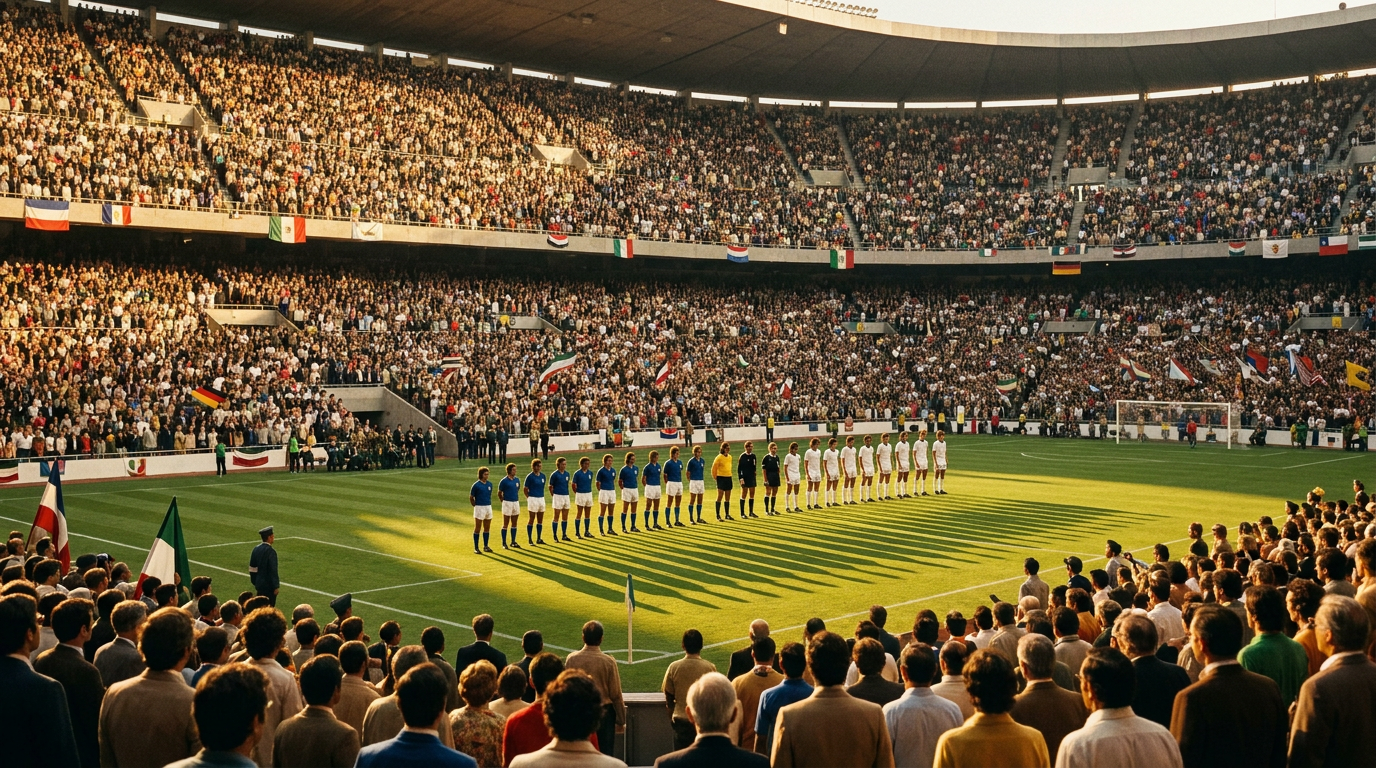
For nearly a century, the FIFA World Cup has served as the ultimate proving ground for tactical innovation, transforming how the global game is played.
By Factlen Editorial Team
- System Purists
- Argue that the World Cup is won by visionary managers who implement rigorous, cohesive tactical frameworks that elevate the entire squad.
- Individualist Advocates
- Believe that while tactics matter, World Cups are ultimately decided by generational talents who transcend systemic constraints.
- Pragmatists
- Focus on adaptability and defensive solidity, arguing that tournament football rewards teams that neutralize opponents rather than purely entertaining.
What's not represented
- · Grassroots coaches who adapt these elite systems for amateur play
- · Players whose careers were hindered by rigid tactical frameworks
Why this matters
Understanding the tactical history of the World Cup enriches the viewing experience, revealing how today's complex formations were forged in the crucible of past tournaments. It highlights how the sport continually reinvents itself through cultural exchange and strategic genius.
Key points
- The World Cup acts as football's ultimate tactical laboratory, forcing rapid innovation due to the limited training time of national teams.
- Early tournaments were defined by the shift from top-heavy attacking formations to balanced systems like Italy's 1934 'Metodo'.
- Brazil's 4-2-4 in 1958 and the Netherlands' 'Total Football' in 1974 proved that structural innovation could perfectly amplify technical brilliance.
- Modern World Cups reward extreme tactical fluidity, as seen in Argentina's chameleon-like adaptability during their 2022 triumph.
The FIFA World Cup is often celebrated for its raw emotion, national pride, and iconic individual performances, but its most enduring legacy lies in its role as a global tactical laboratory. Every four years, the tournament serves as a summit where the prevailing orthodoxies of football are tested, shattered, and rewritten. Because national teams have limited training time compared to club sides, the tactical systems that succeed on this stage must be both robustly effective and easily assimilated by players from diverse domestic leagues. This unique constraint has historically sparked rapid, paradigm-shifting innovations.[1][5]
In the tournament's infancy during the 1930s, the global standard was the 2-3-5 'Pyramid' formation, a top-heavy system that prioritized sheer numbers in attack. However, the World Cup quickly exposed the defensive frailties of this approach. Vittorio Pozzo, the legendary manager of the Italian national team, recognized that the center of the pitch was being overrun. He pulled two forwards deeper into the midfield, creating the 'Metodo' or 2-3-2-3 formation. This subtle shift provided defensive solidity and rapid counter-attacking potential, propelling Italy to back-to-back World Cup victories in 1934 and 1938.[2][3]
Following the hiatus of the Second World War, the tactical landscape fractured. While the English clung to the rigid W-M formation (3-2-2-3), Central Europe began experimenting with fluidity. The defining shock to the system arrived in 1954 via Hungary's 'Magical Magyars.' By deploying Nándor Hidegkuti as a deep-lying center forward—a precursor to the modern 'false nine'—Hungary dragged opposing center-backs out of position, creating massive gaps for inside forwards to exploit. Though Hungary tragically lost the 1954 final to West Germany, their tactical blueprint rendered the rigid marking systems of the era obsolete.[3][6]
The response to Hungary's fluidity came from South America. In 1958, Brazil arrived in Sweden wielding a revolutionary 4-2-4 formation. Devised by Vicente Feola, this system utilized a flat back four for the first time on the global stage, relying on zonal marking rather than man-to-man tracking. The formation demanded extraordinary athleticism from its two central midfielders, but it unleashed devastating attacking width. It was the perfect framework to accommodate the generational talents of a 17-year-old Pelé and the mercurial winger Garrincha, resulting in Brazil's first world title.[2][5]

By 1970, the 4-2-4 had evolved. Opponents had learned to pack the midfield, making a two-man center vulnerable. Brazil's manager, Mário Zagallo, adapted by dropping one of his forwards, creating an asymmetrical 4-3-3. This legendary 1970 squad—featuring five natural 'number 10s' in Pelé, Tostão, Rivelino, Gerson, and Jairzinho—played with a rhythmic, devastating fluidity. They demonstrated that tactical structure did not have to stifle individual brilliance; rather, the right framework could amplify technical superiority to an unstoppable degree.[3][6]
If Brazil in 1970 represented the apex of individual expression within a structure, the 1974 World Cup introduced a system where the structure itself was the star. Rinus Michels and his on-pitch conductor, Johan Cruyff, unveiled 'Total Football' with the Netherlands. This philosophy demanded that any outfield player could seamlessly take over the role of any other player. Defenders attacked, attackers defended, and the team moved as a cohesive, pulsating organism, utilizing an aggressive offside trap to compress the playing area.[1][4]
Ironically, the brilliance of Total Football was thwarted in the 1974 final by a different kind of tactical innovation. West Germany, managed by Helmut Schön, relied on the pioneering role of Franz Beckenbauer as a 'libero' or sweeper. Beckenbauer operated behind the defensive line, reading the game flawlessly and stepping into midfield to launch attacks. The German victory proved that pragmatic, intelligent defensive organization could neutralize even the most dazzling attacking systems, setting the stage for a more defensive era in the 1980s.[2][5]
Ironically, the brilliance of Total Football was thwarted in the 1974 final by a different kind of tactical innovation.
The tactical pendulum swung heavily toward pragmatism in 1982. Italy's manager, Enzo Bearzot, deployed the 'Zona Mista' (mixed zone), a hybrid system that combined the man-marking tenacity of Catenaccio with the spatial awareness of zonal defense. This system was designed to absorb pressure and strike with lethal efficiency on the counter-attack. Italy's triumph in Spain validated the idea that tournaments could be won by neutralizing the opponent's strengths rather than simply imposing one's own.[3][4]
The ultimate synthesis of defensive pragmatism and individual genius occurred in 1986. Argentina's manager, Carlos Bilardo, recognized that he possessed the world's greatest player in Diego Maradona, but lacked a dominant supporting cast. Bilardo invented the 3-5-2 formation specifically to liberate Maradona. By deploying three center-backs and two hard-working wing-backs, Bilardo created an impenetrable defensive foundation, allowing Maradona absolute freedom to roam and dictate the attack without defensive responsibilities. It remains the most successful bespoke tactical system in World Cup history.[3][6]

As the 20th century closed, the physical demands of the game increased exponentially. The 1998 World Cup saw the rise of the robust midfield pivot, epitomized by France's pairing of Didier Deschamps and Emmanuel Petit. Operating in a 4-2-3-1 or 4-3-2-1, this physical shield protected the defense while providing a platform for Zinedine Zidane to orchestrate. The era of the luxury playmaker was ending; modern systems demanded that every player, save perhaps a lone striker, contribute heavily to the defensive phase.[4][5]
The next great revolution arrived in 2010, courtesy of Spain and their 'Tiki-Taka' philosophy. Rooted in the academies of Barcelona, Vicente del Bosque's system utilized relentless, short-passing possession not just as an attacking weapon, but as a defensive tool. By hoarding the ball for 65 to 70 percent of the match, Spain starved their opponents of oxygen. Midfielders like Xavi, Andrés Iniesta, and Sergio Busquets proved that extreme technical proficiency and spatial awareness could overcome physical disadvantages on the grandest stage.[2][6]
Spain's dominance forced the rest of the world to adapt, leading to the high-intensity transition football that defined the 2014 World Cup. Germany, influenced by the domestic rise of 'Gegenpressing' (counter-pressing), built a team that hunted the ball in packs the moment possession was lost. Rather than retreating into a defensive shape, Joachim Löw's side sought to win the ball high up the pitch, exploiting the disorganized state of the opponent's defense. This proactive, athletic approach culminated in their historic 7-1 dismantling of Brazil.[3][4]

In the modern era, tactical rigidity has given way to extreme fluidity. Argentina's triumph in 2022 under Lionel Scaloni showcased a 'chameleon' system. Rather than imposing a single philosophy, Scaloni altered his formation match by match—and sometimes minute by minute—shifting seamlessly between a 4-4-2, a 4-3-3, and a 5-3-2 depending on the opponent. This adaptability, combined with a collective willingness to run relentlessly to compensate for a 35-year-old Lionel Messi, represented the pinnacle of modern tournament management.[5][6]
As the World Cup prepares for its expanded 48-team era in 2026, the tactical landscape is primed for another seismic shift. The inclusion of more nations from diverse footballing cultures will inevitably introduce new stylistic clashes. Teams from emerging confederations often bring unorthodox pressing triggers and unique transitional structures that can disrupt the established European and South American hegemonies. The expanded group stages will test squad depth and tactical flexibility like never before.[1][2]
Ultimately, the history of the FIFA World Cup is the history of football's intellectual evolution. It is a continuous cycle of innovation, imitation, and counter-innovation. From Pozzo's Metodo to Scaloni's fluid adaptability, the tournament remains the ultimate crucible. It proves that while raw talent is essential, true immortality on the global stage is reserved for those who can solve the tactical puzzle of their era.[1][3]
How we got here
1934
Italy wins the World Cup utilizing Vittorio Pozzo's 'Metodo' (2-3-2-3), proving the value of midfield solidity.
1954
Hungary's 'Magical Magyars' revolutionize attacking play with a deep-lying center forward, despite losing the final.
1958
Brazil introduces the 4-2-4 formation, utilizing a flat back four and zonal marking to win their first title.
1974
The Netherlands unveil 'Total Football', a system of extreme positional fluidity that changes the sport forever.
1986
Argentina invents the 3-5-2 formation specifically to provide defensive cover while liberating Diego Maradona.
2010
Spain dominates the tournament with 'Tiki-Taka', using relentless possession as both an attacking and defensive tool.
Viewpoints in depth
System Purists
This camp argues that the evolution of football is driven entirely by visionary coaching and structural innovation.
System purists look at the history of the World Cup and see a chessboard. To them, the triumphs of teams like the 1974 Netherlands (despite their final loss) or the 2010 Spanish side are the ultimate vindication of philosophy over raw athleticism. They argue that a well-drilled system, such as Rinus Michels' Total Football or Pep Guardiola's indirect influence on Vicente del Bosque's Tiki-Taka, elevates average players and makes elite players unstoppable. In this view, the manager is the true architect of World Cup glory, and the players are the specialized instruments executing a grand design.
Individualist Advocates
This perspective contends that tactical systems are secondary to the transcendent brilliance of generational players.
Advocates for the individualist view argue that tactics are merely a framework to get the ball to the best players. They point to 1986, where Carlos Bilardo's 3-5-2 was entirely subservient to the genius of Diego Maradona, or 1958, where the 4-2-4 simply provided the canvas for a 17-year-old Pelé. From this viewpoint, tactical revolutions are often just post-hoc explanations for what happens when a team happens to possess a once-in-a-lifetime talent. They argue that no system can account for the improvisational magic that ultimately breaks deadlocks in World Cup finals.
Pragmatists
This camp believes tournament football is fundamentally different from league football, rewarding defensive solidity and adaptability above all else.
Pragmatists view the World Cup through the lens of risk management. Because knockout football is unforgiving, they argue that the most successful historical teams are those that prioritize not losing over winning beautifully. They champion teams like Enzo Bearzot's 1982 Italy, Didier Deschamps' 1998 and 2018 France squads, and Lionel Scaloni's 2022 Argentina. These teams did not impose a rigid, aesthetic philosophy; instead, they adapted to their opponents, absorbed pressure, and struck ruthlessly in transition. For the pragmatist, the greatest tactical innovation is the ability to change your tactics based on the enemy in front of you.
What we don't know
- How the expanded 48-team format in 2026 will alter the tactical approaches of elite nations facing lower-ranked opponents in the group stage.
- Whether the physical limits of extreme high-pressing systems have been reached, or if sports science will enable even more intense tactical frameworks.
Key terms
- Libero
- A 'sweeper' defender who operates behind the main defensive line, free from man-marking duties, allowing them to read the game and initiate attacks from deep.
- Gegenpressing
- A tactical philosophy where a team immediately attempts to win back possession high up the pitch the moment they lose the ball, rather than retreating into a defensive shape.
- Tiki-Taka
- A style of play characterized by short passing and movement, working the ball through various channels, and maintaining possession to dictate the tempo of the game.
- Zona Mista
- A hybrid defensive system used heavily by Italy in the 1980s that combined elements of strict man-to-man marking with modern zonal spatial awareness.
Frequently asked
Who invented the 4-4-2 formation?
While its exact origins are debated, the 4-4-2 evolved from the 4-2-4 in the 1960s. England's Alf Ramsey famously utilized a 'wingless wonder' variant (essentially a narrow 4-4-2 or 4-3-3) to win the 1966 World Cup.
Why did Total Football fail to win the 1974 World Cup?
Despite their revolutionary style, the Netherlands lost the 1974 final to West Germany. The Germans utilized a highly disciplined man-marking system and the pioneering 'libero' role of Franz Beckenbauer to neutralize the Dutch fluidity.
How did the offside rule change tactics?
Changes to the offside rule, particularly the 1990 amendment stating an attacker is onside if level with the second-to-last defender, forced teams to abandon deep, static defensive lines in favor of higher, more coordinated pressing systems.
What is a 'false nine'?
A false nine is a center forward who frequently drops deep into the midfield. This drags opposing center-backs out of position, creating space for wingers or attacking midfielders to exploit, a tactic famously pioneered by Hungary's Nándor Hidegkuti in the 1950s.
Sources
Source coverage
6 outlets
3 viewpoints surfaced






[1]Factlen Editorial TeamPragmatists
Synthesis by Factlen editorial team
Read on Factlen Editorial Team →[2]FIFA Official ArchivesPragmatists
The Evolution of the FIFA World Cup: A Historical Retrospective
Read on FIFA Official Archives →[3]Cambridge Sports History ArchiveSystem Purists
Inverting the Pyramid: A Century of Football Tactics
Read on Cambridge Sports History Archive →[4]UEFA Technical ReportsSystem Purists
Historical Analysis of European Success at the World Cup
Read on UEFA Technical Reports →[5]ESPNIndividualist Advocates
How the World Cup became football's ultimate tactical chessboard
Read on ESPN →[6]The AthleticPragmatists
From the W-M to Tiki-Taka: The formations that won the World Cup
Read on The Athletic →
More in sports
See all 21 stories →Injury
Buffalo Bills Minicamp Injury Report: Josh Allen and Ed Oliver Return to Field as Training Camp Looms
8 sources

Standings
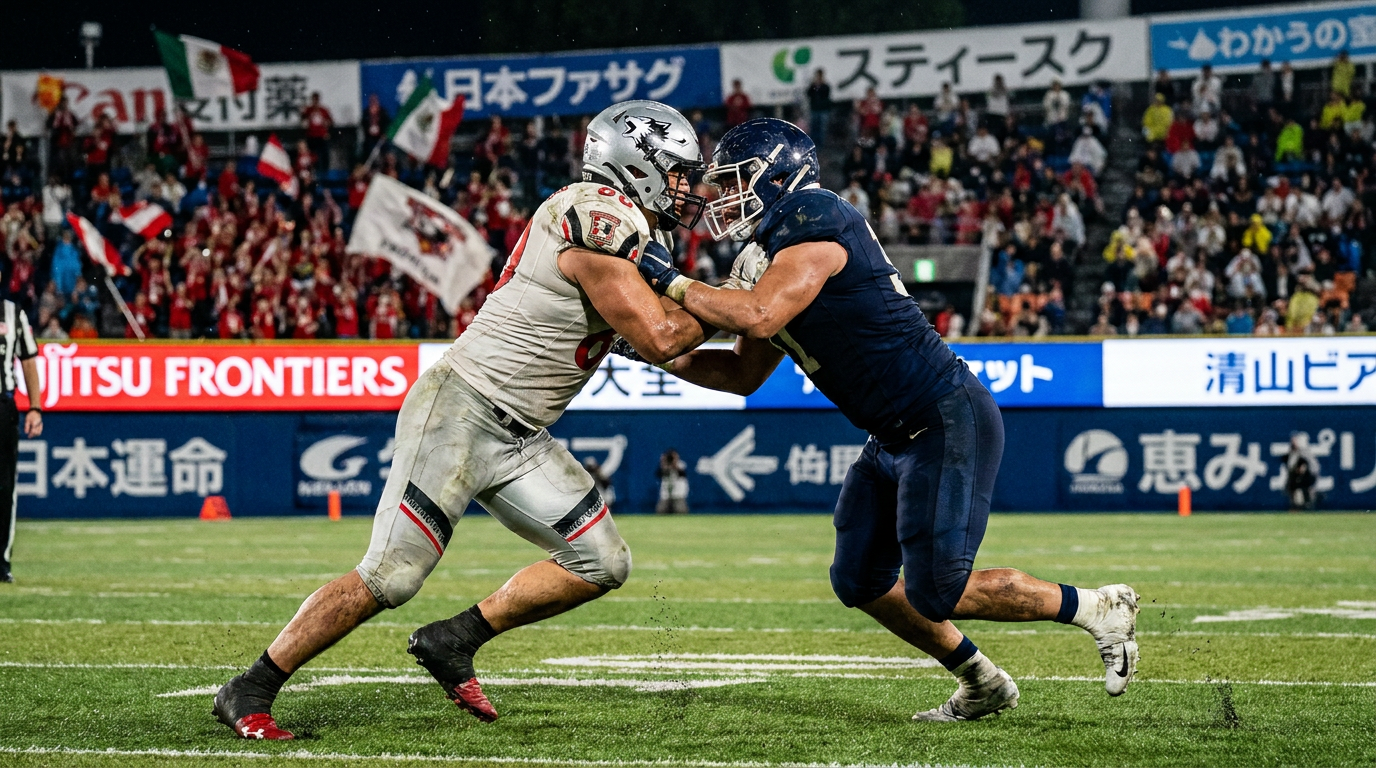
Japan's X-League Premier Standings Tighten as New Year-Round Format Shakes Up the Gridiron
6 sources
Injury
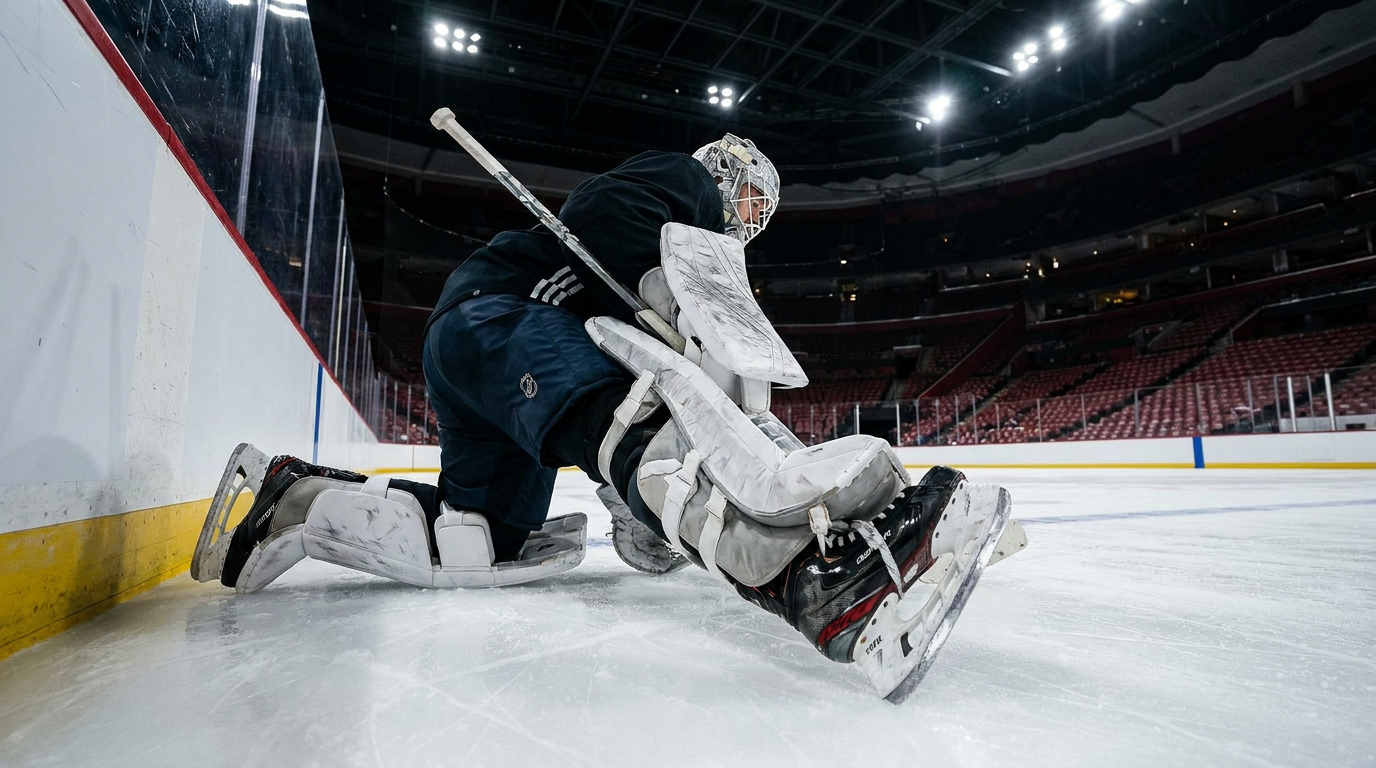
Global Ice Hockey Injury Report: Demko Returns to Ice, Poulin Set for Surgery Following Heroic Run
6 sources
Standings
3ICE Standings Race Tightens as Summer Hockey Prepares for Inaugural World Cup
6 sources
Every angle. Every day.
Get sports stories with full source coverage and perspective breakdowns delivered to your inbox.