
The Science and Politics of Cultivated Meat: Inside the Fight Over the Future of Food
Cultivated meat promises to drastically reduce the environmental footprint of agriculture, but the technology is facing a fierce political backlash and outright bans in several U.S. states.
By Factlen Editorial Team
- Alternative Protein Advocates
- Argue that cultivated meat is a necessary technological leap to mitigate climate change and preserve biodiversity.
- Traditional Agriculture Defenders
- View lab-grown meat as an unnatural product that threatens rural economies and consumer health.
- Regulatory & Legal Analysts
- Focus on the complex legal battles over state sovereignty, federal pre-emption, and market fragmentation.
What's not represented
- · Consumer advocacy groups focused on food affordability
- · Conventional meat processors investing in alternative proteins
Why this matters
As the global population grows, finding sustainable ways to produce protein is critical for mitigating climate change. The outcome of the legal and political battles over cultivated meat will determine whether this technology can scale to meet that demand or if it will be stifled by regional bans.
Key points
- Cultivated meat is grown from animal cells in bioreactors and is biologically identical to conventional meat.
- Life-cycle assessments indicate the technology can reduce land use by 90 percent and water use by up to 96 percent compared to beef.
- To achieve maximum climate benefits, production facilities must be powered by renewable energy.
- Seven U.S. states have banned the sale of cultivated meat to protect traditional agriculture, sparking ongoing federal lawsuits.
The promise of cultivated meat—real animal protein produced without raising or slaughtering livestock—is colliding with a fierce political and cultural backlash. What began as a moonshot in regenerative medicine has matured into a multi-billion-dollar food technology sector, promising to revolutionize how the world eats.[2]
Yet, as the technology moves from the laboratory toward commercial viability, it has ignited a fierce debate. While environmental scientists and food-tech entrepreneurs herald cultivated meat as a vital climate solution, lawmakers in heavily agricultural regions are moving aggressively to outlaw it, framing the technology as an existential threat to rural economies and traditional farming.[3][5]
To understand the controversy, it is essential to understand the mechanism. Cultivated meat is fundamentally different from plant-based alternatives like Beyond Meat or Impossible Foods, which use proteins extracted from peas or soybeans to mimic the taste of beef. Cultivated meat is biologically identical to conventional meat at a cellular level.[2][8]
The production process begins with a harmless biopsy from a living animal—such as a cow, pig, or chicken. Scientists isolate specific starter cells, typically stem cells capable of building muscle and fat. These cells are preserved in banks and then introduced into a nutrient-rich broth containing amino acids, sugars, and vitamins.[1][8]
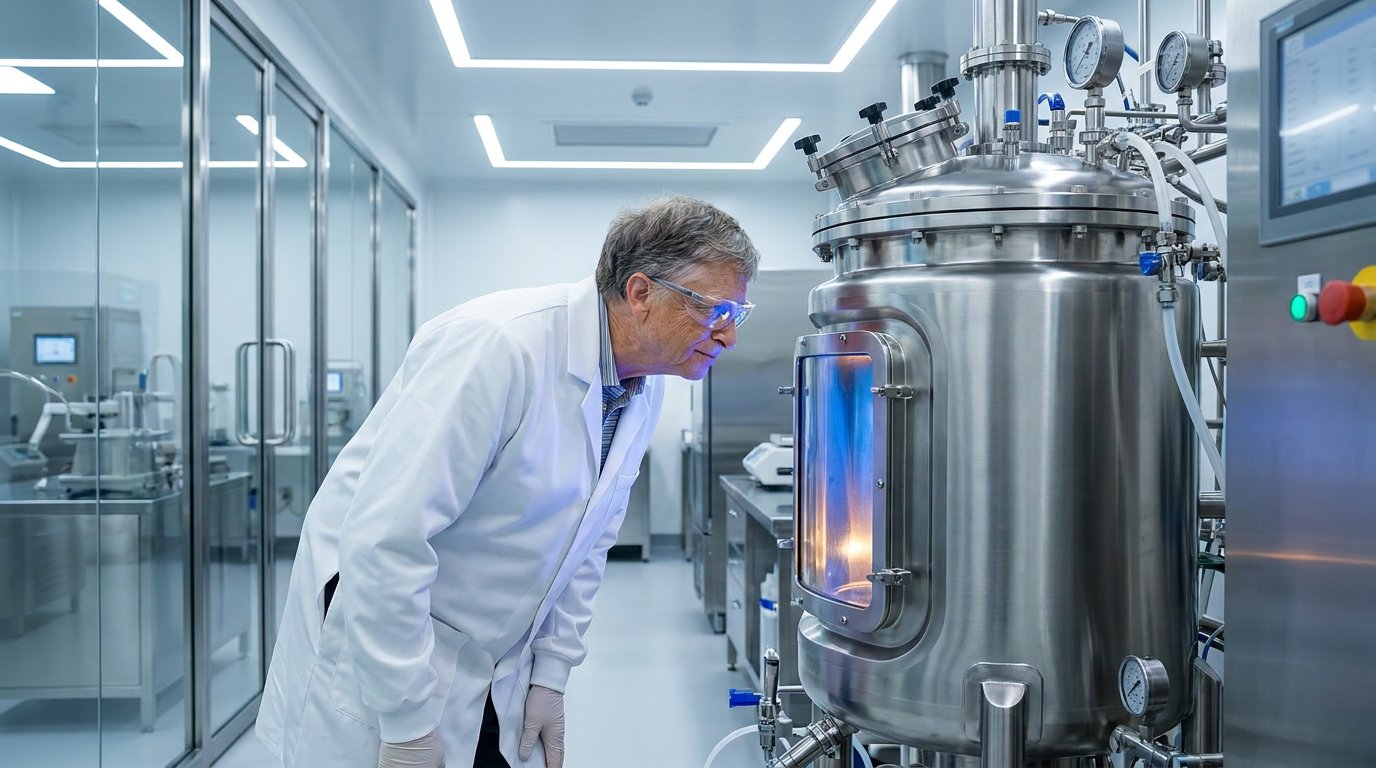
The actual growth occurs inside massive stainless-steel bioreactors, which function much like the fermentation tanks used in breweries. Inside these highly controlled, warm environments, the animal cells multiply exponentially, doubling in volume and density over a period of two to eight weeks.[2][8]
To transform a slurry of cells into a recognizable cut of meat, the cells are seeded onto edible scaffolds. These structures, often 3D-printed from plant proteins like corn or barley, replicate the extracellular matrix found in natural tissues. They guide the cells to organize into the familiar textures of muscle fibers and fat, creating a product that looks and cooks like a traditional steak or chicken breast.[1][8]
The primary argument driving the billions of dollars invested in this technology is environmental sustainability. Traditional livestock farming is incredibly resource-intensive, consuming vast amounts of land and water while generating significant methane emissions. Recent life-cycle assessments indicate that cultivated meat could drastically alter this equation.[1][4]
The primary argument driving the billions of dollars invested in this technology is environmental sustainability.
A 2026 peer-reviewed life-cycle assessment conducted by the Czech Technical University found that cultivated meat production achieves significantly lower environmental footprints than even the most ambitious benchmarks for conventional agriculture. The data suggests that at scale, cultivated meat could reduce land use by up to 90 percent and water consumption by up to 96 percent compared to traditional beef.[4][8]

However, there is a crucial caveat to these climate benefits: energy consumption. Bioreactors require substantial electricity to maintain precise temperatures and sterile conditions. For cultivated meat to achieve its projected 92 to 96 percent reduction in greenhouse gas emissions, production facilities must be powered by renewable energy grids; otherwise, the carbon footprint remains comparable to conventional poultry or pork.[1][4]
Despite the environmental promise and federal safety approvals from the USDA and FDA, cultivated meat is facing a coordinated legislative blockade. By early 2026, seven U.S. states—including Florida, Alabama, and Texas—had passed laws outright banning the manufacture, sale, and distribution of cell-cultured meat.[3][6]
Proponents of these bans argue they are necessary to protect the livelihoods of traditional ranchers and farmers. Texas Agriculture Commissioner Sid Miller recently described cultivated meat as a "Trojan horse" pushed by "billionaire tech investors," arguing that states must prioritize the men and women who have historically fed the country over Silicon Valley startups.[5]

The legislative pushback also taps into consumer skepticism regarding food processing and naturalness. Politicians have frequently deployed visceral rhetoric, labeling the products "bio-slop" or "petri-dish meat." Even in states where bans have faced resistance—such as South Dakota, where the governor vetoed a permanent ban in favor of a five-year moratorium—cattlemen associations have pushed to classify cultivated meat as an adulterated food.[3][7]
This state-level resistance has triggered high-stakes federal litigation. Cultivated meat companies argue that state bans violate the Commerce Clause of the U.S. Constitution and are expressly pre-empted by federal laws like the Poultry Products Inspection Act, which governs meat safety and labeling nationwide.[6]

The courts, however, have begun to side with the states. In March 2026, the Eleventh Circuit Court of Appeals upheld Florida's ban in a lawsuit brought by Upside Foods. The court ruled that while federal law dictates how meat must be inspected and labeled, states retain the authority to enact pure product bans, effectively prohibiting the product from entering their borders entirely.[6]
This legal precedent threatens to fracture the American market, creating a patchwork of states where cultivated meat is either embraced or criminalized. As the industry grapples with the immense technical challenge of lowering production costs to reach price parity with traditional meat, it must now navigate a deeply polarized political landscape that could dictate the future of global food systems.[2][6]
How we got here
2013
Dutch scientist Mark Post unveils the world's first cultivated meat burger on live television.
2020
Singapore becomes the first country in the world to approve the commercial sale of cultivated meat.
2023
The USDA and FDA grant the first regulatory approvals for cultivated chicken to be sold in the United States.
May 2024
Florida and Alabama become the first U.S. states to pass legislation outright banning the sale of cultivated meat.
March 2026
The Eleventh Circuit Court of Appeals upholds Florida's ban, ruling that states have the authority to prohibit the product.
Viewpoints in depth
Alternative Protein Advocates
Argue that cultivated meat is a necessary technological leap to mitigate climate change and preserve biodiversity.
This camp, which includes environmental scientists and food-tech startups, emphasizes the staggering resource efficiency of cellular agriculture. They point to life-cycle assessments showing that cultivated meat can reduce land and water use by over 90 percent compared to conventional beef. By removing the need to raise and slaughter billions of animals, they argue the technology can halt deforestation, eliminate agricultural runoff, and drastically cut methane emissions, provided the bioreactors are powered by renewable energy.
Traditional Agriculture Defenders
View lab-grown meat as an unnatural product that threatens rural economies and consumer health.
Comprising cattlemen associations, rural lawmakers, and agricultural commissioners, this perspective frames cultivated meat as a direct assault on traditional farming. They argue that the technology is an unproven, highly processed experiment pushed by out-of-touch tech billionaires. Beyond economic protectionism for ranchers, they raise concerns about the lack of long-term health studies and argue that consumers inherently prefer natural, time-tested food sources over synthetic alternatives.
Regulatory & Legal Analysts
Focus on the complex legal battles over state sovereignty, federal pre-emption, and market fragmentation.
Legal experts and market analysts are closely watching the collision between federal food safety approvals and state-level bans. They note that while the FDA and USDA have cleared cultivated meat for human consumption, recent appellate court rulings have upheld the right of individual states to enact pure product bans. This camp warns that a fractured regulatory landscape will severely complicate the industry's ability to scale production, attract investment, and achieve the price parity necessary to compete with conventional meat.
What we don't know
- Whether cultivated meat can successfully lower production costs enough to reach price parity with conventional meat at a global scale.
- How the U.S. Supreme Court might ultimately rule on whether state-level product bans violate the Commerce Clause.
- How mainstream consumers will react to cultivated meat once it becomes widely available in grocery stores.
Key terms
- Cultivated meat
- Genuine animal meat produced by cultivating animal cells directly in a controlled environment, rather than raising and slaughtering livestock.
- Bioreactor
- A large, temperature-controlled fermentation tank where animal cells are fed a nutrient-rich broth to multiply and form tissue.
- Scaffolding
- Edible structural materials, often made from plant proteins, that guide multiplying cells to organize into the textures of muscle and fat.
- Life Cycle Assessment (LCA)
- A scientific methodology used to evaluate the total environmental impact of a product throughout its entire production process.
- Federal Pre-emption
- A legal doctrine where federal law supersedes conflicting state laws, currently at the center of lawsuits over state-level meat bans.
Frequently asked
Is cultivated meat the same as plant-based meat?
No. Plant-based meats use proteins extracted from peas or soy to mimic the taste of beef. Cultivated meat is grown from actual animal cells and is biologically identical to conventional meat.
Has cultivated meat been approved for sale in the United States?
Yes, the FDA and USDA have granted safety approvals for certain cultivated meat products. However, several individual states have passed laws banning its sale within their borders.
Why are some states banning cultivated meat?
Lawmakers in states like Florida, Alabama, and Texas argue the bans are necessary to protect traditional ranchers and farmers from economic disruption, while also citing skepticism about the naturalness of lab-grown foods.
Does cultivated meat actually help the environment?
Studies show it uses up to 90 percent less land and water than conventional beef. However, its climate benefits depend heavily on powering the energy-intensive bioreactors with renewable electricity.
Sources
Source coverage
8 outlets
3 viewpoints surfaced







[1]The Good Food InstituteAlternative Protein Advocates
The science of cultivated meat
Read on The Good Food Institute →[2]McKinsey & CompanyRegulatory & Legal Analysts
What is cultivated meat?
Read on McKinsey & Company →[3]The Guardian
Florida is on track to ban cell-cultivated meat while three others float it
Read on The Guardian →[4]Green QueenAlternative Protein Advocates
Cultivated Meat is Better for the Planet, Confirms New LCA Study
Read on Green Queen →[5]Texas Department of AgricultureTraditional Agriculture Defenders
Texas Agriculture Commissioner Sid Miller Blasts Lab-Grown Meat Ruling
Read on Texas Department of Agriculture →[6]Duane MorrisRegulatory & Legal Analysts
Eleventh Circuit Upholds Florida Ban on Lab-Grown Meat
Read on Duane Morris →[7]Beef MagazineTraditional Agriculture Defenders
South Dakota Governor vetoes lab-grown meat ban
Read on Beef Magazine →[8]Cultivated Meat UKAlternative Protein Advocates
How Cultivated Meat Is Made: A Step-by-Step Guide
Read on Cultivated Meat UK →
Every angle. Every day.
Get meta stories with full source coverage and perspective breakdowns delivered to your inbox.