
The Rise of 'Slowtech': How Mindful Apps Are Engineering an End to Doomscrolling
A new wave of 'slowtech' applications is abandoning strict screen-time limits in favor of psychological friction, helping users regain control of their attention without locking them out of their devices.
By Factlen Editorial Team

- Digital Wellness Advocates
- Argue that technology should empower users to reclaim their time through intentional design and mindful friction.
- Behavioral Researchers
- Focus on the psychological mechanisms of the attention economy, studying how micro-delays effectively break dopamine loops.
- Industry Analysts
- View the rise of mindful tech as a rapidly growing market sector driven by consumer demand for better digital boundaries.
- Tech Pragmatists
- Question whether adding more apps is the right solution to an app-created problem, pointing to the underlying business models of social media.
What's not represented
- · Social Media Platform Executives
- · Ad-Tech Industry Representatives
Why this matters
As the attention economy reaches its peak, understanding how to use 'friction-based' technology can help you reclaim hours of lost time, improve your mental health, and build a more intentional relationship with your devices.
Key points
- The 'Slowtech' movement is replacing strict app blockers with mindful, friction-based design.
- Apps like Mivo use micro-delays to break the automatic dopamine loops of doomscrolling.
- Behavioral studies show friction reduces social media usage by 30% without the rebound effect of strict timers.
- Mainstream platforms, including Firefox, are beginning to integrate focus and intentionality tools directly into their interfaces.
- Venture capital is heavily backing digital wellness, signaling a broader industry shift toward mindful tech.
For the better part of a decade, the standard advice for curbing smartphone addiction was brute force: set a timer, lock the app, or put the phone in another room. Yet, as screen time averages continue to hover above four hours a day globally, it has become increasingly clear that strict prohibition rarely works. When a hard limit kicks in, users simply tap "Ignore for 15 minutes" or disable the blocker entirely, treating the restriction as a minor annoyance rather than a behavioral reset. Now, a growing movement dubbed "Slowtech" is taking a radically different approach to digital wellness, abandoning the concept of locking users out in favor of gently slowing them down.[2][4]
The core philosophy of Slowtech is rooted in the concept of "Friction UI." Instead of relying on willpower to honor a hard stop, these tools introduce micro-delays and mindful interruptions into the user experience. A prime example is Mivo, a newly launched application designed specifically to combat the endless loop of doomscrolling on social media. Rather than shutting down Instagram or TikTok after thirty minutes, Mivo alters the way the user interacts with the feed, introducing subtle pauses or requiring intentional actions to continue scrolling.[1][5]
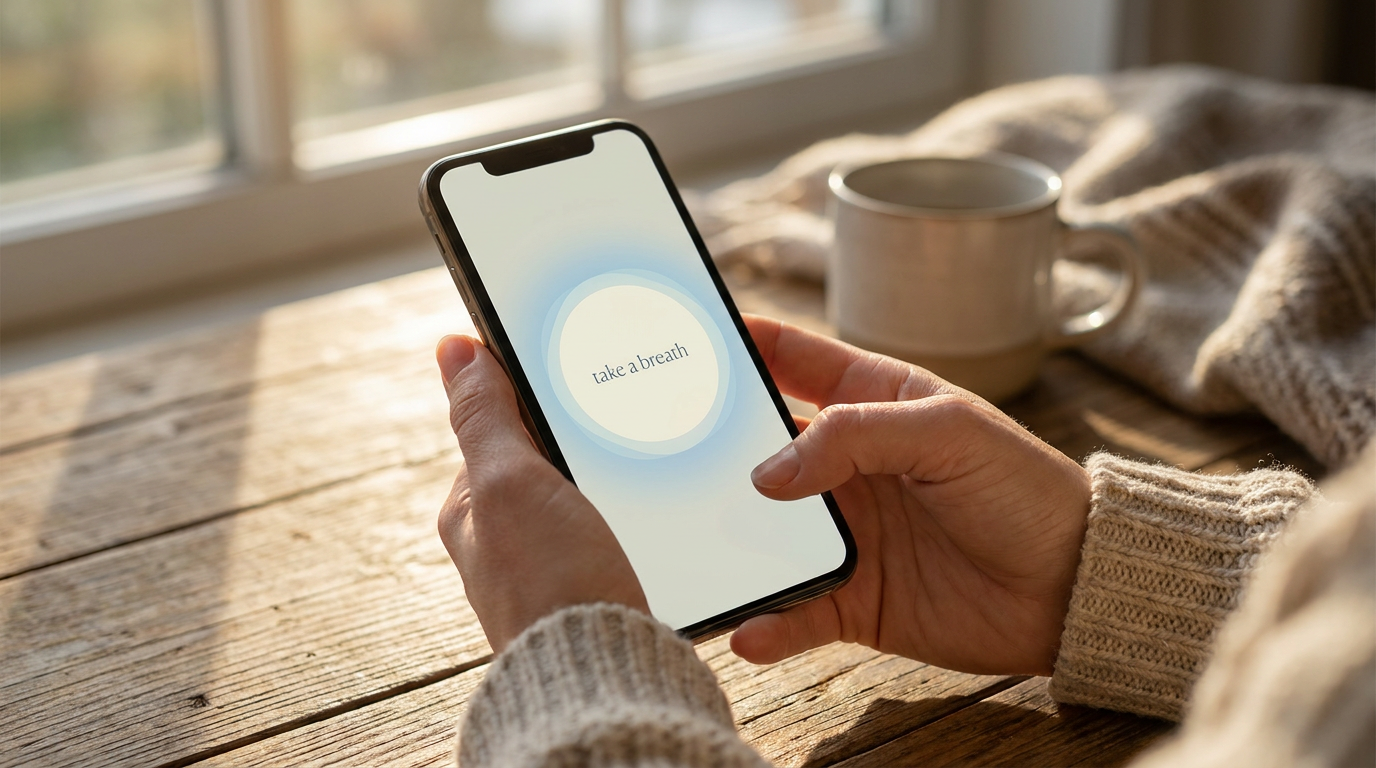
The mechanics of this friction are deeply rooted in behavioral psychology. Social media platforms are engineered to minimize friction, using infinite scroll and auto-playing videos to create a seamless dopamine loop that bypasses conscious decision-making. By injecting a three-second delay before opening an app, or requiring a user to take a deep breath and tap a button to load the next batch of posts, Slowtech apps force the brain out of its automatic state. This brief window of friction is often just enough to break the trance, allowing the user to ask themselves if they actually want to keep scrolling.[4][5]

This shift from prohibition to mindfulness is not limited to niche startup apps; it is beginning to permeate mainstream software design. Mozilla's Firefox browser, for instance, recently rolled out home page widgets that include focus timers and intentional checklists right alongside traditional browsing tools. By integrating these features directly into the environment where users work and play, developers are acknowledging that the goal is not to eliminate screen time, but to make it more purposeful and less reactive.[3]
Early data suggests that this friction-based approach is significantly more effective than traditional app blockers. A recent study published in the Journal of Behavioral Addictions tracked users across various digital wellness interventions and found that those utilizing "mindful friction" reduced their daily social media consumption by an average of 30%. More importantly, these users reported higher levels of satisfaction and lower levels of anxiety compared to those using strict lock-out timers, who often experienced a rebound effect—bingeing on content once the timer was lifted.[8]

Early data suggests that this friction-based approach is significantly more effective than traditional app blockers.
The success of these tools lies in their respect for user autonomy. When an app simply asks, "Are you sure you want to open X?" and requires a short pause, it shifts the locus of control back to the individual. It transforms the smartphone from a slot machine that demands attention into a tool that requires intention. This subtle psychological pivot is what advocates argue makes Slowtech sustainable over the long term, unlike digital detoxes that typically fail within a few weeks.[2][6]
Investors are taking note of this paradigm shift. Venture capital funding for digital wellness startups has surged, with over $1.2 billion deployed in the sector over the past eighteen months. This influx of capital is driving rapid innovation, allowing developers to move beyond simple timers and explore more sophisticated, AI-driven interventions. Some emerging tools now analyze a user's scrolling speed and biometric data, such as screen pressure and typing cadence, to detect when they have slipped into a mindless doomscrolling state, gently intervening only when necessary.[7]
However, the movement is not without its skeptics. Some cultural critics and tech analysts question the inherent paradox of using an app to cure an addiction to apps. They argue that while Slowtech tools offer a helpful band-aid, they do not address the underlying business models of the attention economy, which remain fundamentally reliant on maximizing user engagement. From this perspective, relying on third-party friction tools is a temporary fix in a much larger structural battle for human attention.[6]

Despite these critiques, the immediate relief provided by Slowtech tools is undeniable for many users. The realization that one does not need to throw their smartphone into the ocean or downgrade to a flip phone to reclaim their time is profoundly empowering. By embracing friction, users are finding a middle ground: the ability to stay connected to the digital world without being entirely consumed by it.[2][4]
As the Slowtech movement matures, the next frontier will likely involve deeper integration at the operating system level. While third-party apps like Mivo are pioneering the space, true systemic change will occur when Apple and Google adopt these mindful friction principles as default settings in iOS and Android. Until then, the rise of these intentional design tools offers a hopeful glimpse into a future where technology serves our goals, rather than hijacking our attention.[1][5]
How we got here
2018
Apple and Google introduce native Screen Time and Digital Wellbeing tools, focusing heavily on strict usage limits.
2020–2021
Pandemic lockdowns cause a massive spike in global screen time, highlighting the ineffectiveness of simple app blockers.
2024
A consumer backlash against smartphones leads to a surge in 'dumbphone' sales among Gen Z.
2026
The Slowtech software boom emerges, offering a middle ground through friction-based apps like Mivo.
Viewpoints in depth
Digital Wellness Advocates
Believers in the power of intentional design to restore human agency.
This camp argues that the tech industry has spent billions optimizing for human weakness, and it is time to build software that optimizes for human intention. They view tools like Mivo not as restrictions, but as cognitive seatbelts. By introducing friction, they believe users can enjoy the benefits of connectivity without falling prey to the algorithmic traps designed to harvest their attention.
Behavioral Researchers
Scientists focused on the neurological impact of interface design.
Researchers point to the data showing that willpower is a finite resource that inevitably fails against infinite scroll. They advocate for 'pattern interrupts'—small, unexpected changes in a routine that force the brain to switch from an automatic, habit-driven state to a conscious, decision-making state. Their studies indicate that these micro-frictions are far more sustainable for long-term behavioral change than cold-turkey abstinence.
Tech Pragmatists
Skeptics who doubt that software can solve a software-created crisis.
While acknowledging the immediate benefits of Slowtech, pragmatists argue that these apps are merely treating the symptoms of a diseased ecosystem. They point out that as long as the underlying platforms are financially incentivized to keep users hooked, the arms race between attention-harvesting algorithms and friction-based blockers will continue. They advocate for broader regulatory changes to the attention economy rather than relying solely on consumer-level software interventions.
What we don't know
- Whether major tech giants like Apple and Google will eventually integrate these friction-based tools natively, potentially undercutting third-party developers.
- If users will eventually develop 'friction fatigue' and learn to bypass micro-delays as automatically as they bypass current screen time limits.
Key terms
- Slowtech
- A category of technology designed to encourage deliberate, mindful usage rather than maximizing engagement and screen time.
- Friction UI
- User interface design that intentionally adds minor hurdles or delays to a process to force the user to make a conscious choice.
- Doomscrolling
- The act of spending an excessive amount of time reading large quantities of negative news or mindless content online.
- Dopamine Loop
- A psychological cycle where a user receives a small reward (like a new post or like) that triggers dopamine, compelling them to repeat the action endlessly.
Frequently asked
What is the Slowtech movement?
Slowtech is a design philosophy that prioritizes intentional, mindful technology use over rapid, seamless engagement, often by introducing deliberate friction into user interfaces.
How does Friction UI work?
Instead of blocking an app entirely, Friction UI introduces micro-delays—like a three-second pause or a breathing prompt—before allowing access, breaking the automatic habit of opening apps.
Is this more effective than setting screen time limits?
Early behavioral research suggests it is. While users easily bypass strict timers out of frustration, friction-based tools reduce daily usage by an average of 30% by prompting conscious decision-making.
Sources
Source coverage
8 outlets
4 viewpoints surfaced







[1]TechCrunchDigital Wellness Advocates
Mivo’s new app takes a mindful approach to managing screen time
Read on TechCrunch →The smartphone era created an attention crisis. Slowtech is fixing it
Read on TechCrunch →[3]The Verge
Firefox’s new home page widgets are helping me focus
Read on The Verge →[4]WiredDigital Wellness Advocates
The Rise of Slowtech: How We're Engineering Our Way Out of the Attention Economy
Read on Wired →[5]MIT Technology ReviewBehavioral Researchers
The Mechanics of Mindful UI: Designing for Friction
Read on MIT Technology Review →[6]The AtlanticTech Pragmatists
Can an App Cure Doomscrolling?
Read on The Atlantic →[7]Wall Street JournalIndustry Analysts
Venture Capital Pivots to 'Digital Wellness' Startups
Read on Wall Street Journal →[8]Journal of Behavioral AddictionsBehavioral Researchers
Efficacy of friction-based interventions on social media consumption
Read on Journal of Behavioral Addictions →

More in technology
See all 7 stories →Digital Wellness
The End of App Blockers: How 'Mindful Friction' is Curing the Doomscroll
8 sources
AI Optimization
New AI Optimization Framework Beats Claude Code and Codex by 2.5x on Same Compute Budget
5 sources

AI Orchestration
How the New 'Arbor' Framework Upgrades AI Agents from Coders to Autonomous Researchers
5 sources
Digital Wellbeing
The End of the App Blocker: How 'Mindful Scrolling' is Rewiring Digital Wellbeing
8 sources

Every angle. Every day.
Get technology stories with full source coverage and perspective breakdowns delivered to your inbox.