
The Rise of 'Slow Dating': How Daters Are Beating App Fatigue Through Intentional Courtship
Facing widespread burnout from dating apps, a growing number of singles are embracing 'slow dating' and 'third places' to build deeper, more intentional connections.
By Factlen Editorial Team
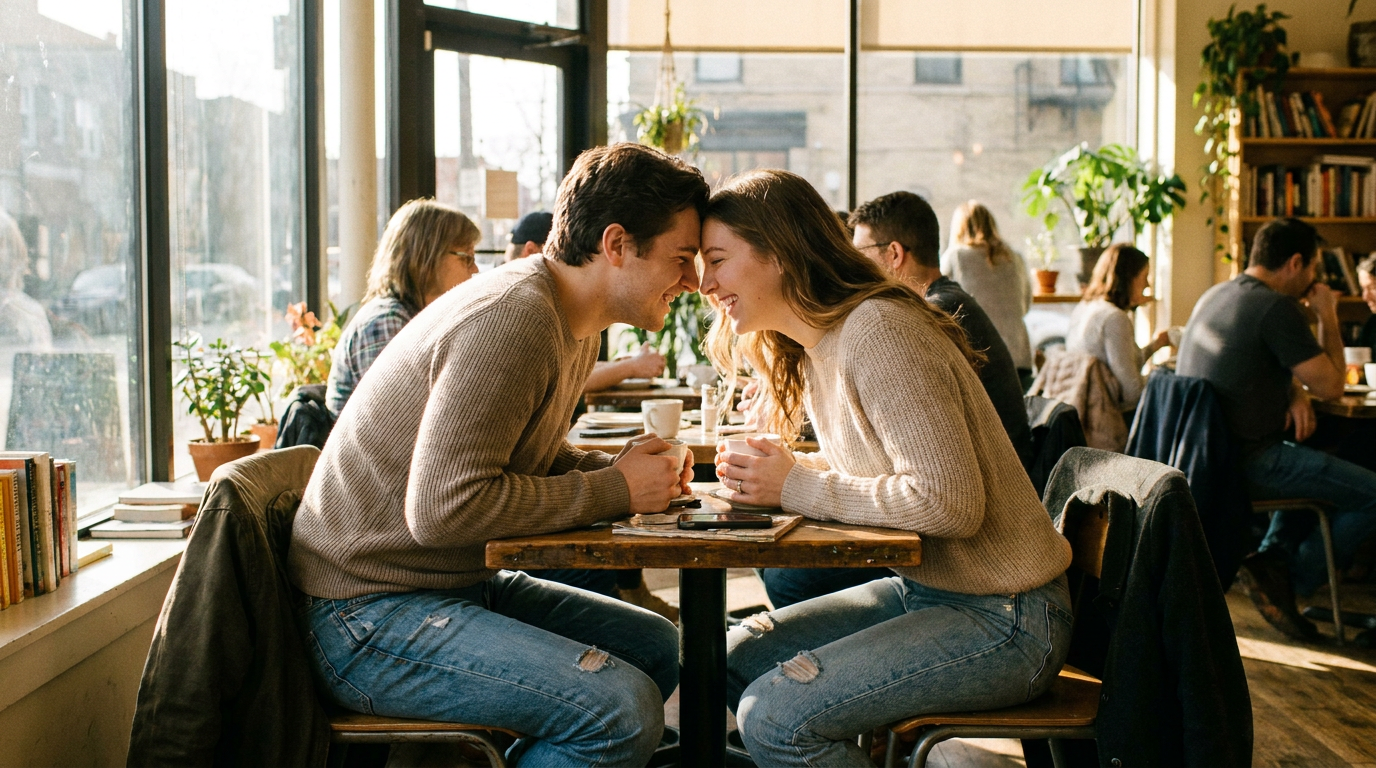
- Intentional Daters
- Advocate for decelerating the romantic timeline to prioritize emotional safety, shared values, and genuine compatibility over instant gratification.
- Relationship Psychologists
- Analyze the trend through the lens of attachment theory, emphasizing how slower pacing allows the nervous system to regulate and build secure bonds.
- Cultural Observers
- Document the broader societal shift away from digital platforms toward 'third places' and offline community building.
What's not represented
- · Dating app executives
- · Individuals who prefer fast-paced casual dating
Why this matters
As digital fatigue reaches an all-time high, understanding the mechanics of slow dating offers a practical, evidence-backed roadmap for anyone looking to build lasting relationships without the anxiety of endless swiping.
Key points
- Nearly 80% of dating app users report feeling emotionally or mentally exhausted by the swiping experience.
- Slow dating counters this fatigue by prioritizing fewer matches, deeper conversations, and a decelerated timeline.
- Psychologists support the trend, noting that slower pacing helps regulate the nervous system and build secure attachments.
- The movement challenges the myth of the 'instant spark,' suggesting that early butterflies are often just anxiety.
- Singles are increasingly turning to 'third places' like run clubs and hobby groups to foster organic, offline connections.
For nearly a decade, the pursuit of romance has been defined by velocity and volume. The gamification of courtship through algorithmic matchmaking created an environment where finding a partner often felt indistinguishable from scrolling through a digital catalog. However, a profound cultural exhaustion has begun to reshape the landscape of modern romance. Recent industry surveys reveal that a staggering majority of dating app users—nearly 80 percent in some polls—report feeling emotionally, mentally, or physically drained by the experience. This phenomenon, widely recognized as dating app fatigue, stems from the endless cycle of swiping, superficial text exchanges, and the transactional nature of evaluating human beings based on a handful of curated photos. The digital architecture that promised to make finding love effortless has, for many, evolved into a validation trap that prioritizes instant gratification over genuine compatibility.[1][5]
The exhaustion is not merely anecdotal; it is deeply rooted in the neurological feedback loops created by modern technology. Dating applications were designed to function much like dopamine slot machines, rewarding users with the intermittent reinforcement of a new match or a fleeting message. While this mechanism is highly effective at keeping users engaged with the platform, it actively works against the formation of secure, lasting attachments. Daters find themselves caught in an endless cycle of worrying about whether a match will message first, or whether a better option is just one swipe away. This constant state of hyper-vigilance leaves little emotional bandwidth for the actual work of getting to know another human being, leading to a pervasive sense of isolation despite unprecedented digital connectivity.[5][6]
In response to this widespread burnout, a counter-movement has steadily gained momentum: "slow dating." Rather than abandoning the search for connection, daters are deliberately decelerating the romantic timeline. Slow dating is a mindful, intentional approach to courtship that prioritizes emotional depth and gradual discovery over the frantic pace of the swiping era. Practitioners are fundamentally changing their behavior by limiting their active matches, engaging in longer and more substantial conversations before meeting, and spacing out early dates to allow their nervous systems to calibrate to a new person. It is a conscious rejection of the "next-best-thing" instinct, replacing the urgency of immediate results with the patience required to build a solid relational foundation.[2][6]

Interestingly, this shift is being heavily driven by Generation Z, a cohort that came of age during the unprecedented social isolation of the global pandemic. Having experienced a highly disrupted introduction to the dating world, many younger daters recognize a deficit in their own organic dating skills. The pandemic forced a period of intense introspection, teaching an entire generation the value of emotional safety and quality interactions over sheer quantity. Consequently, they are rejecting the fast-paced, disposable dating culture inherited from millennials. By adopting a slower approach, they are actively cultivating healthy relationship skills, recognizing that, much like a seed requiring time and attention to bloom, human connections cannot be rushed without compromising their structural integrity.[2][7]
The effectiveness of this decelerated approach is heavily supported by established psychological frameworks, particularly attachment theory. Developed by psychoanalyst John Bowlby, attachment theory suggests that our earliest relationships dictate how we seek and maintain emotional safety in adulthood. Clinical psychologists note that by taking the time to progressively develop intimacy, individuals allow their attachment systems to adjust naturally without being overwhelmed. When the timeline is rushed, daters often bypass crucial stages of emotional regulation, leading to anxiety and premature attachment. Slow dating acts as a direct intervention for this cycle, lowering performance pressure and allowing individuals—especially those with anxious attachment styles—to observe their own reactions and the behavior of their potential partner with greater clarity.[3]
One of the primary dangers of rapid-fire dating is the tendency to fall in love with a projection rather than a real person. In the heat of a new romance, cognitive biases like the "halo effect" can distort a dater's assessment of compatibility, causing them to overlook fundamental misalignments simply because they find the other person physically attractive or charming. By extending the introductory phase over months instead of weeks, slow dating forces the mask of the "best self" to drop. This extended observation period allows individuals to see how a potential partner handles stress, treats strangers, and navigates disagreements. It shifts the focus from superficial chemistry to enduring resonance—the feeling of being genuinely heard and the comfort of shared values.[3][4]
One of the primary dangers of rapid-fire dating is the tendency to fall in love with a projection rather than a real person.
This paradigm shift also challenges the deeply ingrained cultural narrative surrounding the "spark"—that immediate, undeniable chemistry that supposedly signals true love. Relationship experts and behavioral scientists are increasingly warning that the intense butterflies felt on a first date might actually be alarm bells. That rush of excitement is often the body's stress response to unpredictability, masking underlying anxiety or insecurity. When someone is hard to pin down or sends mixed signals, it creates an adrenaline rush that daters frequently confuse with passion. Instead of chasing this volatile high, intentional daters are encouraged to look for a "slow burn," assessing whether a person makes them feel relaxed, secure, and emotionally grounded.[4]

The science of human attraction strongly supports the slow burn model. Research into the psychological phenomenon known as the Mere Exposure Effect demonstrates that familiarity breeds comfort, trust, and ultimately, attraction. The more time we spend with someone in a low-pressure environment, the more attractive they often become to us. Taking the time to let a relationship simmer allows daters to see their partner more clearly, beyond the nerves and performative aspects of a first date. It provides the necessary space to evaluate whether a potential partner possesses the traits that actually predict long-term relationship success, such as kindness, respect, emotional availability, and a shared vision for the future.[4]
As the pace of courtship slows, the substance of the conversations is also transforming. The movement advocates for a transition from "resume dating"—where individuals merely swap facts about their careers, travel histories, and surface-level interests—to "vulnerability dating." This deeper level of interaction requires asking questions that reveal a person's core values, fears, and definitions of a meaningful life. Engaging in this level of emotional exposure requires a degree of courage that fast-paced, disposable dating actively avoids. By committing to offering full presence to one person at a time, daters create an environment where genuine emotional intelligence can flourish, building self-esteem through authentic interaction rather than external validation.[3][6]
To facilitate this depth, practitioners of slow dating are implementing practical boundaries to manage their digital consumption. This often begins with a "monogamy of focus"—the decision to stop multi-dating and instead explore one connection at a time. It involves silencing app notifications, resisting the urge to check for new matches immediately after a date ends, and transitioning away from endless text messaging in favor of voice notes, phone calls, or video chats. By limiting the digital noise and reducing the frequency of communication, daters create the necessary space for reflection. This intentional pausing ensures that when they do engage, they are fully present, allowing the subtle nuances of another human being to become apparent.[5][6]
The desire for organic, unforced connection has also sparked a massive resurgence in "third place" dating. Sociologist Ray Oldenburg coined the term "third place" to describe social environments outside of the home (the first place) and the workplace (the second place). These include cafes, parks, libraries, community gardens, and neighborhood bars. Because these spaces are designed for presence, community, and participation rather than explicit matchmaking, they remove the immediate pressure to impress that characterizes formal dates. In a third place, individuals can gather regularly, allowing familiarity to build naturally through shared routines and repeated, casual interactions over an extended period.[1]

The data reflects a significant behavioral shift toward these offline environments. According to event industry reports, attendance at in-person singles mixers, run clubs, and hobby-based meetups surged by over 40 percent between 2023 and 2024, a trend that has continued to accelerate. People are increasingly exhausted by the interview-like atmosphere of traditional app dates and are seeking out environments where they can observe potential partners in their natural element. A connection might spark over a shared struggle in a weekly language class or during the cool-down phase of a community run. This environment fosters a sense of belonging, ensuring that even if a romantic connection does not materialize, the individual is still enriching their own life.[1]
Despite its many psychological and emotional benefits, the slow dating movement is not without its complications. Couples therapists and relationship experts caution that the terminology can sometimes be co-opted by individuals with avoidant attachment styles to mask commitment-phobia. In these instances, "taking things slow" becomes a polite, socially acceptable label for a reluctance to define the relationship, integrate a partner into one's life, or provide emotional security. The distinction lies in the intention: authentic slow dating is about pacing the progression of intimacy to build a stronger foundation, while avoidant slow dating uses time as a barrier to prevent intimacy altogether. Navigating this difference requires open, honest communication about boundaries and relationship goals early in the process.[3]

Ultimately, the rise of slow dating and intentional courtship represents a profound cultural correction. It is a collective acknowledgment that while technology can facilitate introductions, it cannot hack the human nervous system or accelerate the complex process of building trust. By prioritizing emotional compatibility, engaging in meaningful conversations, and embracing the natural rhythm of human connection, daters are reclaiming their agency. This mindful approach not only reduces the emotional fatigue associated with modern romance but also lays the groundwork for more resilient, lasting partnerships. In a society that frequently equates speed with success, choosing to take one's time in matters of the heart has become a radical and necessary act of self-care.[4][6]
How we got here
2012–2014
The launch of major swipe-based dating apps gamifies romance, prioritizing volume and speed.
2020–2021
Global pandemic lockdowns force singles to rely entirely on digital communication, sparking early conversations about 'intentional dating'.
2024
Industry surveys reveal peak dating app fatigue, with nearly 80% of users reporting emotional exhaustion.
2026
Slow dating and 'third place' meetups become dominant cultural trends as daters actively seek offline, decelerated connections.
Viewpoints in depth
Intentional Daters
Prioritizing emotional safety and shared values over instant gratification.
For those actively practicing slow dating, the movement is a necessary rebellion against the commodification of romance. By limiting their matches and extending the timeline before physical intimacy or exclusivity, they aim to protect their emotional bandwidth. This camp argues that the 'spark' often celebrated in pop culture is frequently just anxiety, and that true compatibility requires the patience to let a 'slow burn' develop. They value vulnerability and deep questioning over the superficial exchange of career facts.
Relationship Psychologists
Viewing the trend through the lens of attachment theory and emotional regulation.
Mental health professionals largely endorse the slow dating trend, pointing to its grounding in established behavioral science. Psychologists note that rapid-fire dating often triggers anxious attachment systems, leading to premature emotional investment in a projected fantasy rather than a real person. By slowing down, daters allow the Mere Exposure Effect to foster genuine trust. However, therapists also caution that 'taking it slow' must be accompanied by clear communication, lest it be weaponized by individuals with avoidant attachment styles to dodge commitment entirely.
Cultural Observers
Tracking the migration from digital platforms to offline 'third places'.
Sociologists and cultural commentators view the rise of slow dating as part of a broader rejection of hyper-digital living. They point to the resurgence of 'third places'—run clubs, community gardens, and independent cafes—as the new infrastructure for modern romance. This perspective highlights that the exhaustion isn't just about dating; it is a symptom of a broader loneliness epidemic. By seeking out shared hobbies, individuals are rebuilding the organic social fabric that dating apps temporarily replaced.
What we don't know
- How dating app companies will permanently alter their algorithms or business models to survive the mass exodus toward offline, slow dating.
- Whether the slow dating trend will lead to a statistically significant increase in long-term marriage or partnership success rates over the next decade.
Key terms
- Slow Dating
- A mindful approach to courtship that prioritizes emotional depth, fewer matches, and gradual progression over fast-paced, volume-based dating.
- Third Place
- A sociological term for public social environments separate from the home (first place) and the workplace (second place), such as cafes or clubs.
- Mere Exposure Effect
- A psychological phenomenon where people tend to develop a preference for things or people simply because they are familiar with them.
- Halo Effect
- A cognitive bias where the perception of one positive trait (like physical attractiveness) influences the overall judgment of a person's character.
- Attachment Theory
- A psychological model describing how early childhood relationships shape the way individuals seek and maintain emotional bonds in adulthood.
Frequently asked
What is the difference between slow dating and just being casual?
Slow dating is highly intentional; it involves pacing the relationship to build a strong emotional foundation. Casual dating often lacks a specific goal or commitment, whereas slow dating is focused on finding a lasting partnership at a healthier speed.
Does slow dating mean you shouldn't use dating apps?
Not necessarily. Many slow daters still use apps, but they change their behavior by limiting active matches, having longer conversations before meeting, and refusing to treat the app like a numbers game.
Why are 'third places' becoming so popular for dating?
Third places like run clubs or cafes remove the high-pressure, interview-like atmosphere of a formal date. They allow people to build familiarity naturally through shared interests and repeated, casual interactions.
How can I tell if someone is slow dating or just avoiding commitment?
Authentic slow dating involves clear communication about intentions and a steady, if gradual, progression of intimacy. If a partner uses 'taking it slow' as an excuse to avoid defining the relationship or integrating you into their life, it may be commitment avoidance.
Sources
Source coverage
7 outlets
3 viewpoints surfaced







[1]India TimesCultural Observers
Third place dating: Not everything needs an app, here's how it works
Read on India Times →[2]Fashion JournalIntentional Daters
What are the benefits of slow dating?
Read on Fashion Journal →[3]Psychologie et SérénitéRelationship Psychologists
Understanding the Psychological Foundations of Slow Dating
Read on Psychologie et Sérénité →[4]Le Marc ThomasRelationship Psychologists
Conscious Dating: A Mindful Approach to Love
Read on Le Marc Thomas →[5]ShopisthanCultural Observers
Swipe Left on Rush, Right on Real: The Slow Dating Trend
Read on Shopisthan →[6]Daily Reading HabitCultural Observers
Why Slow Love Is the Secret to Lasting Connection
Read on Daily Reading Habit →[7]PureWowIntentional Daters
Intentional Dating Is the Post-Pandemic Relationship Trend We Can Get Behind
Read on PureWow →
Every angle. Every day.
Get lifestyle stories with full source coverage and perspective breakdowns delivered to your inbox.