
The Resurrection Culture: How Emerse Faé Built Côte d'Ivoire's Unbreakable Mentality for the 2026 World Cup
After a miraculous mid-tournament takeover led to an Africa Cup of Nations title, Emerse Faé has transformed the Elephants into a tactically fluid and mentally resilient force on the global stage.
By Factlen Editorial Team
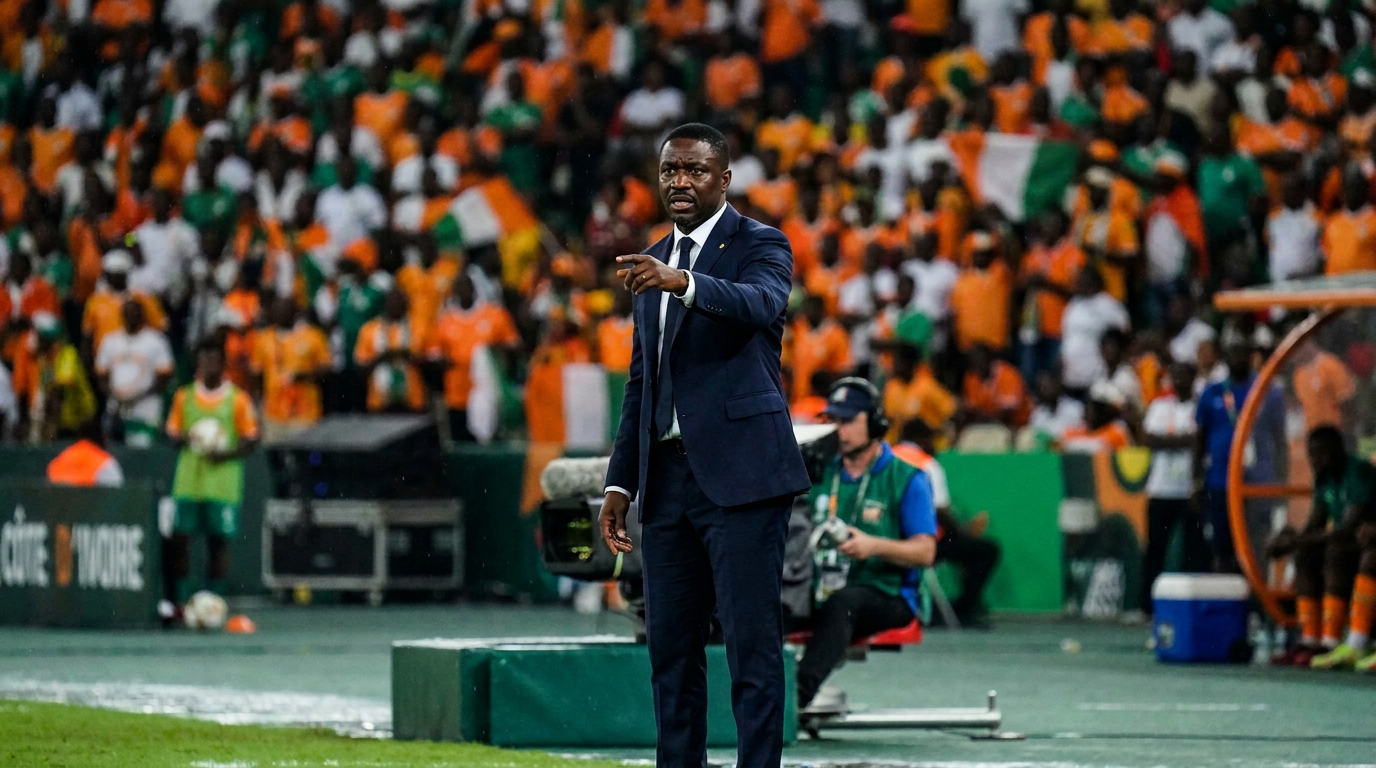
- Ivorian Supporters
- Emphasizes the emotional resurrection of the team, the unifying power of the 2024 AFCON win, and the restoration of national pride.
- Tactical Analysts
- Focuses on Faé's shift to a disciplined 4-3-3, emphasizing defensive structure and rapid transitions over pure individual brilliance.
- Global Football Historians
- Views Faé's trajectory as part of a broader trend of African nations trusting homegrown coaches over foreign managers.
What's not represented
- · Opposing Group E Managers
- · Ivorian Domestic Club Coaches
Why this matters
Côte d'Ivoire's return to the World Cup under Emerse Faé is a masterclass in crisis management and cultural reset. Their journey from the brink of a humiliating home-tournament exit to becoming a tactically disciplined global contender offers a blueprint for how psychological resilience and homegrown leadership can transform a national sporting institution.
Key points
- Côte d'Ivoire returns to the FIFA World Cup for the first time since 2014, ending a 12-year absence.
- Head coach Emerse Faé took over mid-tournament during the 2023 AFCON, leading the team from the brink of elimination to the title.
- Faé has transitioned the team away from relying purely on individual brilliance, implementing a disciplined 4-3-3 system.
- The squad's defensive solidity is anchored by Evan Ndicka, while Franck Kessie controls the midfield engine room.
- The Elephants dominated their CAF qualification group, remaining unbeaten and scoring 25 goals.
When Côte d'Ivoire steps onto the pitch at the 2026 FIFA World Cup, it marks the end of a grueling 12-year absence from the sport's grandest stage. For a nation that once boasted a "Golden Generation" featuring global icons like Didier Drogba and Yaya Touré, missing consecutive tournaments in 2018 and 2022 was a bitter reality check. The squad arriving in North America, however, is not burdened by the ghosts of past superstars. Instead, they are defined by a radically different identity: an unbreakable collective resilience forged in the most dramatic circumstances imaginable.[7]
To understand the psychology of the current Ivorian team, one must look back to the chaotic crucible of January 2024. Hosting the Africa Cup of Nations (AFCON), the Elephants found themselves on the brink of a humiliating group-stage elimination. The atmosphere in Abidjan was toxic, the pressure from expectant fans was crushing, and the Ivorian Football Federation made the drastic decision to dismiss head coach Jean-Louis Gasset mid-tournament. The campaign appeared entirely unsalvageable.[2]
Into this vortex stepped Emerse Faé, a 41-year-old former national team midfielder serving as an assistant. Thrust into the interim head coach role, Faé inherited a fractured dressing room and a nation in mourning. His immediate task was not a tactical overhaul, but a psychological rescue mission. He had to convince a squad of talented but demoralized individuals that their tournament was not yet over.[2][7]
Faé's impact was instantaneous and historic. He famously reflected on the turnaround by noting that the team was "dead" after a heavy defeat to Equatorial Guinea, but managed to "resurrect" when given a lifeline into the knockout stages. That resurrection became literal on the pitch. Under his sudden leadership, Côte d'Ivoire eliminated defending champions Senegal on penalties, survived a dramatic extra-time battle against Mali, and ultimately defeated Nigeria in the final to claim the continental crown.[2]

The AFCON miracle fundamentally altered the trajectory of Ivorian football. Faé was swiftly rewarded with the permanent head coaching position, transitioning his mandate from crisis management to long-term architectural planning. The goal was clear: build a squad capable of not just qualifying for the 2026 World Cup, but competing fiercely once they arrived.[1][2]
The transition from a team relying on emotional momentum to one grounded in tactical discipline has been the hallmark of Faé's permanent tenure. He recognized that the chaotic, adrenaline-fueled football of their AFCON run was unsustainable over a multi-year cycle. Instead, he began implementing a structured 4-3-3 system designed to maximize the specific profiles of his European-based stars while minimizing defensive vulnerabilities.[5]
The foundation of this new system is a rigid defensive shape. Historically, Ivorian teams have been criticized for being top-heavy—blessed with world-class attackers but fragile at the back. Faé has worked meticulously to correct this imbalance. The emergence of Roma's Evan Ndicka as a central defensive pillar has provided the Elephants with a reliable anchor, allowing the team to absorb pressure without fracturing.[4]
The foundation of this new system is a rigid defensive shape.
In the engine room, Faé has built his midfield around the imposing presence of Franck Kessie. The former AC Milan and Barcelona midfielder serves as the fulcrum of the side, tasked with breaking up opposition attacks, dictating the tempo of possession, and making late, devastating runs into the penalty area. Kessie's dual-threat capability allows the team to transition seamlessly between defensive blocks and attacking phases.[4][6]
Offensively, Faé's philosophy emphasizes fluid possession and rapid transitions. Rather than relying on a single talismanic striker, the system is designed to isolate dynamic wingers in one-on-one situations. Players like Manchester United's Amad Diallo and Sunderland's Simon Adingra are given the tactical freedom to cut inside, exploit half-spaces, and stretch opposing defenses.[4][5]

This tactical maturity is deeply intertwined with Faé's personal journey. Born in France, he chose to represent Côte d'Ivoire internationally, earning 41 caps and experiencing the highs and lows of the national team firsthand. He understands the unique pressure of wearing the orange jersey, a perspective that informs his empathetic but demanding man-management style.[7]
Faé also uses his own career disappointments as motivational fuel. Despite playing well in Ligue 1 for Nice ahead of the 2010 World Cup, he was controversially left out of the final squad by then-manager Sven-Göran Eriksson. Faé has openly described that omission as a "bitter pill to swallow," an experience that drives his commitment to absolute meritocracy. Under his watch, squad selections are dictated by form and tactical fit, not reputation.[3]
The effectiveness of this meritocratic approach was evident throughout the CAF qualification campaign. Côte d'Ivoire dominated their group, remaining unbeaten across their fixtures and scoring 25 goals. They demonstrated an ability to grind out narrow victories against stubborn defensive blocks while also ruthlessly punishing weaker opponents, showcasing a tactical versatility that previous iterations of the team often lacked.[6]
The integration of elite young talent has also been crucial to the team's evolution. Sporting Lisbon's Ousmane Diomande has emerged as one of the most coveted young defenders in world football, bringing elite ball-playing ability to the backline. Faé has carefully managed the introduction of these younger players, ensuring they are insulated by experienced veterans who understand the demands of international tournament football.[4]

As the Elephants arrive in North America, they do so against a backdrop of shifting expectations for African football. Morocco's historic run to the semi-finals in 2022 shattered the glass ceiling for CAF nations, proving that African teams possess the tactical sophistication to dismantle European and South American heavyweights. Côte d'Ivoire views themselves as part of this new vanguard.[1]
Faé has been unequivocal about his ambitions for the tournament. "We aren't going to the World Cup for a holiday," he stated in a recent interview, pushing back against the narrative that merely qualifying was the ultimate prize. The coaching staff has instilled a belief that the team possesses the requisite quality to make a deep run, provided they maintain their structural discipline.[3]

Ultimately, the story of Côte d'Ivoire at the 2026 World Cup is a testament to the power of cultural reset. They are a team that looked into the abyss of national embarrassment, survived, and emerged stronger. Emerse Faé has taken a group of talented individuals and forged them into a battle-tested collective, ready to prove that their AFCON resurrection was not a fleeting miracle, but the birth of a formidable new era.[1]
How we got here
Jan 2024
Jean-Louis Gasset is dismissed mid-tournament, and Emerse Faé is appointed as interim head coach of Côte d'Ivoire.
Feb 2024
Faé leads the Elephants to a miraculous comeback, defeating Nigeria 2-1 to win the Africa Cup of Nations on home soil.
Oct 2025
Côte d'Ivoire officially secures qualification for the 2026 World Cup after an unbeaten CAF campaign.
Jun 2026
The Elephants return to the FIFA World Cup stage for the first time in 12 years.
Viewpoints in depth
Tactical Analysts
Focuses on Faé's shift to a disciplined 4-3-3, emphasizing defensive structure and rapid transitions over pure individual brilliance.
For years, tactical observers criticized Côte d'Ivoire for fielding top-heavy squads that relied entirely on the individual brilliance of their forwards while neglecting defensive structure. Analysts point to Faé's tenure as a definitive break from this pattern. By anchoring the defense with Evan Ndicka and utilizing Franck Kessie as a disciplined midfield fulcrum, Faé has created a 4-3-3 system that prioritizes shape and rapid transitions. This pragmatic approach ensures the Elephants are difficult to break down, allowing their dynamic wingers to exploit spaces on the counter-attack without exposing the backline.
Ivorian Football Federation & Players
Emphasizes the emotional resurrection of the team, the unifying power of the 2024 AFCON win, and the restoration of national pride.
Within the Ivorian camp, the narrative is deeply emotional. The federation and the players view the 2024 AFCON victory not just as a sporting triumph, but as a moment of national salvation. Faé is revered not merely as a tactician, but as a unifying figure who understood the psychological weight of the orange jersey. Players frequently cite his empathetic man-management and his ability to relieve pressure during crisis moments as the primary reasons for their renewed confidence on the global stage.
Global Football Historians
Views Faé's trajectory as part of a broader trend of African nations trusting homegrown coaches over foreign managers.
Historians and sociologists of the sport contextualize Faé's success within a larger movement across the African continent. For decades, African federations routinely bypassed local talent to hire European managers—often with mixed results. Faé's journey from an overlooked domestic assistant to a continental champion and World Cup manager mirrors the success of figures like Senegal's Aliou Cissé and Morocco's Walid Regragui. This perspective champions the idea that homegrown coaches, who intimately understand the cultural and emotional nuances of their squads, are uniquely positioned to unlock the full potential of African national teams.
What we don't know
- Whether the emotional momentum from their 2024 AFCON victory can be sustained through the intense pressure of a World Cup knockout stage.
- How the relatively young defensive line will cope against elite South American or European attacking units.
- If the team can consistently break down low-block defenses when rapid counter-attacking space is denied.
Key terms
- AFCON
- The Africa Cup of Nations, the premier international men's association football competition in Africa.
- Interim Manager
- A coach appointed temporarily to lead a team, often following the sudden departure of the previous head coach.
- Engine Room
- A football term referring to the central midfield, where play is dictated, broken up, and controlled.
- Double Pivot
- A tactical setup using two defensive midfielders to protect the backline and distribute the ball.
- CAF
- The Confederation of African Football, the administrative and controlling body for African association football.
Frequently asked
When did Côte d'Ivoire last play in a World Cup?
Prior to 2026, the Elephants last appeared at the global tournament in 2014 in Brazil.
How did Emerse Faé become the head coach?
Faé was appointed as interim coach midway through the 2023 Africa Cup of Nations after the previous manager was dismissed, earning the permanent job after winning the tournament.
What tactical style does the team play?
They utilize a fluid 4-3-3 formation that emphasizes defensive discipline, midfield control, and rapid attacking transitions.
Did Emerse Faé play for the national team?
Yes, Faé was a midfielder who earned 41 caps for Côte d'Ivoire and was part of the squad that reached the 2006 AFCON final.
Sources
Source coverage
7 outlets
3 viewpoints surfaced







[1]Factlen Editorial TeamGlobal Football Historians
Synthesis by Factlen editorial team
Read on Factlen Editorial Team →[2]CAF OnlineIvorian Supporters
Emerse Faé: The Architect of Côte d'Ivoire's Resurgence
Read on CAF Online →[3]FIFAIvorian Supporters
Faé: We aren't going to the World Cup for a holiday
Read on FIFA →[4]GoalTactical Analysts
Ivory Coast World Cup 2026 Tactical Preview
Read on Goal →[5]FWC TimesTactical Analysts
Emerse Fae: Age, Tactics, Career & Ivory Coast's World Cup 2026 Plan
Read on FWC Times →[6]Fantasy Football ScoutTactical Analysts
World Cup 2026 Team Previews: Cote d'Ivoire
Read on Fantasy Football Scout →[7]WikipediaGlobal Football Historians
Emerse Faé
Read on Wikipedia →
More in sports
See all 22 stories →Standings
3ICE Standings Race Tightens as Summer Hockey Prepares for Inaugural World Cup
6 sources

Injury
Progress on the Diamond: Bieber, Rutschman, and Bregman Clear Major Rehab Hurdles
8 sources
Standings
Late June Baseball Standings: Milwaukee Brewers Set Pace as NPB Central League Enters Three-Way Tie
6 sources
Injury
Stefan Bajcetic Cleared for Liverpool Pre-Season After Two-Year Injury Nightmare
6 sources
Every angle. Every day.
Get sports stories with full source coverage and perspective breakdowns delivered to your inbox.