
The 'Repair Stack': How Athletes Are Using Collagen and Vitamin C to Rebuild Tendons
A growing body of clinical evidence shows that taking 15 to 30 grams of collagen with vitamin C before exercise can significantly improve tendon thickness, stiffness, and recovery.
By Factlen Editorial Team
- Sports Scientists
- Focus on the cellular mechanisms and precise timing required to force nutrients into poorly vascularized tissue.
- Clinical Physiotherapists
- Emphasize that the nutritional stack is useless without the mechanical trigger of progressive rehabilitation exercises.
- Performance Coaches
- Prioritize the protocol's ability to increase tendon stiffness, which improves force transmission and athletic speed.
What's not represented
- · Older adults suffering from age-related tendon degeneration
- · Dietitians advocating for whole-food approaches to connective tissue health
Why this matters
Tendon injuries are notoriously slow to heal and frequently end athletic careers. This evidence-based nutritional protocol offers a proven, accessible way to actively strengthen connective tissue and accelerate rehabilitation.
Key points
- Tendons have poor blood supply, making them notoriously slow to heal and adapt.
- Taking 15–30g of hydrolyzed collagen with 50mg of vitamin C can stimulate tendon repair.
- The supplement must be taken 30–60 minutes before exercise to peak in the bloodstream.
- Mechanical loading acts like a sponge, pulling the circulating nutrients into the tendon.
- Vitamin C is a mandatory cofactor required to cross-link the collagen fibers.
- The protocol increases tendon thickness and stiffness, but does not directly build muscle.
For decades, sports nutrition has been overwhelmingly obsessed with muscle. Athletes chug whey protein shakes after lifting weights, meticulously track their carbohydrate intake, and monitor their hydration—all to ensure their muscle fibers recover and grow. But the connective tissues that anchor those muscles to the bone have largely been ignored.[6]
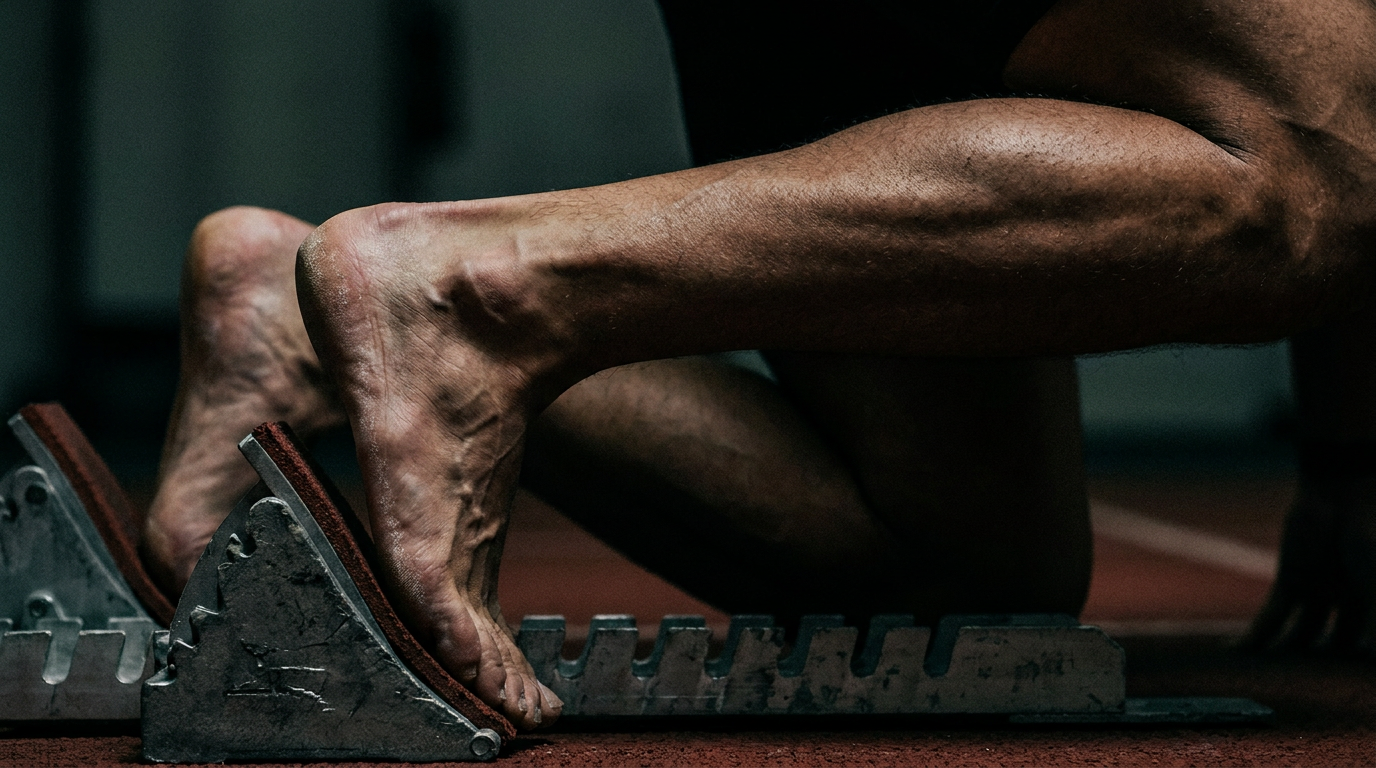
Tendons and ligaments are the structural cables of the human body. They endure immense mechanical stress, absorbing and transmitting force with every sprint, jump, and heavy lift. When they fail, the consequences are severe. Achilles and patellar tendinopathies are notoriously stubborn injuries that can sideline active individuals for months, and in elite sports, they frequently end careers.[3][6]
Historically, the medical consensus was that you simply could not "feed" a tendon. Because connective tissue has a notoriously poor blood supply compared to muscle, experts believed that nutritional interventions were largely useless for tendon repair. The standard prescription for a tweaked Achilles was rest, ice, and eventual physical therapy.[5][6]
That dogma is now being dismantled. A wave of recent clinical research has established a highly specific nutritional protocol—often referred to as the "Repair Stack"—that actively stimulates the synthesis of new collagen in tendons. By combining hydrolyzed collagen peptides with vitamin C and timing the dose precisely around exercise, athletes can fundamentally alter the architecture of their connective tissue.[1][2]
A comprehensive 2026 systematic review of randomized controlled trials confirmed the efficacy of this approach. The review analyzed athletes undergoing resistance training and found that those who supplemented with 15 to 30 grams of collagen alongside vitamin C experienced significantly greater increases in tendon cross-sectional area (thickness) and stiffness compared to those taking a placebo.[1]
The mechanism behind the Repair Stack relies on a fascinating quirk of tendon biology. Unlike muscle protein synthesis, which peaks after a workout, the tendon protocol requires the supplement to be taken 30 to 60 minutes before exercise. This timing is the linchpin of the entire strategy.[2][5]

Tendons act somewhat like dense sponges. When they are at rest, very little blood or fluid moves through them. However, when they are mechanically loaded—stretched and squeezed during a heavy squat or a plyometric jump—they push out fluid. As the tension releases, they pull surrounding fluid back in, absorbing whatever nutrients happen to be circulating in the bloodstream at that exact moment.[5][6]
When they are at rest, very little blood or fluid moves through them.
By consuming 15 to 30 grams of hydrolyzed collagen an hour before training, an athlete ensures that blood levels of specific amino acids—glycine, proline, and hydroxyproline—are peaking exactly when the tendon is acting like a sponge. These three amino acids are the primary building blocks of the collagen triple-helix structure.[1][4]
But the amino acids alone are not enough. Vitamin C plays a mandatory, non-negotiable role in the process. It acts as an essential cofactor for the enzymes (prolyl hydroxylase and lysyl hydroxylase) that cross-link the collagen fibers together. Without at least 50 milligrams of vitamin C present, the body cannot weave the amino acids into strong, stable tendon tissue.[2][5]
The structural changes induced by this protocol are measurable. In one 14-week trial highlighted in the 2026 review, athletes combining targeted collagen supplementation with resistance training saw their Achilles tendon cross-sectional area increase by nearly 10%, compared to just under 4% in the placebo group.[1]

Beyond sheer thickness, the protocol also improves tendon stiffness. In biomechanics, a "stiff" tendon is highly desirable. It acts like a tightly coiled spring, efficiently transferring force from the contracting muscle to the bone without leaking energy. The systematic review noted that higher doses of collagen (15 to 30 grams) consistently produced significant improvements in this metric.[1][6]
It is crucial to understand what the Repair Stack does not do. The research is clear that collagen supplementation does not directly increase muscle strength, muscle hypertrophy, or gross explosive metrics like jump height. It is a purely structural intervention designed to fortify the chassis, not upgrade the engine.[1]
Furthermore, the supplement is entirely useless without the mechanical trigger. Sitting on the couch drinking collagen will not heal a tendinopathy. The tendon cells, known as fibroblasts, require the mechanical signal of high-intensity loading (typically 70% or more of a one-rep max) to "turn on" and begin the remodeling process.[1][4]

The source of the collagen also matters. Whole collagen molecules from food (like bone broth) are too large to be absorbed effectively and are broken down indiscriminately in the gut. The clinical trials specifically utilize "hydrolyzed collagen peptides"—collagen that has been enzymatically chopped into smaller, highly bioavailable fragments that survive digestion and reach the target tissues.[2][5]
Looking ahead, sports scientists are exploring ways to optimize the stack further. Some clinical models suggest that adding 3 to 5 grams of creatine to the pre-workout collagen and vitamin C mix may further stimulate fibroblast activity and cellular hydration, potentially shortening recovery times even more.[2]
For decades, athletes accepted chronic joint pain and tendon degradation as the inevitable cost of high performance. The emergence of the Repair Stack marks a profound shift in sports medicine. By understanding the precise mechanical and nutritional levers that control connective tissue, athletes now have a proven blueprint to rebuild their most vulnerable structures.[3][6]
How we got here
Pre-2010s
Sports nutrition focuses almost exclusively on muscle protein synthesis, treating tendons as inert structures.
2017
Landmark studies demonstrate that vitamin C-enriched gelatin consumed before exercise increases collagen synthesis.
2022
Clinical trials confirm that specific collagen peptides improve tendon health in athletes with symptomatic tendinopathy.
2025
International consensus statements begin recommending holistic, tissue-specific nutrition strategies for elite athletes.
2026
Systematic reviews solidify the protocol, confirming that 15-30g of collagen significantly increases tendon cross-sectional area.
Viewpoints in depth
Sports Scientists
Researchers focused on the biomechanical and cellular mechanisms of tissue adaptation.
For sports scientists, the breakthrough lies in the pharmacokinetics of the protocol. They emphasize that the success of the 'Repair Stack' is entirely dependent on timing. By proving that tendon fibroblasts act like sponges during mechanical loading, researchers have shifted the focus from post-workout recovery to pre-workout preparation, ensuring that the specific amino acids (glycine and proline) are at peak serum concentration precisely when the tissue is primed to absorb them.
Clinical Physiotherapists
Rehabilitation professionals treating tendinopathies and joint injuries.
Physiotherapists view the collagen and vitamin C stack as a powerful adjunct to their primary tool: progressive mechanical loading. They caution against viewing the supplement as a magic bullet, stressing that without the targeted stress of heavy, slow resistance training or plyometrics, the collagen will not be synthesized into the tendon. For this camp, the nutritional protocol is a way to amplify the structural adaptations generated by physical therapy.
Performance Coaches
Trainers focused on maximizing athletic output and preventing injury.
In the high-performance realm, coaches are less focused on injury rehabilitation and more interested in tendon stiffness. A stiffer tendon transmits force more efficiently from the muscle to the bone, improving sprint speed and jump economy. Performance coaches are integrating the 15-gram collagen protocol into pre-training routines specifically to build a more robust, efficient 'chassis' that can handle the massive horsepower generated by elite athletes.
What we don't know
- Whether adding creatine to the collagen and vitamin C stack provides a statistically significant compounding effect in human trials.
- The exact upper limit of collagen dosage before the body stops utilizing the amino acids for connective tissue synthesis.
- How effectively this protocol translates to older, non-athletic populations suffering from age-related tendon degeneration.
Key terms
- Hydrolyzed Collagen Peptides
- Collagen protein that has been broken down into smaller, easily absorbed amino acid chains.
- Fibroblasts
- The specialized cells within connective tissue responsible for synthesizing collagen and the extracellular matrix.
- Cross-Sectional Area (CSA)
- A measurement of a tendon's thickness, used as a primary indicator of structural growth and adaptation.
- Tendon Stiffness
- The resistance of a tendon to stretching; higher stiffness allows for more efficient transfer of force from muscle to bone.
- Mechanical Loading
- The physical stress placed on tissues during exercise, such as lifting weights or jumping, which triggers cellular adaptation.
Frequently asked
Can I just eat protein-rich foods instead of taking collagen?
Standard protein sources like whey or chicken are high in leucine for muscle growth, but low in glycine and proline, which are the specific amino acids required for tendon repair.
Why do I have to take it before my workout?
Tendons have poor blood flow. They only absorb significant nutrients when they are physically squeezed and stretched during exercise, so the amino acids must already be in your bloodstream when the workout begins.
Will this protocol make my muscles bigger?
No. Clinical trials show that collagen supplementation does not directly increase muscle strength or size; it specifically targets the structural integrity of connective tissues.
Do I need a special type of Vitamin C?
No, standard ascorbic acid is sufficient. The key is ensuring at least 50 milligrams are present to act as a cofactor for the enzymes that build the collagen structure.
Sources
Source coverage
6 outlets
3 viewpoints surfaced






[1]ResearchGateSports Scientists
Collagen Supplementation and Tendon Remodeling: A Systematic Review of Randomized Controlled Trials
Read on ResearchGate →[2]Ubie HealthClinical Physiotherapists
The Repair Stack: Using Collagen and Creatine for Tendon Health
Read on Ubie Health →[3]Scandinavian Journal of Medicine and Science in SportsSports Scientists
Consensus Statements—Optimizing Performance of the Elite Athlete
Read on Scandinavian Journal of Medicine and Science in Sports →[4]Sports Medicine - OpenClinical Physiotherapists
Oral Supplementation of Specific Collagen Peptides Combined with Daily Physical Activity Improves Tendon Health
Read on Sports Medicine - Open →[5]Peptides Lab UKPerformance Coaches
Evidence for Athletes and Exercise-Related Joint Pain
Read on Peptides Lab UK →[6]Factlen Editorial TeamPerformance Coaches
Synthesis by Factlen editorial team
Read on Factlen Editorial Team →


Every angle. Every day.
Get fitness stories with full source coverage and perspective breakdowns delivered to your inbox.