
The Evidence on 'Missing Middle' Housing: Does Zoning Reform Actually Lower Prices?
Five years after pioneering cities abolished single-family zoning, a wave of new economic data reveals how legalizing duplexes, ADUs, and townhomes impacts housing supply and affordability.
By Factlen Editorial Team
- Supply-Side Researchers
- Argue that relaxing zoning laws and allowing denser construction is the primary mechanism to stabilize housing costs.
- Density Advocates
- Focus on the social and environmental benefits of legalizing 'missing middle' housing to create walkable, inclusive neighborhoods.
- Reform Skeptics
- Point out that zoning changes often fail to trigger actual construction booms and that nominal rents continue to rise despite the reforms.
What's not represented
- · Low-income renters displaced by localized gentrification
- · Suburban commuters relying on street parking
Why this matters
For decades, restrictive zoning made it illegal to build anything other than expensive single-family homes or massive apartment complexes in most North American neighborhoods. The new data proves that legalizing 'gentle density' is one of the most effective tools cities have to halt runaway housing costs and open neighborhoods to first-time buyers and renters.
Key points
- Five years after Minneapolis eliminated single-family zoning, economic models show rents are up to 34% lower than they would have been without the reform.
- The price stabilization in Minneapolis was driven by altered market expectations and softened demand, rather than an immediate construction boom.
- In California, deregulation has caused Accessory Dwelling Unit (ADU) permits to skyrocket, now accounting for 19% of all new housing.
- Auckland and Austin paired zoning reform with streamlined permitting, resulting in massive supply increases and absolute drops in rental prices.
- Experts warn that zoning reform fails to produce housing if cities do not simultaneously eliminate costly parking minimums.
For the better part of a century, the North American housing market has been defined by a stark binary: sprawling neighborhoods of detached single-family homes, or dense corridors of high-rise apartments. The housing types that once bridged the gap—duplexes, triplexes, courtyard apartments, and townhomes—were effectively zoned out of existence in most cities, creating what urban planners call the 'missing middle.'[8]
As the housing affordability crisis reached a boiling point in the early 2020s, a handful of pioneering cities and states embarked on a radical experiment. They began dismantling single-family zoning, legalizing gentle density by right in an attempt to alleviate the severe shortage of entry-level homes.[5]
The theory was straightforward: if you allow property owners to build two or three units on a lot previously restricted to one, the increased supply will naturally cool price growth and provide more accessible options for middle-income earners.[8]
Now, in 2026, the first wave of long-term, peer-reviewed data is arriving. From the American Midwest to New Zealand, the evidence provides a clear verdict on whether zoning reform actually works to solve the housing crisis.[1][3]
The most closely watched case study is Minneapolis, which in 2018 became the first major U.S. city to pass a comprehensive plan eliminating single-family zoning, a policy that officially took effect in 2020.[1]
A landmark 2025 economic study utilized a 'synthetic control' approach to measure the policy's impact. Researchers constructed a counterfactual 'Synthetic Minneapolis' out of 83 similar donor cities that did not reform their zoning laws, allowing them to isolate the exact effect of the 2040 Plan over a five-year period.[1]
The results were striking. Five years post-implementation, actual rents in Minneapolis were 17.5% to 34% lower than they would have been in the synthetic counterfactual. Home prices saw a similarly dramatic divergence, sitting 16% to 34% below the projected baseline.[1]

International data mirrors these findings. In 2016, Auckland, New Zealand, abolished single-family zoning across three-quarters of the city. A 2026 retrospective analysis found that the reform triggered a 50% increase in building consents compared to the baseline, ultimately driving rents down by 28% relative to what would have occurred without the upzoning.[3]
In Austin, Texas, a sustained package of rezoning and permitting reforms initiated in 2015 resulted in the addition of 120,000 new housing units by 2024—a 30% increase in the city's housing stock. Consequently, rents in Austin's large apartment buildings fell by 7% year-over-year, the steepest decline of any major U.S. metro.[2]
Consequently, rents in Austin's large apartment buildings fell by 7% year-over-year, the steepest decline of any major U.S.
However, the data reveals that the price drop isn't always driven by an immediate construction boom. While Auckland and Austin saw massive spikes in physical construction, the mechanism in Minneapolis was surprisingly different.[1][3]
The 2025 economic analysis found that the Minneapolis reform did not actually trigger a massive wave of new missing-middle construction. Instead, the mere legalization of future density altered market expectations, softening speculative housing demand and cooling price growth before the shovels even hit the dirt.[1]
Reform skeptics point out that this nuance matters. Critics note that nominal rents in Minneapolis still rose 13.5% between 2019 and 2025, and new construction permits actually slowed in 2024. The victory is relative: prices grew much slower than they would have otherwise, but they did not plummet in absolute terms for existing residents.[7]
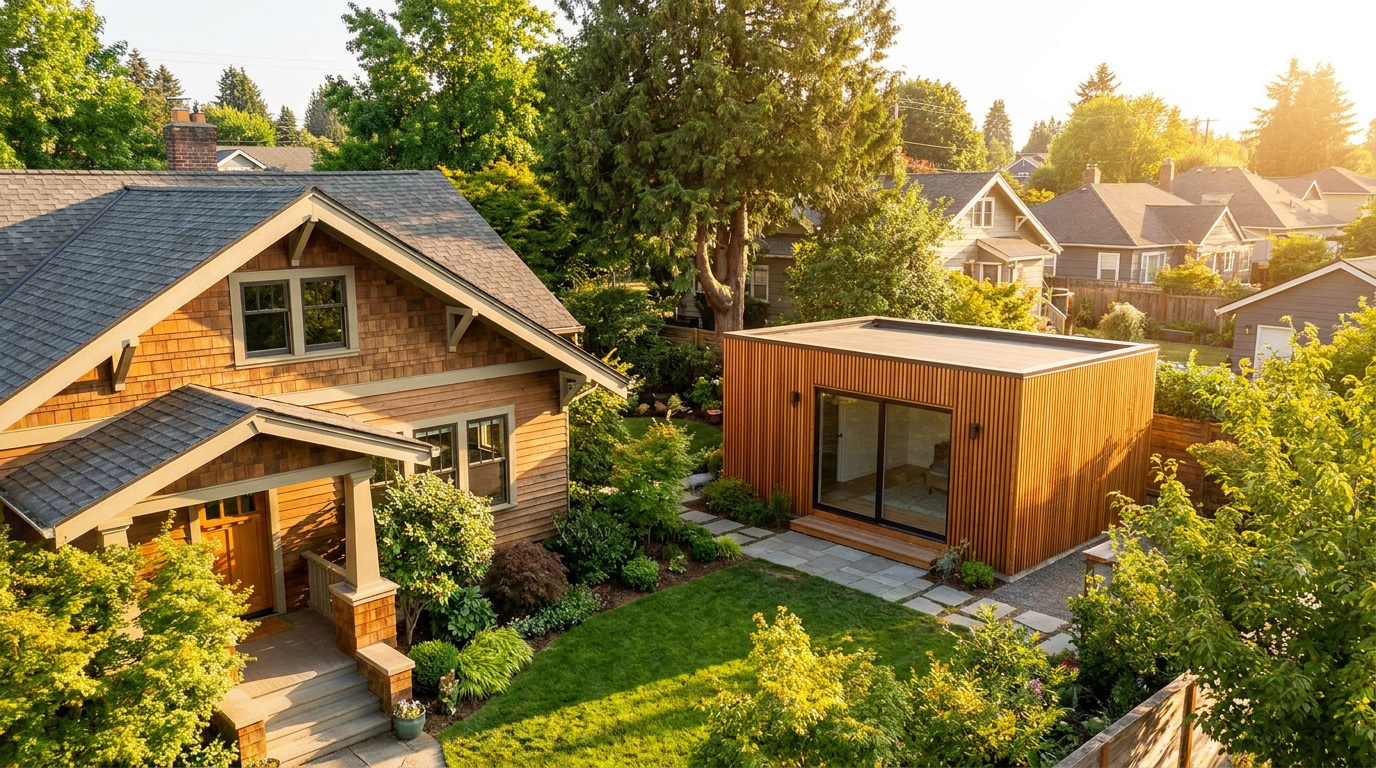
Where full multiplex development has lagged, backyard Accessory Dwelling Units (ADUs) have exploded, proving to be the most frictionless way to add density when regulatory barriers fall.[6]
California serves as the primary evidence base for this trend. After the state passed a series of laws eliminating owner-occupancy requirements, mandating pre-approved plans, and allowing ADUs to be sold separately as condos, production skyrocketed.[6]
By 2025, ADUs represented nearly 19% of all new housing units produced in California. In Los Angeles alone, ADU permits grew by an astonishing 8,850% between 2016 and 2022, transforming the city's housing landscape without altering its visual character.[6]

Yet, the data also reveals a crucial caveat: zoning changes alone are insufficient without parking reform and permitting speed. Simply making a duplex legal does not make it financially viable to build.[5]
Urban policy researchers note that minimum parking requirements are the primary killer of missing middle housing. Because underground parking can cost upwards of $50,000 per stall, mandating two parking spots for a new backyard triplex instantly renders the project unprofitable.[5][8]
Cities that are successfully scaling the missing middle in 2026 have paired zoning reform with the elimination of parking minimums and the creation of 'pre-approved plan' libraries. These pattern books allow builders to bypass months of discretionary review if they use standardized, code-compliant designs.[5]

This comprehensive approach is visible in Canada's 2026 housing data. Nationwide, missing middle starts rose 10% across major cities. However, Calgary and Edmonton—which aggressively reformed both zoning and parking requirements—led the nation, with missing middle formats accounting for a massive 60% of all their new housing starts.[4]
The accumulated evidence from 2020 to 2026 confirms that legalizing the missing middle is not a theoretical exercise. While it cannot instantly cure the gap between wages and housing costs, comprehensive zoning reform acts as a proven, powerful brake on runaway prices, slowly shifting housing from a scarce luxury back toward an accessible commodity.[8]
How we got here
2016
Auckland, New Zealand implements the Unitary Plan, upzoning three-quarters of the city.
Dec 2018
Minneapolis passes the 2040 Plan, becoming the first major U.S. city to vote to end single-family zoning.
Jan 2020
The Minneapolis 2040 Plan officially takes effect, legalizing duplexes and triplexes citywide.
2023-2024
California passes a wave of aggressive ADU laws, eliminating owner-occupancy rules and allowing separate condo sales.
2025-2026
Long-term economic data confirms that early zoning reforms successfully suppressed rent growth compared to counterfactual models.
Viewpoints in depth
Supply-Side Economists
Focus on the empirical data showing that increasing housing supply cools price growth.
Economists and urban planners argue that housing functions like any other market: when demand outstrips supply, prices skyrocket. By pointing to the synthetic control data from Minneapolis and the massive permit increases in Auckland and Austin, this camp argues that restrictive zoning is the primary artificial constraint on housing affordability. They advocate for 'by-right' development, which removes discretionary neighborhood vetoes that often stall or kill multi-family projects.
Density Advocates
Emphasize the social, environmental, and equity benefits of walkable neighborhoods.
For YIMBY (Yes In My Back Yard) advocates, zoning reform is about more than just economics—it is a tool for social equity and climate action. They argue that single-family zoning historically functioned to segregate neighborhoods by income. By legalizing the missing middle, cities can allow essential workers, young families, and seniors to live in high-opportunity neighborhoods. Furthermore, gentle density supports public transit and reduces the carbon footprint associated with sprawling commuter suburbs.
Reform Skeptics
Argue that upzoning primarily benefits developers and fails to deliver immediate affordability.
Skeptics of blanket zoning reform point out that legalizing density does not force developers to build affordable units. They highlight that in cities like Minneapolis, nominal rents still increased and new construction eventually slowed despite the 2040 Plan. This camp argues that upzoning simply increases the speculative land value for property owners, and that without heavy government subsidies or strict rent controls, the free market will only build luxury missing-middle units that remain out of reach for low-income residents.
What we don't know
- Whether the 'synthetic control' models used to evaluate Minneapolis perfectly capture the counterfactual reality of a post-pandemic housing market.
- How long it will take for newly legalized missing-middle housing to naturally filter down to price points accessible to extremely low-income earners.
- Whether suburban municipalities will adopt these reforms voluntarily, or if state and federal governments will need to mandate zoning overrides.
Key terms
- Missing Middle Housing
- House-scale buildings with multiple units—such as duplexes, fourplexes, and courtyard apartments—that fit seamlessly into existing residential neighborhoods.
- Synthetic Control Method
- A statistical technique used by economists to evaluate the effect of a policy by comparing the actual outcome to a mathematically constructed 'synthetic' version of the city that did not adopt the policy.
- Upzoning
- Changing local zoning codes to allow for higher-density land use, such as permitting apartment buildings in areas previously restricted to single-family homes.
- Accessory Dwelling Unit (ADU)
- A smaller, independent residential dwelling unit located on the same lot as a standalone single-family home, often called a granny flat or backyard cottage.
- Parking Minimums
- Local laws requiring developers to provide a set number of off-street parking spaces per new housing unit, which often makes small-scale housing financially unfeasible.
Frequently asked
Does building more housing actually lower rents?
Yes. Economic data from Auckland, Austin, and Minneapolis shows that increasing the housing supply—or even just legalizing future supply—significantly slows rent growth compared to cities that do not build.
Why is it called the 'missing middle'?
It refers to housing types that sit in the middle of the density spectrum (between single-family homes and high-rises) that went 'missing' because zoning laws made them illegal to build for decades.
Did the Minneapolis 2040 plan cause a massive construction boom?
No. Studies show the reform did not trigger an immediate building boom, but the policy still lowered housing costs by altering market expectations and softening speculative demand.
How do parking requirements affect housing costs?
Mandating off-street parking forces developers to build expensive surface lots or underground garages (costing upwards of $50,000 per stall), which often makes small multiplex projects unprofitable to build.
Sources
Source coverage
8 outlets
3 viewpoints surfaced








[1]Social Science Research Network (SSRN)Supply-Side Researchers
Zoning Reforms and Housing Affordability: Evidence from the Minneapolis 2040 Plan
Read on Social Science Research Network (SSRN) →[2]Economic Security ProjectDensity Advocates
The ROAD to Housing Act of 2025 and Supply-Side Reforms
Read on Economic Security Project →[3]Australian Property Planning InstituteDensity Advocates
Australia's missing middle can help solve our housing crisis
Read on Australian Property Planning Institute →[4]Canada Mortgage and Housing CorporationSupply-Side Researchers
Housing Supply Report 2026: Missing Middle Expansion
Read on Canada Mortgage and Housing Corporation →[5]The Pew Charitable TrustsSupply-Side Researchers
Preapproved Plans and the Missing Middle Housing Gap
Read on The Pew Charitable Trusts →[6]California Department of Housing and Community DevelopmentDensity Advocates
Accessory Dwelling Unit (ADU) Production and Permitting Data 2025
Read on California Department of Housing and Community Development →[7]Center of the American ExperimentReform Skeptics
Research finds that falling demand, not rising supply, lowered housing costs after Minneapolis 2040 Plan
Read on Center of the American Experiment →[8]Factlen Editorial TeamSupply-Side Researchers
Synthesis by Factlen editorial team
Read on Factlen Editorial Team →

Every angle. Every day.
Get real estate stories with full source coverage and perspective breakdowns delivered to your inbox.