
The Evidence Behind At-Home Red Light Therapy Masks: What Actually Works
A clinical breakdown of the top LED face masks, separating proven photobiomodulation science from skincare marketing hype.
By Factlen Editorial Team
- Clinical Dermatologists
- Focus on photobiomodulation science, wavelength specificity, and the necessity of consistent, long-term use to see cellular changes.
- Skincare Consumers
- Prioritize device comfort, treatment time, ease of use, and visible improvements in skin texture, acne, and redness.
- Device Skeptics
- Highlight the high cost, the lower power density compared to in-office treatments, and the risk of consumers abandoning the routine before results appear.
What's not represented
- · Aesthetician clinical operators
- · Budget skincare advocates
Why this matters
Consumers are spending upwards of $400 on at-home LED masks. Understanding the clinical evidence, irradiance levels, and wavelength specificity ensures you invest in a tool that actually delivers cellular benefits rather than just glowing plastic.
Key points
- Red light therapy uses specific wavelengths to stimulate cellular energy and boost collagen production.
- Clinical evidence supports modest but significant improvements in fine lines, acne, and inflammation.
- At-home masks have lower power density than clinical panels, requiring longer and more consistent use.
- Near-infrared (NIR) light penetrates deeper than red light to accelerate wound healing and reduce redness.
- Top-tier devices like Omnilux and CurrentBody use flexible silicone to maximize light absorption.
- Consistency over 12 to 16 weeks is mandatory to see structural changes in the skin.
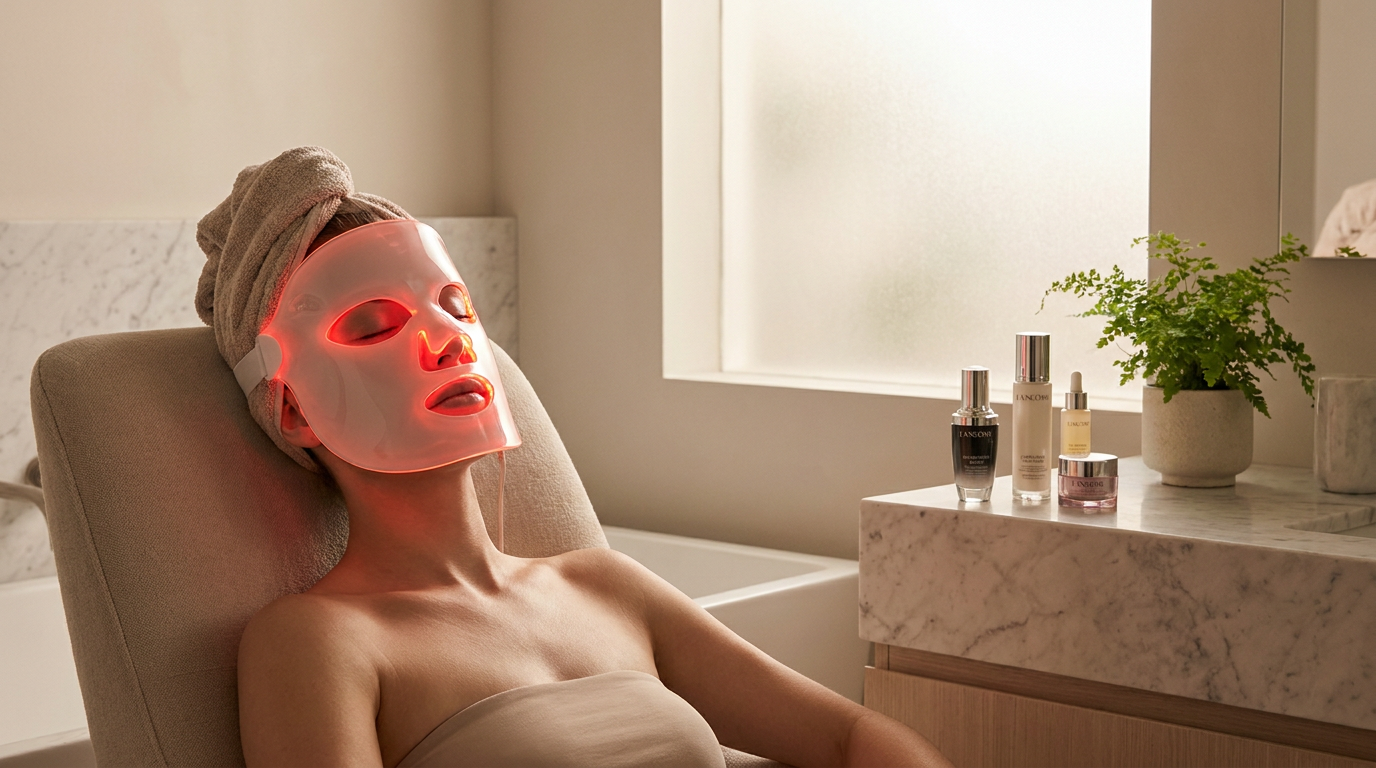
At-home LED face masks look like props from a science fiction film, but they have rapidly become one of the most popular investments in consumer skincare. Promising to reduce wrinkles, clear acne, and lower inflammation without the downtime of chemical peels or lasers, these glowing devices dominate social media and dermatology clinics alike. But as the market floods with cheap knockoffs and high-end models alike, consumers are left wondering which claims are backed by science and which are purely marketing.[3][6]
The underlying science of these devices is not magic; it is a well-documented biological process called photobiomodulation. When specific wavelengths of light penetrate the skin, they are absorbed by chromophores within the cells, particularly the mitochondria. This absorption alters intrinsic cellular activity, essentially giving sluggish, aging cells the energy they need to function optimally. The interactions between light and skin are complex, but clinical evidence confirms that visible and near-infrared light can yield desirable photorejuvenation effects.[1][2]
The strongest evidence for at-home masks centers on anti-aging and collagen stimulation. Extrinsic aging, driven by ultraviolet radiation and environmental stress, generates reactive oxygen species that damage DNA and fragment type I collagen. Fibroblasts—the cells responsible for producing collagen—respond by producing less of it, creating a vicious cycle that manifests as thinning, wrinkled skin. Red light therapy, specifically in the 630 to 660-nanometer range, has been shown to stimulate these fibroblasts, encouraging them to synthesize new collagen and elastin.[1][4]
However, the clinical consensus emphasizes that results are modest and gradual. Multiple randomized controlled trials have observed a reduction in wrinkle depth ranging from 15% to 35% in treated areas, particularly around the eyes and mouth. A systematic review found meaningful improvements in photoaging with consistent treatment over weeks to months. Red light therapy is not equivalent to the dramatic, immediate resurfacing provided by fractional lasers; rather, it works cumulatively to rebuild the skin's structural integrity over time.[4][5]

Beyond visible red light, the inclusion of near-infrared (NIR) light—typically around 830 nanometers—is a critical differentiator for high-quality masks. NIR light is invisible to the human eye but penetrates deeper into the dermis than red light. In wound healing research, NIR therapy consistently accelerates tissue repair and reduces inflammatory markers. For everyday users, this translates to practical applications for post-procedure skin recovery, reducing rosacea-related redness, and calming general skin sensitivity.[2][4]
For acne sufferers, the evidence points to a different wavelength: blue light. Operating around 415 nanometers, blue light therapy targets and neutralizes Cutibacterium acnes, the bacterium central to inflammatory breakouts. When combined with the anti-inflammatory properties of red light, dual-mode masks offer a highly effective, non-invasive method for managing mild to moderate acne vulgaris without the drying side effects of topical treatments.[2][3]
For acne sufferers, the evidence points to a different wavelength: blue light.
The central limitation of at-home red light therapy masks—and the reason they draw skepticism—is power density, or irradiance, measured in milliwatts per square centimeter (mW/cm²). Clinical, in-office LED panels typically deliver 100 to 200 mW/cm², while most at-home masks deliver a fraction of that, usually between 10 and 50 mW/cm². This discrepancy dictates how the devices must be used to achieve efficacy.[4]
Because at-home devices emit lower power, achieving a comparable dose of light energy (measured in joules per square centimeter) requires significantly more treatment time. A clinical session that delivers an effective dose in 10 minutes might require daily 10-to-20-minute sessions at home to approximate the same cellular stimulation. The science supports the efficacy of home devices, but only if the user commits to strict consistency over a period of 12 to 16 weeks.[4][5]

When evaluating the top devices on the market, the Omnilux Contour Face frequently emerges as the gold standard for anti-aging and redness reduction. Crafted from flexible medical-grade silicone, it features 132 LEDs delivering both 633nm red and 830nm near-infrared light. Dermatologists favor it for its robust clinical backing and its contouring shape, which ensures the light diodes sit flush against the skin for maximum absorption and efficacy.[3][6]
A close competitor is the CurrentBody Skin LED Light Therapy Mask. Sharing a very similar flexible silicone design and utilizing the same combination of red and near-infrared wavelengths, the CurrentBody mask performs almost identically to the Omnilux in clinical endpoints. The choice between the two often comes down to minor differences in strap design, facial fit, and price point, though both are widely regarded as top-tier investments for collagen stimulation.[3]
For users prioritizing speed and acne management alongside anti-aging, the Dr. Dennis Gross DRx SpectraLite FaceWare Pro offers a distinct alternative. Unlike the flexible silicone models, this mask is made of rigid plastic and features a combination of red and blue light modes. Its primary advantage is a high-output design that requires only a three-minute daily treatment time, making it highly appealing for those who struggle to commit to longer skincare routines.[3]

Safety profiles for reputable, FDA-cleared at-home LED devices are generally excellent, as the therapy is non-invasive and does not cause DNA damage like ultraviolet light. However, eye protection remains a critical consideration. While red and near-infrared lights are generally safe, masks that emit blue light can pose risks to the retina if the eyes are not properly shielded. Users are advised to utilize the blackout goggles provided with most high-end devices.[2][5]
Ultimately, the clinical evidence confirms that at-home red light therapy is a legitimate, effective tool for skin rejuvenation—provided expectations are managed. It will not replace a facelift, nor will it erase deep dynamic wrinkles overnight. It is a biological support system that requires patience, delivering natural-looking improvements in skin texture, tone, and elasticity through cumulative cellular repair.[4][6]
For consumers willing to invest in a high-quality, clinically validated device and commit to using it three to five times a week, the science is clear: photobiomodulation works. By understanding the roles of specific wavelengths and the importance of consistent irradiance, users can confidently integrate LED therapy into their routines for long-term skin health.[1][6]
How we got here
1990s
NASA utilizes red LED lights to promote plant growth in space and notices accelerated healing in astronauts' skin lesions.
2001
Early clinical research confirms that specific wavelengths of LED light can accelerate human tissue repair and wound healing.
2010s
Dermatologists adopt large, high-powered LED panels for in-office anti-aging and acne treatments.
2020s
Flexible silicone at-home masks launch, democratizing the technology and making daily treatments accessible to consumers.
Viewpoints in depth
Clinical Dermatologists
Focus on photobiomodulation science, wavelength specificity, and the necessity of consistent, long-term use to see cellular changes.
Medical professionals view LED therapy through the lens of cellular biology. They emphasize that photobiomodulation is a proven science, but they caution against expecting surgical results from a topical device. Dermatologists stress the importance of wavelength specificity—noting that cheap devices emitting uncalibrated light are effectively useless. They advocate for devices that combine 633nm red light with 830nm near-infrared light, as this combination has the most robust clinical backing for stimulating fibroblasts and reducing inflammatory markers. For this camp, the device is only as good as the patient's adherence to a strict, months-long routine.
Skincare Consumers
Prioritize device comfort, treatment time, ease of use, and visible improvements in skin texture, acne, and redness.
For the end user, the clinical data is secondary to the practical experience of using the device. Consumers heavily weigh factors like the comfort of flexible silicone versus rigid plastic, battery life, and the time commitment required per session. This perspective drives the popularity of devices like the Dr. Dennis Gross mask, which appeals to busy users with its rapid three-minute treatment time. Consumers report high satisfaction rates when using these devices for immediate, visible concerns like calming active acne breakouts or reducing post-procedure redness, often viewing the long-term collagen benefits as an added bonus.
Device Skeptics
Highlight the high cost, the lower power density compared to in-office treatments, and the risk of consumers abandoning the routine before results appear.
Skeptics do not necessarily doubt the science of light therapy; rather, they question the value proposition of at-home devices. They point out that a $400 mask delivering 30 mW/cm² of irradiance pales in comparison to the power of a clinical LED panel. This camp argues that the subtle, gradual results achieved at home may not justify the high upfront cost for the average consumer. Furthermore, they highlight the psychological reality that many users will abandon the tedious daily routine long before the 12-week mark required to see structural improvements in collagen density.
What we don't know
- The exact long-term effects of daily blue light exposure on facial hyperpigmentation in darker skin tones.
- Whether combining LED therapy simultaneously with certain active skincare ingredients enhances or blocks light absorption.
- The definitive threshold of irradiance (mW/cm²) below which an at-home device becomes entirely ineffective.
Key terms
- Photobiomodulation
- The process by which specific wavelengths of light stimulate cellular function, similar to how plants use sunlight for photosynthesis.
- Irradiance
- The power density of a light device, measured in milliwatts per square centimeter (mW/cm²), which determines how much energy reaches the skin.
- Fibroblasts
- Cells within the skin's dermal layer responsible for producing collagen and elastin, the proteins that keep skin firm.
- Near-Infrared (NIR) Light
- Invisible light (typically 830-850nm) that penetrates deeper than visible red light to reduce inflammation and accelerate tissue repair.
Frequently asked
Do LED masks cause facial fat loss?
No. Facial fat loss is a potential risk associated with radiofrequency (RF) devices, not LED light therapy, which does not generate deep tissue heat.
Can I use retinol with a red light mask?
Yes, but apply retinol after your LED session, not before. Applying active ingredients before light therapy can cause irritation or block light absorption.
How long does it take to see results?
Clinical studies suggest minor improvements in skin tone at 4-6 weeks, with more significant collagen-building results appearing after 12-16 weeks of consistent use.
Is it safe to use every day?
Most at-home devices are cleared for daily use, but 3 to 5 times per week is generally sufficient to achieve optimal cellular stimulation without diminishing returns.
Sources
Source coverage
6 outlets
3 viewpoints surfaced






[1]Journal of Drugs in DermatologyClinical Dermatologists
Light Emitting Diode Phototherapy for Skin Aging
Read on Journal of Drugs in Dermatology →[2]ResearchGateClinical Dermatologists
The Impact of LED Therapy on Skin: The Review
Read on ResearchGate →[3]ForbesSkincare Consumers
The Best LED Face Masks, Tested And Reviewed By Editors
Read on Forbes →[4]DoctronicDevice Skeptics
Red Light Therapy: Clinical Evidence and Efficacy
Read on Doctronic →[5]Boulder Medical CenterClinical Dermatologists
What Can Red Light Therapy Help With?
Read on Boulder Medical Center →[6]Factlen Editorial Team
Synthesis by Factlen editorial team
Read on Factlen Editorial Team →

Every angle. Every day.
Get shopping stories with full source coverage and perspective breakdowns delivered to your inbox.