
The End of Walled Gardens: How Open Protocols Are Rewiring Social Media
The transition from closed social platforms to open, interoperable networks is giving users unprecedented control over their digital identities and communities.
By Factlen Editorial Team
- Open-Web Advocates
- Argues that decentralized protocols are essential for protecting digital rights, privacy, and user autonomy against corporate monopolies.
- Commercial Platforms
- Views interoperability as a necessary evolution to maintain user trust and scale, while carefully managing the technical complexities of federation.
- Protocol Developers
- Focuses on the technical architecture required to make decentralized networks fast, scalable, and capable of supporting composable moderation.
What's not represented
- · Independent Server Administrators
- · Non-technical everyday users
Why this matters
For two decades, building an audience meant being locked into a single corporate platform. The shift to open protocols means your social connections are now a portable asset that you own, fundamentally shifting the balance of power from tech giants back to the user.
Key points
- Social media is shifting from closed corporate platforms to open, interoperable protocols.
- Standards like ActivityPub allow users on different apps to interact seamlessly.
- Open protocols make social graphs portable, allowing users to switch providers without losing followers.
- Decentralized networks face ongoing challenges regarding content moderation and financial sustainability.
- Major tech companies are beginning to integrate these open standards into their existing products.
Imagine if a Gmail user could only send emails to other Gmail users, and communicating with someone on Yahoo required creating a completely separate account. For the last twenty years, this fractured, siloed model is exactly how social media has operated. Users have been trapped inside corporate walled gardens, unable to communicate across platform boundaries. Today, that paradigm is undergoing a fundamental rewiring as the industry shifts from closed platforms to open protocols.[6]
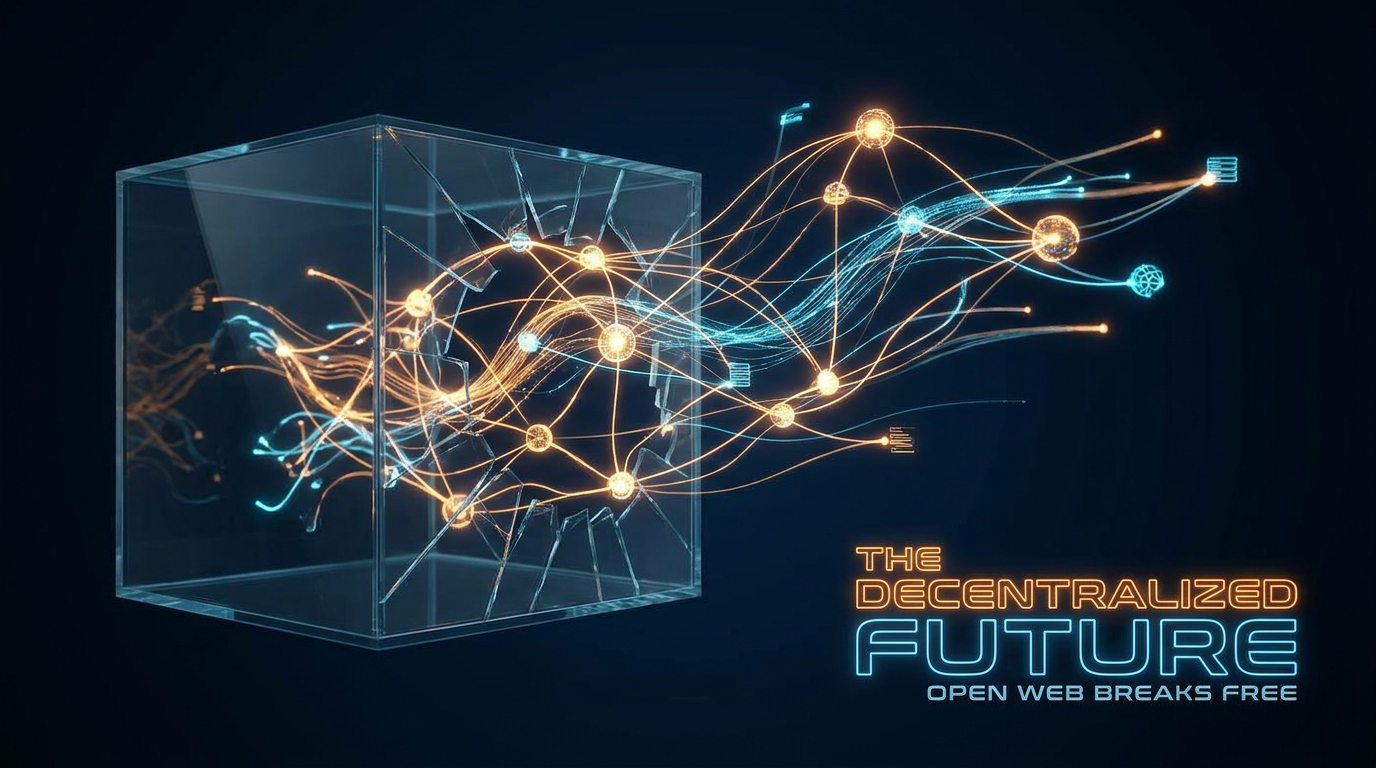
This architectural shift is giving rise to the 'Fediverse,' a sprawling, interconnected network of independent social media servers. Instead of a single company controlling the entire ecosystem, the Fediverse operates on shared technical languages that allow different applications to talk to one another. It represents a return to the early, decentralized ideals of the internet, updated for the modern social web.[4][5]
The primary language powering this transition is ActivityPub. Recognized as an official standard by the World Wide Web Consortium (W3C), ActivityPub dictates a universal format for how servers exchange messages, likes, and follows. Because it is an open standard, any developer can build an application that plugs into the broader network, instantly gaining access to millions of potential connections without having to bootstrap a user base from scratch.[1]
In practice, this means a user on a niche, community-run server like Mastodon can seamlessly follow, reply to, and share posts from a user on a completely different platform. The underlying protocol translates the interactions, making the boundaries between different apps virtually invisible to the end user. It transforms social media from a series of isolated theme parks into a single, interconnected city.[1][5]

The movement gained massive mainstream momentum when Meta integrated ActivityPub into its Threads platform. By bridging a major commercial application with the decentralized web, Meta brought over a hundred million users into the interoperable fold. This move validated the protocol approach and signaled to the broader tech industry that interoperability is becoming a baseline expectation rather than a niche feature.[2]
Parallel to ActivityPub, other open standards are pushing the boundaries of what decentralized social media can do. Bluesky, for instance, developed the AT Protocol, which places a heavy emphasis on account portability and algorithmic choice. Rather than relying on a single feed dictated by the platform, the AT Protocol allows users to subscribe to custom algorithms built by third-party developers, giving them ultimate control over what they see.[3]
Parallel to ActivityPub, other open standards are pushing the boundaries of what decentralized social media can do.
The most profound consequence of this protocol revolution is the concept of user portability. In the era of walled gardens, if a platform changed its rules, altered its algorithm, or simply shut down, creators and users lost their entire social graph. They were essentially digital sharecroppers, building value on land they did not own.[4][6]
Open protocols change this dynamic entirely. Because the user's identity and connections are tied to the protocol rather than the application, the social graph becomes a portable asset. If a user becomes dissatisfied with their current hosting provider, they can pack up their followers and move to a new server, much like porting a phone number to a new carrier.[3][6]
This portability fundamentally alters the power dynamic between tech companies and their users. Platforms can no longer hold audiences hostage; they must continuously earn their users' loyalty through better features, stronger privacy protections, and superior user experiences. It introduces genuine free-market competition to an industry long dominated by monopolies.[4][5]

However, the transition to a decentralized web is not without significant hurdles. The most pressing challenge is content moderation. In a centralized system, a single trust and safety team can ban malicious actors and remove harmful content globally. In a federated system, there is no central authority to enforce rules across the entire network.[4][6]
To address this, protocol developers are pioneering 'composable moderation.' Instead of relying on a single platform's rules, users and server administrators can subscribe to independent, third-party labeling services. These services act as customizable filters, allowing communities to set their own boundaries and automatically block content from known bad actors without requiring a global censor.[3][5]
Financial sustainability also remains an open question. Running servers and hosting media costs real money. Without the massive, centralized advertising networks that fund traditional social media, independent instances must rely on alternative revenue models, such as user donations, premium subscriptions, or institutional grants.[5]

Despite these challenges, the momentum behind open protocols appears unstoppable. The infrastructure of digital connection is being rebuilt from the ground up, prioritizing user agency over corporate lock-in. As these technologies mature, the concept of a 'social media platform' may soon feel as antiquated as a proprietary email network.[6]
How we got here
2018
The W3C officially publishes the ActivityPub standard, laying the groundwork for the modern Fediverse.
2022
Decentralized platforms like Mastodon experience massive user influxes as consumers seek alternatives to legacy networks.
2024
Meta's Threads begins federating posts, bringing millions of mainstream users into the interoperable web.
2026
Protocol-level interoperability becomes a baseline expectation for new social media applications.
Viewpoints in depth
Open-Web Advocates
Digital rights organizations and open-source pioneers view this shift as a necessary correction to the internet's consolidation.
For advocates of the open web, the era of walled gardens was a historical anomaly that centralized too much power in the hands of a few corporations. They argue that open protocols restore the original promise of the internet: a decentralized network where no single entity controls the flow of information. By ensuring that users own their social graphs, these advocates believe we can permanently dismantle the monopolistic practices that have defined the last decade of social media.
Commercial Platforms
Major tech companies are cautiously embracing interoperability to maintain relevance and user trust.
For massive commercial platforms, integrating open protocols is a delicate balancing act. While they recognize the growing consumer demand for portability and interoperability, they must also protect their business models and ensure user safety at an unprecedented scale. Their approach involves gradual integration, carefully testing how federated content interacts with their proprietary algorithms and moderation systems before fully opening the floodgates.
Protocol Developers
Engineers and researchers are focused on solving the complex technical challenges of a decentralized web.
The teams building the underlying architecture of the new social web are primarily concerned with scalability and safety. They acknowledge that decentralized networks are inherently more complex to manage than centralized databases. Their focus is on developing innovative solutions like composable moderation and decentralized identity verification, ensuring that the Fediverse can support billions of users without collapsing under technical debt or being overrun by malicious actors.
What we don't know
- How independent servers will achieve long-term financial sustainability without centralized advertising.
- Whether mainstream users will fully embrace the complexities of choosing their own algorithms and moderation filters.
- How global regulations regarding data privacy and content moderation will apply to decentralized, borderless networks.
Key terms
- Fediverse
- A portmanteau of 'federation' and 'universe,' referring to the interconnected network of independent social media servers that communicate with each other.
- ActivityPub
- An open, decentralized social networking protocol standardized by the W3C that allows different applications to share data and interact.
- Instance
- A single, independently hosted server that forms one node within the broader federated network.
- Interoperability
- The ability of different computer systems, software, or applications to connect and communicate with one another in a coordinated way.
Frequently asked
Can I message someone on a different app?
Yes. If both applications support the same underlying open protocol, such as ActivityPub, you can follow, like, and reply to users across different platforms seamlessly.
Do I have to pay to use federated social media?
Most servers are free to join. However, because there is no centralized advertising, many independent servers rely on user donations or offer premium features to cover their hosting costs.
Who owns my data on a decentralized network?
You do. The architecture of open protocols allows you to export your data and your entire social graph, meaning you can move to a different provider at any time without losing your connections.
Sources
Source coverage
6 outlets
3 viewpoints surfaced






[1]W3COpen-Web Advocates
ActivityPub Specification
Read on W3C →[2]Meta EngineeringCommercial Platforms
Building Interoperability: Threads and the Fediverse
Read on Meta Engineering →[3]BlueskyProtocol Developers
The AT Protocol: A Foundation for the Social Web
Read on Bluesky →[4]Electronic Frontier FoundationOpen-Web Advocates
Why Decentralized Social Media Matters for Digital Rights
Read on Electronic Frontier Foundation →[5]MIT Technology ReviewProtocol Developers
The architecture of tomorrow's social internet
Read on MIT Technology Review →[6]Factlen Editorial Team
Synthesis by Factlen editorial team
Read on Factlen Editorial Team →

More in technology
See all 7 stories →Robotaxis
Japan's Largest Taxi App IPO Signals a National Pivot to Robotaxis
8 sources

Mars Exploration
NASA Taps Eric Schmidt's Relativity Space for 2028 Mars Weather Mission
6 sources

Smart Home
Aura Launches Cordless $499 E-Ink Photo Frame That Looks Like a Real Print
6 sources

AI Infrastructure
Fine-Tuning Forgets, RAG Leaks: Why Hypernetworks Are the Next Era of AI Infrastructure
6 sources
Every angle. Every day.
Get technology stories with full source coverage and perspective breakdowns delivered to your inbox.