
The Emerging Science of Psychobiotics: How Gut Bacteria Actively Shape Mental Health
A new class of beneficial microbes known as psychobiotics is revealing how the gut microbiome directly influences mood, anxiety, and cognitive function. As researchers map the high-speed neural highway between the digestive tract and the brain, targeted bacterial therapies are emerging as a promising frontier in mental health treatment.
By Factlen Editorial Team
- Microbiome Researchers
- Focus on mapping the complex biological mechanisms, such as vagus nerve signaling and extracellular vesicles, that link gut bacteria to brain function.
- Clinical Psychiatrists
- Cautiously optimistic about using targeted probiotics as adjunct therapies for depression, but demand rigorous, large-scale human trials before widespread adoption.
- Nutritional Science Advocates
- Emphasize that consuming a diverse diet rich in whole prebiotic fibers and naturally fermented foods is currently more reliable than taking engineered supplements.
- Biotech Industry
- Actively developing and commercializing proprietary psychobiotic strains designed to deliver specific cognitive and mood-enhancing benefits to consumers.
- Scientific Synthesis
- Provides a comprehensive overview of the emerging science, balancing industry enthusiasm with clinical realities.
What's not represented
- · Patients with Treatment-Resistant Depression
- · Regulatory Agencies (FDA/EFSA)
Why this matters
Understanding the gut-brain connection empowers individuals to take actionable, dietary steps to improve their mental health and cognitive resilience. As psychobiotics move from the laboratory to clinical use, they offer a powerful, non-pharmacological tool for managing stress, anxiety, and depression.
Key points
- Psychobiotics are live beneficial bacteria and prebiotics that directly influence brain function and mental health.
- The gut and brain communicate rapidly via the vagus nerve, with 90% of the neural traffic flowing upward from the digestive tract.
- Gut bacteria manufacture essential neurotransmitters, including dopamine, GABA, and the vast majority of the body's serotonin.
- Recent studies show that specific gut microbes can trigger severe neuroinflammation, a primary driver of major depressive disorder.
- While commercial psychobiotic supplements are surging, experts currently recommend a diet rich in fiber and fermented foods for optimal gut-brain health.
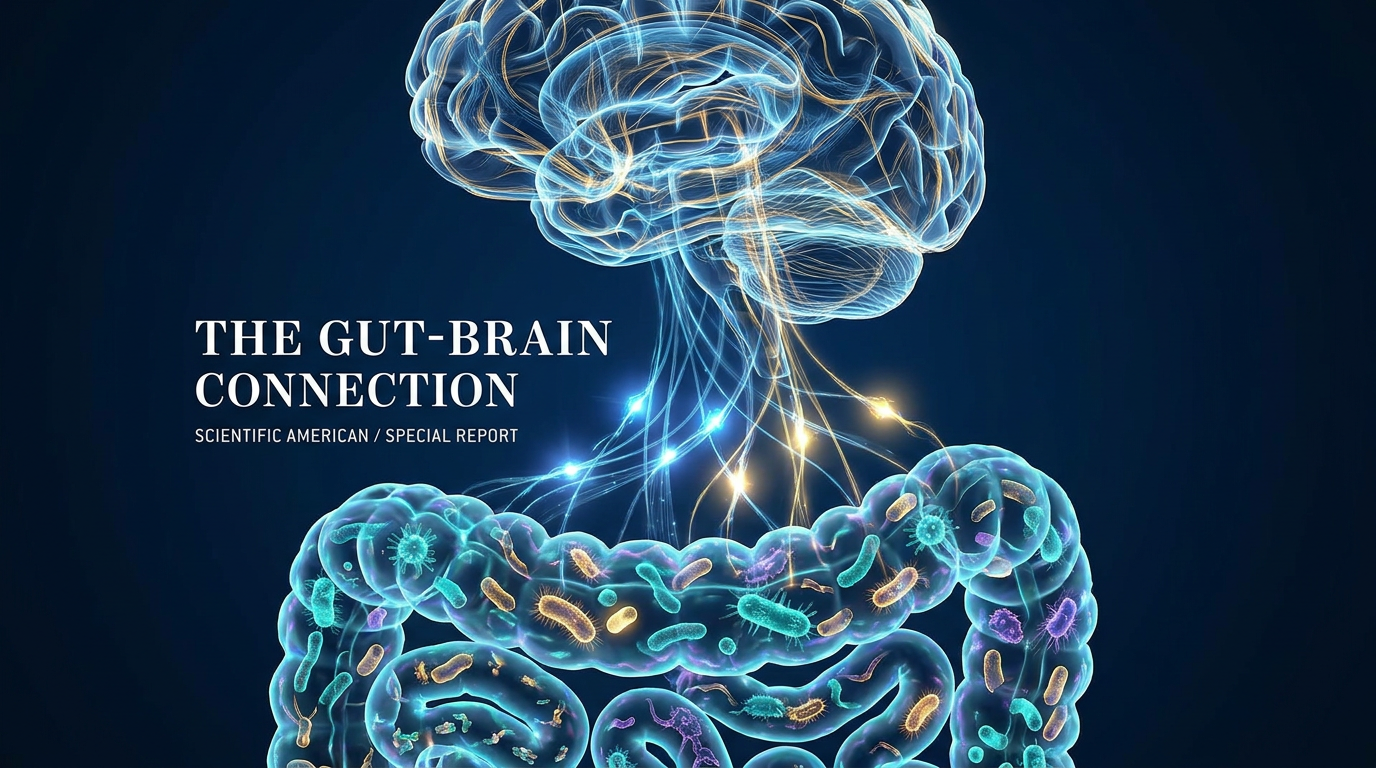
The human gastrointestinal tract is frequently referred to by scientists and medical professionals as the body’s "second brain," and for increasingly compelling reasons. Housing trillions of microorganisms—including bacteria, viruses, and fungi—the digestive system contains an intricate network of neurons known as the enteric nervous system. This localized neural network is so vast and complex that it can govern the entire digestive process, from peristalsis to enzyme release, completely independently of the central nervous system in the skull. For decades, the medical community viewed this dense microbial ecosystem primarily through the narrow lens of digestion, nutrient absorption, and baseline immune function. However, a rapidly expanding and highly funded field of scientific research is currently mapping a profound new biological connection that is upending traditional neuroscience: the microbiota-gut-brain axis. This bidirectional communication highway proves that our gut health and our mental health are inextricably linked.[1][5][7]
At the absolute center of this emerging scientific frontier is the study of "psychobiotics." First conceptualized in the early 2010s but only now reaching clinical maturity, psychobiotics are a newly defined class of live beneficial bacteria (probiotics) and the specialized dietary fibers that feed them (prebiotics). When ingested in adequate and sustained amounts, these specific microbial strains confer direct, measurable mental health benefits to the host. By actively modulating brain function, altering stress responses, and influencing cognitive clarity, these microscopic organisms are opening an entirely new, non-pharmacological frontier in the treatment of widespread psychological conditions such as generalized anxiety, major depressive disorder, and age-related cognitive decline. Rather than treating the brain in isolation, the psychobiotic approach suggests that the most effective way to heal the mind might actually begin in the lower intestines.[6][7]
The communication between the gut microbiome and the human brain is not a slow, passive chemical drift, but rather a high-speed, bidirectional information highway. The primary physical conduit for this rapid signaling is the vagus nerve, a thick bundle of nerve fibers that extends from the brainstem all the way down through the abdomen, connecting to the heart, lungs, and digestive tract. Remarkably, researchers have discovered that up to 90 percent of the neurological traffic along the vagus nerve travels upward from the gut to the brain, rather than the brain issuing commands downward. This means the enteric nervous system is constantly broadcasting a massive stream of sensory data, chemical alerts, and microbial status updates directly into the central nervous system, heavily influencing the brain's emotional and cognitive centers on a moment-to-moment basis.[5][7]
Along this bustling neural highway, the bacteria residing in the gut act as microscopic, highly efficient chemical factories. They are responsible for synthesizing, regulating, and breaking down a vast array of major neurotransmitters that the brain relies upon to function optimally. For example, gut microbes produce significant quantities of dopamine, the neurotransmitter associated with reward and motivation, as well as gamma-aminobutyric acid (GABA), which is essential for calming the nervous system and mitigating anxiety. Even more strikingly, an estimated 90 percent of the body's serotonin—the primary chemical messenger responsible for mood stability, happiness, and healthy sleep cycles—is manufactured not in the brain, but in the digestive tract by specialized enteroendocrine cells that are directly stimulated by commensal gut bacteria.[4][5]
Beyond synthesizing neurotransmitters, these beneficial microbes also perform the vital task of fermenting indigestible dietary fibers. This fermentation process produces highly beneficial byproducts known as short-chain fatty acids (SCFAs), such as butyrate, propionate, and acetate. Once produced in the colon, these small molecules enter the bloodstream and circulate throughout the body, eventually reaching the brain. SCFAs play a critical role in maintaining the structural integrity of the blood-brain barrier, the highly selective semipermeable border that prevents circulating toxins, pathogens, and inflammatory markers from reaching vulnerable neural tissue. By keeping this barrier strong and tightly sealed, SCFAs ensure that the brain operates in a clean, protected environment, which is essential for maintaining sharp cognitive function and preventing neurodegenerative decline.[1][5]

When the gut microbiome loses its delicate balance and microbial diversity—a detrimental state clinically known as dysbiosis—the consequences for human mental health can be severe and far-reaching. In extensive clinical investigations of patients suffering from clinical depression, researchers have found that up to 80 percent of cases reveal a significant loss of gut microbial diversity. This microbial depletion is frequently accompanied by a dangerous overgrowth of pathogenic, pro-inflammatory bacterial strains. Without a robust population of beneficial microbes to produce calming neurotransmitters and protective short-chain fatty acids, the gut environment becomes hostile, leading to a breakdown in the intestinal lining and the subsequent leakage of harmful bacterial endotoxins into the host's general bloodstream.[5]
This resulting systemic inflammation is now recognized by the psychiatric community as a crucial piece of the mental health puzzle. Chronic, low-grade inflammation is no longer viewed merely as a symptom of physical illness, but rather as a primary, driving mechanism behind major depressive disorder and severe anxiety. When pro-inflammatory cytokines cross the blood-brain barrier, they disrupt normal neural signaling, alter the metabolism of serotonin and dopamine, and trigger a defensive sickness behavior in the brain that closely mimics the clinical symptoms of deep depression. Consequently, addressing this root-cause neuroinflammation by restoring harmony to the gut microbiome has become a major target for next-generation psychiatric research and advanced therapeutic interventions.[2][5]
Recent laboratory breakthroughs have successfully isolated exactly how this bacterially induced inflammation reaches the brain and triggers depressive symptoms. In a landmark study, researchers at Harvard Medical School identified a highly specific biological mechanism involving a common gut bacterium known as Morganella morganii. The Harvard research team discovered that this particular bacterial strain has the unique ability to incorporate a common environmental contaminant—diethanolamine (DEA)—into a complex molecule it naturally produces during digestion. This abnormal, contaminant-laced molecule is entirely foreign to the human body and immediately triggers a severe, localized immune response within the intestinal walls.[2]

Recent laboratory breakthroughs have successfully isolated exactly how this bacterially induced inflammation reaches the brain and triggers depressive symptoms.
Once this abnormal molecule activates the immune system, it stimulates the aggressive release of inflammatory proteins, most notably a cytokine called interleukin-6 (IL-6). Elevated levels of IL-6 have long been strongly correlated with major depressive disorder in human patients, but the exact origin of this inflammation was previously unknown. The Harvard discovery provides a definitive, mechanistic link: a specific gut microbe produces a faulty molecule that directly drives the systemic neuroinflammation seen in clinical depression. This finding not only validates the gut-brain theory but also provides pharmaceutical researchers with a tangible, molecular target for diagnosing and potentially treating certain inflammatory subtypes of depressive disorders.[2]
Beyond the well-documented pathways of inflammation and neurotransmitter production, scientists are currently uncovering entirely new, highly sophisticated methods of bacterial communication. Recent microbiological studies have highlighted the critical role of bacterial extracellular vesicles—nanosized, membrane-bound packages released by living psychobiotic bacteria within the gut. For decades, these microscopic vesicles were largely ignored or misunderstood as cellular debris, but advanced imaging techniques have revealed that they are actually complex delivery vehicles packed with bacterial proteins, lipids, and genetic material designed to interact with the host's cellular machinery.[1]
Because of their incredibly small size, these extracellular vesicles are capable of being absorbed directly from the gastrointestinal tract, entering the systemic circulation, and easily crossing the highly restrictive blood-brain barrier. Once they successfully navigate into the central nervous system, these vesicles can deliver their bacterial payloads directly to human brain cells. Research indicates that these payloads can modulate the expression of vital neurotrophic factors, regulate the release of neurotransmitters, and even supplement astrocytes with necessary glycolytic enzymes. This discovery suggests that psychobiotics don't just send chemical signals from afar; they actively dispatch physical packages of genetic information directly into the brain to influence mood and behavior.[1]
The real-world clinical applications of these profound microbiological discoveries are already showing significant promise in human trials. A recent, carefully controlled clinical study investigated the use of targeted probiotics as an adjunct therapy for older adults who were currently receiving standard pharmacological antidepressant treatments. Historically, older populations often experience stubborn, treatment-resistant depression, making the search for effective supplementary therapies a high priority for geriatric psychiatrists. The researchers administered a daily, high-quality probiotic supplement to one group of seniors, while the control group received an identical, inactive placebo alongside their standard daily medication regimen.[3]
The results of the trial provided compelling evidence for the psychobiotic approach. The researchers found that the seniors who took the daily probiotic experienced modest but clinically meaningful and statistically significant improvements in both their depression and anxiety symptoms compared to the placebo group. Furthermore, fecal microbiota profiling of the participants confirmed that the probiotic intervention successfully altered the composition of the microbes living in their digestive systems, correlating directly with their improved psychiatric assessments. While probiotics are not yet viewed as a standalone cure for severe depression, this data strongly supports their use as a powerful, low-risk booster for traditional psychiatric treatments.[3]
Unsurprisingly, the commercial wellness and biotechnology sectors are moving rapidly to capitalize on this emerging science. The international probiotics market, which was already valued at nearly $88 billion in 2023, is currently experiencing a massive surge in bioengineered psychobiotic blends specifically designed to stimulate focus, enhance memory retention, and promote deep relaxation. Innova Market Insights data reveals that explicit gut-brain health claims on supplement packaging have risen by an impressive 11 percent over the last five years, reflecting a growing consumer base that is highly educated about the microbiome and actively seeking natural solutions for cognitive enhancement and stress reduction.[4][6][7]
Leading biotech firms are now developing highly targeted, proprietary bacterial strains to meet this consumer demand. For example, newly commercialized psychobiotic blends feature specific strains like Lactiplantibacillus plantarum, which have been rigorously selected and clinically tested for their unique ability to promote GABA production and alleviate perceived psychological stress. Companies are also exploring how these precision psychobiotics could support neurodevelopmental conditions, including autism spectrum disorder and ADHD in children. To increase consumer compliance, these advanced bacterial strains are being formulated into convenient, lifestyle-friendly formats such as gummies, oil drops, and lozenges, moving far beyond the traditional capsule.[4]
However, despite the immense commercial enthusiasm, leading academic researchers urge a degree of caution when navigating the rapidly expanding market of gut-brain supplements. The biological translation from successful animal models to proven human efficacy is notoriously difficult and fraught with variables. For instance, Lactobacillus rhamnosus JB-1, which was widely considered one of the most promising psychobiotic strains based on dramatic anxiety-reducing effects in rodent trials, ultimately failed to produce any statistically significant mental health benefits when rigorously tested in human clinical trials. The human microbiome is vastly more complex, and individual dietary variations can easily override the effects of a single probiotic pill.[7]

Because every person's microbiome is entirely unique—shaped by genetics, environment, and a lifetime of dietary choices—a specific psychobiotic supplement that works miracles for one individual might be completely ineffective for another. Furthermore, current quantification methods face significant technical challenges, including low sensitivity for detecting trace microbial metabolites in the human body. Until these targeted psychobiotic supplements undergo more rigorous, large-scale, placebo-controlled human trials that can definitively prove their mechanisms of action, the scientific consensus remains cautious about relying solely on commercial pills to cure complex psychiatric conditions.[7]
In the interim, nutritional scientists and gastroenterologists emphasize that the most effective, accessible, and evidence-backed way to cultivate a healthy gut-brain axis is through consistent dietary choices. Rather than attempting to micromanage the microbiome with isolated bacterial strains, experts recommend consuming a diverse array of prebiotic fibers—found abundantly in whole grains, legumes, onions, and garlic—which serve as the essential fuel for beneficial microbes. When these fibers are combined with a regular intake of naturally fermented foods like kefir, kimchi, sauerkraut, and traditional yogurt, the gut is supplied with a broad, resilient spectrum of living bacteria.[6][7]
Ultimately, the emerging science of psychobiotics is fundamentally changing how the medical community views mental health. It dismantles the long-held belief that the brain exists in isolated biological supremacy, proving instead that our emotional well-being is deeply intertwined with the trillions of microscopic organisms inhabiting our digestive tract. While the commercial supplement industry continues to refine its targeted bacterial therapies, the foundational truth remains clear: maintaining a robust, diverse, and well-fed gut microbiome isn't just a matter of digestive comfort—it is an absolute prerequisite for a resilient, focused, and healthy mind.[6][7]

How we got here
Early 2000s
Probiotics enter the mainstream consumer market, primarily marketed for digestive and immune health.
2013
The term 'psychobiotics' is first coined by researchers to describe microbes that confer mental health benefits.
2020–2025
Gut-brain health claims on supplement packaging rise by 11% as the biotechnology industry commercializes the science.
Jan 2025
Harvard researchers pinpoint how the gut bacterium Morganella morganii triggers neuroinflammation linked to depression.
Jun 2026
Clinical trials demonstrate that targeted probiotics can provide a meaningful boost to older adults undergoing standard antidepressant treatment.
Viewpoints in depth
Microbiome Researchers
Mapping the biological pathways between the gut and the brain.
Academic researchers are focused on moving beyond correlation to establish exact causation. By studying the vagus nerve, short-chain fatty acids, and the newly discovered extracellular vesicles, they aim to prove exactly how bacterial metabolites cross the blood-brain barrier. Their work suggests that neuroinflammation and neurotransmitter imbalances are often downstream effects of gut dysbiosis, fundamentally changing how science views the origins of psychiatric disorders.
Clinical Psychiatrists
Evaluating psychobiotics as a practical medical treatment.
While encouraged by recent trials showing that probiotics can boost the efficacy of standard antidepressants, the psychiatric community remains cautious. They point out that human microbiomes are highly individualized, meaning a bacterial strain that reduces anxiety in one patient might do nothing for another. Consequently, they advocate for rigorous, placebo-controlled human trials before officially prescribing psychobiotics as a primary treatment for severe mental health conditions.
Nutritional Science Advocates
Prioritizing whole foods over engineered supplements.
Nutritional experts argue that the most reliable way to support the gut-brain axis is through a diverse, fiber-rich diet rather than isolated pills. They emphasize that prebiotic fibers from whole grains and legumes, combined with naturally fermented foods like kefir and kimchi, provide a broad spectrum of beneficial microbes and the fuel they need to thrive. From this viewpoint, a holistic dietary approach is far more resilient than attempting to micromanage the microbiome with commercial supplements.
Biotech Industry
Commercializing targeted bacterial strains for cognitive enhancement.
The biotechnology and supplement sectors view psychobiotics as the next massive frontier in consumer wellness. Companies are investing heavily in isolating and patenting specific bacterial strains, such as Lactiplantibacillus plantarum, that show promise in reducing cortisol and boosting GABA production. Their goal is to deliver precision mental health benefits—such as improved focus, stress reduction, and better sleep—through convenient consumer formats like gummies and fortified snacks.
What we don't know
- Why certain psychobiotic strains that show dramatic anti-anxiety effects in animal models fail to produce results in human trials.
- The exact dosage and duration required for commercial psychobiotic supplements to yield consistent, long-term mental health benefits.
- How individual genetic differences and baseline dietary habits alter a person's receptiveness to specific psychobiotic interventions.
Key terms
- Psychobiotics
- Live microorganisms and prebiotics that confer mental health benefits by interacting with gut bacteria.
- Gut-Brain Axis
- The bidirectional communication network linking the gastrointestinal system and the central nervous system.
- Vagus Nerve
- A major nerve bundle that serves as the primary information highway between the gut and the brain.
- Short-Chain Fatty Acids (SCFAs)
- Beneficial molecules produced when gut bacteria ferment dietary fiber, known to reduce inflammation and protect the blood-brain barrier.
- Extracellular Vesicles
- Nanosized packages released by bacteria that can transport genetic material and proteins across the blood-brain barrier.
- Dysbiosis
- An imbalance or loss of diversity in the gut microbial community, often linked to systemic inflammation and disease.
Frequently asked
What are psychobiotics?
Psychobiotics are specific strains of beneficial gut bacteria (probiotics) and the fibers that feed them (prebiotics) that have been shown to positively impact mental health and cognitive function.
Can gut bacteria really change my mood?
Yes. Gut bacteria produce and regulate major neurotransmitters like serotonin and dopamine, and they influence systemic inflammation, both of which directly affect mood and stress levels.
Should I take a psychobiotic supplement?
While commercial supplements are emerging, many experts currently recommend focusing on a diet rich in fiber and fermented foods to naturally support a healthy gut microbiome until more human trials are completed.
How does the gut communicate with the brain?
The gut and brain communicate primarily through the vagus nerve, as well as through immune system signaling and the release of microbial metabolites into the bloodstream.
Sources
Source coverage
7 outlets
5 viewpoints surfaced




[1]Frontiers in Cellular and Infection MicrobiologyMicrobiome Researchers
Bacterial extracellular vesicles as a novel mechanism for psychobiotic action on the central nervous system
Read on Frontiers in Cellular and Infection Microbiology →[2]Harvard Medical SchoolMicrobiome Researchers
Drawing a Line From the Gut Microbiome to Inflammation and Depression
Read on Harvard Medical School →[3]ScienceDailyClinical Psychiatrists
Probiotics may offer surprising mental health boost for older adults with depression
Read on ScienceDaily →[4]Nutrition InsightBiotech Industry
Gut-brain axis: Psychobiotics emerge as a new class of cognitive performance enhancers
Read on Nutrition Insight →[5]National Institutes of HealthMicrobiome Researchers
Psychobiotics and the Manipulation of Bacteria-Brain Signals
Read on National Institutes of Health →[6]Tecnológico de MonterreyNutritional Science Advocates
Psychobiotics: The microorganisms that reduce anxiety and stress
Read on Tecnológico de Monterrey →[7]Factlen Editorial TeamScientific Synthesis
Synthesis by Factlen editorial team
Read on Factlen Editorial Team →
Every angle. Every day.
Get food drink stories with full source coverage and perspective breakdowns delivered to your inbox.