
The 'Dad Brain' Is Real: How Fatherhood Biologically Rewires Men
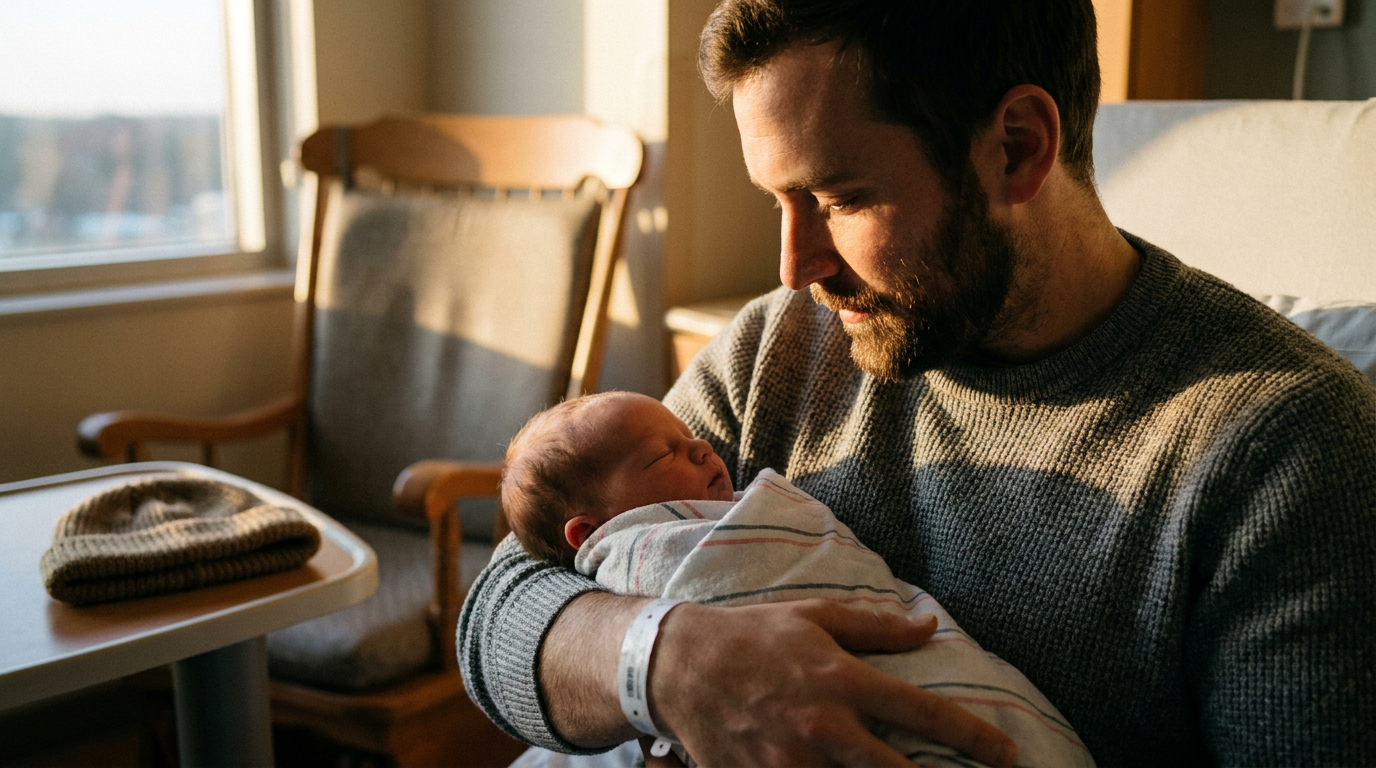
New neuroimaging and endocrinology studies reveal that becoming a father triggers profound neuroplasticity and hormonal shifts, physically remodeling the male brain to prepare for caregiving.
By Factlen Editorial Team

- Neuroscientists & Researchers
- Focus on the biological reality of fatherhood, emphasizing that the male brain undergoes profound, adaptive structural changes.
- Public Health Advocates
- Argue that understanding paternal neurobiology is crucial for systemic support and policy reform.
- Modern Fathers
- View the research as deeply validating, proving their intense emotional experiences are rooted in biology.
What's not represented
- · Adoptive fathers
- · Non-biological caregivers
Why this matters
Understanding that fatherhood is a biological transformation—not just a social role—validates the intense experiences of modern dads, helps destigmatize paternal postpartum depression, and provides hard scientific evidence for the necessity of paid paternity leave.
Key points
- Fathers experience significant neuroplasticity, including a streamlining of cortical gray matter to improve caregiving efficiency.
- The hippocampus, a brain region linked to memory and bonding, increases in volume in highly involved fathers.
- Paternal testosterone drops by an average of 25%, an evolutionary adaptation that reduces aggression and promotes nurturing.
- Caregiving hormones like prolactin and oxytocin rise in fathers, boosting responsiveness and emotional synchrony.
- These profound biological changes also expose roughly 1 in 10 fathers to paternal postpartum depression.
The boundary between "before" and "after" having a child is one of the most profound shifts in human experience. While the dramatic biological changes of pregnancy and motherhood are well-documented, a growing body of evidence reveals that fathers undergo a similarly profound neurobiological transformation.[1][2]
The concept of the "Dad Brain" is moving from a cultural joke to a documented scientific reality. Researchers at the University of Southern California have demonstrated that the transition to fatherhood triggers a critical window of intense neuroplasticity, physically remodeling the male brain to prepare for the demands of caregiving.[5][6]
The most striking finding in recent neuroimaging studies is a measurable reduction in gray matter volume across the cerebral cortex. This reduction is particularly concentrated within the brain's "mentalizing network"—the default mode network responsible for understanding and interpreting the thoughts, feelings, and intentions of others.[3][5]
While the idea of a "shrinking" brain sounds alarming, neuroscientists emphasize that this is actually a highly adaptive streamlining process. Much like the neural pruning that occurs during adolescence, the brain eliminates unnecessary connections to become faster and more efficient at essential new tasks, such as empathizing with a nonverbal infant.[2][5]

Conversely, other areas of the paternal brain experience significant growth. Longitudinal MRI scans show that highly involved fathers experience volume increases in the hippocampus, a region critical for memory, learning, and spatial navigation.[2][6]
This hippocampal growth correlates directly with observable behavior. Fathers who exhibited the largest volume increases in this region demonstrated stronger bonds with their infants, more affectionate attachment, and significantly lower overall parenting stress during the first year postpartum.[2][3]
Beyond structural brain changes, fatherhood initiates a powerful cascade of hormonal shifts that begin even before the child is born. The most consistent finding across multiple endocrinology studies is a significant and sustained drop in paternal testosterone levels.[2][4]
Beyond structural brain changes, fatherhood initiates a powerful cascade of hormonal shifts that begin even before the child is born.
A landmark longitudinal study found that men experience an average 25% drop in testosterone after becoming fathers. While modern wellness culture often pathologizes low testosterone, evolutionary biologists view this decline as a highly sophisticated adaptive mechanism.[2][6]
Lower testosterone levels reliably predict greater paternal involvement. Men with suppressed levels spend more time with their partners and infants, exhibit less aggression, and report higher relationship satisfaction than their higher-testosterone counterparts.[2][4]
This phenomenon aligns perfectly with the "challenge hypothesis" in biology, which posits that male sex hormones naturally rise during competition for mates but suppress to facilitate the nurturing, protection, and cooperative rearing of vulnerable offspring.[4][6]

As testosterone drops, a suite of caregiving hormones rises to take its place. Prolactin, a hormone traditionally associated almost exclusively with stimulating milk production in mothers, also elevates significantly in expectant and new fathers.[2][4]
Higher prolactin levels in men serve as a biological primer for fatherhood. Studies show that elevated paternal prolactin predicts a more positive attitude toward parenthood, increased responsiveness to baby cries, and greater overall enjoyment of the infant.[2][4]
Oxytocin, widely known as the "bonding hormone," also plays a crucial role in the paternal transition. Fathers with higher oxytocin levels engage in more physical play, demonstrate greater emotional synchrony, and exhibit more frequent social interaction with their babies.[2][4]
However, this profound biological rewiring carries transparent risks. The same neuroplasticity and hormonal fluctuations that facilitate deep bonding can also expose men to significant mental health vulnerabilities, leading to paternal postpartum depression in roughly 1 in 10 new fathers.[2][3]

Fathers who experience the most extreme drops in testosterone or the largest cortical volume reductions are at a statistically higher risk for anxiety, psychological distress, and severe sleep disturbances, highlighting a critical blind spot in postpartum care.[3][6]
Viewpoints in depth
Neuroscientists & Researchers
Focus on the biological reality of fatherhood, emphasizing that the male brain undergoes profound, adaptive structural changes.
Researchers like Dr. Darby Saxbe argue that the transition to parenthood represents a critical window of adult neuroplasticity. They view the reduction in cortical gray matter not as a loss of function, but as a necessary 'pruning' that optimizes the brain for the specific, high-stakes demands of keeping an infant alive. This perspective shifts the scientific consensus away from viewing caregiving as a purely female biological domain.
Public Health Advocates
Argue that understanding paternal neurobiology is crucial for systemic support and policy reform.
For public health experts, the evidence of paternal brain changes is a powerful tool for policy advocacy. If fathers are biologically primed to bond with and care for their infants, the lack of paid paternity leave in many countries actively disrupts a critical neurobiological window. Furthermore, advocates stress that acknowledging these hormonal shifts is essential for destigmatizing and treating paternal postpartum depression, which currently goes largely unscreened.
Modern Fathers
View the research as deeply validating, proving their intense emotional experiences are rooted in biology.
Many modern fathers report feeling sidelined by traditional narratives that frame moms as the 'natural' parents and dads as secondary helpers. The scientific validation of the 'Dad Brain' provides a biological vocabulary for their experiences. It reassures fathers that their shifting priorities, heightened emotional sensitivity, and even their exhaustion are not signs of weakness, but evidence of their bodies successfully adapting to their new role.
What we don't know
- Whether these neurobiological changes are permanent or if the brain eventually reverts to its pre-fatherhood state.
- How exactly the neuroplasticity of adoptive fathers or non-biological caregivers compares to that of biological fathers.
Key terms
- Neuroplasticity
- The brain's ability to reorganize itself by forming new neural connections in response to learning, experience, or major life changes.
- Mentalizing network
- A set of brain regions involved in understanding and interpreting the thoughts, feelings, and intentions of others.
- Prolactin
- A hormone traditionally associated with milk production in mothers, but which also rises in fathers to promote caregiving behaviors and responsiveness to infants.
- Challenge hypothesis
- An evolutionary theory suggesting that male testosterone levels rise during competition for mates but decrease to facilitate the care of offspring.
Frequently asked
Does a father's brain actually shrink?
Yes, studies show a reduction in gray matter volume in the cerebral cortex. However, neuroscientists say this "shrinking" is actually a positive streamlining of neural connections that makes the brain more efficient at caregiving.
Why does testosterone drop in new fathers?
Evolutionary biologists believe the drop in testosterone is an adaptive response that reduces aggression and encourages men to focus their energy on nurturing and protecting their vulnerable offspring.
Can fathers get postpartum depression?
Yes. The profound hormonal and neurological changes that help fathers bond with their babies can also expose them to mental health vulnerabilities, with roughly 1 in 10 fathers experiencing paternal postpartum depression.
Sources
Source coverage
6 outlets
3 viewpoints surfaced






[1]NPRPublic Health Advocates
Recent studies show fathers' brains change after bringing home a new baby
Read on NPR →[2]The Washington PostModern Fathers
The surprising science of how fatherhood changes the brain
Read on The Washington Post →[3]Cerebral CortexNeuroscientists & Researchers
Cortical volume reductions in men transitioning to first-time fatherhood reflect both parenting engagement and mental health risk
Read on Cerebral Cortex →[4]National Institutes of HealthPublic Health Advocates
Hormonal changes in expectant fathers across the transition to parenthood
Read on National Institutes of Health →[5]University of Southern CaliforniaNeuroscientists & Researchers
USC researcher explores the neurobiology of the 'dad brain'
Read on University of Southern California →[6]Factlen Editorial TeamModern Fathers
Synthesis by Factlen editorial team
Read on Factlen Editorial Team →


Every angle. Every day.
Get health stories with full source coverage and perspective breakdowns delivered to your inbox.