
The Astrotourism Boom: How Destinations Are Reclaiming the Night Sky
As light pollution obscures the stars for billions, a surge in 'astrotourism' is driving communities worldwide to protect their dark skies for economic and environmental gain.
By Factlen Editorial Team
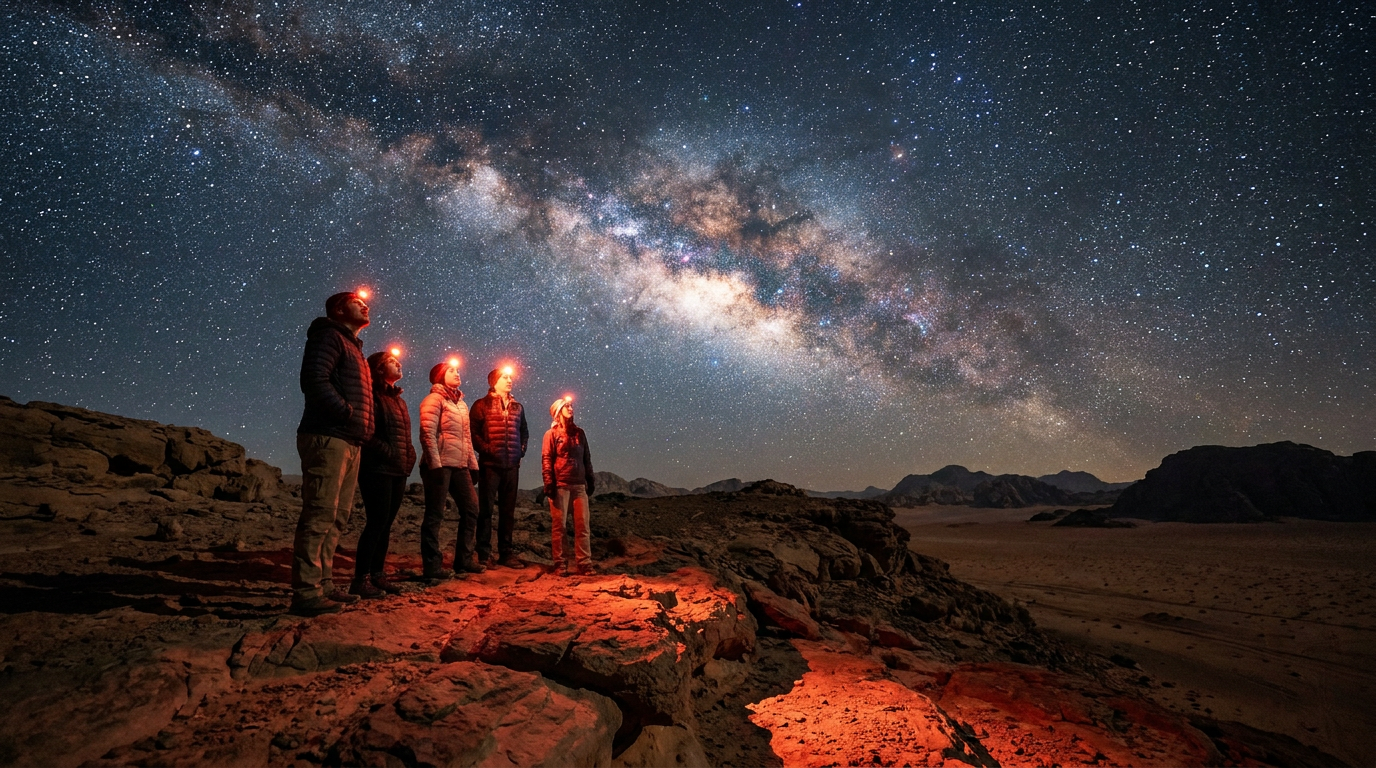
- Tourism Boards & Local Economies
- Views dark skies as a lucrative natural resource that drives off-season travel and creates jobs without requiring heavy infrastructure.
- Conservationists & Astronomers
- Values the reduction of light pollution primarily for its benefits to nocturnal ecosystems, energy conservation, and scientific observation.
- Travelers & Wellness Seekers
- Treats stargazing as an antidote to modern digital burnout, seeking out pristine night skies for mindfulness and connection to nature.
What's not represented
- · Lighting manufacturers adapting to new dark-sky regulations
- · Urban planners balancing safety concerns with light pollution reduction
Why this matters
As light pollution erases the night sky for most of the developed world, destinations are realizing that pristine darkness is a highly lucrative natural resource. This boom in 'astrotourism' is driving municipalities to overhaul their lighting infrastructure, creating a rare win-win that boosts local economies while simultaneously protecting nocturnal wildlife and saving energy.
Key points
- Astrotourism is rapidly expanding, with the global market projected to reach $4.57 billion by 2034.
- Over 250 locations worldwide have been certified as International Dark Sky Places for mitigating light pollution.
- Destinations are retrofitting infrastructure with shielded, warm-LED lighting to attract stargazers and protect ecosystems.
- The trend provides a massive economic boost to rural communities, generating billions in revenue and thousands of jobs.
- Upcoming solar eclipses and the current solar maximum are accelerating traveler interest in celestial events.
For the vast majority of human history, the night sky was a shared cultural inheritance—a canvas of thousands of stars, planets, and the sweeping band of the Milky Way. Today, that inheritance has been largely erased. According to recent environmental data, 99 percent of the population in the United States and Europe lives under skies polluted by artificial light. For eight out of ten North Americans, the Milky Way is completely invisible from their homes. But as true darkness becomes increasingly rare, it is rapidly transforming into one of the most sought-after commodities in the global travel industry.[1][7]
Welcome to the era of "astrotourism." Driven by a desire to escape digital fatigue and reconnect with the natural world, millions of travelers are now planning their vacations around the cosmos. Recent industry surveys indicate that 62 percent of travelers are actively seeking out low-light destinations for their next trip. This surge in interest has elevated stargazing from a niche hobby for amateur astronomers into a mainstream travel megatrend, fundamentally reshaping how rural communities, national parks, and international tourism boards market themselves to the world.[6][7]
The economic footprint of this movement is staggering. The global stargazing tourism market was valued at $1.82 billion in 2025 and is projected to reach $4.57 billion by 2034. This growth is being accelerated by a rare convergence of celestial events. The sun is currently passing through its "solar maximum"—a period of intense magnetic activity that is producing spectacular auroras visible at unusually low latitudes. Combined with highly anticipated total solar eclipses slated for 2026 and 2027, the travel industry is experiencing an unprecedented rush of bookings for remote, dark-sky destinations.[4][7]

But capitalizing on this boom requires more than just being located far from a major city. Destinations are actively competing for official certification from DarkSky International, a nonprofit organization that designates International Dark Sky Places. To date, the organization has certified over 250 parks, reserves, and communities across 22 countries. Earning this badge of honor is a rigorous process. It requires a community to prove that it is actively mitigating light pollution through strict municipal ordinances, public education, and comprehensive infrastructure overhauls.[1]
The mechanics of creating a Dark Sky Place revolve around rethinking how we use artificial light. The goal is not to plunge towns into total darkness, but to implement "smart lighting." This involves retrofitting streetlights and commercial buildings with shielded fixtures that direct light exclusively downward, preventing it from spilling into the atmosphere and creating skyglow. Communities must also transition to warmer, low-intensity LED bulbs—avoiding the harsh blue light that scatters easily in the atmosphere—and install motion sensors so that areas are only illuminated when necessary.[1][3]
Flagstaff, Arizona, serves as the blueprint for this movement. The city began implementing outdoor lighting codes as early as 1958 and became the world's first International Dark Sky City in 2001. Today, despite having a population of over 70,000, residents and visitors can still see the Milky Way from downtown. Other regions have eagerly followed suit. From the remote Isle of Sark in the English Channel to newly certified monuments like Colorado's Browns Canyon, destinations are discovering that protecting the night sky is a highly lucrative investment.[1]
Flagstaff, Arizona, serves as the blueprint for this movement.
The economic incentives for rural communities are profound. A landmark economic study focused on the Colorado Plateau—a region spanning parts of Utah, Arizona, Colorado, and New Mexico—forecasted that astrotourists will spend $5.8 billion in the area over a ten-year period. This influx of capital is expected to generate $2.4 billion in higher wages and support more than 10,000 additional jobs annually. Because stargazing requires visitors to stay overnight, it directly boosts revenue for local hotels, restaurants, and tour operators.[2][5]

Furthermore, astrotourism solves one of the travel industry's most persistent challenges: seasonality. In many national parks, the clearest, darkest skies occur during the colder, non-summer months when the air holds less moisture. By promoting winter stargazing festivals and aurora-chasing tours, destinations can attract a steady stream of visitors year-round. This allows local businesses to maintain their staff and keep their doors open during what would traditionally be considered the off-season, creating a more resilient local economy.[5]
While the economic windfall is driving municipal action, the environmental co-benefits are equally significant. Artificial light pollution wreaks havoc on nocturnal ecosystems. It disorients migrating birds, disrupts the mating habits of fireflies, and fatally confuses newly hatched sea turtles trying to find the ocean. By shielding lights and dimming the skies to attract tourists, communities are inadvertently restoring critical habitats. Conservationists view astrotourism as a highly effective Trojan horse—using the promise of tourism dollars to achieve vital ecological protections.[1][3]
The push for darker skies also yields immediate dividends in energy conservation. A significant portion of global light pollution is simply wasted energy—light shining uselessly into the clouds or illuminating empty parking lots at 3:00 AM. By adopting DarkSky-approved lighting standards, municipalities can drastically reduce their electricity consumption and lower their carbon footprints. In this sense, the fight to save the stars is deeply intertwined with broader global efforts to combat climate change and promote sustainable infrastructure.[1][3]

Human health stands to benefit as well. The proliferation of artificial blue light has been widely linked to the disruption of human circadian rhythms, leading to increased rates of sleep disorders, depression, and other chronic health issues. By rolling back the harsh glare of modern street lighting, dark sky communities are creating environments that are fundamentally healthier for their own residents. The wellness aspect of astrotourism extends beyond the visitors seeking a digital detox; it improves the daily quality of life for the locals living under the preserved canopy of stars.[3]
The movement is now expanding beyond remote wilderness areas and into the suburbs. DarkSky International recently introduced the "Urban Night Sky Place" designation, recognizing sites near large cities that are actively promoting authentic nighttime experiences amidst artificial light. Locations like Saguaro National Park near Tucson, Arizona, are proving that even on the fringes of major metropolitan areas, intentional design and community effort can reclaim a piece of the cosmos. It sends a powerful message that darkness is not just a feature of the deep wilderness, but a resource that can be restored anywhere.[1]

As we look toward the end of the decade, astrotourism is poised to become a fundamental pillar of global ecotourism. It represents a rare alignment of interests: travelers get a breathtaking, awe-inspiring experience, local economies receive a sustainable influx of revenue, and the natural environment is protected from the creeping encroachment of light pollution. By simply looking up, the travel industry has found a way to move forward—proving that sometimes, the most valuable thing a destination can offer is the unspoiled beauty of the dark.[7]
How we got here
1958
Flagstaff, Arizona begins implementing the world's first outdoor lighting codes to protect its night skies.
2001
Flagstaff is officially designated as the world's first International Dark Sky City.
2019
A major economic study reveals that astrotourism on the Colorado Plateau will generate $5.8 billion over the next decade.
2024–2026
The sun enters its solar maximum, producing intense auroras and driving a massive spike in global astrotourism.
Viewpoints in depth
Tourism Boards & Local Economies
For rural and gateway communities, the night sky is a highly monetizable asset that requires minimal infrastructure.
Unlike ski resorts or theme parks, dark skies require almost zero new physical infrastructure to attract visitors. Tourism boards emphasize that astrotourists tend to stay overnight, spend money on local lodging and dining, and often visit during the colder, non-summer months. This creates a year-round economic engine that stabilizes local employment, smooths out seasonal revenue dips, and easily justifies the upfront costs of retrofitting municipal lighting.
Conservationists & Astronomers
For environmental advocates, the astrotourism boom is a Trojan horse for vital ecological preservation.
The primary goal for conservationists is reversing the devastating effects of artificial light on nocturnal wildlife, such as disoriented sea turtles and disrupted bird migrations. By attaching a massive dollar value to darkness, environmentalists can convince municipalities to adopt strict lighting ordinances—shielding fixtures and lowering color temperatures—that they might otherwise ignore. The resulting dark skies benefit scientific observation, save massive amounts of energy, and restore natural habitats.
Travelers & Wellness Seekers
For the visitors driving the trend, astrotourism is fundamentally about unplugging and finding perspective.
In an era defined by screen time and constant digital connectivity, travelers are increasingly viewing pristine darkness as a luxury. This demographic treats stargazing as a form of wellness—similar to forest bathing—where the vastness of the cosmos provides psychological perspective, stress relief, and a rare opportunity to experience the natural world exactly as human ancestors did before the advent of the electric lightbulb.
What we don't know
- Whether the rapid influx of astrotourists to remote, ecologically sensitive areas will eventually create the same overtourism issues seen in traditional hotspots.
- How quickly major metropolitan areas will adopt dark-sky lighting ordinances, given the high upfront costs of retrofitting urban infrastructure.
Key terms
- Astrotourism
- Travel focused on experiencing the night sky, stargazing, and celestial phenomena in pristine environments.
- Skyglow
- The brightening of the night sky over inhabited areas, caused by artificial light scattering in the atmosphere.
- Light Trespass
- Unwanted artificial light that spills onto adjacent properties or into natural habitats where it is not intended.
- Shielded Fixture
- An outdoor light designed so that all illumination is directed downward, preventing it from shining up into the sky.
- Solar Maximum
- The period of greatest solar activity in the sun's 11-year cycle, which increases the frequency and intensity of auroras on Earth.
Frequently asked
What exactly is astrotourism?
Astrotourism is a form of travel motivated by the desire to observe the night sky, stars, and celestial events like eclipses or auroras in areas free from light pollution.
How does a place become a certified Dark Sky Park?
A destination must meet strict criteria set by DarkSky International, which includes retrofitting outdoor lighting to prevent skyglow and hosting public education programs about light pollution.
Why is light pollution considered harmful?
Beyond erasing the stars, artificial light disrupts human circadian rhythms, disorients nocturnal wildlife and migrating birds, and wastes massive amounts of energy.
Do I need a telescope for astrotourism?
No. Many dark sky destinations offer spectacular naked-eye visibility of the Milky Way, and local guides or observatories often provide equipment for deeper viewing.
Sources
Source coverage
7 outlets
3 viewpoints surfaced







[1]DarkSky InternationalConservationists & Astronomers
International Dark Sky Places
Read on DarkSky International →[2]National Park ServiceTourism Boards & Local Economies
Night Skies: An Economic Value
Read on National Park Service →[3]Smithsonian MagazineTravelers & Wellness Seekers
Stay Up Late and Admire the Cosmos With This New 'Stargazing Trail'
Read on Smithsonian Magazine →[4]Market InteloTourism Boards & Local Economies
Stargazing Tourism Market Outlook 2025-2034
Read on Market Intelo →[5]Tourism ManagementConservationists & Astronomers
Dark sky tourism: economic impacts on the Colorado Plateau Economy
Read on Tourism Management →[6]Booking.comTourism Boards & Local Economies
Travel Trends 2025: The Rise of Astrotourism
Read on Booking.com →[7]Factlen Editorial TeamTravelers & Wellness Seekers
Synthesis by Factlen editorial team
Read on Factlen Editorial Team →
Every angle. Every day.
Get travel stories with full source coverage and perspective breakdowns delivered to your inbox.