
Shingles Vaccine Linked to 24% Lower Dementia Risk in Major Nursing Home Study
An analysis of 500,000 Medicare beneficiaries reveals that the recombinant shingles vaccine significantly reduces the risk of cognitive decline, offering a potential breakthrough in dementia prevention.
By Factlen Editorial Team
- Public Health Epidemiologists
- Focusing on the population-level impact and the potential to prevent thousands of dementia cases.
- Immunology & Virology Researchers
- Investigating the biological mechanisms, specifically the role of the AS01 adjuvant versus viral suppression.
- Clinical Geriatricians
- Advocating for immediate changes to vaccination protocols upon admission to long-term care facilities.
- Evidence Synthesis Analysts
- Highlighting methodological limitations and the necessity of randomized controlled trials.
What's not represented
- · Alzheimer's Patient Advocacy Groups
- · Health Insurance Actuaries
- · Neurologists Specializing in Amyloid Treatments
Why this matters
Dementia is one of the most devastating and costly conditions of aging, with few effective treatments. If a widely available, standard shingles vaccine can genuinely reduce the risk of cognitive decline by 24 percent, it offers an immediate, accessible tool for millions of older adults to protect both their physical and mental health.
Key points
- A massive study of 500,000 Medicare beneficiaries found that the recombinant shingles vaccine lowers dementia risk by 24% over four years.
- The absolute risk reduction was 5.8 percentage points, translating to roughly one in 17 dementia cases potentially being prevented.
- The protective effect was observed in a highly vulnerable population: older adults newly admitted to skilled nursing facilities.
- Researchers theorize the vaccine protects the brain by preventing viral neuroinflammation or through the immune-boosting effects of its AS01 adjuvant.
- While the observational data is robust, experts caution that a randomized controlled trial is needed to definitively prove cause and effect.
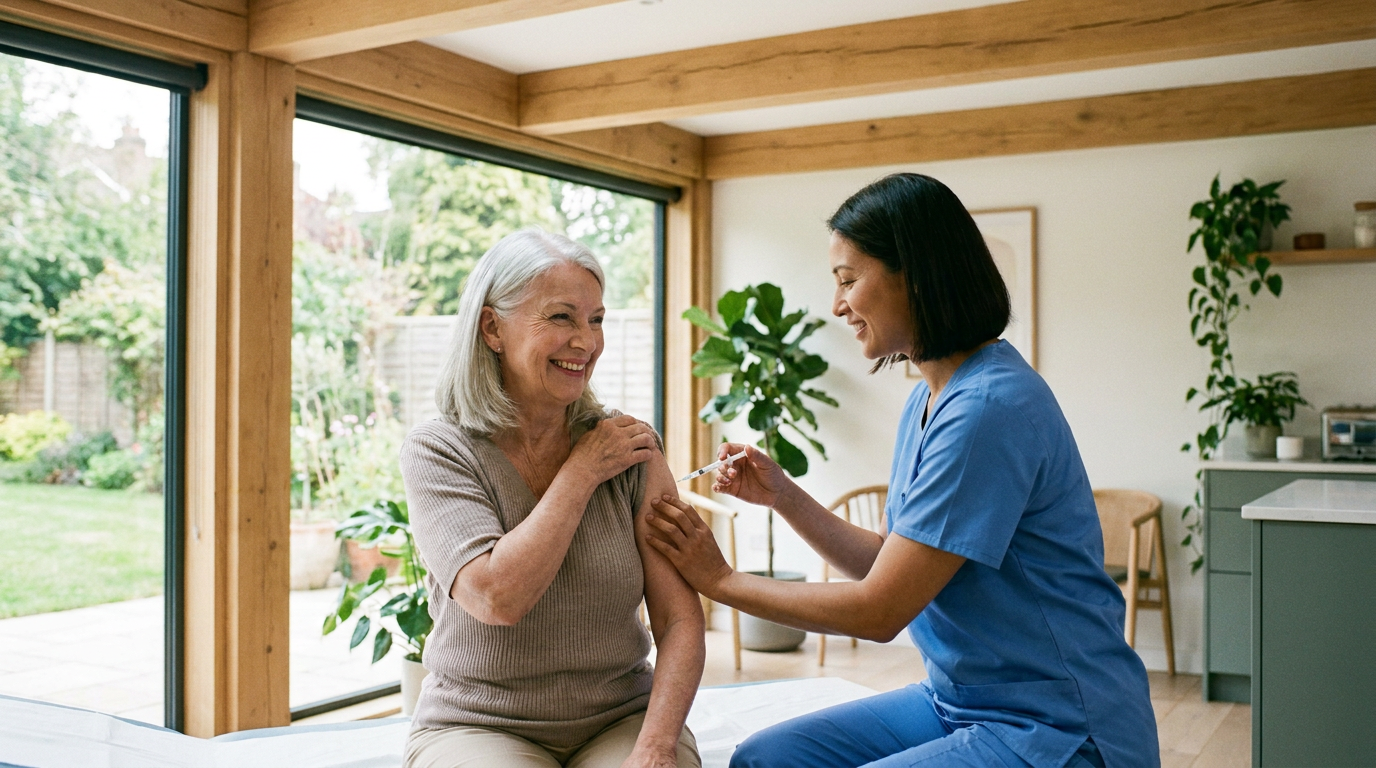
Dementia remains one of the most feared and intractable conditions of aging, a slow cognitive unraveling that has largely defied pharmaceutical intervention. But a growing body of evidence suggests that a powerful tool for protecting the brain might already be sitting in pharmacy refrigerators across the country. A major new study published this week in the Annals of Internal Medicine reveals that older adults who received the recombinant shingles vaccine experienced a dramatic 24 percent lower risk of developing dementia over a four-year period. The findings provide the most robust evidence to date that immunizing against the varicella-zoster virus—the pathogen responsible for both chickenpox and shingles—offers profound, unexpected cognitive benefits. By analyzing a massive dataset of Medicare beneficiaries, researchers have moved beyond early observational hints to demonstrate a significant protective effect in one of the most vulnerable populations in the healthcare system.[3][4]
The research, led by epidemiologists at the Brown University School of Public Health, focused specifically on a highly vulnerable and often understudied demographic: adults aged 66 and older who had been admitted to skilled nursing facilities. These facilities, which provide short-term rehabilitation and long-term care, house patients who are historically at a heightened risk for both viral infections and rapid cognitive decline. The study tracked over 500,000 Medicare beneficiaries who entered these facilities without a prior diagnosis of dementia. The research team compared the cognitive trajectories of residents who received at least one dose of the recombinant zoster vaccine, marketed as Shingrix, within a year of their admission against those who remained unvaccinated. The scale of the data allowed researchers to draw highly precise conclusions about the vaccine's real-world impact on a population that is routinely excluded from traditional clinical trials.[3][4]
The results were striking in their magnitude. Over a four-year follow-up period, the cumulative risk of developing dementia for the unvaccinated group stood at 24.6 percent. For those who received the Shingrix vaccine, that risk plummeted to 18.8 percent. In the realm of geriatric medicine, this 5.8-percentage-point absolute risk reduction is considered massive. Lead author Dr. Kaley Hayes noted that these figures translate to roughly one in 17 dementia cases potentially being prevented simply through routine vaccination. While previous research had linked the older, live-attenuated shingles vaccine to a reduced risk of cognitive decline, this is the first massive cohort study to definitively demonstrate the effect with the newer recombinant vaccine, which completely replaced the older version in the United States in 2020.[1][4]

The crucial question animating the scientific community is the biological mechanism: why exactly does a vaccine designed to prevent a blistering skin rash end up protecting the brain's architecture? The leading theory centers on the destructive power of neuroinflammation. The varicella-zoster virus is a master of evasion; after causing chickenpox in childhood, it retreats into the nervous system, lying dormant in the nerve roots for decades. As the immune system naturally weakens with age, the virus can reactivate, traveling down the nerve fibers to cause the agonizing condition known as shingles. But this reactivation is not confined to the skin. The awakened virus can trigger severe, systemic inflammation that extends directly into the brain and the vascular system, creating a cascade of neurological damage.[2][5]
This viral reactivation is known to significantly increase the risk of strokes and transient ischemic attacks, which are primary drivers of vascular dementia. By effectively locking the virus in its dormant state, the Shingrix vaccine may be cutting off a major source of vascular and neurological trauma. However, a second, increasingly tantalizing theory focuses not on the virus, but on the vaccine's specific ingredients. Shingrix contains AS01, a highly potent adjuvant designed to provoke a massive, durable response from the innate immune system. Some immunologists suspect that this adjuvant might have a generalized, systemic neuroprotective effect. The theory suggests that the adjuvant essentially trains the immune system's macrophage cells to become more aggressive in clearing out the toxic amyloid plaques and neurofibrillary tangles that are the hallmarks of Alzheimer's disease.[5]
This viral reactivation is known to significantly increase the risk of strokes and transient ischemic attacks, which are primary drivers of vascular dementia.
This adjuvant theory gained significant traction following a recent Oxford University study that examined the new respiratory syncytial virus vaccine, Arexvy. That vaccine, which utilizes the exact same AS01 adjuvant as Shingrix, also correlated with a significant drop in dementia diagnoses among older adults. The fact that two vaccines targeting completely different viral pathogens both yield similar neuroprotective signals strongly implies that the immune-boosting adjuvant itself is playing a direct role in preserving cognitive function. If proven true, this would represent a paradigm shift in how we understand the relationship between peripheral immune stimulation and central nervous system health, potentially opening the door to entirely new classes of dementia-preventing therapeutics based on immune modulation.[5]

Despite the robust data and compelling biological theories, researchers are careful to caution that observational studies—even those analyzing half a million patients—cannot definitively prove cause and effect. The primary confounding factor in all such research is the healthy vaccinee bias. This is the well-documented epidemiological reality that people who proactively choose to get vaccinated tend to be healthier overall. They generally have better access to healthcare, engage in more preventative behaviors, have fewer underlying comorbidities, and possess stronger baseline immune systems than those who remain unvaccinated. It is entirely possible that the lower dementia rates observed in the vaccinated cohort are partially a reflection of these broader lifestyle and health advantages, rather than a direct pharmacological effect of the vaccine itself.[3][6]
To mitigate this bias, the Brown University team utilized an advanced statistical modeling technique known as target trial emulation. This approach allowed them to artificially balance the vaccinated and unvaccinated groups across a wide array of demographic and health variables, effectively mimicking the conditions of a randomized controlled trial. Even after adjusting for these differences, the 24 percent relative reduction in dementia risk remained statistically significant. Nevertheless, the authors acknowledge that residual confounding can never be entirely eliminated in retrospective data. For this reason, the consensus among evidence synthesis analysts and public health officials is that a large-scale, randomized controlled trial is the necessary next step. Only a prospective trial can definitively confirm the neuroprotective properties of the vaccine and officially integrate it into clinical dementia prevention guidelines.[4][6]
In the meantime, clinical practitioners argue that the immediate takeaway from the study is highly actionable. Nursing home residents have historically exhibited low uptake of the shingles vaccine, despite being at the highest risk for both the painful viral reactivation and subsequent cognitive decline. Geriatricians and health policy experts suggest that admission to a skilled nursing facility should serve as a mandatory trigger for clinicians to evaluate a patient's immunization status and administer the Shingrix vaccine. By treating the transition into long-term care as a critical intervention point, the healthcare system has an immediate opportunity to deploy a widely available, FDA-approved tool that offers a dual shield—protecting vulnerable seniors from a debilitating physical illness while potentially preserving their minds.[1][2]

The financial and societal implications of these findings are staggering. Dementia care currently costs the United States hundreds of billions of dollars annually, a figure that is projected to skyrocket as the baby boomer generation ages. The physical and emotional toll on families and caregivers is immeasurable. If a standard, two-dose vaccine regimen costing a few hundred dollars can genuinely prevent one in 17 cases of dementia, the return on investment for public health infrastructure would be unprecedented. Policymakers are already beginning to look at these observational studies as a rationale for expanding Medicare coverage and incentivizing aggressive vaccination campaigns in assisted living communities, where the preventative impact would be most acutely felt.[4][6]
As the scientific community awaits the launch of prospective clinical trials, the current evidence pack presents a compelling risk-reward calculus for older adults. The Shingrix vaccine is already universally recommended by the CDC for adults over 50 to prevent herpes zoster, a condition that causes excruciating nerve pain and can lead to long-term complications like postherpetic neuralgia. The vaccine's safety profile is well-established, with side effects generally limited to temporary arm soreness, fatigue, and mild fever. Given that the primary indication for the vaccine is already a critical public health priority, the potential for a massive secondary benefit—shielding the brain from cognitive decline—makes the argument for widespread immunization nearly unassailable.[1][3]
Ultimately, the intersection of immunology and neurology is emerging as one of the most promising frontiers in modern medicine. For decades, the search for a dementia cure has been defined by high-profile clinical trial failures and marginal pharmaceutical gains. The revelation that an existing, highly effective vaccine might alter the trajectory of cognitive decline underscores the profound interconnectedness of the body's systems. Whether the protection stems from suppressing viral neuroinflammation or from the systemic activation of the AS01 adjuvant, the data from the Annals of Internal Medicine offers a rare commodity in the fight against dementia: tangible, evidence-based hope.[2][6]
How we got here
2006
The FDA approves Zostavax, the first live-attenuated shingles vaccine for older adults.
2017
The FDA approves Shingrix, a newer, highly effective recombinant vaccine containing the AS01 adjuvant.
2020
Zostavax is officially discontinued in the United States, making Shingrix the sole shingles vaccine on the market.
2024
Early studies in Nature Medicine suggest the Shingrix vaccine is associated with a significantly lower risk of dementia than its predecessor.
June 2026
A massive Annals of Internal Medicine study confirms a 24% reduction in dementia risk among highly vulnerable nursing home residents.
Viewpoints in depth
Public Health Epidemiologists
Focusing on the population-level impact and the potential to prevent thousands of dementia cases.
Epidemiologists emphasize the sheer scale of the findings. By analyzing 500,000 Medicare beneficiaries, the study provides a highly powered look at real-world outcomes. They argue that a 24 percent relative reduction—translating to one in 17 cases prevented—represents a massive public health opportunity. Because the Shingrix vaccine is already FDA-approved and widely distributed, public health officials believe it could be deployed immediately as a dual-purpose intervention to protect vulnerable seniors without waiting for new drug development.
Immunology & Virology Researchers
Investigating the biological mechanisms, specifically the role of the AS01 adjuvant versus viral suppression.
For immunologists, the most compelling aspect of the data is the underlying mechanism. While suppressing the neuroinflammation caused by the varicella-zoster virus is a strong theory, many researchers are increasingly focused on the vaccine's AS01 adjuvant. Because other vaccines utilizing this exact same immune-boosting ingredient have shown similar neuroprotective signals, virologists suspect the adjuvant itself may be training the innate immune system to clear out the toxic proteins associated with Alzheimer's disease. They argue that understanding this mechanism could unlock entirely new classes of immune-modulating dementia therapies.
Clinical Geriatricians
Advocating for immediate changes to vaccination protocols upon admission to long-term care facilities.
Physicians on the front lines of elder care focus on the immediate clinical takeaways. They point out that nursing home residents have historically low uptake of the shingles vaccine, despite being at the highest risk for both the virus and cognitive decline. Geriatricians argue that admission to a skilled nursing facility should serve as a mandatory trigger for clinicians to evaluate a patient's immunization status. They advocate for updating standard care protocols so that the Shingrix vaccine is routinely offered upon admission, closing a critical gap in preventative care.
Evidence Synthesis Analysts
Highlighting methodological limitations and the necessity of randomized controlled trials.
While acknowledging the strength of the target trial emulation used in the study, evidence synthesis experts caution against declaring the vaccine a definitive dementia preventative. They point out that observational data cannot entirely eliminate 'healthy vaccinee bias'—the reality that individuals who receive vaccines often have better overall health, stronger immune systems, and superior access to medical care. Analysts argue that a large-scale, randomized controlled trial is the only way to isolate the vaccine's true neuroprotective effect from these confounding lifestyle factors.
What we don't know
- Whether the shingles vaccine directly causes the reduction in dementia risk, or if the association is partially driven by 'healthy vaccinee bias.'
- Which biological mechanism is responsible for the neuroprotection: the suppression of the varicella-zoster virus, or the systemic immune activation caused by the AS01 adjuvant.
- How long the cognitive protective effects of the vaccine last beyond the four-year follow-up period observed in the study.
Key terms
- Recombinant Zoster Vaccine (RZV)
- A non-live vaccine, marketed as Shingrix, that uses a viral protein and an immune-boosting adjuvant to protect against shingles.
- Adjuvant
- An ingredient used in some vaccines that helps create a stronger, more durable immune response in people receiving the vaccine.
- Target Trial Emulation
- An advanced statistical method used in observational studies to mimic the design and conditions of a randomized controlled trial, helping to reduce bias.
- Neuroinflammation
- Inflammation of the nervous tissue, often triggered by infection or injury, which is increasingly linked to neurodegenerative diseases like dementia.
- Healthy Vaccinee Bias
- A statistical distortion where people who choose to get vaccinated also tend to have healthier lifestyles and better healthcare access, making the vaccine look more effective than it might actually be.
Frequently asked
Does the shingles vaccine cure dementia?
No. The vaccine is associated with a lower risk of developing dementia in the future, but it is not a treatment or cure for those who already have the condition.
Which shingles vaccine was studied?
The research focused on the recombinant zoster vaccine (RZV), known commercially as Shingrix, which is currently the only shingles vaccine available in the United States.
Why would a skin rash vaccine protect the brain?
Researchers believe that preventing the shingles virus stops it from causing neuroinflammation and strokes, both of which damage the brain. The vaccine's immune-boosting ingredients might also play a protective role.
Who was included in this specific study?
The study analyzed over 500,000 Medicare beneficiaries aged 66 and older who were admitted to skilled nursing facilities for short-term rehabilitation or long-term care.
Sources
Source coverage
6 outlets
4 viewpoints surfaced





[1]STAT NewsClinical Geriatricians
STAT+: Shingles vaccine may lower dementia risk, new study finds
Read on STAT News →[2]Medical News TodayClinical Geriatricians
Shingles vaccine may reduce dementia risk by 24%
Read on Medical News Today →[3]Annals of Internal MedicinePublic Health Epidemiologists
Recombinant Zoster Vaccine and Dementia Risk in Skilled Nursing Facilities
Read on Annals of Internal Medicine →[4]Brown University School of Public HealthPublic Health Epidemiologists
Shingles vaccine linked to 24% lower dementia risk in nursing home residents
Read on Brown University School of Public Health →[5]Gavi, the Vaccine AllianceImmunology & Virology Researchers
Vaccines and dementia risk: What the evidence says
Read on Gavi, the Vaccine Alliance →[6]Factlen Editorial TeamEvidence Synthesis Analysts
Synthesis by Factlen editorial team
Read on Factlen Editorial Team →
More in health
See all 5 stories →Longevity Science
Experimental 'Exercise Mimetic' Drug Shows Promise in Early Human Trials
6 sources
Nutritional Psychiatry
How the Gut-Brain Axis and 'Psychobiotics' Are Reshaping Mental Health Treatment
8 sources

Vaccine Research
Shingles Vaccine Linked to 24% Lower Dementia Risk in Major Nursing Home Study
8 sources

Every angle. Every day.
Get health stories with full source coverage and perspective breakdowns delivered to your inbox.