
Landmark 'Predictive Engine' Theory Rewrites How Scientists Understand Perception, Anxiety, and ADHD
A paradigm shift in neuroscience suggests the brain is not a passive receiver of information, but a 'prediction machine' that hallucinates reality and uses sensory data only to correct its errors. This framework is now offering a unified, destigmatizing explanation for anxiety, ADHD, and trauma.
By Factlen Editorial Team
- Predictive Processing Theorists
- Researchers who view the brain as a Bayesian inference machine.
- Neurodiversity Advocates
- Clinicians and advocates who use the framework to destigmatize ADHD and Autism.
- Clinical Skeptics
- Psychiatrists and researchers cautious about over-applying the theory.
What's not represented
- · Patients undergoing traditional psychiatric treatments
- · Pharmacological researchers developing targeted drugs
Why this matters
By reframing mental health conditions as variations in how the brain predicts the future rather than 'broken' chemical hardware, this theory is destigmatizing neurodivergence and paving the way for entirely new therapeutic interventions.
Key points
- A major paradigm shift in neuroscience frames the brain as a 'predictive engine' rather than a passive receiver of sensory data.
- The brain constantly hallucinates its reality, using incoming sensory information only to correct its 'prediction errors.'
- Chronic anxiety and trauma are increasingly understood as rigid predictive models where the brain over-predicts threat to avoid surprise.
- ADHD and Autism are reframed as distinct predictive styles that assign higher 'precision weighting' to raw sensory input, leading to overload.
- The theory offers a unifying, destigmatizing framework for mental health, though translating it into targeted psychiatric treatments remains an ongoing challenge.
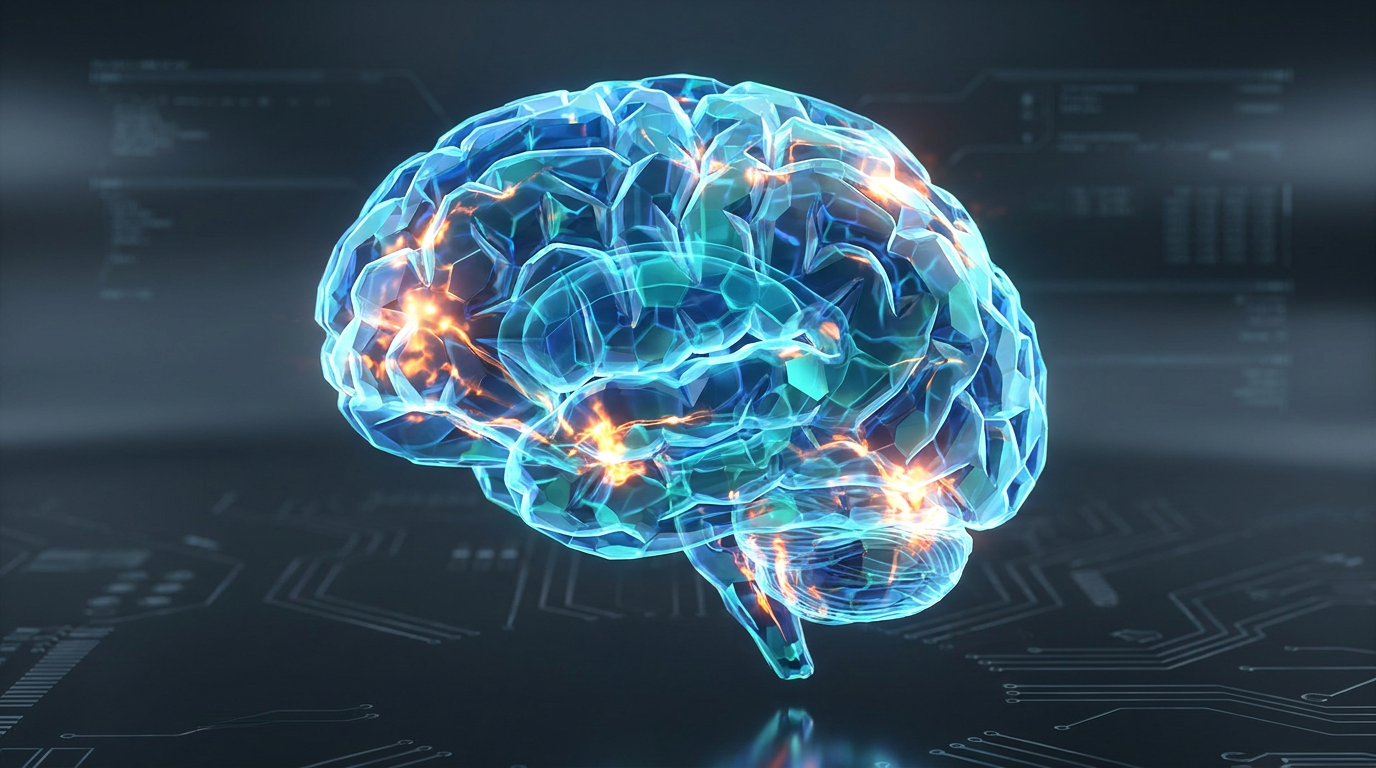
For decades, the dominant metaphor for the human brain was a computer: a passive processor that receives sensory input from the eyes and ears, crunches the data, and produces a reaction. But a sweeping paradigm shift in theoretical neuroscience is dismantling that model. The brain, researchers now argue, is not a passive receiver waiting for the world to happen to it. It is a relentless, proactive "predictive engine".[1][6]
According to the Predictive Processing (PP) framework, the brain is locked inside a dark, silent skull, forced to guess what is happening on the outside. Instead of waiting for sensory data to build a picture of reality from scratch, it continuously generates a "top-down" simulation of the world based on past experiences and statistical probabilities.[2][7]
In this view, what we experience as perception is actually a controlled hallucination. The brain only uses "bottom-up" sensory information from the eyes, ears, and body to check its work. When the sensory data matches the brain's prediction, the incoming signal is suppressed. When there is a mismatch, the brain generates a "prediction error," forcing the neural network to update its internal model.[4][5]
"The core hypothesis is that the nervous system builds predictive models from statistical regularities in prior experience," notes a recent comprehensive review of the framework. This single, elegant mechanism—minimizing prediction error, or what neuroscientist Karl Friston famously termed the "Free Energy Principle"—is now being used to explain everything from basic motor control to complex human consciousness.[2][3][6]

But the most profound impact of the predictive engine theory is currently unfolding in psychiatry and psychology. For years, mental health disorders were largely framed around chemical imbalances or localized brain dysfunction. Now, researchers are reconceptualizing anxiety, trauma, and neurodivergence as variations in how the brain weighs its predictions against incoming evidence.[1][7]
The evidence for this shift is anchored in high-resolution neuroimaging. Studies tracking "mismatch negativity"—a spike in brain activity that occurs when a sequence is broken—show that error signals originate in lower-order sensory cortices and travel upward only when a prediction fails. When a prediction is correct, the brain exhibits "repetition suppression," quieting its neural activity to save metabolic energy.[4][5]
When this predictive machinery operates smoothly, we navigate the world effortlessly, catching a thrown ball or finishing a friend's sentence. But what happens when the system assigns the wrong "weight" or precision to its predictions? This is where the framework offers a revolutionary, destigmatizing lens on anxiety and trauma.[1][2]
Under the predictive processing model, chronic anxiety is not simply an excess of emotion; it is an "epistemic dysfunction." In anxiety-prone individuals, the brain assigns excessive precision to its anticipatory signals of threat. The brain's generative model becomes rigid, constantly predicting danger. Because the brain's primary goal is to minimize surprise, it keeps the body in a state of hypervigilance, effectively choosing the certainty of chronic stress over the terror of the unknown.[1][2]
Psychological trauma functions through a similar mechanism. A traumatic event introduces a massive, unresolved prediction error—a shock so severe that the brain's baseline model of a safe world collapses entirely. To prevent future catastrophic surprises, the traumatized brain updates its "priors" to expect danger everywhere. As researchers in the Journal of Psychopathology and Clinical Science explain, this results in a wide divergence between top-down models and bottom-up sensory inputs, driving the severe avoidance behaviors seen in PTSD.[1]
A traumatic event introduces a massive, unresolved prediction error—a shock so severe that the brain's baseline model of a safe world collapses entirely.
The predictive engine theory is also fundamentally rewriting the clinical understanding of neurodivergence, particularly ADHD and Autism. Rather than viewing these conditions as deficits in attention or social processing, the PP framework frames them as distinct, highly sensitive predictive styles.[4][6]
In neurotypical brains, top-down predictions heavily filter incoming sensory data, allowing people to easily ignore background noise, fluorescent lights, or the feeling of a shirt tag. But in Autistic and ADHD brains, the system often assigns a much higher "precision weighting" to bottom-up sensory input. The brain trusts the raw data more than its own predictions, meaning it processes every micro-shift, subtle cue, and environmental detail as highly significant.[4][5]

This dynamic explains the sensory overload and executive fatigue so common in neurodivergent individuals. "Their brains may assign greater precision to sensory input, meaning they give more weight to what their senses are telling them, even when the information is noisy, ambiguous, or overwhelming," notes clinical analysis on neurodivergent predictive processing. The brain is processing too many prediction errors at once, leading to a system crash.[7]
For ADHD specifically, the framework points to errors in reward prediction. Dopamine is the primary neurotransmitter responsible for signaling prediction errors related to reward and motivation. When dopamine regulation is disrupted, the brain struggles to accurately predict the emotional or chemical payoff of a task, making executive function and task initiation incredibly difficult without immediate, high-stakes urgency.[3][5]
The clinical implications of this paradigm shift are vast. If psychopathology is a function of inflexible predictive models, treatments can be tailored to help the brain safely update its priors. This explains why exposure therapy is highly effective for phobias: it forces the brain to encounter a prediction error—expecting harm, but experiencing safety—repeatedly until the generative model permanently updates.[1][6]
Emerging interventions are now targeting the predictive engine directly. Researchers are exploring how transcranial electrical stimulation (tES) applied to the cerebellum—a region increasingly recognized as a key predictive engine for social and motor timing—might help individuals update their predictive models more fluidly.[3]
Somatic therapies and interoceptive training are also gaining robust empirical backing through this lens. Because the brain predicts the internal state of the body (interoception) just as it predicts the outside world, calming the nervous system physically can send "bottom-up" safety signals that force the brain to revise its top-down predictions of anxiety.[1][4]

Despite its immense explanatory power, the predictive processing framework still faces rigorous scientific hurdles. While the mathematics of the Free Energy Principle are theoretically sound, mapping Bayesian statistical equations directly onto the messy, wet biology of billions of neurons remains a monumental challenge for neuroscientists.[3][5]
Furthermore, clinical critics caution that while predictive processing offers a beautiful unifying theory, translating it into targeted pharmacological or behavioral therapies is still in its infancy. Knowing that a patient has an "overly rigid generative model" does not immediately dictate which medication or therapy will best loosen it.[2][6]
Nevertheless, the shift from viewing the brain as a broken computer to a hyper-protective prediction engine is profoundly destigmatizing. It reframes mental health struggles not as biological failures, but as the side effects of a brain working overtime to keep its host safe in an unpredictable world.[4][7]
As neuroscience continues to map the architecture of our internal simulations, the predictive engine theory stands as one of the most significant leaps in understanding human cognition in a century. It reveals that we do not merely live in the world; we actively hallucinate it, one prediction at a time.[1][3][6]
How we got here
1999
Researchers publish the first computational model of predictive coding in the visual cortex.
2006
Karl Friston introduces the Free Energy Principle, generalizing predictive processing to all brain functions.
2013
Andy Clark publishes 'Surfing Uncertainty,' bringing the predictive brain theory to mainstream cognitive science.
2023
The Journal of Psychopathology formally proposes predictive processing as a unifying framework for mental health disorders.
2026
Clinical trials increasingly test interventions, such as cerebellar stimulation, designed to directly modulate the brain's predictive updating.
Viewpoints in depth
Predictive Processing Theorists
Researchers who view the brain as a Bayesian inference machine.
This camp argues that all cognition, perception, and psychopathology can be reduced to a single imperative: minimizing prediction error. By casting the brain as a statistical engine governed by the Free Energy Principle, they believe neuroscience finally has a 'grand unified theory' that bridges biology, psychology, and artificial intelligence.
Neurodiversity Advocates
Clinicians and advocates who use the framework to destigmatize ADHD and Autism.
For this group, predictive processing is a profoundly validating model. It shifts the narrative away from 'broken' or 'deficient' brains, framing neurodivergence instead as a distinct predictive style. If an Autistic brain assigns higher precision to sensory data, sensory overload is not a malfunction—it is the logical result of a highly granular, data-driven predictive engine.
Clinical Skeptics
Psychiatrists and researchers cautious about over-applying the theory.
While acknowledging the elegance of the predictive brain, skeptics warn against treating it as a clinical panacea. They point out that describing a psychiatric disorder as an 'aberrant precision weighting' does not inherently generate a new treatment. They argue that until the math of predictive processing translates into novel, targeted therapies, it remains a descriptive philosophy rather than a medical breakthrough.
What we don't know
- How exactly neurotransmitters like dopamine and serotonin physically encode 'precision weighting' at the synaptic level.
- Whether predictive processing can fully explain the subjective, conscious experience of emotion (the 'hard problem' of consciousness).
- Which specific therapeutic interventions are most effective at safely loosening an overly rigid predictive model in patients with severe trauma.
Key terms
- Predictive Processing (PP)
- A framework proposing that the brain continuously generates models of the world and updates them based on sensory prediction errors.
- Active Inference
- The process by which the brain minimizes surprise not just by updating its beliefs, but by taking action to change the environment to match its predictions.
- Precision Weighting
- The degree of trust or importance the brain assigns to either its internal predictions or incoming sensory data.
- Interoception
- The brain's perception of the body's internal physical states, such as heart rate, breathing, and digestion.
Frequently asked
What is the predictive engine theory?
It is a neuroscientific framework proposing that the brain doesn't passively receive information. Instead, it actively predicts what will happen and uses the senses only to correct its guesses.
How does this theory explain anxiety?
Anxiety occurs when the brain assigns too much certainty to its predictions of threat, keeping the body in a state of hypervigilance to avoid surprise.
Why do Autistic and ADHD brains experience sensory overload?
Under this model, neurodivergent brains assign higher 'precision weighting' to raw sensory data, meaning they process every minor environmental detail instead of filtering it out.
What is a prediction error?
A mismatch between what the brain expected to happen (its top-down prediction) and the actual sensory data it received from the environment.
Sources
Source coverage
7 outlets
3 viewpoints surfaced







[1]Journal of Psychopathology and Clinical SciencePredictive Processing Theorists
Predictive processing as a framework for understanding psychopathology
Read on Journal of Psychopathology and Clinical Science →[2]Preprints.orgPredictive Processing Theorists
Predictive Processing and Mental Disorders: A Review of the Evidence
Read on Preprints.org →[3]Psychology TodayClinical Skeptics
The Brain as a Predictive Engine: Active Inference and Cognition
Read on Psychology Today →[4]Myndset TherapeuticsNeurodiversity Advocates
Predictive Processing: Why the Neurodivergent Brain Runs in Overdrive
Read on Myndset Therapeutics →[5]National Library of MedicinePredictive Processing Theorists
Sensory prediction and repetition suppression in the developing brain
Read on National Library of Medicine →[6]Factlen Editorial TeamClinical Skeptics
Synthesis by Factlen editorial team
Read on Factlen Editorial Team →[7]Predictably CorrectNeurodiversity Advocates
Quick Intro to Predictive Processing and Neurodivergence
Read on Predictably Correct →

Every angle. Every day.
Get science stories with full source coverage and perspective breakdowns delivered to your inbox.