
June 2026 Golf Injury Report: Morikawa Contends Through Pain as Day, Thompson, and Koepka Face Setbacks
As the summer major season heats up, professional golf is defined by physical resilience, with Collin Morikawa contending at the U.S. Open despite a lingering back injury while other stars are forced to the sidelines.
By Factlen Editorial Team
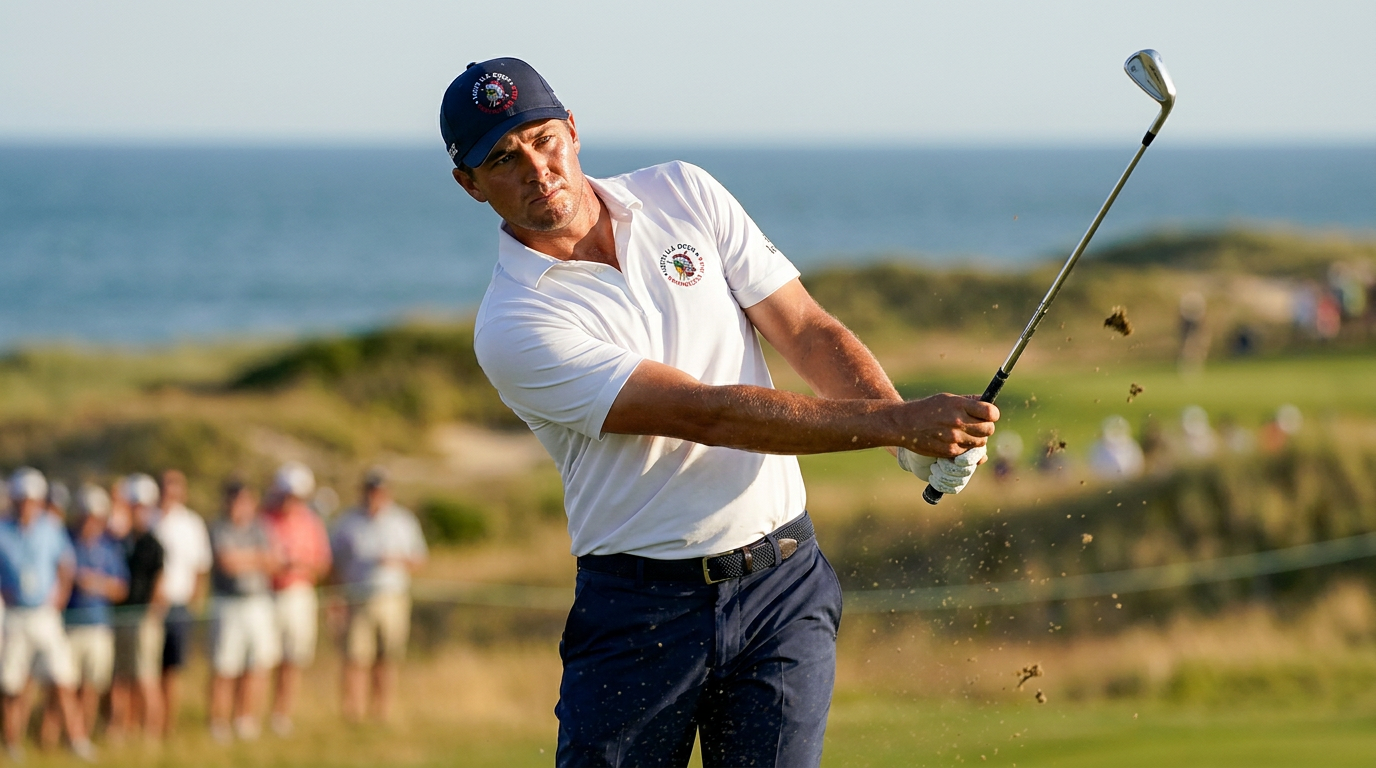
- Resilient Competitors
- Athletes who modify their swings and play through lingering discomfort to remain in contention.
- Cautious Veterans
- Players who choose to withdraw to prevent further structural damage to their bodies.
- Diagnostic Uncertainty
- Athletes facing sudden, unexplained symptoms that require immediate medical investigation.
What's not represented
- · Physical Therapists
- · Swing Coaches
Why this matters
For fans and fantasy managers, tracking player health is crucial during the major championship season. Understanding how stars like Morikawa and Hull adapt their games to play through pain offers deep insight into the physical demands of modern golf.
Key points
- Collin Morikawa shot a second-round 65 at the U.S. Open while actively managing a back injury.
- Jason Day and Brooks Koepka both suffered painful withdrawals from recent events due to back and nerve issues, respectively.
- Lexi Thompson withdrew from the Meijer LPGA Classic with severe hip pain, prioritizing her long-term health.
- Charley Hull has climbed to World No. 3 on the LPGA Tour despite battling a torn ankle ligament.
- Will Zalatoris continues his successful return to the PGA Tour following career-saving lumbar fusion surgery.
The modern professional golf swing is a violent, highly torqued athletic movement, and the June 2026 injury report is a stark testament to its physical toll. As the major championship season reaches its peak, both the PGA Tour and the LPGA Tour are seeing a wave of high-profile injuries that threaten to reshape the leaderboards. Yet, rather than a simple list of casualties, this month's medical updates highlight the extraordinary resilience required to compete at the highest level. Players are increasingly forced to balance the pursuit of historic titles against the long-term health of their bodies, making every swing a calculated risk.[1]
The prime example of this grit is currently unfolding at Shinnecock Hills during the 126th U.S. Open. Collin Morikawa arrived in New York actively managing a lingering back injury that first derailed his season at The Players Championship in March. The two-time major champion has been forced to play conservatively, admitting to the media that he cannot swing at full speed for fear of re-aggravating the delicate lumbar issue. Despite these severe limitations, Morikawa has refused to withdraw, instead relying on his elite course management and mental toughness to navigate one of the most punishing layouts in championship golf.[1]
"It's still a little uncomfortable," Morikawa confessed to reporters after his round. "I can't hit every shot that I want to hit. Usually, my go-to shot with right-to-left wind with an iron would be to cut something up... I can't quite cut it as much as I want." Despite lacking his full arsenal of ball-striking weapons, Morikawa relied on a spectacular short game to fire a brilliant second-round 65. That remarkable score vaulted him directly into contention, keeping his hopes alive for capturing the third leg of the elusive career Grand Slam.[1]
Morikawa's ability to adapt his strategy and play through the pain stands in stark contrast to the heartbreak experienced by others at Shinnecock Hills. Former World No. 1 Jason Day saw his U.S. Open campaign end abruptly and painfully after just 10 holes. Day, who has battled severe and well-documented back problems for the better part of a decade, was visibly struggling to rotate through his swing. Sitting at 7-over par and clearly in physical distress, he ultimately took a cart back to the clubhouse, marking another frustrating chapter in his ongoing health saga.[3]

The Australian's withdrawal is a devastating setback in a season where he had desperately hoped to find his vintage form. Biomechanical experts and swing coaches have previously noted that Day's back spasms are often triggered by underlying rib cage alignment issues, which place immense, disproportionate strain on his surrounding musculature. Despite working extensively with specialized coaches to rebuild his swing and reduce that stress, the structural vulnerabilities remain a constant threat to his career longevity, proving just how difficult it is to outrun chronic golf injuries.[8]
Just days before the U.S. Open began, the golf world was stunned by a bizarre and concerning medical update from Brooks Koepka. Competing at the RBC Canadian Open at TPC Toronto, the five-time major champion unexpectedly withdrew prior to the final round while sitting comfortably at 6-under par and in the mix for a high finish. Unlike a standard muscle strain or joint sprain, Koepka's issue presented as a sudden neurological symptom that left both the player and his medical team searching for immediate answers.[2]
Koepka's issue was not a traditional golf injury, but rather a sudden loss of sensation. "I'm struggling to grip the club with my ring finger and pinkie finger," Koepka explained to the press. "My fingers would come loose, it was kind of numb." The unexplained numbness cast a heavy, ominous shadow over his highly anticipated return to Shinnecock Hills, the exact site of his gritty 2018 U.S. Open triumph, and raised serious questions about his immediate competitive future.[2]
Koepka's issue was not a traditional golf injury, but rather a sudden loss of sensation.
The injury bug has been equally disruptive on the LPGA Tour, claiming one of the sport's biggest names during a premier summer event. At the $3.25 million Meijer LPGA Classic in Michigan, fan-favorite Lexi Thompson was forced to withdraw just before her opening round. Thompson, the celebrated 2015 champion of the event, cited severe hip pain that made it mechanically impossible to compete at the level required to challenge the world's best players. The sudden exit disappointed thousands of local fans who had gathered specifically to watch the American star navigate the Blythefield Country Club layout.[4]
In an emotional public statement, Thompson expressed her profound heartbreak over missing her absolute favorite stop on the calendar. "Unfortunately, the pain in my hip reached a point where I knew I wasn't able to compete," she wrote, noting that she would return home to focus entirely on healing and rehabilitation. The withdrawal adds to a physically taxing multi-year stretch for Thompson, who has previously played through severe back inflammation, sudden neck problems, and the systemic fatigue associated with Hashimoto's disease.[4][6]

However, the women's game also provides one of the year's most inspiring and gritty medical comebacks. England's Charley Hull has spent the better part of a year battling a torn ankle ligament—suffered after accidentally tripping on a curb in a parking lot—and a separate, debilitating back injury. Rather than taking an extended leave of absence, Hull has worked tirelessly with physical therapists to manage the pain, taping the ankle heavily and adjusting her practice routines to minimize unnecessary stress on her joints.[5]
Despite the lingering annoyance of her ankle, which still strictly prevents her from running or engaging in high-impact cardio, Hull has flatly refused to let the injuries derail her athletic prime. She opened the 2026 season with a massive, statement-making victory at the PIF Saudi Ladies International. That win, coupled with a string of top-10 finishes, propelled her to World No. 3—the highest global ranking ever achieved by an Englishwoman in the history of the sport.[5]
"I feel good. It's just annoying because I can't really get back to running or anything like that," Hull remarked ahead of the Kroger Queen City Championship. Her ability to compartmentalize the pain, trust her modified swing, and consistently produce the best golf of her life is a masterclass in athletic endurance. It serves as a powerful reminder that in professional golf, perfect health is a luxury, and champions are often those who simply manage their physical imperfections better than the rest of the field.[5]

That exact brand of endurance is currently being tested by Will Zalatoris, who continues his methodical, highly scrutinized return to the PGA Tour in 2026. After undergoing a career-saving lumbar fusion surgery to address catastrophic back pain, Zalatoris is competing on a medical exemption. His slow but steady journey back to the top of the leaderboards serves as a vital beacon of hope for players like Day and Morikawa, proving that modern surgical medicine can salvage careers that were once considered entirely over.[9]
Meanwhile, the sport's most famous rehabilitating athlete, Tiger Woods, remains frustratingly on the sidelines. Still recovering from his latest back surgery and an indefinite absence following a series of off-course setbacks, Woods recently missed the entry deadline for the 2026 Open Championship at Royal Birkdale. This unfortunate development ensures that the 15-time major champion will miss all four major championships for the second consecutive year, leaving fans wondering if and when his body will ever allow for one final competitive chapter.[7]

Ultimately, this comprehensive June injury report underscores a harsh, unavoidable reality of the modern game: professional golf is a grueling, high-attrition endurance sport. The players who ultimately hoist the trophies on Sunday afternoons are not just those with the most aesthetically pleasing swings, but those who can outlast the physical toll of a relentless global schedule. As the summer progresses, the true test for these athletes will be found in the physical therapy trailers just as much as on the fairways.[1][5]
How we got here
March 2026
Collin Morikawa withdraws from The Players Championship after one hole due to a back injury.
May 2026
Charley Hull reaches World No. 3 despite ongoing recovery from a torn ankle ligament.
June 14, 2026
Brooks Koepka withdraws from the RBC Canadian Open citing unexplained numbness in his fingers.
June 18, 2026
Lexi Thompson pulls out of the Meijer LPGA Classic before her opening round with severe hip pain.
June 19, 2026
Jason Day exits the U.S. Open after just 10 holes as chronic back issues flare up.
Viewpoints in depth
Resilient Competitors
Athletes who modify their swings and play through lingering discomfort to remain in contention.
For players like Collin Morikawa and Charley Hull, withdrawal is an absolute last resort. This camp focuses on adapting their biomechanics—such as relying more on short-game precision when full-swing speed is compromised. They work closely with physical therapists to manage inflammation round-by-round, accepting that playing at 80% physical capacity is often required to capture major championships during the grueling summer stretch.
Cautious Veterans
Players who choose to withdraw to prevent further structural damage to their bodies.
Veterans with a history of chronic issues, such as Jason Day and Lexi Thompson, understand that pushing through acute pain can jeopardize their long-term careers. This perspective prioritizes immediate withdrawal and comprehensive rehabilitation over the glory of a single tournament. Their approach is heavily informed by past surgeries and the realization that the modern golf swing's rotational forces can easily turn a minor strain into a career-ending rupture.
Diagnostic Uncertainty
Athletes facing sudden, unexplained symptoms that require immediate medical investigation.
When a player experiences neurological symptoms—like Brooks Koepka's sudden finger numbness—the immediate priority shifts from competition to diagnostics. This camp highlights the terrifying unpredictability of sports injuries, where an athlete can feel perfectly fine one day and lose basic motor function the next. Medical teams in these scenarios advocate for an immediate halt to play until MRI and nerve-conduction studies can rule out severe spinal or nerve damage.
What we don't know
- The exact medical diagnosis for the sudden numbness in Brooks Koepka's fingers remains undisclosed.
- It is unclear when Tiger Woods will officially return to competitive golf following his ongoing rehabilitation.
- Whether Collin Morikawa's back can withstand the grueling weekend pressure of a major championship is yet to be seen.
Key terms
- Medical Exemption
- A status granted by a golf tour that allows a player to retain their playing privileges while recovering from a long-term injury or surgery.
- Lumbar Fusion
- A major surgical procedure that permanently connects two or more vertebrae in the lower back to eliminate motion and relieve severe pain.
- Withdrawal (WD)
- When a golfer officially removes themselves from a tournament after it has begun, typically due to injury or illness.
- Hashimoto's Disease
- An autoimmune disorder affecting the thyroid gland, which can cause fatigue and joint pain, complicating athletic recovery.
Frequently asked
Why are back injuries so common in professional golf?
The modern golf swing requires immense rotational force and torque, placing extreme stress on the lumbar spine and surrounding musculature over thousands of repetitions.
Did Tiger Woods play in the 2026 U.S. Open?
No, Tiger Woods missed the 2026 U.S. Open and did not enter the Open Championship as he continues an indefinite rehabilitation following a car crash and multiple surgeries.
How is Collin Morikawa playing through his back injury?
Morikawa has adapted his strategy by swinging at less than full speed to avoid re-aggravation, relying heavily on his elite chipping and putting to remain competitive.
Sources
Source coverage
9 outlets
3 viewpoints surfaced









[1]PGA TourResilient Competitors
Collin Morikawa rebounds at U.S. Open despite 'uncomfortable' back injury
Read on PGA Tour →[2]Golf.comDiagnostic Uncertainty
Brooks Koepka WD (hand injury) prior to the final round of the RBC Canadian Open
Read on Golf.com →[3]NDTVCautious Veterans
Jason Day's U.S. Open 2026 Ends Early As Back Injury Forces Painful Withdrawal
Read on NDTV →[4]EssentiallySportsCautious Veterans
'How Disappointed I Am': Lexi Thompson Releases Statement as Sudden Injury Forces Her Out of $3.25M LPGA Event
Read on EssentiallySports →[5]Daily Club GolfResilient Competitors
Charley Hull Gets Real About Physical Struggles After Injury Setback: 'Quite Annoying'
Read on Daily Club Golf →[6]Golf MonthlyCautious Veterans
Lexi Thompson Withdraws From LPGA Tour Event Due To Injury
Read on Golf Monthly →[7]CBS SportsCautious Veterans
Tiger Woods return delayed: 15-time major winner will not play Open Championship 2026
Read on CBS Sports →[8]Women's Golf JournalCautious Veterans
Jason Day's U.S. Open 2026 Ends Early After Injury Scare: Reason Revealed
Read on Women's Golf Journal →[9]GolfshakeResilient Competitors
Where There's a Will: Zalatoris Returns
Read on Golfshake →

More in sports
See all 9 stories →NWSL Expansion
NWSL Shatters Attendance Records as Utah Royals Mount Historic 10-Game Unbeaten Streak
7 sources

Injury
Ilia Topuria Avoids Surgery for Orbital Fractures Following UFC Freedom 250 Title Bout
9 sources
Standings
UFC Championship Picture: Gaethje and Gane Claim Gold as Standings Reshuffle
8 sources
US Cricket
Major League Cricket Launches Season 4 as US Infrastructure Boom Accelerates
8 sources
Every angle. Every day.
Get sports stories with full source coverage and perspective breakdowns delivered to your inbox.