
How Solid-State Batteries Are Finally Moving From the Lab to the Road
After decades of research, solid-state battery technology is entering pilot production in 2026, promising to double EV range and cut charging times to 10 minutes.
By Factlen Editorial Team
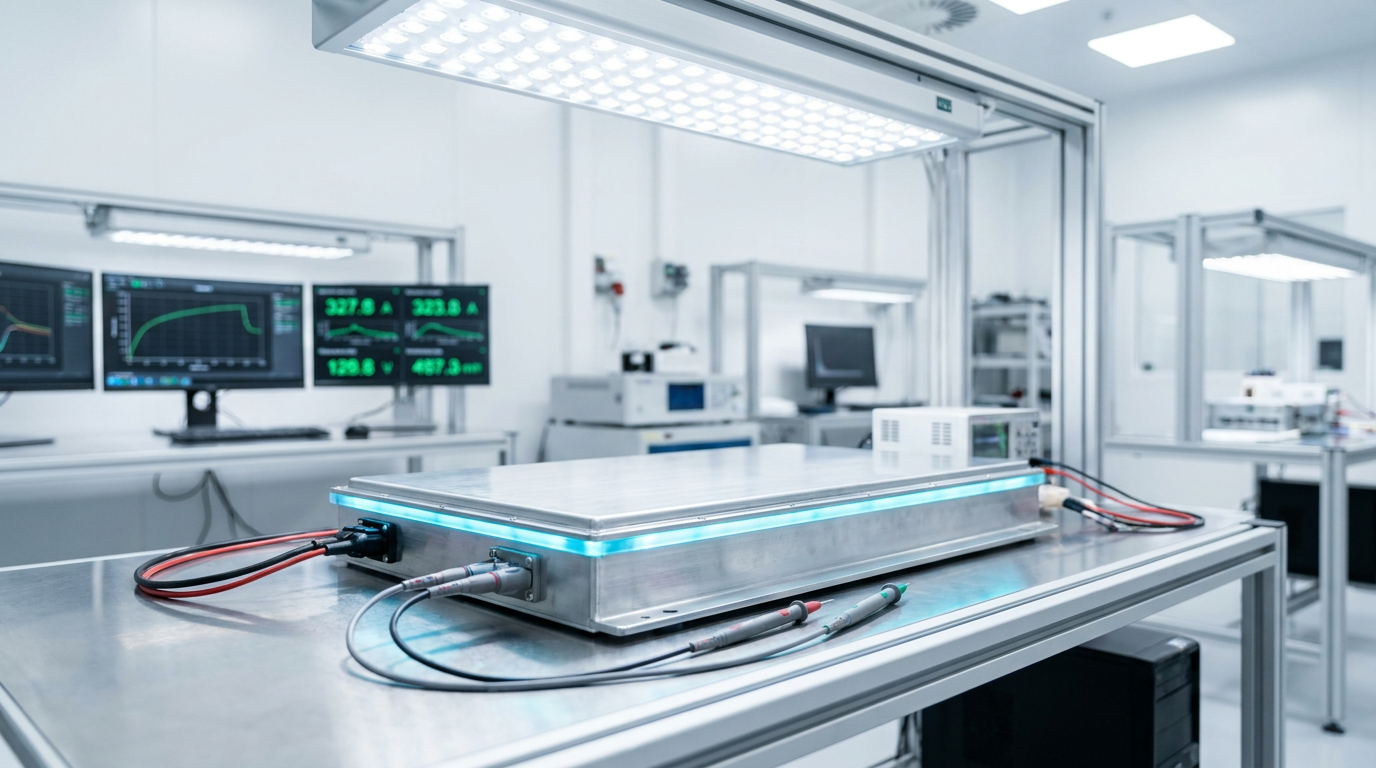
- Commercial Developers
- Focused on scaling production and hitting late-2020s launch targets.
- Market Analysts
- Focused on the economic realities, high initial costs, and gradual adoption curves.
- Technology Explainers
- Focused on the underlying chemistry and consumer benefits of the transition.
What's not represented
- · Raw material mining communities affected by the shift from graphite to increased lithium and novel solid-electrolyte materials.
- · Legacy auto mechanics adapting to entirely new battery architectures and safety protocols.
Why this matters
Solid-state batteries represent the biggest leap in energy storage since the lithium-ion cell, promising to eliminate range anxiety, drastically reduce fire risks, and make electric vehicles lighter and more efficient.
Key points
- Solid-state batteries replace flammable liquid electrolytes with stable solid materials.
- The technology allows for pure lithium-metal anodes, drastically increasing energy density.
- Automakers project ranges exceeding 600 miles and charge times around 10 minutes.
- Pilot manufacturing plants are breaking ground in 2026, moving tech out of the lab.
- Initial commercial rollouts are targeted for 2027–2028 in luxury electric vehicles.
For the better part of a decade, the electric vehicle industry has chased a singular "holy grail": the solid-state battery. Promised as the technological leap that would finally make EVs lighter, safer, and capable of driving cross-country on a single rapid charge, the technology has long felt perpetually five years away. But in 2026, the narrative is shifting from laboratory breakthroughs to concrete industrialization. Major automakers and battery startups are breaking ground on pilot manufacturing plants, locking in supply chains, and signing multi-year commercialization agreements. The race to put solid-state batteries on the road is officially underway.[3][8]
The momentum accelerated significantly in mid-2026. In June, solid-state pioneer QuantumScape announced a major joint research agreement with Honda to advance its lithium-metal battery platform for automotive and motorcycle applications. This follows Honda's rigorous technical evaluation of QuantumScape's technology, which had already secured a partnership with Volkswagen. Meanwhile, Japanese oil refiner Idemitsu Kosan, in collaboration with Toyota, broke ground on a large-scale pilot plant designed to produce hundreds of tons of solid electrolytes annually by 2027.[1][2][7]
To understand why the industry is pouring billions into this transition, one must look at the fundamental chemistry of how a battery works. Every battery contains two electrodes—an anode (negative) and a cathode (positive)—separated by an electrolyte. The electrolyte is the chemical medium that allows lithium ions to flow back and forth between the electrodes during charging and discharging.[3][4]
In the lithium-ion batteries that power today's EVs, smartphones, and laptops, that electrolyte is a liquid—specifically, a lithium salt dissolved in a highly flammable organic solvent. While liquid electrolytes are excellent at shuttling ions quickly, they come with inherent limitations. Under extreme stress, such as a severe crash, overcharging, or intense heat, the liquid can ignite, leading to a dangerous chain reaction known as thermal runaway.[3][4]

A solid-state battery, as the name implies, replaces this liquid solvent with a solid material. Depending on the manufacturer, this solid separator might be made of ceramics, glass, polymers, or sulfides. This single material substitution unlocks a cascade of engineering benefits that fundamentally rewrite the performance limits of an electric vehicle.[3][8]
The most immediate and highly touted benefit is a massive leap in energy density—the amount of energy a battery can store relative to its weight or volume. Today's best lithium-ion batteries max out around 200 to 300 watt-hours per kilogram (Wh/kg). Solid-state developers are targeting 400 to 500 Wh/kg for their first commercial iterations.[3][6]
This leap in density is not just because the solid electrolyte is lighter. The true breakthrough is that a solid, rigid separator allows engineers to completely swap out the battery's anode. Conventional EV batteries use graphite anodes to safely house lithium ions. But because a solid electrolyte acts as a physical barrier, it can safely pair with a pure lithium-metal anode. Lithium metal stores far more energy than graphite, meaning a battery of the exact same physical size can hold dramatically more power.[3][8]
This leap in density is not just because the solid electrolyte is lighter.
For the consumer, this translates directly to range. Automakers project that early solid-state EVs will comfortably exceed 600 miles (roughly 1,000 kilometers) on a single charge. Toyota's second-generation solid-state roadmap, slated for the end of the decade, targets an astonishing 745 miles of range. At that point, range anxiety ceases to be a factor in consumer purchasing decisions.[2][5]

Charging speeds are poised for a similar revolution. In a liquid battery, pushing electricity into the cells too quickly can cause lithium to pile up on the anode unevenly, forming microscopic, needle-like structures called dendrites. If a dendrite grows long enough to pierce the separator and touch the cathode, it causes a short circuit and a potential fire.[4]
Solid electrolytes are physically tough enough to suppress dendrite growth, allowing the battery to safely absorb massive amounts of current. QuantumScape's latest QSE-5 prototype cells have demonstrated the ability to fast-charge from 10 percent to 80 percent in just 12.2 minutes. Toyota is aiming for a 10-minute fast charge for its first-generation solid-state vehicles. This brings the EV charging experience remarkably close to the time it takes to fill a traditional gas tank.[1][2][5]
Safety improvements are equally dramatic. Because the flammable liquid solvent is entirely removed from the equation, the risk of a catastrophic battery fire is virtually eliminated. Solid electrolytes can withstand significantly higher temperatures before degrading, meaning automakers can potentially reduce the heavy, complex cooling systems and protective armor currently required in EV battery packs. This compounding weight reduction further improves the vehicle's overall efficiency.[3][4]
Despite these overwhelming advantages, the transition to solid-state is not an overnight flip of a switch. The technology has faced immense hurdles in moving from controlled laboratory environments to mass production. Solid electrolytes are notoriously brittle and difficult to manufacture at scale without introducing microscopic defects. Furthermore, maintaining perfect contact between the solid electrodes and the solid electrolyte as the battery expands and contracts during use requires precise engineering, often involving high internal pack pressures.[7][8]

Because of these manufacturing complexities, the rollout will happen in phases. The market is currently entering a "semi-solid" era, particularly in China, where companies like NIO and IM Motors are deploying batteries that use a hybrid of solid and liquid electrolytes to boost density while utilizing existing manufacturing lines. Fully solid-state batteries are expected to reach the consumer market between 2027 and 2028.[2][5][6][7]
When they do arrive, they will not immediately replace lithium-ion batteries in budget-friendly commuter cars. The initial production costs will be high, meaning the first wave of solid-state technology will almost certainly debut in high-end luxury vehicles and performance flagships, where premium pricing can absorb the expense of the new tech. Toyota, for instance, is expected to introduce its first solid-state applications under the Lexus brand.[7]
As production scales and supply chains mature into the 2030s, costs will inevitably fall, allowing the technology to trickle down to the broader automotive market. For now, the developments of 2026—from pilot plants breaking ground to major OEM partnerships solidifying—prove that the solid-state battery is no longer just a theoretical holy grail. It is a tangible, rapidly approaching reality that will define the next generation of global transportation.[1][2][6][8]
How we got here
2010s
Early laboratory research proves the viability of solid electrolytes paired with lithium-metal anodes.
2020
Toyota demonstrates an early prototype solid-state vehicle, though cycle life and manufacturing remain hurdles.
2024
QuantumScape begins shipping 'Alpha-2' prototype cells to automotive partners for rigorous testing.
Mid-2026
Major partnerships solidify, including QuantumScape with Honda, and Idemitsu Kosan breaking ground on a solid electrolyte pilot plant.
2027–2028
Target window for the first commercial solid-state EVs to hit the luxury market.
Viewpoints in depth
Automakers & Battery Developers
Companies investing billions to commercialize the technology.
Manufacturers like Toyota, QuantumScape, and Factorial Energy view solid-state batteries as the definitive future of mobility. They argue that the technology's ability to double range and slash charging times to 10 minutes will eliminate the final barriers to mass EV adoption. For these companies, the current focus is entirely on scaling up manufacturing, securing raw materials like solid electrolytes, and proving long-term durability in real-world automotive conditions.
Industry Pragmatists
Analysts cautioning about timelines and manufacturing costs.
While acknowledging the scientific breakthroughs, manufacturing experts and market analysts warn that the transition will be slower and more expensive than optimistic press releases suggest. They point out that building solid-state cells requires entirely new, highly controlled manufacturing environments, as the materials are extremely sensitive to moisture and require high pressure to maintain internal contact. Pragmatists argue that traditional liquid lithium-ion batteries will remain the dominant, cost-effective choice for standard consumer vehicles well into the 2030s.
Safety Advocates
Groups focused on the reduction of thermal runaway risks.
Fire safety researchers and first responders are highly supportive of the solid-state transition. Current lithium-ion battery fires, though statistically rare, burn incredibly hot and are notoriously difficult to extinguish due to the flammable liquid solvents that fuel their own combustion. Safety advocates emphasize that replacing these liquids with inert solid ceramics or polymers fundamentally removes the fuel source for thermal runaway, making future EVs inherently safer in severe collisions.
What we don't know
- The exact premium consumers will have to pay for first-generation solid-state vehicles.
- How quickly manufacturing yields can scale to make the technology affordable for mass-market cars.
- Whether unforeseen degradation issues will emerge after years of real-world automotive use.
Key terms
- Electrolyte
- The chemical medium inside a battery that allows ions to flow between the positive and negative electrodes.
- Thermal Runaway
- A dangerous chain reaction where a battery cell overheats, causing adjacent cells to ignite and resulting in a severe fire.
- Energy Density
- A measure of how much energy a battery can store relative to its weight or volume, typically expressed in watt-hours per kilogram (Wh/kg).
- Dendrites
- Microscopic, needle-like metallic structures that can grow inside a battery during fast charging, potentially causing short circuits.
- Anode
- The negative electrode of a battery, which stores lithium ions when the battery is fully charged.
Frequently asked
Will solid-state batteries make EVs cheaper?
Not initially. The first solid-state batteries will be expensive to manufacture and will likely debut in high-end luxury vehicles. Prices are expected to drop as production scales in the 2030s.
How fast will a solid-state EV charge?
Automakers and battery developers are targeting a 10% to 80% charge in roughly 10 to 12 minutes, approaching the speed of filling a gas tank.
Are solid-state batteries safe?
Yes, they are significantly safer than current EV batteries. By removing the flammable liquid electrolyte, solid-state batteries virtually eliminate the risk of thermal runaway and chemical fires.
Sources
Source coverage
8 outlets
3 viewpoints surfaced








[1]ElectriveCommercial Developers
QuantumScape signs Honda as solid-state battery partner
Read on Electrive →[2]CarscoopsCommercial Developers
Toyota's 620-Mile Solid-State EV Plan Just Got A Major Boost From Big Oil
Read on Carscoops →[3]Car and DriverTechnology Explainers
What Are Solid-State Batteries, and Why Do They Matter for EVs?
Read on Car and Driver →[4]PCMagTechnology Explainers
What Is a Solid State Battery?
Read on PCMag →[5]Green Car ReportsCommercial Developers
Toyota plots solid-state battery timeline for future EVs
Read on Green Car Reports →[6]Fortune Business InsightsMarket Analysts
EV Solid State Battery Market Size, Share | Forecast [2026-2034]
Read on Fortune Business Insights →[7]EVWorldMarket Analysts
Toyota's Solid-State Battery Roadmap: Reality vs. Rumor
Read on EVWorld →[8]BIS ResearchMarket Analysts
Solid-State Battery Race Heats Up Amid Investment Surge
Read on BIS Research →
Every angle. Every day.
Get automotive stories with full source coverage and perspective breakdowns delivered to your inbox.