
How Martial Arts Rewire the Adult Brain to Fight Cognitive Decline
Emerging neuroscience reveals that the complex movements and strategic problem-solving required in martial arts like Tai Chi and Brazilian Jiu-Jitsu actively promote neuroplasticity and improve executive function in adults.
By Factlen Editorial Team
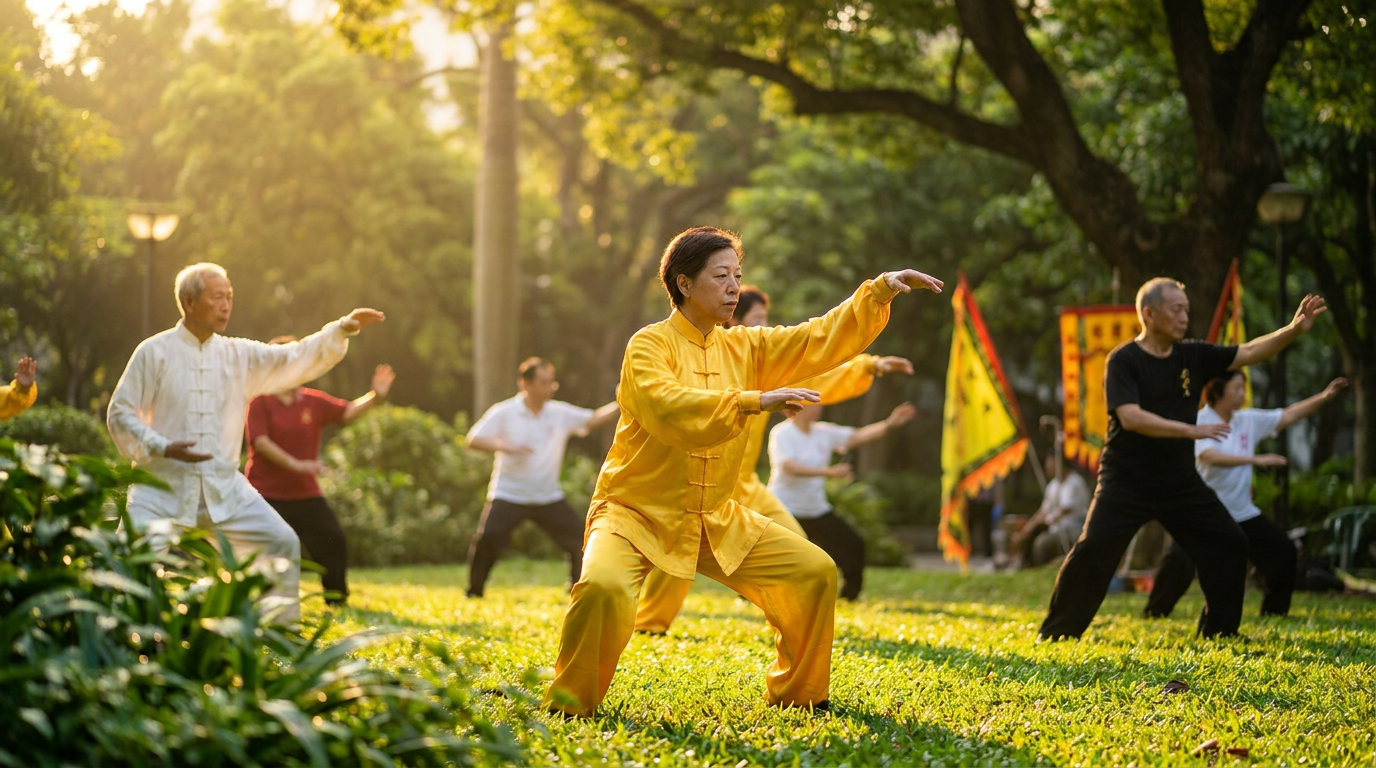
- Cognitive Aging Researchers
- Scientists focused on the neurological mechanisms that delay dementia and preserve brain volume.
- Martial Arts Practitioners
- Instructors and adult students who emphasize the psychological and practical benefits of training.
- Public Health Advocates
- Professionals looking for scalable, cost-effective interventions for aging populations.
What's not represented
- · Traditional sports coaches
- · Pharmaceutical researchers
Why this matters
While standard aerobic exercise improves general blood flow, the unique combination of physical exertion and complex problem-solving found in martial arts provides a targeted workout for the brain's executive functions. For adults looking to maintain mental sharpness and delay cognitive decline, stepping onto the mat offers a scientifically backed, multi-modal defense.
Key points
- Martial arts training stimulates neuroplasticity by forcing the brain to learn complex, novel movement patterns.
- Unlike standard aerobic exercise, martial arts specifically improve executive function and decision-making skills.
- A recent NIA-funded study found that cognitively enhanced Tai Chi significantly improved memory in older adults.
- High-intensity arts like Brazilian Jiu-Jitsu trigger a 'flow state' that reduces cortisol and builds psychological resilience.
- Training increases the release of BDNF, a crucial protein that protects existing neurons and encourages new growth.
The fear of cognitive decline is one of the most pervasive anxieties of aging. For decades, the standard prescription for maintaining a sharp mind has been a combination of crossword puzzles, Sudoku, and moderate aerobic exercise like brisk walking. While these activities offer undeniable benefits, emerging neuroscience suggests that the brain requires a more dynamic, multifaceted challenge to truly thrive.[7]
Enter martial arts. Long associated with youthful athleticism or combat sports, disciplines ranging from the slow, deliberate movements of Tai Chi to the intense, strategic grappling of Brazilian Jiu-Jitsu are increasingly being recognized as powerful interventions for adult brain health.[7]
The underlying mechanism driving this cognitive enhancement is neuroplasticity—the brain’s remarkable ability to rewire itself and form new neural connections throughout a person's lifespan. When an adult learns a complex martial arts technique, they are not merely training their muscles; they are forcing their nervous system to adapt to entirely new patterns of coordination, balance, and spatial awareness.[6]
This process is fundamentally different from the repetitive, automated motions of jogging or cycling. While standard aerobic exercise is excellent for increasing overall cerebral blood flow, martial arts demand continuous, active problem-solving and spatial calculation.[3]

Researchers at Bangor University have demonstrated that this continuous cognitive demand specifically targets the brain's executive functions. Executive function, governed largely by the prefrontal cortex, encompasses the higher-order mental processes required for planning, decision-making, and inhibitory control.[5]
In studies comparing martial arts training to standard aerobic exercise in middle-aged adults, both activities improved general attention and processing speed. However, only the martial arts practitioners showed significant improvements in executive function. The necessity of anticipating an opponent's move, inhibiting automatic reactions, and executing complex motor sequences places a unique, highly beneficial load on the prefrontal cortex.[3]
This cognitive load can be intentionally amplified, as demonstrated by a landmark study funded by the National Institute on Aging and published in the Annals of Internal Medicine. Researchers investigated the effects of Tai Chi on older adults who had already been diagnosed with mild cognitive impairment (MCI), a condition that frequently precedes dementia.[1][2]
The study divided participants into three groups: one performing standard stretching, one practicing traditional Tai Chi, and a third engaging in "cognitively enhanced" Tai Chi. This enhanced version required participants to perform traditional physical movements while simultaneously completing mental challenges, such as spelling words backward.[1][2]
This enhanced version required participants to perform traditional physical movements while simultaneously completing mental challenges, such as spelling words backward.
After six months, the results were striking. While the traditional Tai Chi group improved their cognitive test scores by 1.5 points compared to the stretching group, the cognitively enhanced Tai Chi group saw their scores surge by nearly three points. Furthermore, the Tai Chi practitioners demonstrated improved dual-task walking speed—a critical metric for fall prevention and an indicator of robust neural processing.[1][2]

The benefits extend down to the cellular and metabolic levels. A pilot study conducted at Harvard University utilized magnetic resonance spectroscopy to measure brain metabolites in older adults before and after a 12-week Tai Chi program.[4]
The researchers observed a significant increase in the ratio of N-acetylaspartate to creatine (NAA/Cr) in the posterior cingulate gyrus, a brain region heavily involved in memory and emotional regulation. This increase suggests enhanced neuronal density and health, providing biological evidence that mindful movement can actively protect brain tissue.[4]
Beyond the slow, meditative practice of Tai Chi, high-intensity martial arts like Brazilian Jiu-Jitsu (BJJ) offer their own unique cognitive and psychological benefits. Often referred to as "human chess," BJJ is a grappling art that requires practitioners to navigate a near-infinite tree of physical variables and strategic decisions while under intense physical pressure.[7]
This combination of high-stakes problem-solving and physical exertion reliably triggers a psychological "flow state." In this state of total immersion, the brain is forced to abandon external stressors and anxieties, providing a profound neurological reset.[7]

The neurochemical cascade triggered by this intense engagement is substantial. Martial arts training stimulates the release of brain-derived neurotrophic factor (BDNF), a crucial protein that acts like fertilizer for the brain, promoting the survival of existing neurons and encouraging the growth of new synapses.[6]
Simultaneously, the physical exertion and successful execution of techniques trigger the release of dopamine, serotonin, and endorphins. This neurochemical cocktail not only elevates mood and reduces symptoms of depression but also actively suppresses the production of cortisol, the body's primary stress hormone.[6]
For adults navigating high-pressure careers or the general stresses of modern life, this reduction in cortisol is transformative. The ability to remain calm, analytical, and decisive while a training partner is attempting a submission translates directly into improved emotional regulation and decision-making latency in the boardroom or daily life.[7]
Ultimately, the science is clear: the human brain thrives on complex, novel challenges. By combining physical exertion, continuous learning, and strategic problem-solving, martial arts offer a uniquely comprehensive workout for the mind. Whether through the gentle flow of Tai Chi or the rigorous strategy of Brazilian Jiu-Jitsu, stepping onto the mat is one of the most effective ways to ensure the brain remains resilient, adaptable, and sharp across a lifespan.[7]

Viewpoints in depth
Cognitive Aging Researchers
Scientists focused on the neurological mechanisms that delay dementia and preserve brain volume.
For neuroscientists and gerontologists, martial arts represent a highly efficient, multi-modal intervention. Rather than treating physical decline and cognitive decline as separate problems requiring separate therapies, researchers view disciplines like Tai Chi as a unified solution. They emphasize the measurable biological markers—such as increased plasma BDNF levels and improved N-acetylaspartate to Creatine (NAA/Cr) ratios—as evidence that complex, mindful movement actively protects against neuronal death and promotes neurogenesis.
Martial Arts Practitioners
Instructors and adult students who emphasize the psychological and practical benefits of training.
From the perspective of those on the mats, the benefits are less about brain chemistry and more about immediate psychological resilience. Practitioners of Brazilian Jiu-Jitsu often describe the sport as 'human chess,' where the absolute necessity of focusing on a physical threat forces the mind into a flow state. This intense, involuntary mindfulness provides a profound break from daily anxieties, effectively lowering cortisol levels and building a quiet, tested confidence that translates directly into high-pressure professional environments.
Public Health Advocates
Professionals looking for scalable, cost-effective interventions for aging populations.
Public health experts view martial arts—particularly low-impact forms like Tai Chi—as a critical tool for community health. Because these practices require minimal equipment and can be adapted for individuals with varying levels of mobility, they offer a highly accessible way to address two major public health crises simultaneously: age-related cognitive decline and fall-related injuries. Advocates push for the integration of these programs into senior centers and community clinics as a preventative measure.
What we don't know
- The exact optimal 'dose' (frequency and duration) of martial arts training required to maximize neuroplasticity.
- How the cognitive benefits of striking arts (like boxing or Muay Thai) compare to grappling arts or Tai Chi, given the added risk of subconcussive impacts.
Key terms
- Neuroplasticity
- The brain's ability to reorganize itself by forming new neural connections in response to learning or experience.
- Executive Function
- A set of mental skills that include working memory, flexible thinking, and self-control, managed primarily by the prefrontal cortex.
- Brain-Derived Neurotrophic Factor (BDNF)
- A protein that promotes the survival of nerve cells and plays a crucial role in the growth, maturation, and maintenance of new neurons.
- Mild Cognitive Impairment (MCI)
- An early stage of memory loss or other cognitive ability loss in individuals who maintain the ability to independently perform most activities of daily living.
Frequently asked
Can I start martial arts if I have no prior experience?
Yes. Disciplines like Tai Chi and beginner Brazilian Jiu-Jitsu are designed to accommodate all ages and fitness levels, focusing on technique, safety, and gradual progression rather than brute strength.
How does martial arts differ from regular aerobic exercise for the brain?
While running or cycling improves general blood flow, martial arts require continuous problem-solving, spatial awareness, and complex motor coordination, which specifically targets and strengthens the brain's executive functions.
What is cognitively enhanced Tai Chi?
It is a modified version of traditional Tai Chi that incorporates additional mental challenges, such as spelling words backward while performing physical movements, to further stimulate the brain's neural networks.
Sources
Source coverage
7 outlets
3 viewpoints surfaced






[1]National Institutes of HealthCognitive Aging Researchers
Tai chi improves memory in older adults
Read on National Institutes of Health →[2]Annals of Internal MedicineCognitive Aging Researchers
Clinical effectiveness of cognitively enhanced tai ji quan training on global cognition
Read on Annals of Internal Medicine →[3]National Center for Biotechnology InformationMartial Arts Practitioners
Acute Effects of Martial Arts Training on Cognitive Performance
Read on National Center for Biotechnology Information →[4]Harvard UniversityCognitive Aging Researchers
Brain Metabolites and Muscle Energetics After Tai Chi Training
Read on Harvard University →[5]Bangor UniversityPublic Health Advocates
Assess neurocognitive Changes continged to Martial Arts Practice
Read on Bangor University →[6]Science Hood PublishingCognitive Aging Researchers
Tai Chi and Qigong to promote neurogenesis and cognitive health
Read on Science Hood Publishing →[7]Factlen Editorial TeamMartial Arts Practitioners
Synthesis by Factlen editorial team
Read on Factlen Editorial Team →


Every angle. Every day.
Get fitness stories with full source coverage and perspective breakdowns delivered to your inbox.