
How Citizen Detectives Are Using Open-Source Data to Expose Global Crimes
From tracking illegal fishing fleets to finding missing persons, civil society organizations are harnessing publicly available data to democratize intelligence and hold bad actors accountable.
By Factlen Editorial Team

- Digital Investigators & NGOs
- Argue that democratized data allows civil society to expose abuses and hold bad actors accountable.
- Legal & Law Enforcement
- Value the influx of actionable intelligence but stress the need for rigorous verification protocols to ensure admissibility.
- Academic & Ethics Watchdogs
- Highlight the risks of informational bias, algorithmic blind spots, and the need for strict ethical boundaries.
What's not represented
- · Defense Attorneys
- · Privacy Advocates
Why this matters
The democratization of intelligence means that exposing corruption, environmental crimes, and human rights abuses is no longer the exclusive domain of state agencies. Everyday citizens and NGOs now possess the tools to hold bad actors accountable on a global scale, transforming public data into a powerful mechanism for justice.
Key points
- Civil society organizations are using public data to track environmental crimes, human rights abuses, and missing persons.
- The International Criminal Court has begun issuing arrest warrants based primarily on verified social media evidence.
- Global Fishing Watch uses satellite and AIS data to track over 35,000 commercial vessels, exposing illegal fishing.
- Trace Labs crowdsources intelligence from thousands of volunteers to provide law enforcement with leads on missing persons.
- The Berkeley Protocol was established to ensure digital evidence meets the strict standards required for international courts.
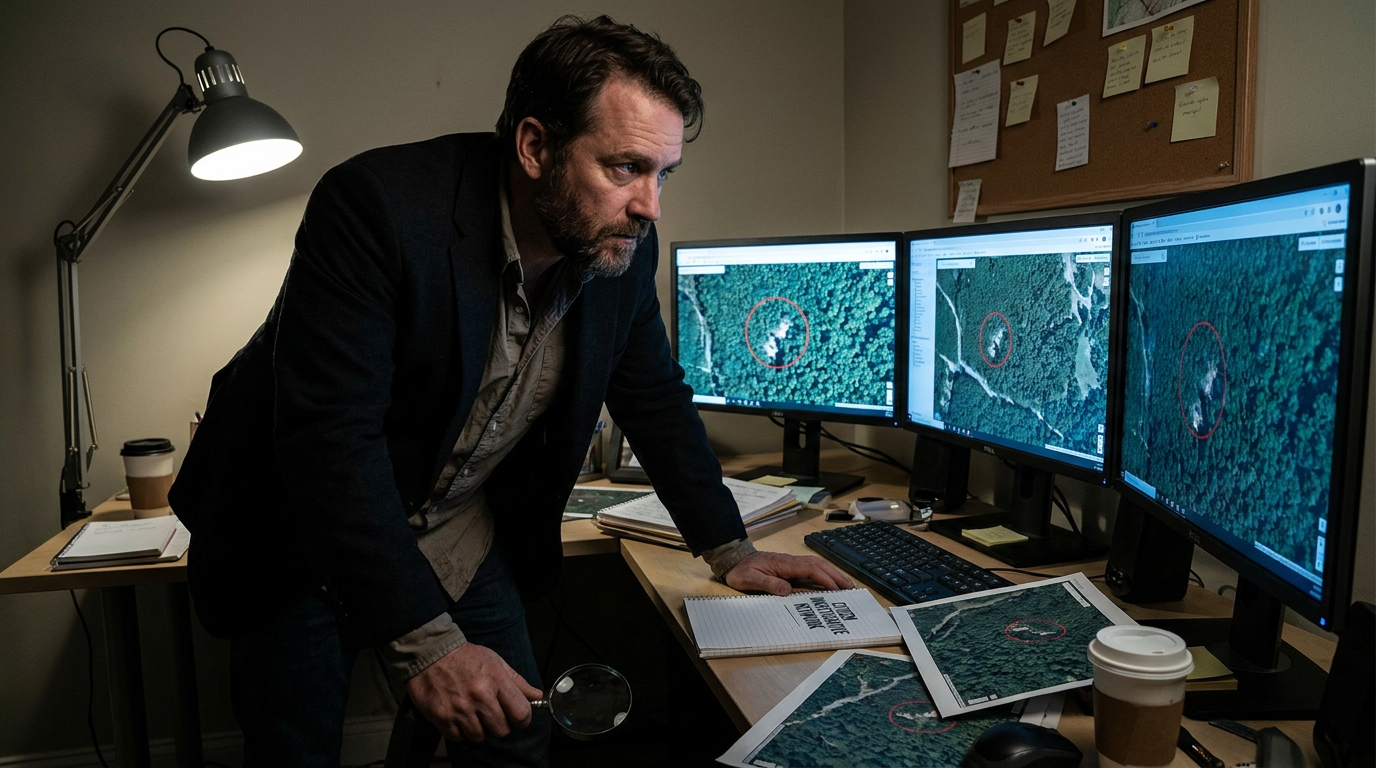
For decades, the word "intelligence" conjured images of classified government dossiers, covert operatives, and multi-billion-dollar satellite networks. Today, some of the world's most impactful intelligence work is being done by volunteers, journalists, and non-profit organizations using nothing more than a laptop and an internet connection. This is the era of Open Source Intelligence (OSINT)—the rigorous collection and analysis of publicly available data to uncover hidden truths.[4][6]
The sheer volume of digital exhaust generated by modern life has fundamentally democratized the intelligence landscape. Every day, millions of social media posts, public flight logs, corporate registries, and commercial satellite images are uploaded to the public domain. While state intelligence agencies have long utilized this data, a growing ecosystem of civil society organizations is now harnessing it to track environmental crimes, document human rights abuses, and locate missing persons.[4][5]
Historically, prosecuting war crimes relied heavily on physical evidence and on-the-ground witness testimony, which are often inaccessible in active conflict zones. Today, digital evidence is filling the gap. In a watershed moment for international law, the International Criminal Court (ICC) issued its first-ever arrest warrant based primarily on social media evidence in 2017, targeting a Libyan commander for war crimes.[2][5]

This shift toward digital accountability was largely pioneered by investigative collectives like Bellingcat, which demonstrated that crowdsourced geolocation and chronolocation of user-generated content could meet rigorous evidentiary standards. To bridge the gap between citizen journalism and the courtroom, the United Nations and the University of California, Berkeley launched the "Berkeley Protocol" in 2020. This framework provides standardized guidelines for digital investigators, ensuring that open-source evidence is collected, preserved, and verified in a manner admissible in international courts.[2]
Beyond the battlefield, satellite data and machine learning are exposing massive environmental crimes. The global ocean has long been a blind spot for law enforcement, allowing illegal, unreported, and unregulated (IUU) fishing to strip up to $50 billion from the global economy annually. Organizations like Global Fishing Watch are changing this by making the invisible visible. By combining Automatic Identification System (AIS) broadcast data with optical and radar satellite imagery, they track the movements of more than 35,000 commercial fishing vessels in near real-time.[1]

Beyond the battlefield, satellite data and machine learning are exposing massive environmental crimes.
In June 2026, Global Fishing Watch expanded its capabilities by introducing "IUU Fishing Risk Insights," a dataset designed to reveal the digital fingerprints of illicit maritime activity. Rather than relying solely on physical patrols, the system uses machine learning to flag suspicious behavioral indicators—such as vessels disabling their tracking beacons, loitering in protected marine areas, or conducting unauthorized at-sea transshipments. This intelligence is then handed directly to regional enforcement agencies to prioritize their physical inspections.[1]
OSINT is also being applied to localized crises, proving that crowdsourced reconnaissance can accelerate missing persons investigations. Trace Labs, a non-profit organization, has pioneered a model that crowdsources intelligence to assist law enforcement with active cases. Through virtual "Search Party" events structured as Capture the Flag (CTF) competitions, thousands of skilled volunteers gather to generate leads for police departments.[3]
The methodology is strictly governed by rules of "passive reconnaissance." Volunteers are forbidden from interacting with targets, hacking, or breaching privacy walls. Instead, they comb through public social media profiles, public records, and reverse image searches to build a digital footprint of the missing individual's last known movements. This crowdsourced approach supplies under-resourced police departments with actionable intelligence they often lack the time or personnel to gather themselves.[3]

While the successes of civil-society OSINT are well-documented, the field faces significant methodological hurdles. The primary challenge is informational bias; algorithms and social media platforms often skew the visibility of certain events, potentially leading investigators to disproportionately focus on regions with high digital penetration while ignoring offline communities. Furthermore, the rapid proliferation of generative AI and deepfakes requires investigators to constantly update their verification tools to separate authentic user-generated content from manipulated propaganda.[4][5]
Despite these challenges, the professionalization of the OSINT community is accelerating. By establishing strict ethical boundaries, partnering with academic institutions, and developing standardized evidentiary protocols, citizen investigators are proving that transparency can be a powerful weapon against impunity. The democratization of intelligence has not only expanded the capacity of law enforcement and international courts but has also given everyday citizens a tangible way to advocate for global justice.[2][6]
How we got here
2014
Bellingcat is founded, popularizing the use of crowdsourced OSINT to investigate international conflicts.
2016
Global Fishing Watch launches, providing the first free global view of commercial fishing activity via satellite data.
Aug 2017
The International Criminal Court issues its first arrest warrant based primarily on social media evidence.
2020
The UN and UC Berkeley launch the Berkeley Protocol to standardize digital open-source investigations for legal accountability.
Jun 2026
Global Fishing Watch introduces IUU Fishing Risk Insights to map the digital fingerprints of illegal maritime activity.
Viewpoints in depth
Digital Investigators & NGOs
Argue that democratized data allows civil society to expose abuses and hold bad actors accountable.
This camp believes that the monopoly on intelligence gathering has been permanently broken by the digital age. Organizations like Bellingcat, Global Fishing Watch, and Trace Labs argue that when public data is rigorously analyzed, it empowers civil society to bypass bureaucratic bottlenecks and expose corruption, environmental destruction, and human rights abuses in near real-time. They view OSINT as a fundamental tool for democratizing justice and providing a voice to marginalized communities.
Legal & Law Enforcement
Value the influx of actionable intelligence but stress the need for rigorous verification protocols to ensure admissibility.
Law enforcement agencies and international prosecutors welcome the massive influx of leads generated by crowdsourced intelligence, acknowledging that they often lack the resources to monitor the vast expanse of the internet. However, they emphasize that raw data is not evidence. This camp advocates for strict adherence to frameworks like the Berkeley Protocol, warning that without rigorous chain-of-custody documentation and verification, open-source intelligence will fail to hold up under cross-examination in a court of law.
Academic & Ethics Watchdogs
Highlight the risks of informational bias, algorithmic blind spots, and the need for strict ethical boundaries.
Researchers and ethicists caution against treating OSINT as an infallible silver bullet. They point out that open-source investigations are inherently vulnerable to informational bias—events in regions with high smartphone penetration and internet access are heavily documented, while abuses in disconnected areas remain invisible. Furthermore, they warn about the psychological toll on volunteer analysts exposed to graphic content and the growing threat of deepfakes, urging the community to maintain strict ethical boundaries to prevent vigilantism and misinformation.
What we don't know
- How the rapid advancement of generative AI and deepfakes will impact the long-term reliability of user-generated video evidence.
- Whether smaller, under-resourced local courts will have the technical capacity to evaluate complex digital open-source evidence.
- How to fully eliminate informational bias when investigations rely heavily on regions with high internet penetration.
Key terms
- Open Source Intelligence (OSINT)
- The practice of collecting, evaluating, and analyzing publicly available information to answer specific intelligence questions.
- Automatic Identification System (AIS)
- A tracking system used on ships that broadcasts their location, speed, and direction to avoid collisions, which is now used to monitor global fishing activity.
- Geolocation
- The process of determining the exact real-world geographic location of an object or event shown in a digital image or video.
- Passive Reconnaissance
- Gathering information about a target using only publicly available resources, without directly interacting with or alerting the target.
Frequently asked
What is Open Source Intelligence (OSINT)?
OSINT is the collection and analysis of information that is publicly available, such as social media posts, satellite imagery, and public government records, to generate actionable intelligence.
Is OSINT the same as hacking?
No. OSINT relies entirely on publicly accessible data and passive reconnaissance. It strictly forbids hacking, breaching privacy walls, or interacting with targets under false pretenses.
Can social media posts be used in court?
Yes, if properly verified. International courts have begun accepting digital open-source evidence, provided it meets strict standards for collection, preservation, and verification, such as those outlined in the Berkeley Protocol.
Sources
Source coverage
6 outlets
3 viewpoints surfaced






[1]Global Fishing WatchDigital Investigators & NGOs
IUU Fishing Risk Insights: Mapping the digital fingerprints of vessels at sea
Read on Global Fishing Watch →[2]Reuters Institute for the Study of JournalismLegal & Law Enforcement
From breaking news to collecting evidence: how Bellingcat uses open source to investigate war crimes
Read on Reuters Institute for the Study of Journalism →[3]Trace LabsDigital Investigators & NGOs
A Global Approach to the Missing Persons Dilemma
Read on Trace Labs →[4]Cambridge University PressAcademic & Ethics Watchdogs
The evolution of Open-Source Intelligence (OSINT)
Read on Cambridge University Press →[5]UK Research and InnovationAcademic & Ethics Watchdogs
Leveraging OSINT for Human Rights Investigation
Read on UK Research and Innovation →[6]Factlen Editorial TeamDigital Investigators & NGOs
Synthesis by Factlen editorial team
Read on Factlen Editorial Team →
Every angle. Every day.
Get defense security stories with full source coverage and perspective breakdowns delivered to your inbox.