
How AI Dubbing and Neural Lip-Sync Are Breaking Hollywood's Language Barrier
Advanced AI dubbing tools are democratizing global cinema by translating dialogue and seamlessly re-animating actors' faces, cutting localization costs by up to 90%.
By Factlen Editorial Team
- Independent Filmmakers
- View the technology as a massive democratizing force that allows low-budget projects to reach a global audience.
- Major Studios & Streamers
- Focus on the enterprise efficiency of unlocking vast back-catalogs for international markets at a fraction of traditional costs.
- Voice Actors & Labor Unions
- Argue for strict consent protocols, fair compensation, and transparent data training to protect human artistry.
- AI Technology Developers
- Emphasize the pursuit of perfect visual fidelity and the implementation of ethical guardrails like digital watermarking.
What's not represented
- · International dubbing studio executives
- · Non-English speaking audiences
Why this matters
By drastically reducing the cost and technical barriers of translating film and video, this technology allows independent creators to reach a global audience instantly, fundamentally changing whose stories get told and seen worldwide.
Key points
- AI dubbing cuts localization costs by up to 90%, allowing indie films to release globally.
- Voice cloning preserves the original actor's tone, pitch, and emotional delivery across languages.
- Neural rendering re-animates the actor's mouth to match translated dialogue with 0.02-second accuracy.
- Major streamers are using the tech to unlock back-catalogs for international markets.
- Labor unions are successfully pushing for strict consent and compensation models for voice cloning.
- Developers are integrating proprietary watermarking to verify synthetically altered media.
In 2026, the most significant revolution in Hollywood isn't a new camera sensor or a massive CGI spectacle—it is the quiet, systematic dismantling of the global language barrier. When the Swedish sci-fi film 'Watch the Skies' hit United States theaters, audiences watched the original Scandinavian cast deliver their performances in flawless English. The actors had never recorded those lines, yet every syllable matched their mouth movements perfectly.[6]
This is the reality of modern AI dubbing and visual lip-sync technology. Once dismissed as a novelty that produced robotic voices and unsettling, uncanny-valley visuals, the technology has rapidly matured into a broadcast-grade utility. It is actively reshaping how film and video content is produced, distributed, and consumed across the globe.[3][8]
Historically, international distribution forced filmmakers into a difficult compromise. Traditional dubbing required hiring an entirely new cast of voice actors to record translated dialogue, while sync editors painstakingly tried to match the new words to the original actor's mouth movements. The process was prohibitively expensive, culturally jarring, and often pulled viewers out of the story.[8]
The financial mathematics of localization have now fundamentally shifted. Industry data indicates that AI dubbing is reducing localization costs by 70 to 90 percent, compressing workflows that once took weeks into a matter of days. Driven by this efficiency, the AI video dubbing market is experiencing explosive growth, projected to reach nearly $400 million by the early 2030s.[1]

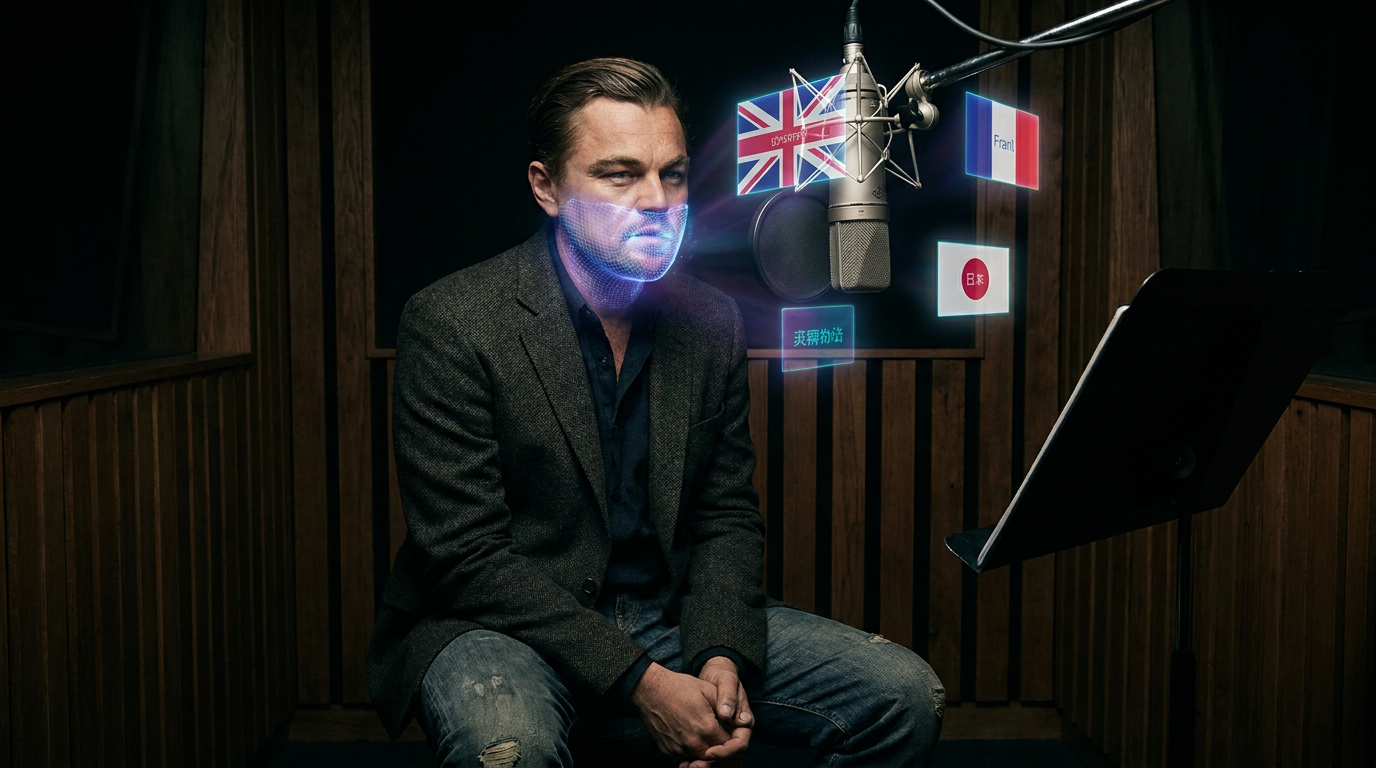
The mechanism behind this transformation begins with advanced voice cloning. Rather than simply reading translated text in a generic synthetic voice, modern models analyze just a few seconds of the original actor's performance to capture their unique vocal identity. Systems like CAMB.AI's MARS model can replicate an actor's exact tone, pitch, and emotional rhythm across more than 140 languages, ensuring the character's soul remains intact.[9]
However, the true breakthrough lies in the visual synchronization. The process relies on 'phoneme-to-viseme mapping,' where the AI analyzes the sounds of the translated audio and identifies the corresponding mouth shapes required to produce them. Using Generative Adversarial Networks (GANs), the software then re-animates the actor's lower face to match the new dialogue.[4][8]
The precision of this neural rendering has reached unprecedented levels. Leading platforms now utilize 'Deep-Mesh' technology to account for micro-expressions and facial muscle movements, achieving facial sync accuracy as tight as 0.02 seconds. This viseme-level precision effectively closes the gap that audiences subconsciously register when audio and visual cues misalign, building immediate viewer trust.[1][4][5]

The precision of this neural rendering has reached unprecedented levels.
Major streaming platforms are quietly leading the enterprise adoption of these tools. Companies like Netflix and Amazon Prime Video have transitioned from early pilot tests to integrating AI dubbing into their core pipelines. By automating the localization process, these platforms can rapidly unlock vast libraries of back-catalog content for new international markets without the upfront investment of traditional studio dubbing.[2]
Beyond the studio system, the technology is serving as a massive democratizing force for independent creators. A low-budget documentary or an indie feature film can now be localized into dozens of languages simultaneously. This allows independent filmmakers to compete on a global stage, reaching audiences in Mumbai, Tokyo, and Madrid with the same native-feeling presentation as a blockbuster franchise.[2][9]
The integration into professional workflows has also become seamless. Post-production teams are utilizing platforms like Sync Labs' Sync-3, which plug directly into standard editing software. These tools act as digital studio assistants, capable of handling complex lighting conditions, rapid dialogue, and multiple faces on screen, all while exporting in pristine 4K ProRes quality.[3]
The broader economic implications for the entertainment sector are staggering. Analysts estimate that up to $10 billion of forecast original content spend could be addressable by some form of AI in the coming years, with post-production localization leading the charge.[7]

Despite the overwhelming technical success, the rapid ascent of AI dubbing has triggered necessary alarm bells regarding labor and consent. Voice actors and industry unions have raised existential concerns about the unauthorized cloning of their performances. During recent contract negotiations, organizations like SAG-AFTRA heavily prioritized establishing strict AI guardrails to ensure fair compensation.[10]
The core of the labor debate centers on control over digital likenesses. Actors and advocates are demanding transparent 'nutrition labels' for the data used to train these models, ensuring that human artistry is not commodified without explicit permission.[7][10]
In response, governments and regulatory bodies are beginning to step in. The European Union's AI Act categorizes generative AI tools as high-risk, mandating strict transparency requirements for synthetic media. Similarly, international regulators are enforcing policies that require AI-generated dubbed voices to be clearly labeled on-screen to protect cultural authenticity.[10]

To navigate these ethical concerns, technology developers are building safeguards directly into their platforms. Proprietary watermarking and verification tools are becoming standard features, allowing studios and audiences to definitively check if a video's audio or visuals were synthetically altered.[3]
Looking ahead, the frontier of AI dubbing is shifting toward real-time processing. Platforms are already deploying live translation with lip-sync capabilities for streaming content, pushing processing latency to under two seconds. As the technology continues to evolve, the ultimate promise of AI dubbing is a more connected global culture—a landscape where the power of a story is never limited by the language in which it was originally told.[1][4]
How we got here
2023
Early AI dubbing tests focus primarily on documentary content where lip-sync is less critical.
2024
The AI video dubbing market reaches $31.5 million as voice cloning fidelity dramatically improves.
2025
Major streamers begin deploying AI dubbing for scripted content; SAG-AFTRA negotiates strict AI consent guardrails.
2026
AI models achieve 0.02-second facial sync accuracy, enabling photorealistic theatrical releases and real-time live streaming translation.
Viewpoints in depth
Independent Filmmakers
View the technology as a massive democratizing force that allows low-budget projects to reach a global audience.
For decades, the cost of professional dubbing kept independent films locked into their native language markets. Independent creators argue that AI dubbing is the ultimate equalizer. By utilizing creator-focused platforms, a $50,000 indie documentary can now be localized into 40 languages over a weekend, allowing it to compete for viewership on global streaming platforms alongside $200 million studio blockbusters.
Major Studios & Streamers
Focus on the enterprise efficiency of unlocking vast back-catalogs for international markets at a fraction of traditional costs.
Streaming giants view AI dubbing as a critical tool for scaling their global footprints. Rather than spending millions to traditionally dub older catalog titles for emerging markets, studios can use enterprise AI platforms to localize thousands of hours of content efficiently. They emphasize that the technology's ability to preserve the original actor's emotional performance makes the final product superior to traditional overdubbing.
Voice Actors & Labor Unions
Argue for strict consent protocols, fair compensation, and transparent data training to protect human artistry.
Labor advocates acknowledge the technology's efficiency but warn of the existential threat to the dubbing industry and voice actors. Their primary focus is establishing a robust legal framework around digital likenesses. Unions demand that actors must explicitly consent to having their voices cloned, receive fair compensation for every language generated, and have access to 'nutrition labels' that disclose exactly what data was used to train the AI models.
AI Technology Developers
Emphasize the pursuit of perfect visual fidelity and the implementation of ethical guardrails like digital watermarking.
The engineers building these platforms are focused on eliminating the 'uncanny valley' effect. By achieving 0.02-second facial sync accuracy, they argue they are enhancing the viewer's immersion. In response to ethical concerns, developers are proactively building proprietary watermarking and verification tools into their exports, ensuring that platforms and audiences can always identify synthetically altered media.
What we don't know
- How international audiences will respond long-term to the cultural nuances of AI-translated dialogue compared to native performances.
- Whether the cost of enterprise-grade neural rendering will drop fast enough to become standard in micro-budget student films.
- How copyright law will ultimately treat the ownership of a synthetic voice performance generated in a language the original actor does not speak.
Key terms
- Phoneme-to-Viseme Mapping
- The process of translating spoken sounds (phonemes) into the corresponding visual mouth shapes (visemes) on screen.
- Voice Cloning
- AI technology that analyzes a speaker's unique vocal characteristics and replicates them to generate new speech, often in different languages.
- Neural Rendering
- A deep learning technique used to generate photorealistic images or video frames, used here to seamlessly blend the AI-generated mouth movements with the original footage.
- Generative Adversarial Networks (GANs)
- A class of machine learning frameworks where two neural networks contest with each other to generate highly realistic synthetic media.
- Uncanny Valley
- The unsettling feeling viewers experience when a digital human looks almost, but not perfectly, realistic.
Frequently asked
Does AI dubbing sound robotic?
No. Modern voice cloning captures the original actor's exact tone, pitch, and emotional rhythm, applying those human nuances to the translated language.
How does the AI change the actor's mouth?
It uses 'phoneme-to-viseme mapping' to analyze the new audio and generate a photorealistic neural mesh over the actor's lower face, perfectly matching the new words.
Are human voice actors losing their jobs?
The technology is shifting the industry. While it reduces the need for traditional dubbing casts, unions like SAG-AFTRA are negotiating strict consent and compensation models for voice cloning.
Can indie filmmakers afford this technology?
Yes. While enterprise systems exist for major studios, many creator-focused platforms offer AI dubbing for a fraction of the cost of traditional studio localization.
Sources
Source coverage
10 outlets
4 viewpoints surfaced










[1]MediumMajor Studios & Streamers
Understanding the Current State of AI Video Dubbing
Read on Medium →[2]Noiz.aiIndependent Filmmakers
Best AI Dubbing Software for 2026
Read on Noiz.ai →[3]Sync LabsAI Technology Developers
Sync 3: Studio-Grade AI Lip-Sync Platform
Read on Sync Labs →[4]Digen.aiAI Technology Developers
The Evolution of Real-Time Lip-Synced Translation
Read on Digen.ai →[5]HeyGenAI Technology Developers
Best AI Dubbing Tools in 2026
Read on HeyGen →[6]Flawless AIMajor Studios & Streamers
Flawless Announces Watch the Skies, the First Visually Dubbed Feature
Read on Flawless AI →[7]McKinsey & CompanyMajor Studios & Streamers
AI in Hollywood: Post-production and the $10B shift
Read on McKinsey & Company →[8]Vozo.aiIndependent Filmmakers
How AI Dubbing Actually Works
Read on Vozo.ai →[9]CAMB.AIIndependent Filmmakers
AI Dubbing Software for Filmmakers in 2026
Read on CAMB.AI →[10]AMT LabVoice Actors & Labor Unions
Artificial Intelligence and Its Ethical Implications for the Dubbing Industry
Read on AMT Lab →
Every angle. Every day.
Get entertainment stories with full source coverage and perspective breakdowns delivered to your inbox.